




Logistics Operations and Industry Trends
Logistics operations play a crucial role in today’s business landscape.
They ensure the timely delivery of goods and services.
Meanwhile, rapid technological advancements and changing consumer expectations drive significant industry trends.
Automation in Warehouse Operations
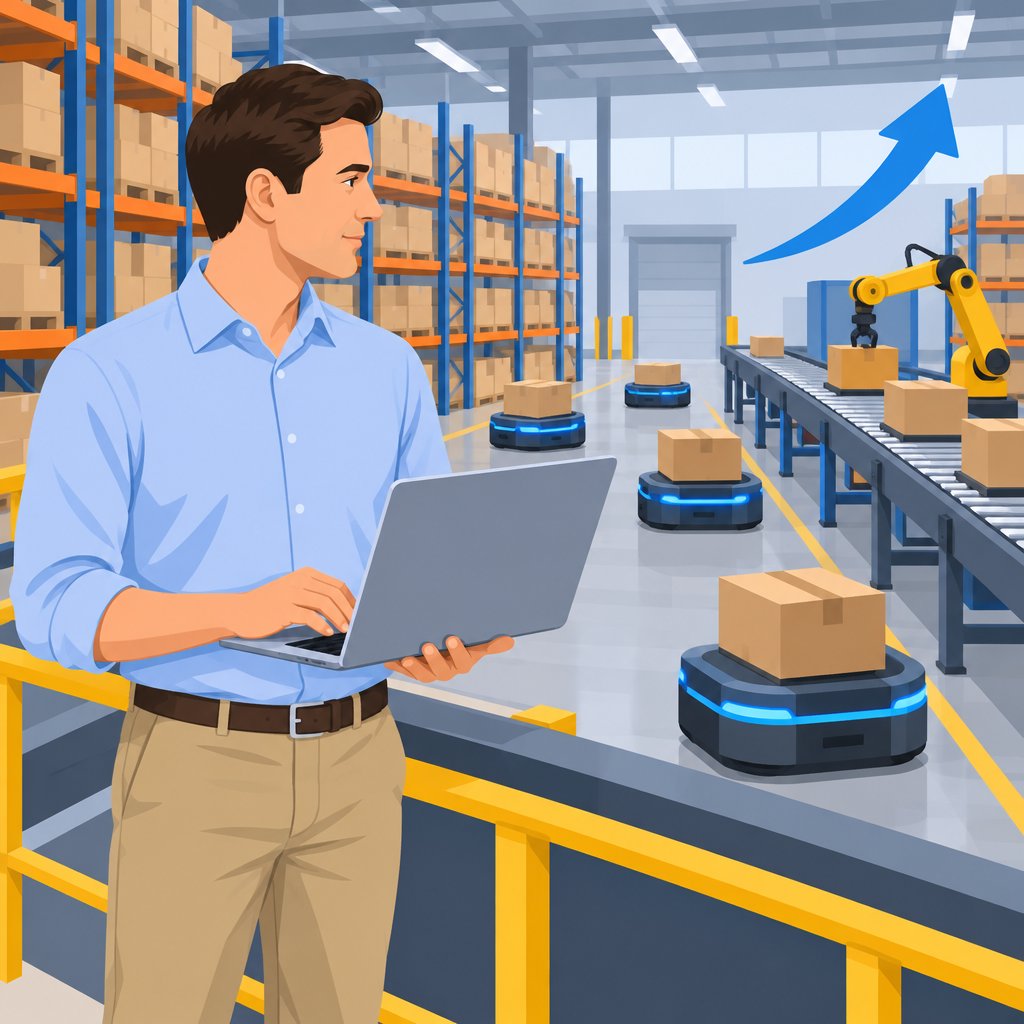
Automation and robotics are reshaping warehouse operations.
These technologies streamline processes and help companies manage growing demands.
Meanwhile, automated systems improve task speed, consistency, and accuracy.
- Automation uses robots and automated systems to streamline warehouse processes.
- Companies like Amazon and Walmart implement automated warehouse systems to improve efficiency.
- Automated systems perform picking, packing, and sorting with greater speed and accuracy.
- Companies reduce human errors and increase productivity by automating warehouse operations.
Benefits of Automation in Logistics
Automation helps logistics companies process orders more quickly.
Additionally, accurate systems support stronger inventory management and order fulfillment.
Companies can also reduce expenses while using warehouse space more effectively.
- Automation increases efficiency by speeding order processing and reducing logistics lead times.
- Automated systems improve accuracy because they reduce inventory and fulfillment errors.
- Companies can save costs by minimizing labor expenses and optimizing warehouse space.
Robotics in Transportation Operations
Robotics now supports transportation operations and delivery services.
Self-driving vehicles can improve efficiency and reduce delivery times.
Furthermore, robots and drones support package delivery in busy urban areas.
- Self-driving vehicles increasingly support transportation operations and delivery services.
- Companies like Tesla and Waymo invest in autonomous vehicle technology.
- Autonomous vehicles can improve last-mile delivery services.
- Robots and drones deliver packages in urban areas with high delivery volumes.
Companies Implementing Robotics
Several major companies are testing robotics across warehouses and transportation networks.
These initiatives target faster, more accurate, and more efficient operations.
As a result, robotics supports both package handling and delivery activities.
- UPS has partnered with robotics companies to test autonomous delivery vehicles and drones.
- DHL uses warehouse robots to automate order picking and packing processes.
- FedEx has invested in autonomous trucks to improve transportation speed and accuracy.
Companies that embrace automation and robotics can respond more effectively to changing operational demands.
Data Analytics and AI in Supply Chain Management
Data analytics and artificial intelligence are transforming supply chain management.
These technologies help companies manage inventory and make informed decisions.
They also improve forecasting accuracy across changing business environments.
- Predictive analytics optimizes inventory management.
- Machine learning algorithms support demand forecasting.
Data Analytics Transforming Supply Chain Management
Data analytics provides insights into the entire logistics process.
AI algorithms analyze large datasets to identify patterns, trends, and anomalies.
Consequently, companies can streamline operations, reduce costs, and improve efficiency.
Predictive Analytics for Inventory Management
Predictive analytics helps companies improve their inventory management processes.
Machine learning algorithms analyze historical data and forecast future demand.
These methods can predict potential stockouts before they affect customers.
Therefore, businesses can maintain suitable product levels and reduce carrying costs.
They can also improve customer satisfaction by providing products when needed.
Companies Using Analytics for Better Decisions
Several companies use data analytics and AI to improve decision-making.
Amazon uses AI algorithms to predict customer demand and optimize warehouse operations.
As a result, Amazon achieves faster deliveries and higher customer satisfaction.
UPS uses data analytics to optimize delivery routes and reduce fuel consumption.
Its analysis includes traffic patterns, weather conditions, and package sizes.
These insights help UPS make efficient decisions and minimize carbon emissions.
Strategic Benefits of Intelligent Supply Chains
Data analytics and AI continue to advance supply chain management.
Companies can optimize supply chains, manage inventory, and improve forecasting accuracy.
By adopting these technologies, businesses can respond more effectively to marketplace demands.
Find Out More: Daily Tasks of a Procurement Specialist
Sustainability Initiatives
Sustainability now guides many logistics operations because environmental concerns continue to increase.
Recently, companies have shifted toward more sustainable supply chain practices.
These organizations aim to reduce carbon footprints while maintaining environmentally responsible operations.
Transform Your Career Today
Unlock a personalized career strategy that drives real results. Get tailored advice and a roadmap designed just for you.
Start NowEco-Friendly Practices in Logistics
Many companies now implement eco-friendly practices within their logistics operations.
First, green packaging materials reduce waste and limit environmental impact.
Additionally, electric vehicles lower emissions and reduce reliance on fossil fuels.
Some organizations also invest in carbon-neutral shipping to offset environmental impacts.
Benefits of Sustainable Logistics Operations
Sustainability initiatives can produce several benefits for logistics operations.
Efficient processes and reduced waste can lower operating costs.
Furthermore, eco-friendly materials and vehicles can attract environmentally conscious customers.
These practices may strengthen brand image and support corporate social responsibility.
Finally, sustainable operations can help companies comply with relevant regulations.
The Future Role of Sustainable Logistics
Sustainability will continue shaping the future of logistics operations.
Companies can reduce environmental impacts while improving operational performance.
Moreover, ongoing innovation can encourage more environmentally friendly logistics solutions.
See Related Content: Freight Agent Continuing Education Options
Last-Mile Delivery Innovation
Last-mile delivery often presents the most challenging and costly stage of the supply chain.
This final stage moves products from distribution centers to customers’ doorsteps.
Therefore, providers must address congestion, costs, and rising customer expectations.
Challenges in Last-Mile Delivery
Several obstacles can make the final delivery stage difficult to manage efficiently.
- Urban congestion slows delivery routes through crowded city streets.
- High delivery costs make the last mile a significant part of overall delivery expenses.
- Customers expect quick delivery and real-time tracking updates.
Advancements in Last-Mile Delivery
Logistics providers are adopting innovative solutions to address these last-mile delivery challenges.
- Retailers offer same-day delivery options to meet demand for faster service.
- Companies like Amazon are exploring drones for faster and more efficient package delivery.
- Micro-fulfillment centers place smaller automated facilities closer to urban areas.
Benefits of Last-Mile Delivery Innovation
These innovative approaches can create meaningful benefits for logistics providers and customers.
- Strategic planning and technology can significantly reduce delivery times.
- Fast and reliable delivery can improve customer satisfaction and encourage repeat business.
- Efficient last-mile processes can reduce operational costs and improve overall performance.
Find Out More: How to Become a Transportation Security Screener
Supply Chain Resilience
Resilient supply chains help companies manage today’s constantly evolving business landscape.
Natural disasters and global pandemics can disrupt operations and threaten business continuity.
Therefore, companies increasingly recognize the need to reduce risks across their supply chains.
Importance of Building Resilient Supply Chains
Supply chain disruptions occur with increasing frequency.
Natural disasters, including hurricanes, earthquakes, and tsunamis, can delay production and reduce revenue.
Furthermore, the COVID-19 pandemic exposed supply chain vulnerabilities worldwide.
Companies that relied heavily on overseas suppliers faced border closures, transportation restrictions, and labor shortages.
These challenges significantly affected their operations.
Strategies to Enhance Resilience
Companies use several strategies to strengthen supply chain resilience.
Nearshoring, dual-sourcing, and digitization help businesses respond more effectively to disruptions.
These approaches also support faster decisions and stronger operational control.
- Nearshoring: Companies move production closer to target markets, reducing lead times and transportation costs.
- Dual-sourcing: Companies diversify suppliers and create backup plans, reducing dependence on one source.
- Supply chain digitization: Blockchain, IoT, and AI improve visibility, transparency, and real-time decision-making.
Case Studies of Successful Disruption Management
Several companies have managed disruptions by taking proactive steps.
They strengthened supplier networks, improved monitoring, and positioned operations for faster responses.
These measures helped them maintain production and meet customer needs during unexpected events.
Company A: A global electronics manufacturer diversified its suppliers and digitally tracked inventory levels.
When a supplier experienced a fire, the company quickly switched suppliers and maintained production.
Company B: A pharmaceutical company moved production facilities closer to key markets.
During the COVID-19 pandemic, the company increased production and continued supplying essential medicines.
Nearshoring and supplier diversification can help businesses maintain operations during unforeseen challenges.
Learn More: Freight Handler Work-Life Balance Tips
Transform Your Career Today
Unlock a personalized career strategy that drives real results. Get tailored advice and a roadmap designed just for you.
Start NowEcommerce Growth Impact
Ecommerce growth is reshaping logistics operations as consumers increasingly choose online shopping.
This shift requires logistics providers to adjust processes for rising demand.
Meanwhile, changing customer expectations create pressure for faster and more flexible fulfillment.
Overview of Ecommerce Logistics Changes
The booming ecommerce industry continues to influence logistics operations significantly.
Online retail giants such as Amazon and Alibaba have disrupted traditional transportation and supply chain practices.
Consequently, logistics companies are developing innovative strategies to support online retail growth.
Challenges Created by Ecommerce Growth
Rising online purchases have increased order volumes across logistics operations.
Customers also expect logistics providers to deliver purchases faster than traditional services.
Additionally, frequent online returns require companies to improve reverse logistics processes.
- Online shopping has increased order volumes, challenging logistics companies to manage and fulfill orders efficiently.
- Growing demand for fast shipping pressures logistics operations to meet shorter delivery times.
- More online returns require logistics companies to streamline reverse logistics processes.
Strategies for Adapting Logistics Operations
Logistics companies can respond to ecommerce growth by improving fulfillment, inventory, partnerships, and operational planning.
They can also use technology and analytics to manage demand more effectively.
Furthermore, flexible processes can help companies address changing customer expectations.
- Companies can implement warehouse management systems and automated picking solutions to streamline order fulfillment.
- They can optimize warehouse layouts to increase capacity and improve order processing times.
- Data analytics can reveal customer behavior, inventory conditions, and supply chain performance.
- Stronger partnerships with providers and vendors can expand capabilities and improve operational efficiency.
- Eco-friendly practices can reduce packaging waste and support more sustainable logistics operations.
These strategies help logistics companies adapt to ecommerce demands and strengthen their position in the digital age.
By responding proactively, logistics providers can address operational challenges while pursuing new opportunities.
Collaboration and Integration
Collaboration and integration increasingly shape the future of logistics operations.
This trend reflects today’s complex, interconnected business environment, where one company cannot manage every supply chain aspect effectively.
Therefore, companies increasingly share data and coordinate activities to streamline operations and improve efficiency.
Strategic Partnerships Across the Supply Chain
Companies form strategic partnerships to coordinate logistics activities and address shared operational challenges.
These partnerships connect organizations with complementary capabilities and resources.
Additionally, shared information helps partners coordinate decisions across the supply chain.
- Amazon and UPS collaborate on package delivery to optimize routes and reduce costs.
- Walmart partners with IBM to track food products through blockchain technology and improve traceability.
These examples demonstrate how organizations combine expertise to improve supply chain performance.
Moreover, coordinated operations can reduce duplicated efforts between participating companies.
Shared data also supports faster responses when supply chain conditions change.
Operational Benefits of Integration
Integrated supply chains provide greater visibility across connected operations.
Companies can use that visibility to anticipate disruptions and respond proactively.
Furthermore, coordinated processes can shorten lead times and support operational efficiency.
- Improved visibility helps companies understand supply chain activity and respond to disruptions proactively.
- Enhanced efficiency eliminates redundant processes, reduces lead times, and supports cost savings.
- Better coordination creates a more seamless customer experience with faster delivery and higher satisfaction.
Ultimately, collaboration and integration help companies adapt to the supply chain industry’s dynamic and competitive nature.
Strategic Adaptation in Logistics Operations
Technology continues to advance across logistics operations.
Consequently, automation, artificial intelligence, and machine learning are becoming more prevalent throughout the industry.
Businesses must monitor these developments and apply suitable technologies to improve efficiency and competitiveness.
Moreover, companies should adapt their strategies as the logistics landscape changes.
Those that ignore emerging trends may lose ground to competitors and miss opportunities for growth.
Therefore, leaders need to identify relevant developments and implement timely responses.
Staying informed helps businesses remain relevant as logistics operations evolve.
Proactive innovation can help companies discover new opportunities for operational growth and efficiency.
Adaptable businesses can pursue stronger performance in a rapidly changing market.


