




Introduction
Handling high-stress situations as a SysAdmin is crucial for maintaining productivity and well-being in the workplace.
Effective stress management helps ensure that job performance and overall mental health remain protected.
Therefore, SysAdmins should manage workplace stress to support consistent performance and personal well-being.
Recognizing Stress in SysAdmin Roles
SysAdmins can experience stress while managing demanding technical responsibilities.
Early recognition helps identify problems before stress affects daily performance.
Self-awareness helps SysAdmins understand personal stress responses and triggers.
Common Signs and Symptoms
Stress can affect mood, concentration, sleep, and physical comfort.
SysAdmins may feel overwhelmed or remain constantly alert during difficult periods.
These changes can signal that workplace pressure requires closer attention.
- Increased irritability or mood swings
- Difficulty concentrating on tasks
- Changes in sleep patterns, including insomnia or oversleeping
- Feelings of being overwhelmed or constantly on edge
- Headaches, muscle tension, or stomach issues
Recognizing Personal Stress Triggers
Self-awareness helps SysAdmins connect stressful reactions with specific workplace situations.
Tracking these patterns can support earlier and more effective responses.
Different responsibilities may create different emotional and physical reactions.
- Deadlines or time pressures
- Technical challenges or system failures
- Interpersonal conflicts with colleagues or clients
- Overwhelming workloads or unrealistic expectations
- Lack of support or resources
Physical, Emotional, and Behavioral Indicators
Stress can appear through physical symptoms, emotional changes, and altered behavior.
Cognitive changes may also affect concentration, memory, and thought patterns.
Interpersonal changes can reduce communication and increase conflict with colleagues.
- Physical indicators include fatigue, muscle tension, headaches, and digestive issues
- Emotional indicators include anxiety, irritability, depression, and mood swings
- Behavioral indicators include appetite changes, sleep changes, and social withdrawal
- Cognitive indicators include concentration difficulties, memory problems, and negative thinking
- Interpersonal indicators include conflict, reduced communication, and isolation
Recognizing these indicators early helps SysAdmins respond to stress more effectively.
Coping Strategies for High-Stress Situations
High-stress situations require practical responses that help SysAdmins remain steady during urgent technical demands.
Different strategies suit different people, so test approaches that support emotional control.
Use these methods regularly to strengthen thoughtful responses during difficult incidents.
- Mindfulness techniques
- Deep breathing exercises
- Meditation practices
Mindfulness Techniques for Mental Clarity
Mindfulness directs your attention toward the present moment without judging your thoughts or feelings.
This practice can calm your mind and help you assess technical challenges more clearly.
Regular mindfulness practice can also support concentration, decision-making, resilience, and emotional awareness.
Deep Breathing for Immediate Relaxation
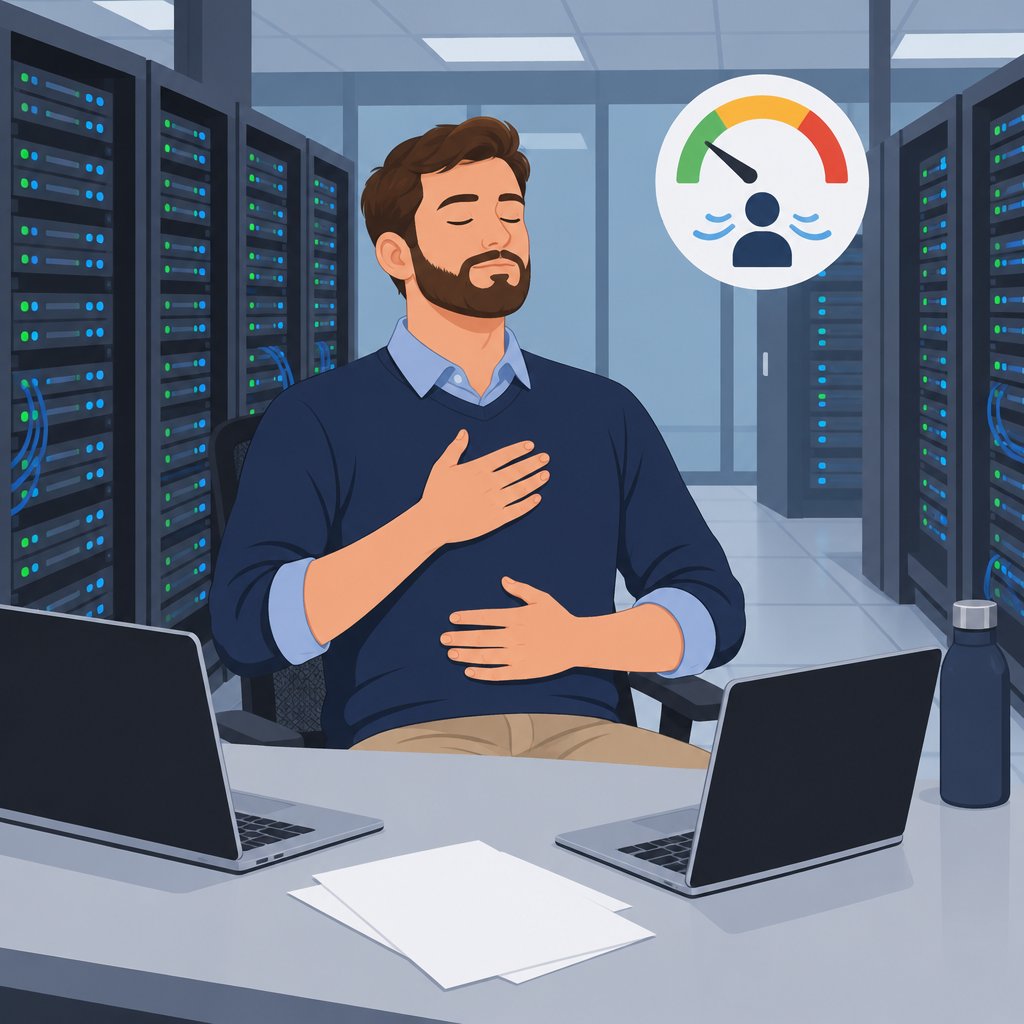
Deep breathing uses slow, controlled breaths to encourage your body’s relaxation response.
This technique can ease physical stress signs, including an elevated heart rate and shallow breathing.
When pressure rises, pause briefly, breathe deeply, and regain control before responding.
Meditation for Focus and Balance
Meditation provides dedicated time for relaxation, focused attention, and mental recovery.
During meditation, focus on your breathing and observe thoughts without becoming attached to them.
Consistent practice can encourage self-awareness, resilience, acceptance, and emotional balance.
Support Networks and Professional Assistance
Trusted colleagues, friends, and family members can provide encouragement during demanding situations.
Colleagues may also offer useful perspectives when technical responsibilities feel overwhelming.
If stress becomes difficult to manage, consider contacting a therapist, counselor, or mental health professional.
Professional support can provide tools and resources for managing stress and protecting your well-being.
See Related Content: How IT Consultants Improve Business Operations
Prioritize Self-Care
- SysAdmins should prioritize self-care practices.
- Regular exercise, healthy eating, and sufficient sleep can reduce stress.
- Additionally, set boundaries, take breaks, and practice relaxation techniques.
Explore Further: Importance of Version Control for Web Developers
Establishing Effective Communication
Effective communication helps SysAdmins handle high-stress situations with greater clarity.
When overwhelming tasks and tight deadlines arise, communicate clearly with team members.
Open discussions about challenges and concerns prevent misunderstandings and address issues promptly.
Additionally, colleagues can offer valuable insights and support when you explain your stressors.
Supervisors and HR can guide workload adjustments and stress management efforts.
Furthermore, expressing concerns about workloads or unrealistic expectations can encourage more manageable working conditions.
Transform Your Career Today
Unlock a personalized career strategy that drives real results. Get tailored advice and a roadmap designed just for you.
Start NowClear expectations help teams distribute tasks evenly and reduce individual pressure.
Seeking feedback about performance and stress management strategies supports continued personal growth.
Strong communication channels help SysAdmins navigate demanding situations successfully.
Uncover the Details: Case Studies: Successful E-commerce Specialist Projects
Time Management for Sysadmins
Time management gives sysadmins a practical way to balance workloads and deadlines.
During high stress, deliberate planning helps maintain focus and supports steadier decisions.
Effective techniques can improve productivity, reduce stress, and support a healthier work-life balance.
Prioritizing Work and Sharing Responsibilities
First, rank tasks according to urgency, importance, and their effect on current responsibilities.
Set realistic goals so critical work receives attention before less important activities.
Meanwhile, delegate suitable responsibilities to team members to distribute workload and improve efficiency.
Organizing Schedules and Daily Tasks
Create a daily schedule that assigns dedicated time to each task.
Break large assignments into smaller, manageable steps to make progress easier.
Planning in advance keeps work organized and helps sysadmins track deadlines without feeling overwhelmed.
Reducing Procrastination and Distractions
Start scheduled tasks promptly instead of postponing work that could create additional pressure.
Limit distractions by protecting focused work periods and following the planned schedule.
Consequently, consistent action supports productivity and reduces stress when deadlines approach.
See Related Content: Penetration Testing: Beyond the Basics
Stress Reduction Techniques for SysAdmins
SysAdmins can use practical techniques to make demanding technical work more manageable.
These approaches support mental well-being while SysAdmins manage IT systems.
Furthermore, efficient processes can reduce pressure during challenging work periods.
- Stress reduction techniques help SysAdmins maintain mental well-being.
- Time management tools help prioritize tasks and allocate appropriate time for each responsibility.
- Automation software streamlines repetitive tasks and reduces manual workload.
- Workflow optimization strategies improve efficiency when managing IT systems.
- Stress management techniques help SysAdmins cope with high-pressure situations.
Benefits of Stress Reduction Techniques
Applying these techniques can strengthen daily performance and support healthier working habits.
They also help SysAdmins respond more effectively when workplace demands increase.
Additionally, consistent stress management can support collaboration during demanding situations.
- Stress reduction lowers burnout risk and improves job satisfaction.
- It enhances productivity by helping SysAdmins focus on critical tasks.
- Effective stress management promotes a healthier work-life balance.
- It increases resilience and adaptability during unexpected challenges.
- It improves communication and teamwork in high-stress environments.
Resources for Learning Stress Management Techniques
SysAdmins can explore several resources to develop practical stress management skills.
Different formats allow individuals to choose learning methods that suit their needs.
Supportive communities can also encourage shared learning and practical coping strategies.
- Online courses can teach stress management skills tailored for IT professionals.
- Workshops and seminars can introduce mindfulness and relaxation techniques for SysAdmins.
- Books and articles can explain stress reduction practices for IT professionals.
- Mobile apps can provide guided meditation and breathing exercises.
- Support groups and forums let SysAdmins share experiences and coping strategies.
Strategies for Sustaining SysAdmin Well-Being
As a SysAdmin, you must manage high-stress situations to protect productivity and well-being.
Self-care supports recovery during demanding periods.
Take breaks, exercise, and practice mindfulness to recharge and reduce stress.
Clear communication helps teams address issues promptly.
Keep colleagues and superiors informed when you need support.
Meanwhile, manage time by prioritizing tasks, delegating when possible, and setting realistic goals.
These choices help prevent burnout and sustain performance.
Your well-being matters, and seeking help supports resilience rather than signaling weakness.
By combining these practices, you can handle demanding SysAdmin responsibilities more effectively.
Supportive work environments also help you face challenges without feeling alone.
Additional Resources
Google search results for How to Handle High-Stress Situations as a SysAdmin Information Technology
Bing search results for How to Handle High-Stress Situations as a SysAdmin Information Technology


