




Introduction
Disaster response coordinators manage resources and teams during disasters.
A career in disaster response coordination helps save lives and restore communities after emergencies.
Key responsibilities include emergency planning, resource allocation, communication, and logistics management.
Understanding the Role of a Disaster Response Coordinator
A disaster response coordinator directs emergency efforts during disasters.
This professional leads teams, applies response plans, and maintains clear communication.
Consequently, the coordinator helps response activities operate efficiently during crises.
Core Skills for Crisis Coordination
Several abilities support effective performance in this demanding role.
Clear communication helps coordinators relay information during emergencies.
Strong leadership guides and motivates response teams under pressure.
- Coordinators communicate information effectively during crises.
- They organize tasks and manage resources efficiently.
- They solve problems quickly and effectively.
- They make critical decisions in high-stress situations.
Importance of Effective Disaster Coordination
Effective coordination strengthens the organization and delivery of disaster response activities.
It also connects response teams, stakeholders, organizations, and agencies.
Moreover, coordinated action helps responders address crises more efficiently.
- Coordination supports timely resource deployment to affected areas.
- It prevents duplicated efforts during response activities.
- It maximizes the impact of response work.
- It facilitates seamless communication among response teams and stakeholders.
- It improves response efficiency and effectiveness.
- It enhances collaboration between involved organizations and agencies.
These qualities support successful coordination across emergency response activities.
Education and Training for Disaster Response Coordination
Building this career requires relevant education, focused training, and practical experience.
These preparations help candidates develop knowledge for emergency planning and disaster response work.
Additionally, continued learning can strengthen professional capabilities over time.
Academic Qualifications for Disaster Response Careers
A bachelor’s degree in emergency management, public administration, or a related field typically meets employer requirements.
However, some employers prefer candidates with master’s degrees for higher-level positions.
Courses in disaster management, risk assessment, and emergency planning can provide valuable preparation.
- A bachelor’s degree can establish foundational knowledge for emergency management work.
- A master’s degree may improve qualifications for advanced positions.
- Relevant coursework can strengthen understanding of disaster planning and risk assessment.
Certifications and Professional Training Programs
Professional certifications can enhance a candidate’s credentials in disaster response coordination.
Furthermore, structured training programs can develop practical knowledge for emergency situations.
Seminars, workshops, and conferences also help professionals maintain current knowledge.
- The Certified Emergency Manager certification can strengthen professional credentials.
- The Certified Business Continuity Professional certification can support career development.
- FEMA and Red Cross training programs can provide valuable skills and knowledge.
- Seminars, workshops, and conferences can support continuous professional education.
Internships and Volunteer Experience
Internships allow candidates to gain hands-on experience with emergency management agencies and government organizations.
Meanwhile, nonprofit placements can expose participants to practical disaster response activities.
Volunteering can also help candidates develop skills and build professional connections.
- Interning with emergency management agencies can provide practical workplace experience.
- Government agency internships can introduce candidates to emergency operations.
- Nonprofit placements can offer experience supporting disaster response missions.
- Community event volunteering can help participants develop practical response skills.
- A work portfolio can showcase projects and capabilities to potential employers.
Combining education, certifications, and practical experience can support career growth in this field.
Therefore, candidates should continue seeking opportunities to learn, practice, and develop professionally.
Each preparation step can bring aspiring coordinators closer to making a positive impact during crises.
You Might Also Like: Typical Day in the Life of a Disaster Response Coordinator
Building a Strong Disaster Response Network
Strong professional connections can support a career in disaster response coordination.
These relationships can provide support, resources, and opportunities for professional growth.
Moreover, an active network can strengthen collaboration throughout the disaster response community.
- Join professional organizations related to disaster response.
- Attend conferences and networking events.
- Establish relationships with key stakeholders in the field.
Joining Professional Organizations
Professional organizations can connect you with experienced disaster response professionals.
For example, IAEM and NEMA offer resources, training, and networking opportunities.
These opportunities can help you develop connections and advance your coordination career.
Attending Conferences and Networking Events
Conferences can help you learn about current trends and developments in disaster response.
Additionally, networking events create opportunities to meet professionals and potential employers.
Building relationships at these events can support future collaborations and career opportunities.
Establishing Stakeholder Relationships
Relationships with key stakeholders can support long-term career development.
Relevant stakeholders include government agencies, nonprofit organizations, private companies, and other professionals.
Transform Your Career Today
Unlock a personalized career strategy that drives real results. Get tailored advice and a roadmap designed just for you.
Start NowNurturing these connections can provide valuable insights, support, and advancement opportunities.
By building this network, you can strengthen your position within the disaster response community.
Delve into the Subject: Work Environment and Conditions for ICE Agents
Importance of Quick Thinking and Sound Decisions During Emergencies
In disaster response coordination, every second matters during emergencies.
Quick thinking helps professionals assess urgent needs and prioritize response tasks.
Sound decisions support effective relief coordination when pressure makes situations difficult.
Training Opportunities for Crisis Management Skills
Various training opportunities can strengthen crisis management skills.
Courses in emergency management, disaster response, incident command systems, and crisis communication build useful knowledge.
Furthermore, workshops, seminars, and conferences provide insights and tools for improving decision-making.
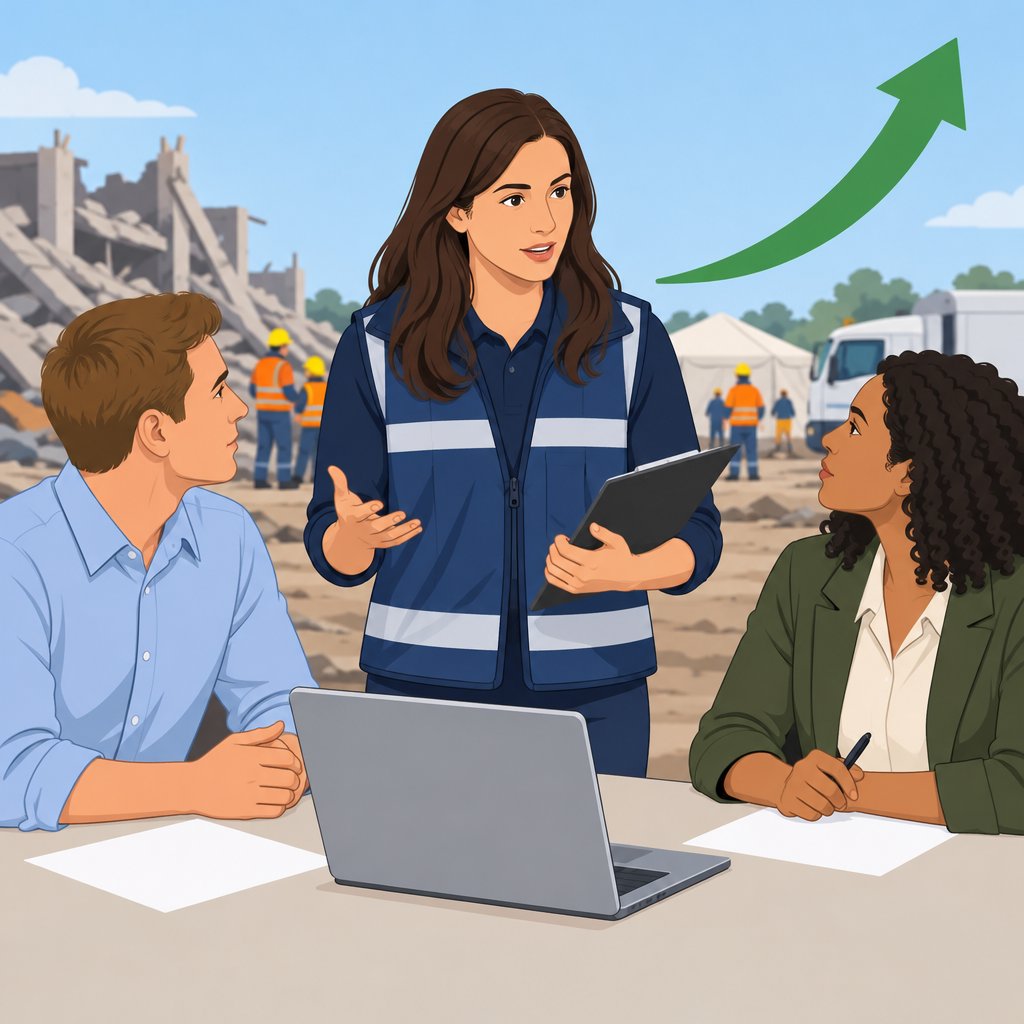
Learning from Past Disaster Response Scenarios
Studying past disaster response scenarios can strengthen crisis management and decision-making skills.
Case studies of successful responses reveal approaches that support effective emergency coordination.
Likewise, unsuccessful responses show what may fail in different situations.
That knowledge can guide future planning and help professionals execute response efforts more effectively.
Explore Further: Cybersecurity Specialist: Common Challenges and Solutions
Hands-On Training and Simulation Experience
- Participating in disaster response drills and exercises
- Working with local emergency management agencies
- Volunteering with disaster response organizations
Hands-on training and simulations help candidates build practical experience for disaster response coordination.
By participating actively, individuals develop skills and knowledge for responding effectively to emergencies.
Furthermore, these activities strengthen decision-making abilities within controlled response environments.
They also let participants test response strategies before facing real emergencies.
Disaster response drills allow participants to practice response strategies in controlled environments.
These exercises simulate real-life scenarios and help participants refine their emergency procedures.
Additionally, participants can strengthen their ability to apply response strategies during simulated emergencies.
Working with local emergency management agencies offers valuable insight into disaster coordination efforts.
Through collaboration, individuals learn about the roles and responsibilities involved in emergency response.
Moreover, this experience provides practical exposure to managing emergency activities.
Volunteering with disaster response organizations offers another path toward practical field experience.
These organizations often provide training opportunities and hands-on involvement for their volunteers.
Meanwhile, volunteers can support disaster response operations and contribute to community resilience.
Together, drills, agency collaboration, and volunteering build relevant experience for disaster response coordination.
These opportunities help individuals develop the skills, knowledge, and expertise required for emergency response work.
Therefore, hands-on participation can support meaningful career development in this field.
Delve into the Subject: Interview Tips for Aspiring Deputy Sheriffs
Building Resilience and Emotional Intelligence
Self-care protects coordinators from burnout during demanding disaster response work.
Regular breaks, nutritious meals, and exercise help coordinators maintain mental wellness during crisis situations.
These practices support steady performance while coordinators manage challenging responsibilities.
Self-Care and Mental Wellness in High-Stress Environments
Disaster response coordination requires consistent attention to personal mental wellness.
Taking breaks, eating well, and exercising can help coordinators manage stress during crisis situations.
Therefore, coordinators should treat self-care as an important part of sustaining effective response work.
Coping Mechanisms for Traumatic Situations
Healthy coping mechanisms help coordinators process traumatic situations without ignoring difficult emotions.
For example, coordinators can talk with counselors or debrief with colleagues after difficult events.
Additionally, mindfulness and journaling can help them reflect on and process emotional experiences.
Transform Your Career Today
Unlock a personalized career strategy that drives real results. Get tailored advice and a roadmap designed just for you.
Start NowEmotional Intelligence for Supporting Others
Emotional intelligence helps coordinators support team members and affected individuals with greater understanding.
Empathy, active listening, and effective communication strengthen interactions during difficult circumstances.
By understanding and managing their emotions, coordinators can better assist both their teams and affected individuals.
Staying Updated on Disaster Response Practices
- Professionals follow industry publications and websites for current news.
- Professionals attend workshops and seminars about disaster response coordination.
- Professionals collaborate with colleagues to share knowledge and expertise.
Professionals can track changing practices by following industry publications and websites for current disaster response news.
These sources often describe new developments, emerging technologies, and methods that can improve coordination skills.
Furthermore, regular reading helps practitioners remain informed and prepare for changing demands.
Workshops and seminars provide opportunities to learn from experienced professionals.
Participants can gain knowledge, practical skills, and fresh perspectives through these educational events.
Additionally, these gatherings create opportunities to exchange ideas with other disaster response professionals.
Collaboration strengthens professional learning because colleagues share knowledge and experiences.
By discussing different approaches, practitioners can refine their response coordination skills.
Consistent learning helps professionals build expertise and remain prepared for evolving disaster response needs.
Career Growth in Disaster Response Coordination
A career in disaster response coordination allows professionals to support communities during emergencies and natural disasters.
These professionals plan, organize, and coordinate relief efforts when communities need assistance.
Therefore, this field offers meaningful opportunities to strengthen emergency support and protect affected communities.
Education and Training Opportunities
Relevant education helps candidates develop knowledge for disaster response coordination.
Additionally, courses and certifications can strengthen skills in emergency management and crisis communication.
Practical training also improves a professional’s ability to respond effectively during disasters.
Continuous Professional Development
Continuous learning helps disaster response coordinators remain familiar with current practices and trends.
Furthermore, workshops, conferences, and seminars can expand knowledge and professional connections.
Ongoing development supports career advancement and strengthens disaster response capabilities.
Additional Resources
Bing search results for How to Build a Career in Disaster Response Coordination Protective Services


