




Understanding the Role of a Film Director
A film director holds a crucial position in the filmmaking process.
They oversee the artistic and dramatic aspects of a film.
Directors make pivotal decisions about the film’s vision and storytelling approach.
Their guidance shapes performances, visual style, and narrative pacing.
The Significance of Cinematography
Cinematography plays a vital role in creating visually compelling movies.
It involves the art and technique of capturing images on film or digital media.
A cinematographer, or director of photography, translates a director’s vision into visual storytelling.
The interplay of lighting, camera angles, and movement creates emotional resonance with the audience.
The Director’s Influence on Cinematography
Directors significantly impact cinematography through their distinct visions.
They establish the film’s tone and aesthetic, guiding the cinematographer’s choices.
Furthermore, their interpretation of the script sets the framework for visual storytelling.
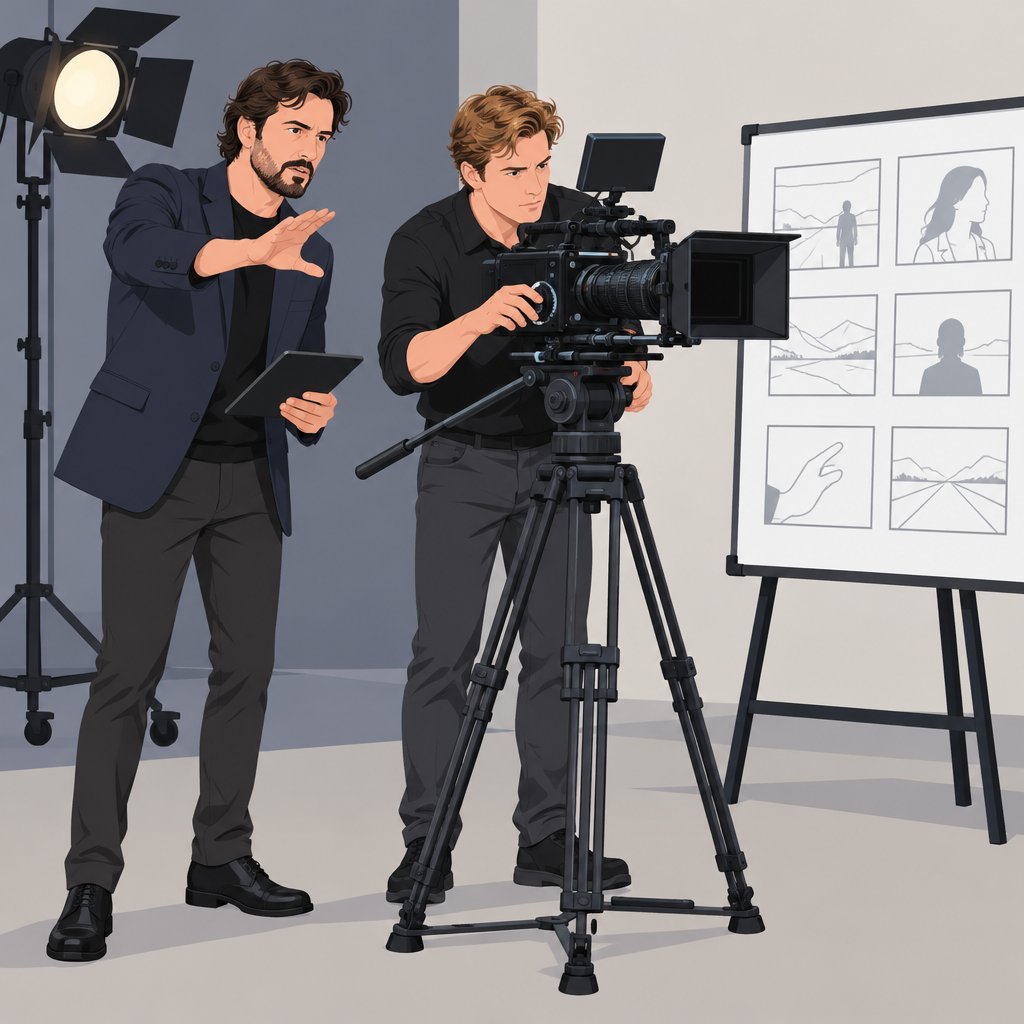
The director and cinematographer discuss concepts and imagery during crucial collaboration.
For instance, Martin Scorsese uses dynamic camera movement to enhance storytelling.
In contrast, Wes Anderson prefers meticulously composed shots for a whimsical feel.
These stylistic choices directly influence lighting, camera angles, and color palettes.
Additionally, directors bring personal experiences into their films’ visual aspects.
Their backgrounds and artistic influences often shape the film’s visual narrative.
For example, a director’s preference for practical effects can inspire creative camera techniques.
These techniques can evoke authenticity.
Consequently, a film director’s impact on cinematography remains profound and multifaceted.
Their decisions guide visual elements that captivate audiences.
By setting tone, mood, and pace, directors create unforgettable cinematic experiences.
Therefore, collaboration with cinematographers remains essential in filmmaking.
Visual Style Through Directorial Collaboration
Film directors shape a movie’s visual style through close collaboration with cinematographers.
Together, they create memorable imagery that supports the film’s themes, mood, and emotional undertones.
Directors communicate their vision through focused discussions about the story’s intended emotional effect.
They choose camera angles, lighting, and framing to guide the audience’s perception.
Moreover, camera distance influences the viewer’s relationship with each subject.
A close camera position creates intimacy and strengthens the feeling of connection.
By contrast, a wide shot establishes context and reveals the surrounding setting.
Lighting also supports visual storytelling and helps define a scene’s emotional tone.
Directors may request soft, diffused light for gentle scenes.
Alternatively, harsh light and dramatic shadows can create tension or despair.
These choices can also evoke hope, joy, and other emotional responses.
Furthermore, directors carefully position subjects within each frame.
This framing shapes composition, visual balance, and the audience’s understanding of character relationships.
It can also communicate power dynamics without relying on dialogue.
Several filmmakers demonstrate how distinctive visual choices can influence cinematic language.
- Stanley Kubrick uses meticulous composition and symmetrical framing.
- Wes Anderson uses vibrant color palettes and quirky symmetry.
- Alfred Hitchcock uses suspenseful angles and innovative shot techniques.
- Martin Scorsese uses dynamic camera movements and gritty realism.
- Ezra Miller uses unique visual storytelling in avant-garde films.
Each filmmaker reflects artistic intentions and thematic concerns through visual decisions.
Meanwhile, directors and cinematographers build a cohesive visual language through sustained collaboration.
Transform Your Career Today
Unlock a personalized career strategy that drives real results. Get tailored advice and a roadmap designed just for you.
Start NowAs filmmakers develop scenes, they continually consider the story’s emotional core.
They craft images that capture attention while serving the narrative.
This balance connects visual style with emotional impact and deepens audience engagement.
By studying influential filmmakers, aspiring artists can better understand the importance of visual choices.
Ultimately, thoughtful imagery draws viewers into the film’s world.
Directorial decisions about angles, lighting, and framing therefore shape the film’s visual narrative.
A strong partnership with cinematographers helps directors establish a distinctive and cohesive style.
This collaboration enriches storytelling and strengthens the viewer’s experience on screen.
Collaborating with Cinematographers
Directors and cinematographers strongly influence a film’s visual storytelling.
Their collaboration combines distinct perspectives into a unified artistic vision.
When both professionals communicate effectively, their partnership creates a compelling visual narrative.
The Importance of Collaboration
A strong partnership helps directors and cinematographers achieve a successful film.
Both professionals contribute different strengths while pursuing the same creative direction.
Consequently, their cooperation supports consistent visual decisions throughout production.
- Shared Vision: Directors and cinematographers align their visions so every shot reflects the story’s emotional tone.
- Creative Exchange: Open discussions encourage ideas that can produce innovative visual techniques.
- Problem Solving: Collaboration helps both professionals address filming challenges while preserving visual quality.
- Trust: Mutual trust creates a safe space for sharing ideas without hesitation.
- Enhancing Mood: Cinematographers use lighting and camera movement to strengthen the director’s intended mood.
Open Communication and Mutual Understanding
Effective communication helps directors and cinematographers maintain a productive working relationship.
Early conversations establish shared expectations for interpreting the story visually.
Regular dialogue also allows both professionals to refine their choices during filming.
- Script Discussions: Early script discussions help both professionals understand the story deeply.
- Visual References: Reference materials give directors and cinematographers a common visual foundation.
- Feedback Loops: Continuous feedback encourages improvements and supports necessary adjustments during shooting.
- Receptiveness to Ideas: Openness allows new perspectives to inspire fresh filming approaches.
- Regular Meetings: Frequent check-ins maintain alignment and clarify changing production goals.
Examples of Successful Director-Cinematographer Partnerships
Several notable partnerships demonstrate how teamwork can produce distinctive cinematography.
Each collaboration reflects a different relationship between directorial intention and cinematographic execution.
These examples show how shared decisions can shape memorable cinematic images.
- Martin Scorsese and Robert Richardson: Their work on “The Aviator” connected rich visuals with the film’s themes.
- Alfonso Cuaron and Emmanuel Lubezki: Their collaboration on “Gravity” used innovative camera movement to amplify tension.
- Christopher Nolan and Hoyte van Hoytema: Their work on “Dunkirk” synchronized camera techniques with the film’s intense atmosphere.
- Wes Anderson and Robert Yeoman: Their partnership supported symmetrical compositions and vibrant color palettes.
- James Cameron and Mauro Fiore: Their work on “Avatar” used cinematography to capture Pandora’s visual world.
The Impact of Director-Cinematographer Collaboration
Cohesive collaboration can significantly influence a film’s cinematography.
Directors and cinematographers can develop visual choices that support the narrative’s emotional beats.
Their combined work can also create images that remain memorable for audiences.
- Visual Consistency: A unified approach creates coherence in the film’s style and mood.
- Innovative Techniques: Collaboration encourages experimentation with fresh visual methods.
- Enhanced Storytelling: Visual elements can strengthen the narrative and its emotional moments.
- Striking Compositions: Teamwork can produce framing that directs attention toward important story elements.
- Memorable Scenes: Successful partnerships often create lasting visuals that resonate with audiences.
Ultimately, collaboration shapes the relationship between a film’s story and its visual presentation.
Open communication helps directors and cinematographers create cohesive visual storytelling.
As filmmakers pursue new artistic possibilities, their partnership remains vital to innovative storytelling.
Learn More: Case Studies: Successful Media Buying Campaigns
Setting the Mood and Tone
Film directors shape a movie’s atmosphere through deliberate cinematography choices.
They select colors, lighting styles, and camera movements to communicate mood and tone.
Each visual decision influences the audience’s emotions and deepens engagement with the narrative.
Consequently, cinematography guides viewers through the story’s emotional experience.
Color Psychology in Film
Color evokes feelings, establishes moods, and communicates important themes.
Directors use color deliberately to strengthen audience engagement and shape perceptions.
For example, different colors commonly suggest distinct emotional responses.
- Red: Conveys passion, anger, or danger.
- Blue: Evokes calmness, sadness, or detachment.
- Green: Suggests nature, tranquility, or envy.
- Yellow: Represents happiness, optimism, or caution.
- Purple: Indicates luxury, mystery, or spirituality.
These associations allow directors to influence how audiences interpret individual scenes.
In “The Sixth Sense,” M. Night Shyamalan uses color to suggest fear and unease.
The film’s cool color palette reinforces its chilling atmosphere.
Lighting Techniques
Lighting establishes a scene’s emotional tone and influences audience reactions.
Directors select different lighting styles to create specific visual effects.
Therefore, lighting can make a setting feel cheerful, realistic, dramatic, or mysterious.
Transform Your Career Today
Unlock a personalized career strategy that drives real results. Get tailored advice and a roadmap designed just for you.
Start Now- High-key Lighting: Creates bright, even illumination and an open atmosphere.
- Low-key Lighting: Produces dramatic shadows and contrast, heightening tension and intrigue.
- Natural Lighting: Mimics daylight and creates authenticity and realism.
- Chiaroscuro Lighting: Uses stark contrasts between light and shadow for dramatic effect.
In “Blade Runner,” Ridley Scott employs low-key lighting to create a dystopian ambiance.
Shadows dominate the frame and reinforce the film’s themes of isolation and paranoia.
As a result, the lighting makes the fictional world feel tense and uncertain.
Camera Movement and Framing
Camera movement and framing significantly influence the mood of a scene.
Directors adjust camera positions and movements to shape audience perception.
These choices can reveal details, create intimacy, or intensify suspense.
- Panning: Creates expansiveness or reveals important details.
- Dolly Shots: Move closer or farther away, changing perceptions of intimacy.
- Static Shots: Maintain focus on subjects and build tension or anticipation.
- Handheld Shots: Instill realism and often support intense moments.
These techniques reveal how directors translate their vision into visual movement.
In “Children of Men,” Alfonso Cuaron uses long, handheld takes to build urgency.
That approach immerses viewers in the film’s chaotic world.
Combining Elements for Emotional Impact
Directors often combine several cinematography elements to create a distinctive mood.
They integrate color, lighting, and camera movement into a unified emotional experience.
Furthermore, successful films demonstrate how visual choices can support narrative themes.
- “Atonement” (2007): Joe Wright uses lush greens and soft lighting during the first half.
- This combination conveys romantic nostalgia and innocence.
- “Her” (2013): Spike Jonze uses warm colors and gentle lighting.
- That approach creates an intimate and wistful atmosphere around love and longing.
- “The Godfather” (1972): Francis Ford Coppola uses low-key lighting and muted colors.
- This technique establishes a somber tone around family and power struggles.
These examples show how directors create distinct moods through deliberate cinematography choices.
Each decision influences the viewer’s emotional journey through the story.
As a result, combined visual elements can make a film’s atmosphere memorable.
Audience Interpretation
Directors seek connections between films and their audiences.
Cinematography can elicit strong reactions through color, lighting, and movement.
These visual elements guide emotions while preserving the film’s artistic direction.
Moreover, viewers may interpret the same scene in different ways.
Personal experiences shape individual responses to cinematographic choices.
Directors acknowledge this subjectivity while pursuing broad emotional resonance.
The Lasting Impact of Cinematography
Film directors give cinematography an important role in visual storytelling.
They use color, lighting, and camera movement to strengthen mood and emotional tone.
Studying notable directors helps audiences appreciate the artistry behind filmmaking.
Viewers encounter powerful narratives shaped by a carefully developed visual language.
Directing remains a collaborative process that requires knowledge of cinematography’s nuances.
This partnership ultimately produces memorable cinematic experiences.
Find Out More: How to Build a Winning Media Sales Pitch
Directors use cinematography to deepen narratives and strengthen emotional meaning.
Visual choices connect storytelling with audience feeling.
These techniques help viewers understand characters, themes, and dramatic developments.
Cinematographic Techniques That Strengthen Storytelling
Framing, movement, lighting, color, and lenses guide how viewers experience each scene.
Directors combine these elements to support narrative purpose and emotional direction.
Consequently, purposeful visuals can make the storytelling experience more immersive.
- Framing: Directors guide audience attention through deliberate framing choices.
- A close-up can create intimacy, while a wide shot can suggest isolation.
- Camera Movement: Smooth movement can create calmness and visual stability.
- Abrupt, shaky movement can heighten anxiety, tension, or chaos.
- Lighting: Bright lighting can suggest joy, while shadows can create fear or mystery.
- Subtle lighting adjustments can shape a scene’s emotional tone.
- Color Palette: Warm colors often suggest positivity, while cool colors can communicate sadness or detachment.
- Color choices can strengthen a film’s emotional resonance.
- Lens Choices: Wide-angle lenses can exaggerate a character’s surroundings.
- Telephoto lenses can isolate characters within their environments.
Each element contributes to a cohesive visual language.
Moreover, aligned visuals can clarify themes and intensify emotional responses.
As a result, audiences engage more deeply with the narrative.
Visual Metaphors and Symbolic Meaning
Directors use visual metaphors to create additional layers of narrative meaning.
These choices encourage viewers to interpret themes beyond the literal action.
Recurring images and carefully chosen settings can express emotional or thematic ideas.
Transform Your Career Today
Unlock a personalized career strategy that drives real results. Get tailored advice and a roadmap designed just for you.
Start Now- Recurring Imagery: Repeated objects or colors can represent particular themes or emotional states.
- For example, a broken clock may symbolize a character’s stagnation.
- Environmental Symbolism: Settings can communicate symbolic meaning.
- An abandoned house might signify lost hope, while a blooming garden could represent renewal or growth.
- Character Reflections: Mirrors and reflective surfaces can reveal inner struggles.
- A character facing a mirror may symbolize self-reflection or internal conflict.
- Body Language and Composition: Spatial arrangements can symbolize a character’s emotional journey.
- A hunched posture may express defeat, while an upright posture can show resilience.
- Contrast and Juxtaposition: Opposing visuals can add narrative depth.
- Light placed against darkness can symbolize a struggle between good and evil.
Furthermore, these metaphors invite audiences to explore complex themes.
Careful visual construction allows viewers to discover multiple layers of meaning.
Therefore, symbolism enriches the audience’s understanding of the narrative.
How Visual Choices Shape Audience Interpretation
Cinematographic decisions influence how audiences interpret events and characters.
Directors guide emotional responses by controlling what viewers see and feel.
This influence can continue after the film ends.
- Creating Suspense: Strategic lighting and framing can build anticipation.
- A slowly revealed shadow may create anxiety before a character appears.
- Shaping Empathy: Close-ups can strengthen connections between audiences and characters.
- Intimate portrayals can encourage viewers to share characters’ struggles and emotions.
- Setting Tone: Color palettes and lighting establish a film’s emotional tone.
- Inconsistent visual choices can confuse the audience’s emotional alignment.
- Building Context: Cinematography can place characters within meaningful environments.
- A crumbling setting may reflect a character’s emotional condition.
- Highlighting Themes: Repeated visuals can emphasize important thematic ideas.
- Such patterns can guide audience perception and encourage deeper reflection.
Viewers may analyze these choices to understand character motivations and story arcs.
In addition, visual patterns can shape interpretations beyond immediate emotional reactions.
Ultimately, cinematography can leave lasting impressions on audiences.
Cinematography as a Narrative Vehicle
Cinematography functions as more than a visual element.
It carries narrative information, emotional meaning, and thematic depth.
Through visual artistry, directors communicate complex ideas with greater impact.
Framing, symbolism, movement, color, lighting, and lenses work together to shape cinematic meaning.
These choices create immersive worlds that connect audiences with the story.
They also encourage viewers to question themes and examine emotional responses.
Consequently, cinematography can transform storytelling and leave a lasting mark on viewers.
Learn More: How to Identify the Right Influencers for Your Brand
Evoking Emotions
Directors shape emotional tone through cinematography.
They employ visual techniques to engage audience feelings.
Camera movement, framing, and composition provide three foundations for this emotional influence.
Camera Movement
Camera movement strongly shapes the audience’s emotional experience.
It can amplify tension, create serenity, and guide viewers through emotional journeys.
Directors use several movement techniques to influence these responses.
- Tracking Shots: Following a character can create intimacy and involve viewers in that journey.
- Dolly Zoom: This technique alters perspective dramatically and can evoke confusion or anxiety during tense scenes.
- Handheld Camera: This approach creates realism and immerses audiences in chaotic or emotional moments.
- Slow Motion: Slowing action lets viewers savor poignant moments and notice character reactions.
Framing
Framing controls what viewers see within each shot.
It can communicate important ideas without spoken dialogue.
Directors use framing choices to encourage specific emotional responses.
- Close-ups: These shots reveal subtle facial emotions and strengthen connections with characters’ inner thoughts.
- Extreme Wide Shots: These shots place characters within their environments and can evoke isolation or vulnerability.
- Over-the-shoulder Shots: This framing presents a character’s perspective and builds empathy during dialogue.
- Two-Shot Compositions: These shots emphasize relationships and can create tension or intimacy.
Composition
Composition determines how visual elements appear within a frame.
These arrangements influence how viewers perceive emotions throughout a film.
Several composition techniques help directors guide attention and feeling.
- Rule of Thirds: Positioning subjects along grid lines creates visual interest and directs attention toward critical elements.
- Leading Lines: These lines guide the viewer’s gaze and can suggest movement, urgency, or foreboding.
- Symmetry: Symmetrical arrangements can evoke calmness, while asymmetry can create discomfort or anticipation.
- Color Use: Warm colors often suggest comfort, while cool colors can communicate sadness or coldness.
Powerful Emotional Moments in Film
Many directors combine cinematographic techniques to create powerful emotional moments.
These choices can connect visual details with characters’ experiences.
The following films demonstrate how cinematography can intensify audience responses.
- “The Silence of the Lambs” (1991): Close-ups of Clarice Starling convey vulnerability and deepen audience connection.
- “Schindler’s List” (1993): Black and white imagery amplifies historical horror, while the red coat creates distress.
- “Gravity” (2013): The vastness of space creates isolation, while long takes intensify Dr. Ryan Stone’s solitude.
- “Her” (2013): Soft colors and gentle camera movements evoke loneliness and longing.
Cinematic Emotional Resonance
Directors take calculated risks when they manipulate cinematography.
Their choices can give scenes emotional depth and lasting resonance.
Carefully crafted movement, framing, and composition can evoke intense feelings.
These emotional experiences can remain with audiences long after the credits roll.
They can influence perspectives and encourage personal introspection.
Through visual artistry, directors invite audiences to experience the human condition.
A director’s role extends beyond storytelling through this emotional use of cinematography.
As filmmakers continue evolving, cinematic techniques will remain important to emotional resonance.
Transform Your Career Today
Unlock a personalized career strategy that drives real results. Get tailored advice and a roadmap designed just for you.
Start NowFind Out More: Content Creation: Setting Realistic Goals and KPIs
Creating Seamless Visual Transitions
Scene transitions guide viewers smoothly from one moment to another.
Sudden changes can interrupt attention and weaken the story’s emotional flow.
Therefore, directors plan transitions carefully with cinematographers.
- Match cuts connect separate scenes through visual similarities.
- Dissolves blend shots together and soften changes between moments.
- Visual motifs repeat images or colors and strengthen continuity.
Match Cuts and Visual Connections
Match cuts connect two images through similar shapes, movements, or meanings.
This technique links separate scenes while encouraging viewers to compare their ideas.
As a result, directors can express thematic relationships without additional dialogue.
In 2001: A Space Odyssey, Stanley Kubrick matches a tossed bone with a spacecraft in orbit.
The transition connects primitive tools with advanced technology.
It also symbolizes evolution and progress across an immense span of time.
Wes Anderson uses visual symmetry similarly in The Royal Tenenbaums.
One match cut connects the protagonist’s childhood with adulthood.
The repeated composition emphasizes character development through visual contrast.
Dissolves and Emotional Continuity
Dissolves merge one shot gradually into another.
This transition can suggest passing time or changing emotions.
It also softens visual shifts and preserves audience immersion.
In Casablanca, dissolves connect characters through pivotal experiences.
The gradual blending allows emotional weight to accumulate without abrupt interruption.
Directors can also use dissolves to create dreamlike sequences.
In Inception, Christopher Nolan uses transitions to move between dream levels.
These shifts reinforce the film’s complex narrative structure.
Consequently, the transition itself becomes part of the storytelling.
Visual Motifs and Narrative Unity
Visual motifs repeat images, colors, or shapes throughout a film.
These recurring elements provide visual anchors for the audience.
They can also reinforce themes while connecting distant narrative moments.
Barry Jenkins uses color motifs prominently in Moonlight.
The recurring colors reflect the protagonist’s emotional journey.
Similar visual elements connect important stages of the character’s life.
Therefore, the motifs help viewers follow the narrative and feel its emotional changes.
Innovative Transition Techniques in Film
Many directors expand traditional transitions to create distinctive cinematic experiences.
They combine editing, movement, color, and composition to guide audience attention.
These choices can invite interpretation while preserving narrative momentum.
- In Birdman, Alejandro Gonzalez Inarritu uses long takes and seamless transitions.
- This approach makes the film resemble one continuous shot.
- In The Godfather, Francis Ford Coppola combines dissolves and match cuts.
- These techniques connect family life with criminal activity.
- In La La Land, Damien Chazelle uses color and choreographed transitions.
- The visual design reflects harmony between music and narrative.
- In Mad Max: Fury Road, George Miller combines rapid cuts with visual motifs.
- The resulting rhythm sustains the film’s relentless narrative drive.
Shared Planning for Consistent Transitions
Directors and cinematographers plan transitions around the film’s visual language.
They consider how framing, lighting, movement, and composition will connect scenes.
This planning helps each transition support the story’s structure and emotional direction.
Denis Villeneuve and Roger Deakins demonstrate this attention in Blade Runner 2049.
Deakins’ cinematography complements Villeneuve’s storytelling approach.
Their visual choices create an immersive experience for audiences.
As filmmaking techniques develop, directors continue exploring new ways to connect scenes.
These transitions can surprise viewers while keeping the narrative coherent.
Transform Your Career Today
Unlock a personalized career strategy that drives real results. Get tailored advice and a roadmap designed just for you.
Start NowTransitions as a Cohesive Storytelling Language
Transitions shape how audiences experience movement, time, and emotional change.
Match cuts, dissolves, and motifs each create continuity through different visual methods.
When directors use them purposefully, visual shifts become meaningful parts of the narrative.
Viewers can then recognize the artistry behind the films they watch.
Every carefully designed transition contributes to a cohesive and engaging cinematic journey.
Innovating Visual Techniques
Film directors continually advance cinematography by challenging established visual conventions.
Their experiments encourage new approaches to visual storytelling.
These innovations often involve camera angles, long takes, and experimental lighting.
Unconventional Camera Angles
Directors use unconventional camera angles to present distinctive perspectives.
These choices can strengthen emotional engagement and clarify dramatic meaning.
Different angles can also evoke contrasting feelings in viewers.
- High Angles: High-angle shots can make characters appear vulnerable or insignificant.
- Low Angles: Low-angle shots can give characters an imposing presence.
- Extreme Close-Ups: Extreme close-ups reveal details that express emotions beyond spoken words.
- Over-the-Shoulder Shots: Over-the-shoulder shots place viewers within a character’s immediate space.
- Bird’s Eye View: Aerial shots present broad perspectives that can suggest isolation or vastness.
Alfred Hitchcock used unconventional angles to build suspense.
His film “Vertigo” demonstrates how a high angle can create disorientation.
Similarly, Christopher Nolan experiments with angles to heighten tension and intrigue.
Long Takes and Continuous Visual Movement
Long takes preserve continuous action within one extended shot.
This approach can maintain tension while immersing viewers in each scene.
Directors carefully choreograph movement and transitions to sustain visual continuity.
- Enhanced Realism: Long takes can make viewers feel present within the action.
- Increased Tension: Extended shots build anticipation before scenes change or action escalates.
- Character Development: Continuous shots can reveal motivations and emotions more fully.
- Fluidity: Long takes can connect multiple story elements through natural visual movement.
Andrei Tarkovsky used long takes in films such as “Andrei Rublev.”
His approach created contemplative moments that deeply affected audiences.
Alejandro Gonzalez Inarritu used long takes in “Birdman” to strengthen tension and continuity.
Experimental Lighting Techniques
Lighting shapes the mood and narrative tone of cinematic scenes.
Directors can manipulate illumination to create unexpected visual effects.
Consequently, lighting choices add meaning beyond basic scene visibility.
- Chiaroscuro: Chiaroscuro contrasts light and shadow to create drama and tension.
- Color Gel Lighting: Color gels can quickly alter a scene’s emotional mood.
- Natural Lighting: Natural light can support authenticity and realism.
- Light as a Character: Some directors treat light as an active narrative element.
Orson Welles used chiaroscuro to evoke drama and tension.
Wong Kar-wai used vibrant colors to deepen emotional expression.
Denis Villeneuve used dynamic lighting in “Blade Runner 2049” to create a distinctive visual landscape.
The Lasting Influence of Visionary Directors
Visionary directors have expanded cinematography through persistent visual experimentation.
Their choices challenge filmmaking conventions and encourage new creative possibilities.
Several influential directors demonstrate this lasting effect through distinctive visual methods.
- Stanley Kubrick: Kubrick’s precise compositions elevated visual storytelling.
- Martin Scorsese: Scorsese’s dynamic camera work gives his films distinctive rhythm.
- David Lynch: Lynch’s surreal style encourages viewers to question reality.
- Guillermo del Toro: Del Toro uses color and texture to express emotional depth.
These directors show how bold artistic choices can transform cinematography.
Their visual experimentation continues to influence future filmmakers.
They also demonstrate how technique can support a film’s broader artistic purpose.
Future Directions in Visual Storytelling
Directors continue advancing cinematography by testing the limits of visual expression.
They combine unusual camera techniques, sustained shots, and inventive lighting.
As filmmakers pursue fresh approaches, visual storytelling will continue developing.
Lasting Value of Visual Craft
Film audiences often interpret stories through patterns created by framing, light, movement, and composition.
These patterns give each moment visual meaning beyond spoken dialogue.
Consequently, cinematography helps viewers notice emotions, themes, and changes in character.
Directors shape these patterns by deciding how images support the unfolding story.
Those decisions connect visual details with the film’s broader artistic direction.
Transform Your Career Today
Unlock a personalized career strategy that drives real results. Get tailored advice and a roadmap designed just for you.
Start NowViewers may remember a film through its images long after the credits end.
That memory reflects how visual choices organize feeling, attention, and interpretation.
Meanwhile, carefully designed frames can reveal character depth without direct explanation.
Visual storytelling therefore gives audiences another way to understand narrative meaning.
It also allows themes to emerge through what the film shows.
Behind each frame, directors and cinematographers devote sustained effort to visual precision.
They refine images so the finished film supports its intended experience.
Through this work, technical decisions become expressive parts of the story.
Their efforts demonstrate how filmmaking combines planning, judgment, and artistic discipline.
Each completed scene reflects choices that guide the audience’s attention.
Recognizing this process deepens appreciation for every frame.
It encourages viewers to consider how images influence their responses.
Moreover, visual craft can make a film feel coherent and memorable.
Such artistry remains meaningful because it links cinematic form with human interpretation.
For that reason, studying cinematography enriches the experience of watching film.
Additional Resources
Google search results for Film Director's Impact on Cinematography Media and Communication
Bing search results for Film Director's Impact on Cinematography Media and Communication


