




The Changing Role of Factory Work
Factory work plays a pivotal role in the United States economy.
Recent trends are shaping the current state of factory work.
Technological advancements are shifting factory work toward automation and innovation.
Automation and Robotics in U.S. Factories
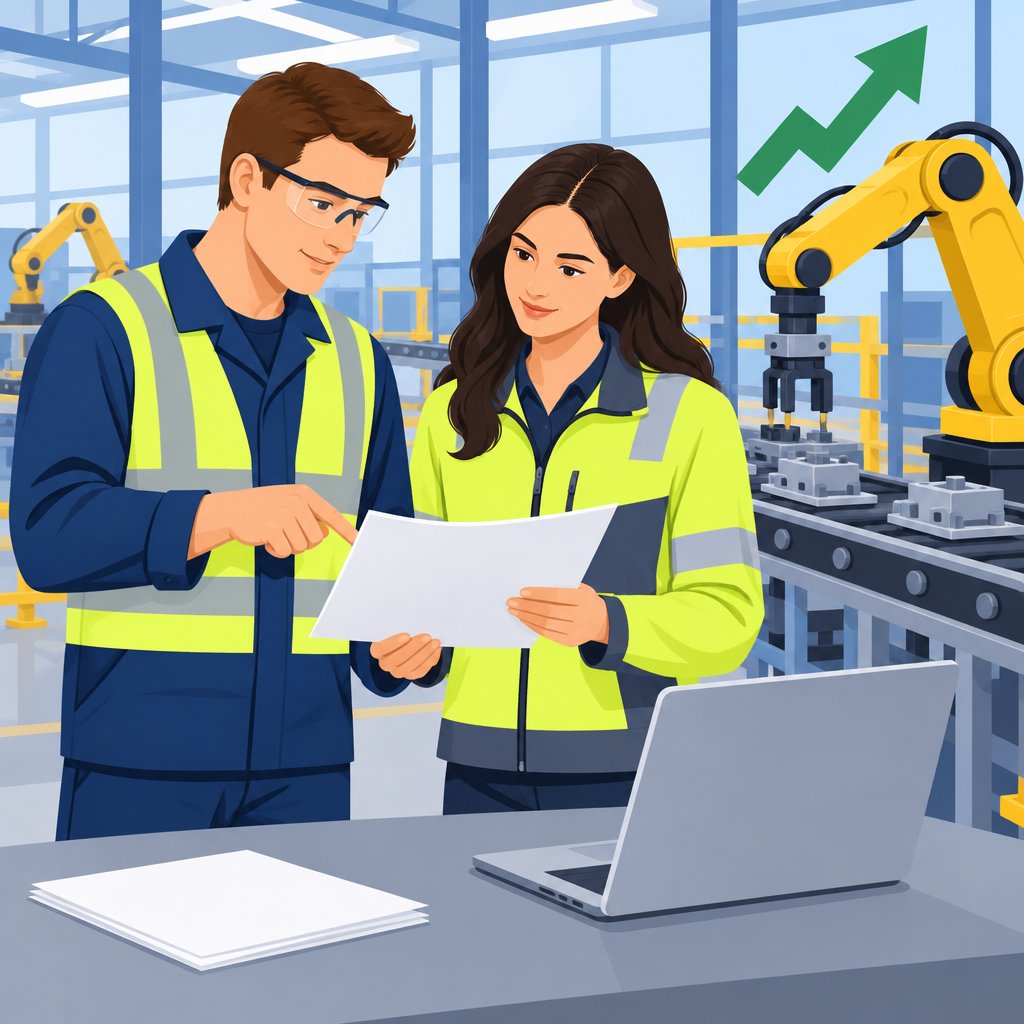
Automation and robotics now shape factory operations across the United States.
These technologies improve efficiency, precision, and productivity during goods production.
Consequently, factory workers increasingly need technical skills to operate and maintain automated systems.
- Automation and robotics have significantly impacted factory work in the United States.
- Technology continues transforming factory operations through greater efficiency and productivity.
- However, workers face job displacement and retraining requirements.
How Robots Transform Manufacturing Tasks
Automation streamlines production processes and reduces factories’ reliance on manual labor.
Robots now perform assembly, welding, and material handling tasks that workers once completed.
As a result, factories increase production output while changing traditional manufacturing roles.
This shift also raises concerns about employment’s future within the manufacturing sector.
Challenges for Manufacturing Workers
Despite operational benefits, automation creates significant challenges for workers.
Machines increasingly handle routine tasks that people previously performed.
Therefore, some workers may experience displacement as factories adopt additional automated systems.
Workers must adapt to changing technology and develop skills that support evolving manufacturing processes.
Technical Skills and New Career Opportunities
Meanwhile, factories need skilled workers who can operate and maintain automated systems.
Workers can specialize in programming, robotics, and data analysis to strengthen their manufacturing careers.
Additionally, automated factories require professionals who design, develop, and integrate advanced technologies.
These changes create career paths for individuals pursuing technology and engineering roles.
Workers who embrace technological advancements and acquire new skills can better navigate evolving factory environments.
Skills and Training for Factory Workers
Developing new skills helps factory workers respond to changing manufacturing demands.
Training programs prepare employees to use modern tools and support future operations.
Specialized instruction helps workers build capabilities for advanced manufacturing environments.
Therefore, companies must invest in training to prepare their workforce for future challenges.
Importance of Developing New Skills
Continuous skill development helps workers adjust to new processes and workplace requirements.
Workers improve productivity when they practice updated methods and understand evolving production needs.
In addition, ongoing learning supports efficient work as factories introduce unfamiliar systems.
Companies can strengthen operations by giving employees regular opportunities to build relevant abilities.
Specialized Training in Technology and Advanced Manufacturing
Industry 4.0 technologies require workers to develop digital and technical capabilities.
Specialized programs can teach programming, data analysis, and machine maintenance.
These skills help employees manage technology and contribute to operational improvements.
Furthermore, targeted instruction helps companies support innovation and remain competitive.
Preparing the Workforce for Future Factory Work
Companies can prepare employees through coordinated education, practice, and knowledge sharing.
Partnerships with educational institutions can align instruction with workplace needs.
Meanwhile, continuous learning gives workers multiple ways to expand their capabilities.
- Educational partnerships: Companies can partner with technical schools and community colleges to develop customized training.
- Apprenticeships: Apprenticeship programs provide hands-on training and mentorship for aspiring manufacturing professionals.
- Online learning: Workers can complete online courses, workshops, and certifications to strengthen their abilities.
- Professional development: Organizations can encourage continuous learning and development throughout the workforce.
- Technology investment: Companies can adopt Internet of Things, artificial intelligence, and automation technologies.
- Hands-on practice: Access to advanced tools and equipment supports practical learning and skill development.
- Mentorship: Mentorship programs can transfer knowledge between experienced and new employees.
- Knowledge sharing: Cross-functional collaboration can encourage employees to share practices and workplace knowledge.
These strategies help companies prepare employees for changing factory work.
They also support long-term manufacturing success through continued investment in skill development.
Gain More Insights: The Importance of Janitors in Maintaining Clean Workspaces
Sustainability and Environmental Impact
- Focus on sustainable manufacturing practices
- Explore how factories reduce environmental impacts
- Promote sustainability throughout future factory work
Manufacturers increasingly emphasize sustainability within their production processes.
Sustainability meets present needs without compromising future generations’ ability to meet their needs.
Within factory work, sustainable practices must remain environmentally friendly, socially responsible, and economically viable.
Transform Your Career Today
Unlock a personalized career strategy that drives real results. Get tailored advice and a roadmap designed just for you.
Start NowSustainable Practices in Manufacturing
Manufacturers increasingly adopt sustainable practices to reduce carbon emissions and minimize waste.
They can lessen environmental impacts by using renewable energy, reducing emissions, and conserving resources.
These efforts connect responsible production with the industry’s long-term needs.
Factory Adaptations for Environmental Protection
Factories now implement green initiatives and adopt technologies that reduce environmental impacts.
For example, energy-efficient equipment and processes can reduce energy consumption and emissions.
Additionally, waste reduction and recycling programs can decrease the waste factories generate.
Factories also conserve water to reduce usage and limit pollution.
Some facilities use sustainable materials and energy-efficient designs within green building practices.
Sustainability’s Role in Future Factory Work
Promoting sustainability helps factories protect the environment and mitigate climate change’s harmful effects.
By reducing waste, conserving resources, and limiting emissions, factories help preserve the planet for future generations.
Sustainable practices can also create cost savings and improve manufacturers’ operational efficiency.
Furthermore, environmentally conscious consumers may favor businesses that prioritize sustainability.
These priorities can help manufacturers attract customers and strengthen their competitive position.
Therefore, sustainable factory work supports environmental protection and the manufacturing industry’s long-term viability.
See Related Content: The Role of a Painter in Home Renovation Projects
Globalization and the Future of U.S. Factory Work
- Impact of globalization on the future of factory work in the United States
- Competition from international markets
- Ways to remain competitive in a global economy
Globalization connects U.S. manufacturers with customers, suppliers, and competitors across international markets.
Trade, communication, and transportation help companies operate on a global scale.
Consequently, factory work faces both new opportunities and serious competitive pressures.
American manufacturers can reach more customers by exporting products to global markets.
This expansion may support higher production, job creation, and economic growth.
Competition from International Markets
International competition challenges domestic manufacturers in several ways.
Foreign producers may operate with lower labor costs and less stringent regulations.
Therefore, U.S. companies must manage costs while preserving product value.
At the same time, global competition can encourage stronger performance and new opportunities.
Companies that understand international demand can respond more effectively to changing customer needs.
Strategies for Global Manufacturing Competitiveness
Manufacturers can remain competitive by improving productivity, quality, and market differentiation.
Process innovation can streamline production, reduce costs, and increase output.
Meanwhile, high-quality products can help American manufacturers stand out globally.
Research, design, and marketing can create distinctive value for consumers.
Strategic alliances, joint ventures, and supply chain partnerships can expand market access.
These partnerships can also support resource sharing, knowledge transfer, and best-practice exchange.
By adapting to global conditions, American manufacturers can support the future of factory work.
You Might Also Like: Certifications for Power Line Installers
Workforce Diversity and Inclusion
Workforce diversity and inclusion are crucial to the future of factory work in the United States.
Promoting both values creates a fairer and more equitable workplace.
Furthermore, inclusive workplaces can enhance productivity and creativity.
Several factors explain why these values matter in factory environments.
- A diverse workforce brings together people with unique experiences, backgrounds, and perspectives.
- This variety of thought fosters innovation and problem-solving.
- Inclusive environments encourage collaboration and support well-informed decisions.
Companies also gain important benefits from maintaining a diverse factory workforce.
- Diverse teams can increase productivity by drawing on broader skills and expertise.
- Companies that value inclusion can attract and retain top talent.
- Embracing diversity can strengthen a company’s reputation and brand image.
Factories can increase diversity and inclusion through several practical strategies.
- Organizations can provide training about workplace diversity and inclusion.
- Leaders can establish diversity goals and track progress toward them.
- Open communication allows employees to share experiences without fear of judgment.
Embracing diversity and inclusion supports companies and employees alike.
Transform Your Career Today
Unlock a personalized career strategy that drives real results. Get tailored advice and a roadmap designed just for you.
Start NowFactories can thereby create more innovative, productive, and successful workplaces for everyone.
Discover More: Top Tools Every Painter Needs for Interior Projects
Government Policies and Regulations
- Government policies and regulations heavily impact factory work in the United States.
- These regulations cover labor laws, safety standards, environmental regulations, and taxation.
- Furthermore, the Occupational Safety and Health Administration ensures that factories maintain safe working conditions.
- Labor laws, including minimum wage requirements and overtime pay, also affect factory operations.
- Environmental regulations dictate how factories dispose of waste and limit emissions to protect the environment.
Potential Impact of Future Policies
- Future policies could encourage factory automation to improve efficiency and reduce labor costs.
- Additionally, incentives may encourage factories to adopt sustainable practices and reduce environmental impacts.
- Regulations could evolve to address emerging technologies, including 3D printing and artificial intelligence.
- Meanwhile, trade policies and tariffs may influence American factories’ global competitiveness.
- Government subsidies or tax breaks could encourage innovation and investment in advanced manufacturing technologies.
Advocating for Supportive Policies
- Advocating for policies that support factory work remains crucial for the industry’s future.
- Collaboration among industry leaders, policymakers, and advocacy groups can shape effective policies.
- Supportive policies can help factories thrive while encouraging job creation and economic growth.
- Investments in workforce training programs can help workers adapt to technological changes.
- Policies that prioritize fair wages, worker safety, and environmental sustainability can strengthen the industry.
Reshoring and Supply Chain Resilience
U.S. manufacturers are increasingly bringing production facilities and processes back from overseas locations.
This reshoring trend is changing how companies organize factory work and manage production.
As a result, domestic manufacturing is gaining importance within the U.S. economy.
Importance of Reshoring
Reshoring creates employment opportunities for American workers and supports local communities.
Additionally, domestic production contributes to economic growth by strengthening local manufacturing activity.
Reshoring also reduces the country’s dependence on foreign suppliers.
Therefore, domestic capabilities give companies greater control over their supply chains.
They can also reduce disruptions caused by political instability, natural disasters, or trade disputes.
Building Resilient Supply Chains
Resilient supply chains adapt and respond effectively when unexpected disruptions occur.
Companies need this flexibility to maintain operations and meet customer demand during challenging periods.
The COVID-19 pandemic highlighted weaknesses in supply chains that relied heavily on overseas production.
Consequently, manufacturers increasingly value supply chains that can withstand global disruptions.
Strategies for Enhancing Domestic Manufacturing
Companies can strengthen domestic manufacturing by investing in advanced technologies and automation systems.
These investments can increase productivity and improve operational efficiency.
Moreover, industry stakeholders, government agencies, and educational institutions can collaborate on workforce development.
This collaboration helps employees develop skills for modern manufacturing practices.
Training and upskilling opportunities can prepare workers for high-tech manufacturing environments.
Finally, research and development can help manufacturers improve processes and create new products.
By encouraging innovation, companies can strengthen their global competitiveness and support industry growth.
Together, reshoring and resilient supply chains can support sustainable growth in U.S. manufacturing.
Shaping the Future of United States Factory Work
Factory work in the United States will continue changing as technology advances and consumer demands evolve.
Therefore, companies must adapt their practices to remain successful in the coming years.
Businesses that resist change may lose ground to competitors that embrace new approaches.
However, industry stakeholders can support a stronger future through collaboration and shared planning.
Businesses, government agencies, and educational institutions each have important roles in this effort.
Together, these groups can encourage innovation and continuous improvement across the factory work sector.
Such cooperation can help the industry serve workers, businesses, and consumers more effectively.
Strategic planning can also strengthen the sector’s relevance within a changing global market.
This shared commitment can help factory work remain an important part of the United States economy.


