




Introduction
Disability services coordinators assist individuals with disabilities in accessing services.
They play a crucial advocacy role.
They advocate for the rights and needs of individuals with disabilities.
Advocacy is essential in the field of disabilities.
It ensures individuals receive proper support and resources.
Disability services coordinators play a crucial role in advocating for individuals with disabilities.
They coordinate support services to help people with disabilities lead fulfilling and independent lives.
Overview of Disability Services Coordinators
- They work with individuals with disabilities to identify their needs and develop personalized support plans.
- Disability services coordinators collaborate with community organizations and service providers to ensure access to necessary resources.
- They advocate for the rights of individuals with disabilities and work to remove barriers to inclusion and participation.
Key Responsibilities of Disability Services Coordinators
- Assessing the needs of individuals with disabilities and developing customized support plans.
- Coordinating access to services such as healthcare, transportation, education, and employment support.
- Advocating for individuals with disabilities to ensure their rights are upheld and respected.
Qualifications and Skills Required for This Role
- A bachelor's degree in social work, psychology, special education, or a related field is typically required.
- Strong communication and interpersonal skills are essential for building relationships with individuals with disabilities.
- Knowledge of disability rights laws and regulations is crucial for advocating effectively on behalf of clients.
Methods Disability Services Coordinators Use to Support Individuals
- Providing emotional support and guidance to help individuals navigate challenges related to their disabilities.
- Assisting with accessing and understanding available services and resources in the community.
- Empowering individuals with disabilities to advocate for themselves and self-determine their goals and objectives.
Disability services coordinators play a vital role in advocating for individuals with disabilities.
They ensure access to the support and resources these individuals need to thrive.
Definition of Advocacy in Relation to Disability Services
Advocacy in disability services involves supporting and representing individuals with disabilities.
It ensures their rights and needs are met.
Importance of Advocacy in Empowering Individuals with Disabilities
Advocacy plays a crucial role in empowering individuals with disabilities by giving them a voice.
It promotes inclusivity and fosters independence.
By advocating for their rights and promoting social inclusion, disability services coordinators help individuals live more fulfilling lives.
Advocacy also enables access to essential services, support, and opportunities.
Examples of Advocacy Activities That Disability Services Coordinators Engage In
- Providing information and resources to individuals with disabilities
- Supporting individuals in navigating complex systems and procedures
- Helping individuals access appropriate healthcare services
- Collaborating with community organizations to create inclusive environments
- Advocating for policy changes to improve accessibility and non-discrimination
- Empowering individuals to self-advocate and assert their rights
- Raising awareness about disability issues and promoting understanding
- Offering emotional support and guidance to individuals and their families
You Might Also Like: Innovative Approaches in Family Support Services
In the realm of disability services coordination, promoting inclusivity is paramount.
It requires enhancing accessibility in physical spaces.
Enhancing accessibility in physical spaces
- Implementing ramps and elevators for wheelchair users
- Installing tactile paving for individuals with visual impairments
- Making restrooms and facilities easily usable by those with varying disabilities
It also involves ensuring inclusivity in educational and workplace settings.
Ensuring inclusivity in educational and workplace settings
- Advocating for reasonable accommodations for students with disabilities
- Promoting accessible technologies like screen readers and assistive devices
- Encouraging a culture of acceptance and support for individuals of all abilities
Disability services coordinators collaborate with other professionals to create inclusive environments.
Collaborating with other professionals to create inclusive environments
- Working with architects and designers to create universally designed spaces
- Partnering with educators to develop inclusive teaching strategies
- Coordinating with HR departments to ensure workplace inclusivity and diversity
By actively engaging in these advocacy efforts, coordinators foster a more accessible society.
They play a crucial role in promoting inclusivity for individuals with disabilities.
Gain More Insights: Essential Resources for Housing Coordinators
Supporting Individuals with Disabilities
- Providing emotional support and guidance
- Assisting with navigating resources and services
- Advocating for the rights and needs of individuals with disabilities
Emotional Support and Guidance
One of the primary roles of disability services coordinators is to provide emotional support.
They offer guidance to individuals with disabilities.
This can involve listening to their concerns.
They also offer advice and provide a safe space for expression.
Many individuals with disabilities face unique challenges.
Having someone who empathizes with their experiences makes a significant difference.
Disability services coordinators play a crucial role in offering this support.
This support helps individuals cope with the emotional aspects of their disabilities.
Assisting with Navigating Resources and Services
Another important aspect is assisting individuals with disabilities to navigate resources.
These resources support various aspects of their lives.
This assistance includes connecting them with medical professionals.
It also involves linking them to social services and educational institutions.
Community organizations offer programs tailored to their needs.
By helping access these resources, coordinators empower individuals.
They enable a more fulfilling and independent life.
This support ensures equal opportunities for individuals to thrive.
Advocating for the Rights and Needs of Individuals with Disabilities
Arguably the most critical role is advocacy for individuals with disabilities.
Transform Your Career Today
Unlock a personalized career strategy that drives real results. Get tailored advice and a roadmap designed just for you.
Start NowCoordinators work with policymakers and community leaders.
They promote policies that ensure equal access and opportunities.
Disability services coordinators serve as powerful advocates.
They challenge discrimination and promote inclusivity.
They fight for the rights of individuals with disabilities.
By amplifying their voices, coordinators drive positive change.
This role is vital for advancing the rights and well-being of individuals.
Find Out More: Interview Questions for Human Services Assistant Positions
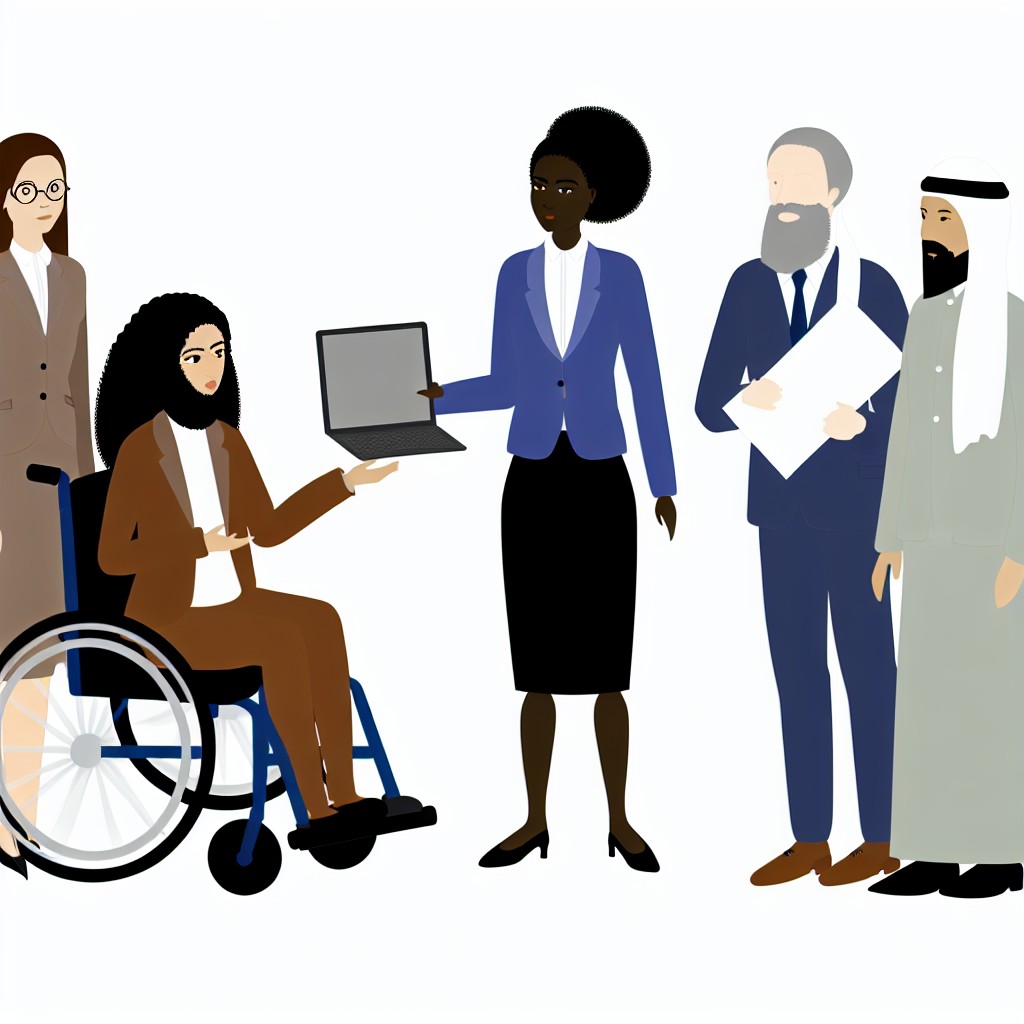
Collaborating with Community Organizations
- Building partnerships with organizations that support individuals with disabilities
- Advocating for policy changes at a local and national level
- Organizing events and initiatives to raise awareness about disability issues
As Disability Services Coordinators, one of our primary roles is to collaborate with community organizations.
These organizations provide support to individuals with disabilities.
By building partnerships with these organizations, we ensure clients receive necessary resources and assistance.
Advocating for policy changes at local and national levels is crucial to improving lives of individuals with disabilities.
Disability Services Coordinators play a vital role in promoting inclusion, accessibility, and equal opportunities.
By actively engaging with policymakers and decision-makers, we drive meaningful change.
Organizing events and initiatives raises awareness about disability issues.
Hosting workshops, seminars, and campaigns helps educate the public about challenges faced by individuals with disabilities.
These events foster a more inclusive and understanding community.
Our advocacy efforts play a crucial role in promoting rights and well-being of individuals with disabilities.
Through collaboration with community organizations and policy advocacy, we work to create a more inclusive society for all.
Explore Further: Public Health Social Workers in Government Agencies
Training and Professional Development
- Engaging in ongoing training and professional development opportunities
- Staying informed about best practices in disability services and advocacy
- Sharing knowledge and expertise with colleagues and the community
Disability Services Coordinators must prioritize training and professional development.
Engaging in ongoing opportunities helps coordinators stay current with the latest trends.
This continuous learning ensures the highest level of support for individuals with disabilities.
Staying informed about best practices plays a crucial role for Disability Services Coordinators.
Coordinators must know current laws, regulations, and available resources to support clients.
Being up-to-date helps coordinators navigate the complex disability services landscape effectively.
Additionally, sharing knowledge with colleagues and community members is essential.
Collaboration fosters a more inclusive and supportive environment for individuals with disabilities.
Sharing information and resources benefits those who rely on disability services and advocacy.
Training and professional development remain key aspects of the advocacy role for coordinators.
By engaging regularly, staying informed, and sharing expertise, coordinators better serve individuals.
Ultimately, these efforts make a positive impact in communities.
Disability services coordinators play a crucial role in advocating for individuals with disabilities.
They act as a voice for the disabled community.
The coordinators ensure their needs are met and rights are upheld.
By advocating for policy changes and accommodations, coordinators help create a more inclusive society.
They work closely with stakeholders to address barriers.
Coordinators promote equal opportunities for those with disabilities.
Through education and awareness initiatives, coordinators strive to eliminate discrimination.
They also work to reduce stigma surrounding disabilities.
Transform Your Career Today
Unlock a personalized career strategy that drives real results. Get tailored advice and a roadmap designed just for you.
Start NowThe impact of advocacy by disability services coordinators is profound.
Their work leads to improved access to services and resources.
Individuals with disabilities benefit from increased support and opportunities.
This support enhances their quality of life.
By amplifying the voices of the disabled community, coordinators empower individuals to advocate for themselves.
It is essential for society to support and empower individuals with disabilities.
Advocacy efforts play a key role in this support.
Together, we can create a more inclusive and accessible world for all individuals.
This includes people regardless of their abilities.
Advocacy’s Role in Enhancing Lives of People with Disabilities
Disability services coordinators play a vital role in advocacy for individuals with disabilities.
Their advocacy efforts lead to positive changes that improve lives.
Supporting and empowering individuals with disabilities requires continued advocacy and awareness campaigns.
Additional Resources
Disability Rights Connecticut (DRCT) | Disability Advocates
ORR Unaccompanied Alien Children Bureau Policy Guide: Section 2