




Role of Disability Services Coordinators
Disability services coordinators promote accessibility for individuals with disabilities.
They help ensure equal opportunities for people with disabilities.
Therefore, they support full participation in society.
Accessibility and Inclusion
Accessibility enables inclusion and participation in all aspects of life.
Coordinators work to remove barriers limiting access to education, employment, healthcare, and essential services.
Consequently, their work supports access to important areas of society.
Core Responsibilities in Disability Services
Disability services coordinators assess individual needs and identify appropriate support services.
They develop individualized plans that address each person’s needs and goals.
Additionally, they connect people with resources while providing ongoing guidance through challenges.
- They assess individual needs to determine appropriate support services.
- They develop individualized plans that address specific needs and personal goals.
- They connect individuals with resources that can improve their quality of life.
- They advocate for equal access to opportunities and uphold individual rights.
- They provide ongoing support and guidance during challenging situations.
Collaborative Support Across Services
Collaboration helps coordinators provide comprehensive support.
They work with professionals and organizations to share knowledge and improve service quality.
Furthermore, coordinated efforts address complex needs and strengthen advocacy for systemic improvements.
- Partners share knowledge and best practices to enhance service quality.
- They coordinate care across providers to support continuity of care.
- They address complex challenges by combining professional and organizational expertise.
- They advocate for systemic changes that improve accessibility and inclusion.
- They pool resources and expertise to provide holistic support for diverse needs.
Through advocacy, collaboration, and support, coordinators help build a more inclusive and equitable society.
Disability Services Coordinators and Accessible Environments
Disability services coordinators evaluate and modify physical environments for individuals with disabilities.
- They assess existing infrastructure and identify barriers that may limit accessibility.
- They collaborate with stakeholders to develop inclusive strategies for various settings.
- They implement necessary adjustments to remove physical barriers.
- They advocate for universal design principles that make spaces accessible to everyone.
- They ensure compliance with disability laws and regulations to guarantee equal access.
Accommodations and Adjustments for Accessibility
Disability services coordinators can recommend accommodations that promote inclusivity and accessibility in physical environments.
- They can recommend ramps and elevators for wheelchair accessibility.
- They can add tactile signage and braille labels for people with visual impairments.
- They can ensure doorways accommodate wheelchair users.
- They can adjust lighting levels for individuals with sensory sensitivities.
- They can provide adjustable desks and chairs for people with mobility impairments.
These accommodations enhance accessibility and create more welcoming environments for everyone.
Learn More: How to Excel as a Crisis Intervention Specialist
Providing Support Services
Disability services coordinators provide support services to individuals with disabilities.
These services help individuals overcome barriers and pursue their goals.
Through tailored assistance, coordinators help individuals access resources for academic and professional progress.
Academic Accommodations
- Coordinators work with students to implement academic accommodations tailored to their needs.
- These accommodations may provide extended exam time, note-taking assistance, or alternative course material formats.
- As a result, students with disabilities can access education more equitably.
Assistive Technology
- Coordinators help individuals explore assistive technology that can enhance their learning experiences.
- These tools may include screen readers, speech-to-text software, or adaptive devices.
- Consequently, assistive technology helps individuals participate more fully in academic and professional settings.
Counseling Services
- Disability services coordinators offer counseling to address emotional and psychological challenges.
- These services give individuals a safe space to discuss concerns and develop coping strategies.
- Furthermore, counseling can strengthen resilience, improve self-esteem, and help individuals navigate personal obstacles.
Disability services coordinators guide individuals through challenges and help them access necessary resources.
They also provide support that addresses individual needs and circumstances.
This assistance helps individuals pursue academic and professional goals.
Delve into the Subject: Benefits of Working as a Residential Counselor
Advocacy and Awareness
Disability services coordinators advocate for the rights and needs of individuals with disabilities.
- They work within academic institutions, workplaces, and communities to support inclusion.
- Through advocacy, they help create environments that value participation and respect.
Importance of Advocacy
Advocacy helps individuals with disabilities access opportunities on an equal basis.
- It ensures that individuals with disabilities have equal access to opportunities.
- Additionally, it promotes a society where everyone receives value and respect.
Advocacy in Academic Institutions
In academic institutions, coordinators help students participate fully in learning.
- They work to create accessible learning environments for students.
- Moreover, they collaborate with faculty and staff to provide necessary accommodations and support.
Advocacy in Workplaces
At work, coordinators help employees with disabilities participate in professional settings.
- They advocate for workplace accommodations for employees with disabilities.
- They also support equal employment opportunities and a supportive work environment.
Advocacy in Communities
Within communities, coordinators encourage acceptance and remove barriers to participation.
- They promote awareness and acceptance of disabilities in communities.
- They also work to break down barriers and create inclusive spaces for everyone.
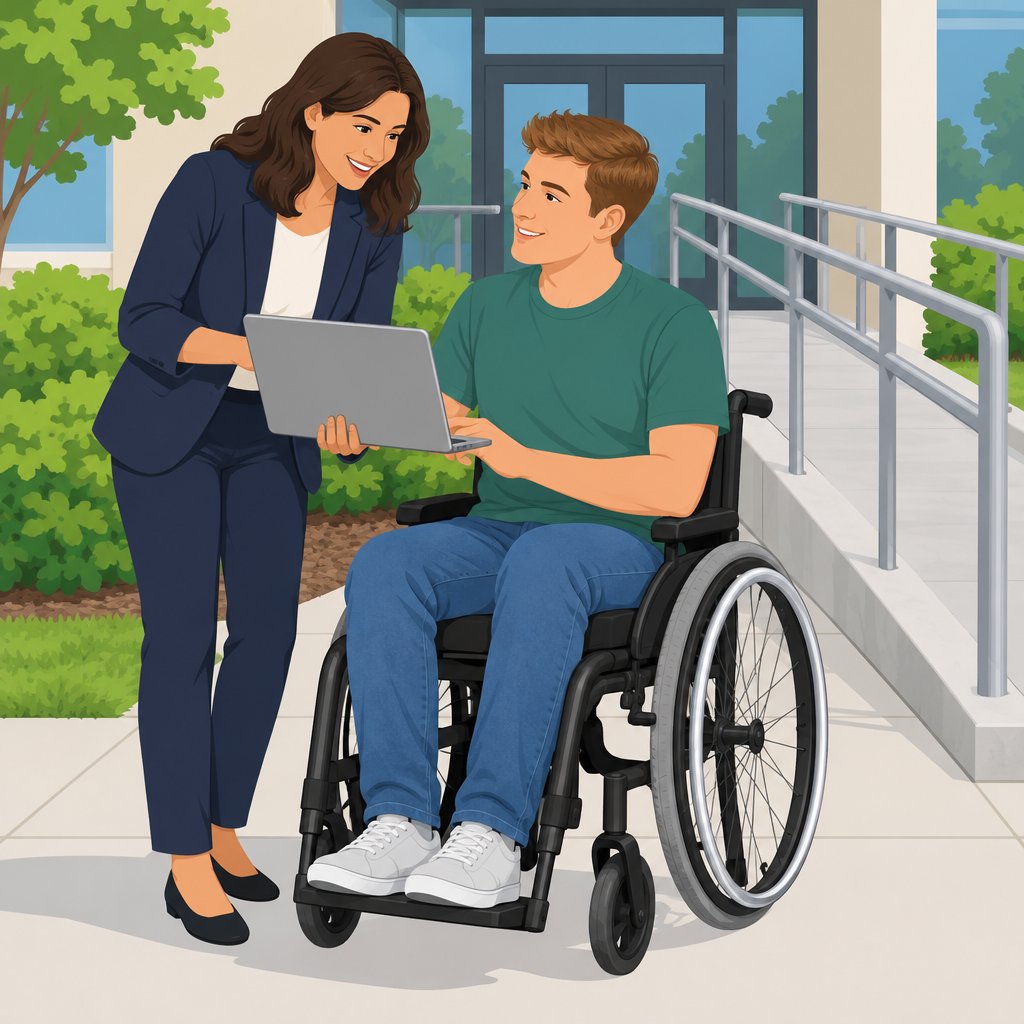
Raising Awareness
Raising awareness helps communities understand disability issues and support inclusion.
- It helps create a more inclusive society.
- Furthermore, it helps reduce stigma and discrimination against individuals with disabilities.
Importance of Awareness
Awareness encourages people to recognize and respect different abilities.
- It promotes acceptance and understanding of different abilities.
- It also encourages empathy and compassion toward individuals with disabilities.
Benefits of an Inclusive Society
Inclusive communities recognize the contributions and value of individuals with disabilities.
- An inclusive society benefits everyone by fostering diversity and tolerance.
- It also creates a sense of belonging and community for individuals with disabilities.
Delve into the Subject: Career Pathways for Aspiring Community Health Workers
Collaboration with Stakeholders
Disability services coordinators play a crucial role in promoting accessibility and inclusivity in educational institutions.
They establish partnerships with students, faculty, staff, and external organizations to create supportive environments for people with disabilities.
These relationships help institutions respond to varied needs through shared communication and planning.
Partnerships with Students
- Coordinators work closely with students with disabilities to understand their needs and provide necessary accommodations.
- They collaborate with student organizations to raise awareness about disability rights and encourage campus inclusivity.
- Through trust and open communication, coordinators ensure that students share concerns and receive appropriate responses.
Collaboration with Faculty
- Coordinators partner with faculty members to create accessible learning environments and encourage inclusive teaching practices.
- They provide training and resources that help faculty support students with disabilities in their classrooms.
- Working together, coordinators and faculty members can expand equal academic opportunities for all students.
Engagement with Staff
- Coordinators collaborate with staff members to help keep campus facilities and services accessible.
- They provide disability awareness and etiquette training that encourages inclusivity and respect.
- By involving staff, coordinators help create a more welcoming environment for the campus community.
Partnerships with External Organizations
- Coordinators work with disability advocacy groups and service providers to strengthen support for students with disabilities.
- These partners collaborate on accessibility initiatives and support inclusive policies on campus and within communities.
- External partnerships expand the resources and expertise available to address diverse needs.
Collaboration with stakeholders helps coordinators build supportive and inclusive educational environments.
Shared efforts promote accessibility, raise awareness, and strengthen support for students, faculty, and staff.
Strong partnerships benefit the entire campus community by fostering diversity and respect.
Gain More Insights: Key Tools and Resources for Case Managers
Transform Your Career Today
Unlock a personalized career strategy that drives real results. Get tailored advice and a roadmap designed just for you.
Start NowTraining and Education for Disability Inclusion
Training and education help stakeholders recognize disability-related barriers and respond with greater understanding.
Disability awareness also encourages respectful communication and more inclusive decision-making.
Furthermore, accommodation guidance helps stakeholders create accessible spaces and provide appropriate support.
- Training clarifies challenges that people with disabilities may face.
- Education explains accommodations that support access and participation.
- Knowledge of best practices strengthens services for people with disabilities.
Educational Initiatives Led by Disability Services Coordinators
Disability services coordinators can facilitate workshops that explain disability-related needs and inclusive practices.
Seminars create opportunities for discussion, questions, and shared experiences related to disability.
Moreover, coordinators can use webinars, online resources, and training sessions to expand learning opportunities.
- Coordinators can organize workshops with detailed information about disabilities.
- They can collaborate with experts to present current disability awareness guidance.
- Educational initiatives can increase knowledge and understanding among stakeholders.
Evaluation and Improvement
Disability services coordinators regularly evaluate and improve accessibility services and accommodations.
- They assess current accommodations to ensure they meet the needs of individuals with disabilities.
- Coordinators gather feedback from students, faculty, and staff to identify areas for improvement.
- They review policies and procedures, then adjust them according to feedback and changing needs.
- Coordinators collaborate with stakeholders to implement changes that enhance accessibility for all.
Collecting feedback from individuals with disabilities helps coordinators meet their needs effectively.
- Feedback helps coordinators understand the specific challenges individuals may face.
- It provides insight into areas where accommodations may fall short or need modification.
- By listening to feedback, coordinators can tailor services to support diverse needs.
- Regular feedback loops enable coordinators to improve accessibility services continuously.
Building More Inclusive Communities
Disability Services Coordinators help create accessible and welcoming campuses through accommodations and support services.
They also promote equal opportunities for students with disabilities.
By working with students, faculty, and staff, coordinators strengthen inclusive campus environments.
Continued advocacy can help communities remove barriers for individuals with disabilities.
Furthermore, awareness, effective policies, and necessary support can expand opportunities for everyone.
These efforts can help build more equitable and inclusive communities for all individuals.


