




Precision Agriculture and Data Analytics
Precision agriculture is revolutionizing farming by incorporating advanced technologies.
Precision agriculture uses technology to optimize resources, including water, fertilizer, and pesticides.
Meanwhile, data analytics collects, analyzes, and interprets agricultural data for informed decisions.
Benefits of Data Analytics in Precision Agriculture
Data analytics helps farmers monitor crop health, predict yields, and optimize inputs for increased productivity.
Additionally, it helps farmers reduce costs, minimize environmental impact, and improve efficiency.
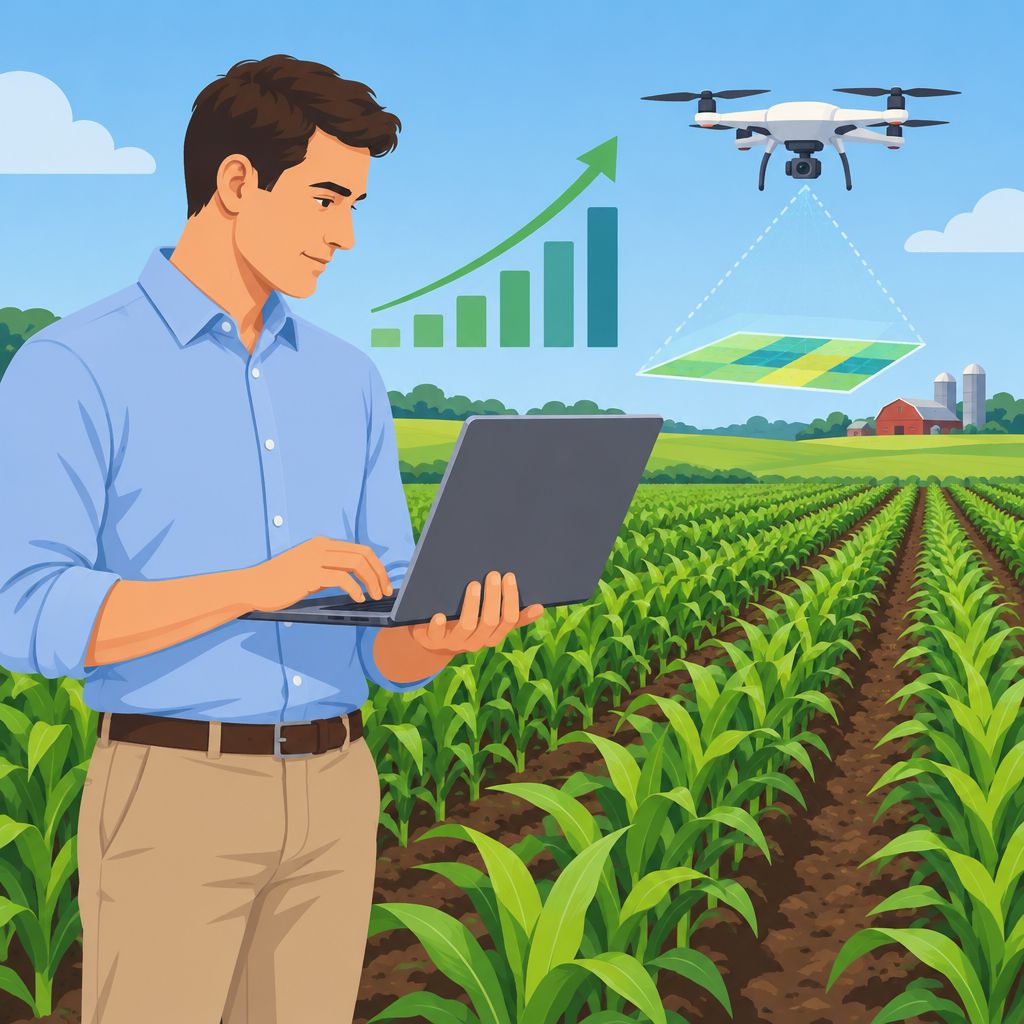
It also makes precision agriculture technologies, including drones and sensors, more effective in the field.
As a result, data analytics supports more sustainable farming practices and higher yields.
These benefits show how data analytics drives precision agriculture’s success and sustainability.
Types of Data Collected in Precision Agriculture
Precision agriculture organizes field information into several data categories.
These categories help farmers examine conditions across growing areas.
Together, they support more informed analysis of farm operations.
- Topographical data
- Weather data
- Soil data
- Crop health data
- Yield data
Technologies Used for Data Collection and Analysis
Modern tools collect and analyze agricultural information efficiently.
GPS technology supports location-based data collection.
Additionally, analytical systems help interpret large and complex datasets.
- GPS technology
- IoT devices
- Machine learning algorithms
- Big data analytics tools
- Remote sensing technologies
Roles of Sensors, Drones, and Satellite Imagery
Sensors, drones, and satellite imagery capture different views of farm conditions.
Sensors report soil moisture and nutrient levels in real time.
Meanwhile, drones and satellites reveal crop conditions at different scales.
- Sensors provide real-time data on soil moisture and nutrient levels.
- Drones capture high-resolution images of crops for analysis.
- Satellite imagery offers a wide-area view for monitoring crop health and growth.
Benefits of Data Analytics in Decision-Making
Data analytics supports practical decisions throughout agricultural operations.
First, it helps farmers allocate resources and identify problems early.
Furthermore, precise input use can reduce costs, improve production, and limit waste.
- Optimized resource allocation can improve productivity.
- Early detection supports timely responses to crop diseases or pest infestations.
- Precision fertilizer and pesticide application can reduce costs.
- Data-driven insights can enhance crop yield and quality.
- Minimizing input waste can reduce environmental impact.
Applications of Data Analytics in Precision Agriculture
Data analytics helps farmers evaluate field conditions and improve daily management decisions.
Moreover, analytical tools connect soil, weather, crop, and equipment information.
These insights support timely actions that improve resource use and crop performance.
- Soil and crop monitoring: Analytics reveals soil health, moisture levels, and crop growth patterns.
- Precision irrigation: Farmers analyze sensor readings and weather forecasts to improve irrigation efficiency.
- Pest and disease management: Analytics identifies infestation patterns and unusual conditions for timely intervention.
- Yield prediction: Predictive tools estimate yields using historical information, weather conditions, and related factors.
Successful Data Analytics Implementations
Several agricultural companies apply analytics to address operational and crop management needs.
These examples demonstrate how digital tools can support data-driven farming practices.
Furthermore, each company combines analytics with specialized agricultural technologies or software.
- John Deere: The company uses analytics for precision agriculture solutions, including automated tractors and farm management software.
- The Climate Corporation: The company develops digital tools that help farmers make data-driven crop management decisions.
- PrecisionHawk: The company combines drones and analytics to provide aerial crop monitoring and yield optimization insights.
- Granular: The company provides farm management software that helps users analyze field data and improve productivity.
Efficiency and Productivity Through Data-Driven Strategies
Data-driven strategies help farmers manage resources more precisely across their operations.
In addition, real-time information supports faster responses to changing field and weather conditions.
Farmers can also measure operational performance and target areas that need improvement.
- Optimized resource allocation: Analytics guides water, fertilizer, and pesticide use while reducing costs.
- Real-time decision-making: Farmers use current crop and weather information to make informed decisions quickly.
- Precision farming practices: Analytics supports variable-rate applications and GPS-guided equipment.
- Performance monitoring: Farmers track operational results, identify weaknesses, and apply targeted improvement strategies.
Sustainability and Environmental Impact Reduction
Analytics helps farmers connect operational decisions with sustainability goals.
By examining resource use, farmers can identify opportunities to reduce waste and environmental pressure.
These practices also support conservation planning and more resilient agricultural ecosystems.
- Optimized inputs: Analytics improves fertilizer and chemical management while supporting sustainable practices.
- Carbon footprint monitoring: Farmers analyze emissions and energy use to identify reduction opportunities.
- Water conservation: Analytics improves irrigation schedules, limits water waste, and encourages sustainable water use.
- Biodiversity preservation: Farmers monitor biodiversity indicators and plan conservation efforts that strengthen ecosystem resilience.
See Related Content: Government Funding for Plant Pathology Research
Challenges in Implementing Data Analytics in Precision Agriculture
Farmers may struggle to recognize the practical benefits of data analytics.
Additionally, implementation requires substantial initial investment and technical coordination.
These challenges can slow adoption and limit effective use across farm operations.
- Farmers may lack awareness of data analytics benefits.
- High initial costs can restrict technology adoption.
- Integrating sensors, drones, and satellites can create complexity.
- Traditional farmers may resist operational changes.
- Farms may lack skilled professionals who interpret data.
Data Privacy and Security Issues
Agricultural data can contain sensitive information that requires careful protection.
Furthermore, farmers must evaluate vendor access and follow applicable privacy regulations.
Strong security practices can reduce unauthorized access and improve confidence in data systems.
- Data breaches or cyber attacks may expose sensitive agricultural information.
- Third-party vendors may access confidential farm information.
- Farmers must consider regulations such as GDPR and CCPA.
- Encryption and secure storage can prevent unauthorized access.
- Farmers need education about data security and privacy practices.
Integration with Existing Farm Management Systems
Data analytics tools must work effectively with existing farm management systems.
Transform Your Career Today
Unlock a personalized career strategy that drives real results. Get tailored advice and a roadmap designed just for you.
Start NowMeanwhile, incompatible platforms can interrupt data movement between software and machinery.
Successful integration also requires customization, staff training, and infrastructure improvements.
- Different agricultural software platforms may create compatibility issues.
- Seamless data flow must connect analytics tools with farm machinery.
- Solutions may require customization for each farm operation.
- Farm staff need training to interpret analytical insights.
- Existing infrastructure may require upgrades to support applications.
Training and Education for Farmers
Farmers need accessible education before they can use data analytics confidently.
Therefore, training should explain essential concepts through practical and understandable materials.
Educational partnerships can also encourage continued learning and broader technology adoption.
- Workshops can introduce farmers to data analytics fundamentals.
- User-friendly interfaces can simplify analytics tools for nontechnical users.
- Online tutorials can support self-paced learning.
- Certifications or incentives may encourage adoption.
- Agricultural universities can include data analytics in their curricula.
Delve into the Subject: The Science Behind Grape Growing
Future Trends in Data Analytics for Precision Agriculture
Future tools will help farmers gather and interpret information more effectively.
Meanwhile, connected technologies will support timely observations across growing areas.
These developments will also encourage collaboration and more sustainable farm management.
- Integration of IoT devices to gather real-time data
- Use of drones and satellite imagery for crop monitoring
- Predictive analytics for better decision-making on the farm
- Focus on sustainability and environmental impact
- Increased use of data sharing platforms for collaboration
Potential Advancements in Technology for Data Collection and Analysis
New collection tools will provide more detailed information about field conditions.
Additionally, improved software will help users understand and manage that information.
Weather and security technologies will further strengthen agricultural data practices.
- Development of sensors for soil health and moisture levels
- Enhanced software for data visualization and interpretation
- Automation of data management processes for efficiency
- Implementation of blockchain technology for data security
- Incorporation of weather forecasting data for planning
Adoption of AI and Machine Learning in Agriculture
AI can help farmers evaluate fields and estimate potential crop yields.
Machine learning can also identify crop threats and guide resource decisions.
Furthermore, data-based recommendations can support farm planning and market awareness.
- Utilization of AI algorithms for field mapping and crop yield estimation
- Machine learning models for pest and disease detection in crops
- Automated decision support systems for optimal resource allocation
- Prediction of market trends and crop prices using AI techniques
- Personalized recommendations for farmers based on data analysis
Collaboration with Research Institutions and Technology Companies
Research partnerships can connect agricultural expertise with emerging technical capabilities.
Technology companies can contribute tools for testing and practical implementation.
Meanwhile, shared knowledge can encourage continued innovation throughout agriculture.
- Partnerships with universities for research and development projects
- Engagement with tech firms for cutting-edge solutions in agriculture
- Joint ventures to test and implement new technologies on the field
- Sharing of data and knowledge to drive innovation in the industry
- Investment in tech startups working on agtech solutions
Find Out More: Extension Agents and Agricultural Innovation
Data Analytics Supports Better Agricultural Decisions
Data analytics gives farmers valuable insights for agricultural decision-making.
It also helps them allocate resources more effectively and monitor crop health.
As a result, farmers can strengthen productivity through informed operational choices.
Farm Businesses Gain Efficiency and Profitability
Farmers and agricultural businesses can use analytics to improve operational efficiency.
Moreover, these insights can support more profitable management decisions.
Therefore, agricultural businesses should incorporate analytics into their ongoing planning.
Continued Research Strengthens Precision Agriculture
The field continues to evolve as researchers develop improved analytical approaches.
Meanwhile, farmers and businesses should follow relevant advancements in precision agriculture.
Continued research and development can help users maximize the potential of data analytics.
Additional Resources
Google search results for Role of Data Analytics in Precision Agriculture Agricultural
Bing search results for Role of Data Analytics in Precision Agriculture Agricultural


