




Introduction
Extension agents play a crucial role in agricultural innovation.
They bridge the gap between researchers and farmers.
Additionally, they provide valuable information and resources.
These resources help farmers adopt sustainable farming practices.
Extension Agents’ Practical Support for Farm Innovation
Extension agents translate research findings into practical instructions that farmers can use in daily operations.
Through demonstrations, they explain how innovative methods can improve farm management.
Moreover, these professionals help farmers evaluate benefits before adopting unfamiliar technologies.
Agents supply guidance and tools that support careful implementation of new agricultural practices.
By listening closely, they identify challenges affecting each farm and adapt their assistance accordingly.
Regular field visits allow agents to observe progress and respond to emerging problems.
During those visits, agents troubleshoot difficulties and recommend adjustments that improve results.
Training sessions and workshops introduce farmers to emerging agricultural trends.
Meanwhile, agents collaborate with experts to design solutions for different farming systems and regions.
They also encourage sustainable choices, including crop diversification and efficient irrigation.
Farmers can therefore reduce chemical use while pursuing environmentally responsible production.
Such guidance helps producers respond to changing environmental conditions and market demands.
Agents further mentor farmers as they build confidence and manage innovation independently.
This support empowers farmers to take greater ownership of their agricultural success.
Consequently, extension work strengthens modernization while supporting sustainable farming practices.
Training and Education Provided by Extension Agents
Extension agents provide structured training for farmers and other agricultural stakeholders.
They use workshops and practical sessions to share knowledge and strengthen agricultural skills.
These educational activities also encourage informed decisions and responsible farm management.
Workshop and Training Formats
Agents select training formats that match farmers’ needs and current agricultural challenges.
They combine demonstrations, discussions, and targeted instruction during these educational activities.
As a result, participants can connect new information with practical farm decisions.
- Extension agents use field demonstrations to present new farming techniques, technologies, and practices.
- These demonstrations help farmers observe how new approaches may improve yields and profitability.
- Technology workshops introduce precision farming, drone technology, and digital agriculture.
- Sustainable practice training covers organic farming, integrated pest management, and soil conservation.
- Financial management workshops address budgeting, financial literacy, and access to credit.
- Marketing workshops discuss value chains, market access, product quality, and profitability.
Each format addresses a different aspect of agricultural performance and decision-making.
Furthermore, varied instruction gives participants several ways to understand and apply new information.
These sessions also create opportunities for farmers to discuss challenges with other stakeholders.
Value of Continuous Learning
Farmers and extension agents need continuous learning as agriculture changes rapidly.
Regular education helps them respond to new technologies, market trends, and environmental challenges.
It also supports stronger skills, better decisions, and more resilient agricultural operations.
- Continuous learning helps farmers and agents adapt to changes in agriculture.
- It strengthens knowledge, skills, productivity, efficiency, and profitability.
- Learning encourages creative thinking, experimentation, and agricultural innovation.
- Workshops support networking, idea sharing, partnerships, and collaboration.
- Education empowers participants to make informed decisions and advocate for their needs.
- Greater knowledge can promote self-reliance, independence, and resilience during challenges.
Continuous learning therefore supports agricultural development and long-term sustainability.
By investing in education, extension agents strengthen the capabilities of the agricultural community.
Explore Further: How to Stay Updated with Irrigation Industry Standards
Drip Irrigation Innovation
- Farmers successfully adopted drip irrigation systems.
- Drip irrigation improves water efficiency and increases crop yields.
- Extension agents promoted this technology and taught farmers how to use it.
- Farmers saved water, reduced labor costs, and increased their profits.
Drip irrigation delivers water directly to plant roots.
Therefore, crops receive consistent amounts of water when they need it.
This precision supports healthier plants and higher yields per acre.
Impact of Drip Irrigation on Crop Yields
Farmers who adopted drip irrigation achieved significant improvements in crop yields.
The system reduces water stress by supplying plants consistently.
As a result, crops grow healthier and produce higher yields.
Transform Your Career Today
Unlock a personalized career strategy that drives real results. Get tailored advice and a roadmap designed just for you.
Start NowImpact of Drip Irrigation on Sustainability
Drip irrigation helps farmers use water more efficiently.
Consequently, farmers reduce their dependence on rivers and wells.
The system also reduces soil erosion and nutrient runoff.
Impact of Drip Irrigation on Profitability
Farmers may face higher setup costs when adopting drip irrigation.
However, lower water use and labor expenses create long-term savings.
Higher yields and better produce quality can also increase market returns.
Integrated Pest Management Innovation
- Farmers successfully adopted integrated pest management practices.
- IPM uses environmentally friendly methods to manage crop pests.
- Extension agents trained farmers in effective IPM strategies.
- Farmers reduced pesticide use, crop losses, and damage to soil health.
IPM combines cultural, biological, and physical pest control methods.
This approach limits farmers’ reliance on chemical pesticides.
It also supports crop protection and healthier agricultural ecosystems.
Impact of IPM on Crop Yields
IPM practices can improve crop yields by controlling pest populations.
Farmers protect crops from damage without depending heavily on chemical pesticides.
Healthier plants can then support higher yields.
Impact of IPM on Sustainability
IPM reduces pesticide use and minimizes environmental pollution.
It also protects beneficial insects that support pollination and natural pest control.
Additionally, IPM supports soil organisms and promotes farm biodiversity.
Impact of IPM on Profitability
Farmers can lower input costs by reducing chemical pesticide use.
IPM also decreases the risk of pest resistance developing in fields.
Furthermore, healthier plants and improved soil quality can increase market value.
Explore Further: Networking and Support Groups for Farm Managers
Challenges Faced by Extension Agents
Extension agents encounter financial, material, and social barriers when they promote agricultural innovation.
These barriers can limit program delivery and reduce support available to farmers.
Furthermore, successful innovation depends on resources and farmer willingness to consider new practices.
- Limited Funding: Restricted budgets make it difficult to implement projects and support farmers.
- Lack of Resources: Limited technology, tools, and equipment can weaken information delivery and farmer training.
- Resistance to Change: Some farmers hesitate to adopt new practices or technologies recommended by extension agents.
Strategies for Supporting Agricultural Innovation
Extension agents can address these barriers through flexible funding, careful planning, and stronger farmer relationships.
Alternative support can expand program capacity and improve access to needed tools.
Meanwhile, trust and participation can help farmers evaluate unfamiliar practices.
- Diversifying Funding Sources: Grants, partnerships, and sponsorships can supplement available program budgets.
- Improving Resource Management: Agents can prioritize resources according to farmer needs and intervention impact.
- Building Relationships and Trust: Evidence-based information, demonstrations, and farmer participation can encourage acceptance.
Discover More: Key Skills Needed to Become an Agricultural Consultant
Collaboration Among Agricultural Stakeholders
Extension agents, farmers, and other stakeholders can jointly advance innovation in agriculture.
Each group contributes distinct knowledge, experience, and resources to agricultural problem-solving.
Strong partnerships help communities develop practical responses to changing agricultural needs.
- Build partnerships that encourage agricultural innovation.
- Connect technical knowledge with farmers’ practical experience.
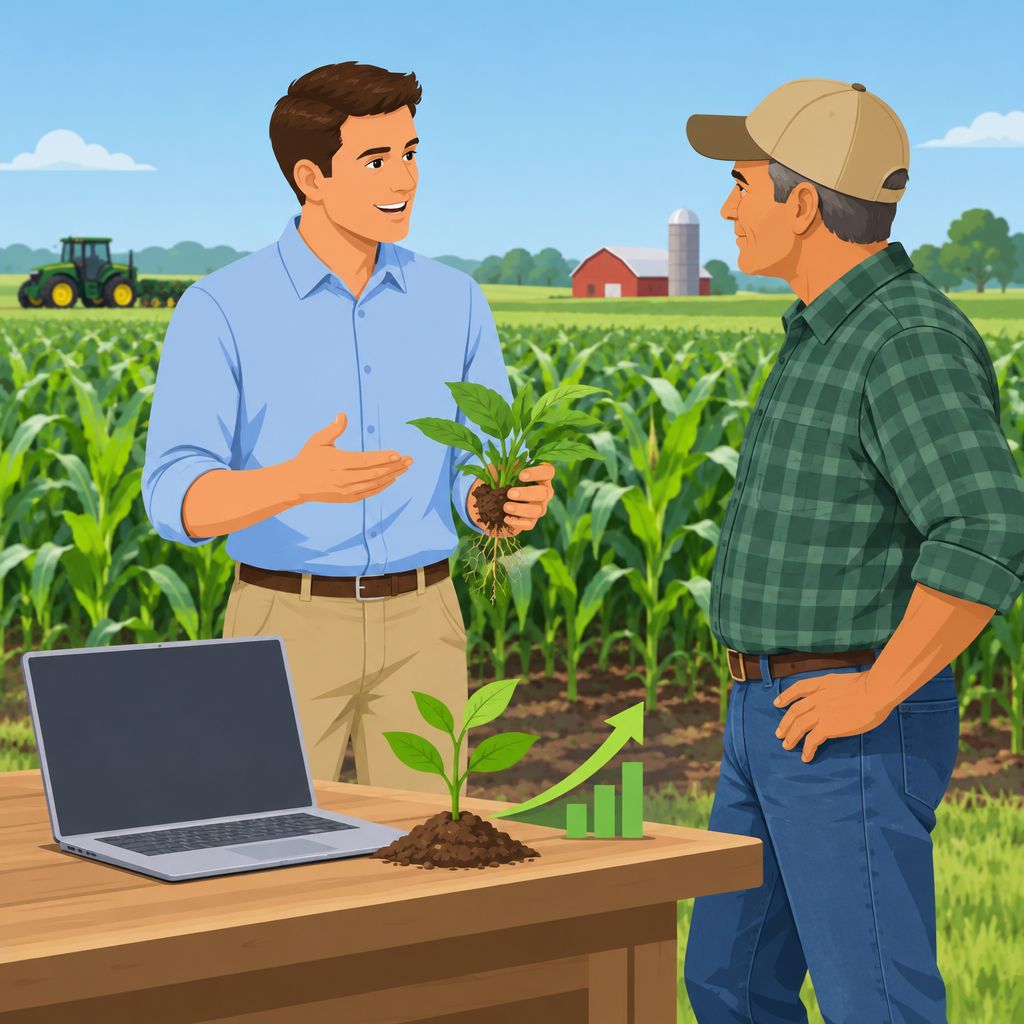
Building Strong Agricultural Partnerships
Partnerships allow stakeholders to combine their strengths when addressing agricultural challenges.
Extension agents offer technical guidance and access to current research.
Farmers contribute firsthand knowledge about local conditions, practices, and priorities.
Other stakeholders can add resources and perspectives that strengthen collective decisions.
Benefits of Shared Knowledge
Collaboration expands the knowledge available to farming communities.
Stakeholders can share ideas, compare experiences, and identify suitable practices.
This exchange encourages continuous learning and supports more informed agricultural decisions.
Moreover, shared knowledge can strengthen productivity, sustainability, and resilience.
Improving Extension Program Effectiveness
Collaborative planning helps extension programs respond to local farming priorities.
Farmers can explain their needs while agents help identify appropriate responses.
Consequently, programs can become more relevant, coordinated, and useful to communities.
Transform Your Career Today
Unlock a personalized career strategy that drives real results. Get tailored advice and a roadmap designed just for you.
Start NowDifferent perspectives also help stakeholders address complex agricultural challenges comprehensively.
Co-Creating Agricultural Innovations
Stakeholders can jointly develop technologies, practices, and strategies for farming.
Farmers can assess proposed solutions within real farming situations.
Extension agents can help stakeholders adjust solutions according to shared observations.
This process supports practical innovation and encourages continued improvement.
Strengthening Farming Communities Through Partnership
Effective collaboration can increase the reach and impact of agricultural development efforts.
When stakeholders coordinate their efforts, farming communities can pursue shared priorities more effectively.
Partnerships also encourage trust, learning, and collective responsibility among participants.
Ultimately, cooperation creates stronger foundations for sustainable agricultural progress.
Explore Further: Public vs. Private Sector: Conservation Science Jobs
The Future of Agricultural Extension and Innovation
Agricultural technology and research continue to shape extension work.
Emerging tools help farmers improve production while supporting sustainable agricultural practices.
Extension agents can guide farmers as new opportunities and technologies develop.
Emerging Trends in Agricultural Technology and Research
- Precision agriculture uses data-driven methods to optimize crop yields.
- Sustainable agriculture practices support environmental stewardship.
- Gene editing and biotechnology improve crop traits through modern breeding methods.
- Artificial intelligence and machine learning support crop monitoring and pest management.
- Vertical farming and hydroponics address challenges associated with urban agriculture.
- Drones and satellite imaging help farmers monitor crop health and make informed decisions.
Ways Extension Agents Can Adapt
Extension agents can strengthen their services by responding to farmers’ changing needs and opportunities.
Digital communication, training, collaboration, and personalized advice can help agents serve farmers effectively.
Partnerships and farmer participation can also connect agricultural communities with useful innovations.
- Use digital tools and platforms to communicate effectively with farmers.
- Provide training on new technologies and agricultural practices.
- Collaborate with researchers and industry experts to remain informed about trends.
- Offer personalized advisory services that reflect individual farmer needs.
- Build partnerships with agribusinesses to improve access to innovative solutions.
- Encourage farmers to participate in research trials and pilot programs.
By staying informed, extension agents can drive agricultural innovation and sustainability while adapting their approaches to changing sector needs.
Extension Agents Strengthen Agricultural Resilience
Extension agents strengthen agricultural communities by connecting farmers with resources, guidance, and opportunities for continued improvement.
They help farmers respond to local challenges while supporting productive and environmentally responsible decisions.
Furthermore, their close relationships with farmers allow them to adapt assistance to community needs.
Moreover, these professionals connect research institutions with farming communities.
They translate scientific findings into practical strategies that farmers can apply.
Through this work, farmers can improve crop yields and reduce agriculture’s environmental impact.
Consequently, communities can build stronger agricultural systems and respond more effectively to changing challenges.
Supporting extension agents therefore strengthens farmer empowerment and encourages ongoing learning across the agricultural sector.
Their commitment remains important for agriculture’s long-term productivity, sustainability, and resilience.
Additional Resources
Google search results for Extension Agents and Agricultural Innovation Agricultural
Bing search results for Extension Agents and Agricultural Innovation Agricultural


