




Cybersecurity Threats to Nuclear Security Officers
Cybersecurity threats to nuclear security officers require attention in today’s digital age.
As technology advances, cyber attackers develop new methods to target critical infrastructure, including nuclear facilities.
Therefore, protecting nuclear facilities from cyber attacks remains essential.
A security breach could produce catastrophic consequences for the facility, surrounding areas, and nearby populations.
Cyber Threats Affecting Nuclear Facilities
Cyber threats can affect nuclear facilities through digital attacks on operational and information systems.
These incidents may disrupt operations, expose sensitive information, or damage public confidence.
Therefore, nuclear security requires awareness of attack methods and their possible consequences.
Common Cyber Attacks Against Nuclear Facilities
Attackers can use several methods to target systems connected with nuclear facilities.
Phishing may provide unauthorized access, while malware can infect systems with harmful software.
Additionally, ransomware and denial of service attacks can interrupt access to important resources.
- Phishing attacks use malicious emails to gain access.
- Ransomware encrypts data and demands payment.
- Denial of service attacks disrupt services.
- Malware infects systems with harmful software.
Security Consequences of Cyber Attacks
Cyber attacks can interfere with nuclear operations and compromise sensitive information.
In severe cases, attacks may cause physical damage or release radioactive materials.
They can also weaken public trust in the nuclear industry.
- Disruption of nuclear operations.
- Compromise of sensitive information.
- Physical damage to nuclear facilities.
- Release of radioactive materials.
- Loss of public trust in the nuclear industry.
Responsibilities of Nuclear Security Officers
Nuclear security officers help prevent and respond to cyber threats at nuclear facilities.
They coordinate protective measures, monitor possible attacks, and support staff awareness.
They also collaborate with information technology experts to strengthen security.
- Implementing cybersecurity measures at nuclear facilities.
- Monitoring and detecting potential cyber attacks.
- Training staff in cybersecurity best practices.
- Collaborating with information technology experts.
Challenges in Addressing Cyber Threats
Security officers must address increasingly complex cyber attacks.
Limited resources can make security improvements difficult to implement.
Furthermore, insufficient training and coordination can weaken defensive efforts.
- Complexity of modern cyber attacks.
- Resource constraints affecting security measures.
- Lack of comprehensive cybersecurity training.
- Inadequate coordination with information technology departments.
Practices That Strengthen Nuclear Cybersecurity
Nuclear security officers can strengthen protection through consistent cybersecurity practices.
Regular assessments help identify risks before attackers exploit weaknesses.
Layered controls and response planning can improve preparedness during cyber incidents.
- Provide regular cybersecurity training for staff.
- Conduct thorough risk assessments regularly.
- Implement multilayered security controls.
- Develop incident response plans for cyber attacks.
Strengthening Protection Through Coordinated Action
Cyber threats create significant risks for nuclear security.
Security officers can reduce those risks by remaining vigilant and adopting established practices.
Collaboration with information technology experts can further protect nuclear facilities from cyber attacks.
Role of Nuclear Security Officers in Cyber Threat Mitigation
Nuclear security officers help facilities detect and respond to cyber threats.
They monitor systems, manage safeguards, and coordinate responses.
Their work supports critical infrastructure and operational safety.
Responsibilities During Cybersecurity Incidents
Officers monitor network systems for unauthorized access and suspicious activity.
They implement security measures that protect nuclear facilities from cyber threats.
Additionally, officers investigate breaches and coordinate with information technology professionals.
- Officers monitor network systems for unauthorized access and suspicious activities.
- They implement and manage security measures against cyber threats.
- They investigate potential breaches and analyze causes to prevent future incidents.
- Officers collaborate with information technology professionals to strengthen cybersecurity measures.
- They respond promptly to cyber incidents and minimize effects on operations and safety.
Training and Incident Response Protocols
Effective training prepares employees to follow cybersecurity practices and response protocols.
Regular updates help security procedures address changing threats and technologies.
Drills test team readiness, while communication channels support prompt incident reporting.
- Security officers provide employees with comprehensive cybersecurity training.
- They update security protocols as threats and technologies evolve.
- Teams conduct periodic drills and exercises to test cyber attack readiness.
- Facilities establish communication procedures for reporting and addressing incidents promptly.
- Officers collaborate with external experts and agencies to improve threat intelligence.
Coordinated Protection of Nuclear Facilities
Security officers strengthen nuclear facility protection through continuous monitoring and coordinated action.
Their responsibilities help limit the effects of cyber incidents on operations and safety.
By following established protocols, officers help protect critical infrastructure from cyber attacks.
Learn More: Cybersecurity Specialist: Key Trends to Watch in 2025
Collaboration with IT Professionals
Security officers can strengthen cybersecurity by working closely with IT experts.
Effective communication between security officers and IT teams supports successful security efforts.
Transform Your Career Today
Unlock a personalized career strategy that drives real results. Get tailored advice and a roadmap designed just for you.
Start NowJoint planning helps both teams address cybersecurity risks across critical infrastructure.
Importance of Working Closely with IT Experts
Cyber threats constantly evolve, so security teams need specialized knowledge to respond effectively.
IT professionals identify vulnerabilities and implement appropriate security measures.
Moreover, collaboration supports comprehensive protection and faster responses to potential threats.
- Cyber threats constantly evolve and require specialized knowledge to manage effectively.
- IT professionals identify vulnerabilities and implement necessary security measures.
- Collaboration creates a comprehensive approach that addresses potential cybersecurity risks.
- IT support enables timely responses that can minimize potential damage.
- Ongoing cooperation helps security officers track current cyber threats and trends.
Effective Communication Between Security Officers and IT Teams
Clear communication helps teams implement cybersecurity measures correctly.
Regular meetings allow security officers and IT professionals to align their goals.
Additionally, transparent discussions encourage coordinated responses to emerging cyber threats.
- Use clear and concise communication when implementing cybersecurity measures.
- Hold regular meetings to align security goals and objectives.
- Share relevant updates about security protocols and procedures.
- Establish reporting procedures for potential cyber threats.
- Maintain open dialogue to encourage collaboration between teams.
Cyber threats pose significant risks to nuclear security.
Therefore, security officers and IT professionals must cooperate to safeguard critical infrastructure.
Working together strengthens defenses and helps teams mitigate potential cyber risks.
Discover More: CBP Officer Work-Life Balance Insights
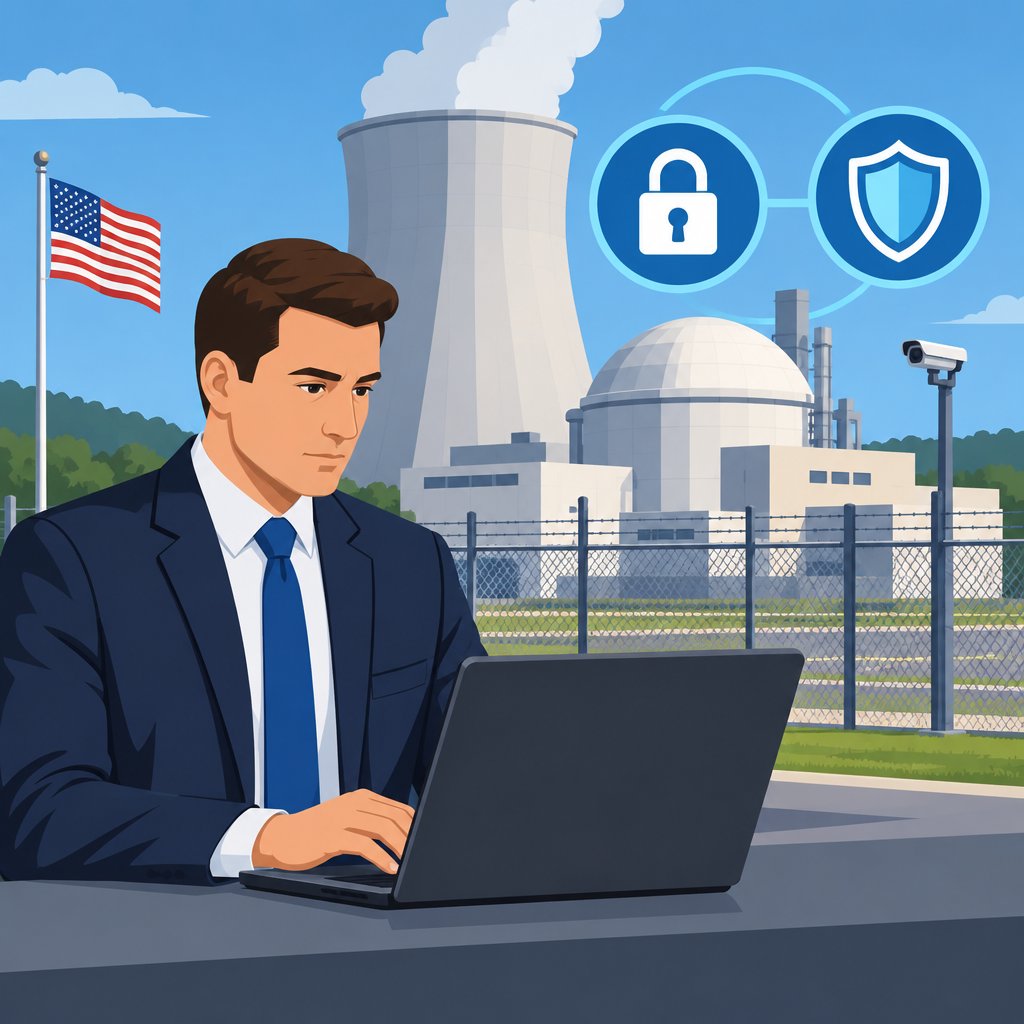
Cybersecurity Integration in Nuclear Security
Digital systems have increased the need for stronger cybersecurity within nuclear security operations.
Nuclear facilities therefore require coordinated measures that address both physical and digital security concerns.
Cybersecurity integration helps protect critical infrastructure from unauthorized access and disruptive incidents.
- Implement cybersecurity protocols within existing security frameworks.
- Conduct regular security assessments and updates to address emerging cyber threats.
Cybersecurity Protocols Within Existing Frameworks
Effective integration begins by examining existing security frameworks for digital vulnerabilities.
Organizations can then introduce protocols that address identified weaknesses and restrict unauthorized system access.
This coordinated approach supports consistent protection across critical nuclear infrastructure.
Regular Assessments and Security Updates
Security assessments help identify new vulnerabilities before they create additional risks.
Regular updates allow organizations to strengthen controls as cyber threats and technologies change.
Continuous review also helps maintain effective safeguards across nuclear security systems.
Sustained Protection for Nuclear Facilities
Integrated cybersecurity measures strengthen the protection of nuclear facilities against evolving digital threats.
Security frameworks become more resilient when organizations combine established procedures with current cybersecurity practices.
Ongoing assessments and timely updates support lasting security across critical infrastructure.
Uncover the Details: Conflict Resolution for Campus Security Officers
Cyber Attack Case Studies at Nuclear Facilities
Cyber attacks have affected nuclear facilities and related critical infrastructure.
These incidents reveal weaknesses that can threaten operations, information, and public confidence.
They also show why facilities need continuous cybersecurity improvements and careful preparation.
Examples of Cyber Attacks on Nuclear Facilities
Several incidents illustrate how attackers can target nuclear systems or supporting infrastructure.
The cases involve malware, power disruptions, and ransomware-related effects.
Together, these events demonstrate the broad consequences of cyber attacks.
- Stuxnet attack on Iran’s Natanz nuclear facility
- Ukraine power grid cyber attack
- WannaCry effects on a United Kingdom nuclear facility
In 2010, the Stuxnet worm targeted Iran’s Natanz nuclear facility.
Observers believed the United States and Israel developed the worm.
It sabotaged enrichment centrifuges and caused significant damage to Iran’s nuclear program.
In 2015 and 2016, attackers targeted Ukraine’s power grid.
The attack caused widespread power outages and demonstrated risks to critical infrastructure.
In 2017, WannaCry ransomware struck the United Kingdom’s National Health Service.
The attack also affected a nuclear facility, although critical systems remained uncompromised.
Security Lessons from These Incidents
These incidents identify several practices that can strengthen cybersecurity at nuclear facilities.
Regular reviews, employee education, technical safeguards, and cooperation all support stronger protection.
Security officers can apply these lessons while addressing changing cyber risks.
Transform Your Career Today
Unlock a personalized career strategy that drives real results. Get tailored advice and a roadmap designed just for you.
Start Now- Regular security audits
- Training and cybersecurity awareness
- Advanced security technologies
- Collaboration and information sharing
Regular security audits help facilities identify vulnerabilities and correct weaknesses.
Training programs teach employees safer cybersecurity practices and strengthen security awareness.
Intrusion detection, network monitoring, and encryption can help identify and limit threats.
Facilities, government agencies, and cybersecurity experts can share threat intelligence and effective practices.
These measures help facilities respond proactively as cyber threats continue changing.
Find Out More: Building Rapport as a Parole Officer
International Cooperation on Cybersecurity in the Nuclear Sector
Organizations like the International Atomic Energy Agency play a crucial role in promoting cybersecurity in the nuclear sector.
Meanwhile, the IAEA works with member states to develop guidelines and recommendations that strengthen cybersecurity measures.
By sharing best practices and information, countries can enhance their nuclear security capabilities.
Therefore, international cooperation helps address evolving cyber threats facing the nuclear industry.
Role of Organizations Like the International Atomic Energy Agency
The IAEA provides technical assistance and training to help member states implement effective cybersecurity measures.
Through its cybersecurity program, the IAEA helps countries develop national strategies and regulatory frameworks.
Additionally, the IAEA coordinates with international organizations and stakeholders to promote cybersecurity best practices.
By working closely with member states, the IAEA builds capacity and strengthens cybersecurity awareness throughout the nuclear sector.
Sharing Best Practices and Information Among Countries
Countries can learn from one another by sharing information about cyber threats and vulnerabilities in the nuclear sector.
Furthermore, collaborative efforts can improve critical infrastructure resilience and strengthen cybersecurity defenses.
Shared best practices help countries develop more effective cybersecurity policies and procedures.
Through timely information sharing, countries can respond quickly to cyber incidents and prevent potential threats.
Enhancing Nuclear Security Through International Cooperation
International cooperation remains vital because cyber threats in the nuclear sector continue changing and becoming more complex.
By working together, countries can coordinate responses to cyber incidents and strengthen global security.
Moreover, cybersecurity collaboration protects nuclear facilities while safeguarding public health and safety.
International cooperation also fosters trust and transparency, supporting a more secure and resilient nuclear industry.
Emerging Technologies for Cybersecurity in the Nuclear Sector
Nuclear security teams can use emerging technologies to strengthen detection, data protection, and responses to cyber threats.
Artificial intelligence and machine learning can support real-time threat detection.
Blockchain can help secure critical data and prevent unauthorized access.
- Artificial intelligence and machine learning algorithms can support real-time threat detection.
- Blockchain technology can secure critical data and help prevent unauthorized access.
- Advanced encryption techniques can protect sensitive information from cyber attacks.
Challenges and Opportunities in Adopting New Cybersecurity Tools
Adopting new cybersecurity tools creates both operational challenges and opportunities for nuclear security.
Facilities must integrate new technologies with existing systems without disrupting operations.
Security officers also need usable tools and training to apply them effectively.
Budget constraints can complicate upgrades as cyber threats continue evolving.
- Integrating new technologies with existing nuclear security systems can create operational challenges.
- Enhanced detection capabilities can help security teams identify and respond to cyber threats more effectively.
- Security officers must use new cybersecurity tools effectively during security operations.
- Training programs can teach security officers how to use and leverage new technologies.
- Budget constraints can limit upgrades to cybersecurity tools and systems.
- Private sector cybersecurity firms can help develop cost-effective solutions for nuclear security.
The nuclear sector must continuously adapt its cybersecurity strategies to address growing cyber threats.
By leveraging AI, blockchain, and encryption, security officers can strengthen defenses and protect critical infrastructure.
Strengthening Cybersecurity for Nuclear Facilities
Cyber threats pose significant risks to nuclear security officers.
These threats can target critical infrastructure, disrupt operations, and compromise sensitive information.
Therefore, nuclear facilities must prioritize cybersecurity measures against potential attacks.
Security officers need training to identify and mitigate cyber threats.
This training helps protect officers and the facilities where they work.
Furthermore, cybersecurity experts and nuclear security officers must collaborate to strengthen facility security.
Their cooperation supports proactive responses to cyber risks and helps safeguard nuclear assets.
Organizations should invest in robust cybersecurity measures and provide ongoing officer training.
They should also implement best practices to prevent cyber threats.
Transform Your Career Today
Unlock a personalized career strategy that drives real results. Get tailored advice and a roadmap designed just for you.
Start NowBy strengthening cybersecurity protocols, organizations can protect nuclear facilities and security officers.
Additional Resources
Google search results for Cyber Threats and Nuclear Security Officers Protective Services
Bing search results for Cyber Threats and Nuclear Security Officers Protective Services


