




Crop Cultivation and Agricultural Innovation
Crop cultivation plays a vital role in agriculture by providing food, raw materials, and income for farmers.
Traditionally, farmers rely on manual labor and conventional methods like tilling and hand-watering.
However, these methods are labor-intensive, time-consuming, and may not always yield optimal results.
Therefore, agricultural workers need innovations that improve cultivation efficiency and productivity.
Biotechnology and Crop Improvement
Biotechnology changes crop genetics to improve important characteristics.
Scientists can develop crops with stronger resistance to pests and diseases.
As a result, farmers may produce higher yields and better-quality crops.
Greater Productivity Under Difficult Conditions
Genetically modified crops can withstand drought and extreme temperatures.
This resilience helps farmers maintain production during harsh environmental conditions.
Consequently, stronger crops can reduce losses and support more reliable harvests.
Improved Nutritional Value
Biotechnology can improve the nutritional profiles of selected crops.
Enhanced crops may provide consumers with additional vitamins and minerals.
Therefore, nutritional improvements can support health benefits for consumers and farmers.
Reduced Dependence on Chemical Pesticides
Pest-resistant crops can reduce the need for chemical pesticide applications.
This change may lower agricultural workers’ exposure to harmful chemicals.
Additionally, reduced pesticide use can lessen agriculture’s environmental impact.
Concerns About Agricultural Biotechnology
Despite these benefits, critics question the possible effects of genetically modified crops.
Some concerns involve unknown risks to human health and the environment.
Moreover, biotech companies’ influence over seed markets raises questions about control and equity.
Future Contributions to Food Security
Biotechnology offers potential solutions to several challenges facing agricultural workers.
However, continued research must address concerns surrounding genetically modified crops.
Future innovation may help biotechnology support food security for generations to come.
Precision Farming Techniques
Precision farming uses technology to give crops and soil what they need.
Farmers combine data analytics, technology, and specialized equipment to guide farm management decisions.
These tools provide detailed insights that can improve efficiency, productivity, and profitability.
Data Guided Crop Management
Precision farming collects information about soil moisture, nutrient content, and crop health.
Farmers analyze this information to adjust their management practices.
Consequently, they can support healthier crops while reducing unnecessary environmental effects.
Technologies Supporting Precision Farming
Several technologies help farmers collect and analyze information about fields and crops.
These tools provide timely information for planting, irrigation, fertilization, and pest control decisions.
Farmers can therefore adjust their practices according to changing field conditions.
- Global Positioning System technology identifies field and equipment locations precisely.
- GPS helps farmers control planting, harvesting, and other agricultural activities.
- Sensors measure soil moisture, temperature, nutrient levels, and crop health.
- Drones capture detailed field images and help farmers monitor crop health.
- Drones can also help detect pests and diseases at an early stage.
Efficient Use of Farm Inputs
Precision farming helps agricultural workers increase efficiency and reduce operating costs.
Data driven decisions can reduce waste while improving crop yields.
Moreover, farmers can minimize their use of water, fertilizers, and pesticides.
Improved Resource Management
Farmers can control fertilizer and pesticide applications more precisely.
This approach limits overuse and helps reduce related costs.
Additionally, GPS guided planting can reduce overlaps, fuel use, and wasted time.
These practices support a more efficient and sustainable agricultural industry.
Find Out More: Power Line Installers: Career Flexibility
Vertical Farming
Vertical farming cultivates crops in vertically stacked layers or structures.
Transform Your Career Today
Unlock a personalized career strategy that drives real results. Get tailored advice and a roadmap designed just for you.
Start NowThis innovative approach offers several benefits for crop cultivation.
Importantly, vertical farming maximizes limited space and resources.
By growing crops upward, vertical farming can increase yield per square foot of land.
This advantage benefits urban areas where land remains scarce and expensive.
Additionally, vertical farming reduces long-distance produce transportation and lowers carbon emissions.
Examples of Successful Vertical Farming Projects
AeroFarms operates as a leading vertical farming company in the United States.
Its state-of-the-art vertical farms use aeroponic technology to grow various leafy greens.
Another successful project, Plenty, operates in California.
Plenty uses vertical hydroponic systems to produce fresh fruits and vegetables year-round.
Meanwhile, Sky Greens in Singapore uses an innovative system with rotating trays.
These rotating towers support continuous harvesting of crops such as lettuce and spinach.
Vertical farming can help revolutionize crop cultivation and provide sustainable agricultural solutions.
Discover More: Safety Tips Every Fence Erector Should Follow on the Job
Sustainable Agricultural Practices
Sustainable agriculture takes a holistic approach to farming and supports the land, ecosystem, and community.
It uses environmentally friendly, economically viable, and socially responsible methods.
Therefore, sustainable agriculture supports current farmers while protecting resources for future generations.
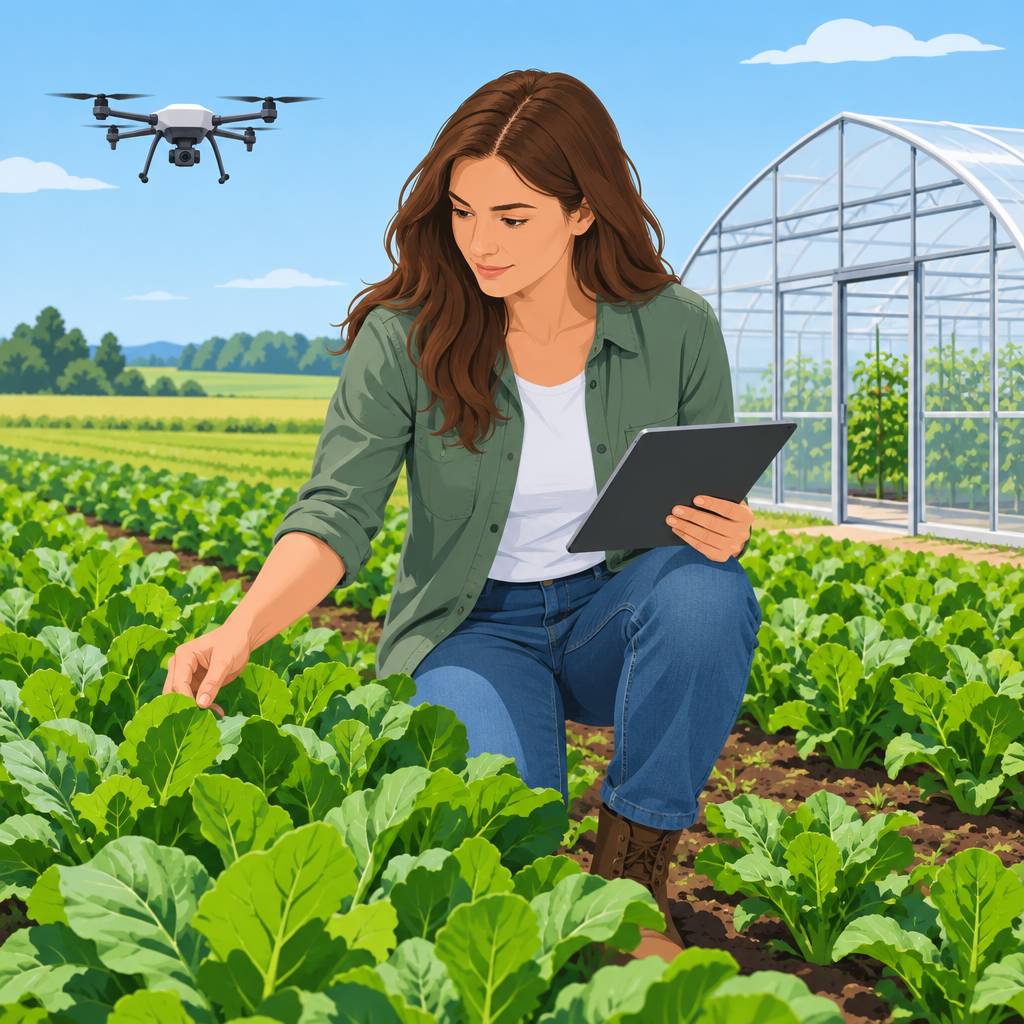
Environmental Preservation and Food Security
Sustainable practices preserve the environment by protecting soil health, water quality, and biodiversity.
By reducing chemical fertilizers and pesticides, sustainable farming limits potential harm to ecosystems.
Furthermore, these methods reduce agriculture’s carbon footprint and support climate change mitigation.
Sustainable agriculture also strengthens long-term food security through diverse and resilient production systems.
Crop rotation, diverse cropping systems, and integrated pest management help farms adapt to changing environmental conditions.
As a result, these practices reduce crop failure risks and improve food production stability.
Sustainable Techniques for Agricultural Workers
Agricultural workers can apply practical techniques that improve farm productivity and resource efficiency.
These methods also support farm profitability while strengthening the agricultural sector’s long-term sustainability.
Workers can select suitable techniques according to their farming conditions and available resources.
- Organic farming avoids synthetic chemicals and uses compost or manure to improve soil fertility and crop health.
- Water conservation uses drip irrigation and rainwater harvesting to reduce waste and improve water efficiency.
- Agroforestry integrates trees and shrubs into farmland, supporting soil conservation, carbon sequestration, and biodiversity.
- Integrated pest management combines biological, cultural, and physical methods to control pests and diseases.
Find Out More: Construction Manager's Checklist for Site Inspections
Drones in Crop Cultivation
Drones support modern agriculture by helping farmers monitor crops and respond to field problems.
Farmers equip drones with high-resolution cameras to inspect crop conditions from above.
This approach gives growers timely observations without relying only on ground inspections.
Drone-Based Crop Monitoring
Crop monitoring drones provide real-time information that supports faster farming decisions.
They also survey large areas efficiently, which helps save time and labor costs.
Furthermore, their collected data helps farmers identify field conditions requiring attention.
- Real-time data helps farmers make informed decisions quickly.
- High-resolution imagery can reveal crop stress and nutrient deficiencies early.
- Early observations can expose pest infestations before they cause greater crop losses.
- Farmers can create precise treatment plans from the collected information.
Drone-Assisted Pest Management
Drones help farmers manage pests by locating affected areas and supporting targeted responses.
Precision spraying limits chemical use and reduces unnecessary exposure for agricultural workers.
Additionally, aerial surveys improve access to difficult-to-reach parts of a field.
- Targeted pesticide application can reduce environmental impact.
- Precision spraying helps avoid excessive chemical application.
- Early pest detection can help prevent crop loss and support higher yields.
- Aerial surveys strengthen pest management across challenging field areas.
The Future of Drone-Based Crop Management
Drones can transform how farmers monitor crops and manage changing field conditions.
Accurate and timely information can improve efficiency, productivity, and resource management.
Moreover, drone use can support sustainability by reducing chemical usage and agricultural waste.
These capabilities empower farmers to make data-driven decisions for stronger yields and more sustainable practices.
Explore Further: Landscape Architecture: Integrating Art and Nature
Transform Your Career Today
Unlock a personalized career strategy that drives real results. Get tailored advice and a roadmap designed just for you.
Start NowAutomation in Agriculture
Automation uses technologies to perform tasks that humans traditionally handled.
In crop cultivation, these systems streamline operations and improve efficiency.
Farmers can apply automation across planting, watering, monitoring, and harvesting activities.
Automation Technologies and Benefits
Robotic systems use sensors and actuators for several crop cultivation tasks.
These machines can plant, water, and harvest crops through programmed actions.
As a result, automation helps farmers organize repetitive work more consistently.
Automated operations can complete tasks faster and more accurately.
They may also reduce labor costs because farms need fewer human workers.
Thus, farmers can manage essential activities with less manual effort.
Implementation Challenges and Future Progress
High upfront costs can complicate the purchase and maintenance of automation technologies.
Moreover, some farmers lack the technical knowledge required to operate these systems effectively.
Training and system management can therefore create additional implementation difficulties.
Certain delicate harvesting tasks still require human dexterity and judgment.
Automation may struggle to reproduce nuanced human decision-making in these situations.
Ongoing technological advances are making automated systems more accessible and user-friendly.
AI-powered systems continue to advance automated crop cultivation practices.
These improvements support more efficient and sustainable agricultural work.
Climate-Resilient Crops
Climate-resilient crops support sustainable agriculture as climate change creates more difficult growing conditions.
These crops can withstand droughts, floods, heatwaves, pests, and diseases.
Therefore, resilient varieties help agricultural workers protect food production and their livelihoods.
Importance of Climate-Resilient Crops
Climate-resilient crops strengthen food security when changing conditions threaten agricultural production.
They also reduce the likelihood of crop failure during extreme weather events.
As a result, these varieties improve the resilience of agricultural systems.
- They help ensure food security during climate change.
- They reduce risks associated with extreme weather.
- They improve the resilience of agricultural systems.
Crop Varieties for Extreme Conditions
Researchers develop new varieties that help crops tolerate severe environmental conditions.
For example, breeders integrate drought-tolerant genes into selected crop species.
Meanwhile, biotechnology can strengthen pest resistance in important crops.
- Breeders integrate drought-tolerant genes into crop species.
- They breed staple crops for greater heat stress resistance.
- Biotechnology engineers pest resistance in selected crops.
Benefits for Agricultural Workers
Stable crop yields can give agricultural workers greater security in their livelihoods.
Additionally, resilient crops can reduce workers’ dependence on chemical pesticides.
These varieties also help workers adapt to changing climate patterns.
- Stable yields can strengthen livelihood security.
- Resilient crops can reduce dependence on chemical pesticides.
- These varieties can improve climate adaptability.
Market and Agricultural Resilience
Adopting climate-resilient crops can give agricultural workers a competitive market advantage.
These varieties support sustainable livelihoods under challenging environmental conditions.
They also contribute to the agriculture sector’s broader resilience during climate change.
Innovation and the Future of Crop Cultivation
Adopting innovative crop cultivation methods helps agricultural workers improve farm performance.
These advancements increase efficiency, support sustainability, and strengthen crop yields.
The main methods include precision agriculture, vertical farming, and hydroponics.
Together, these technologies help farmers use resources efficiently while reducing waste and environmental impact.
Furthermore, agriculture’s future depends on workers adopting methods that improve productivity and profitability.
Therefore, agricultural workers should follow developments in crop cultivation technology and practice.
By using new tools and techniques, farmers can support sustainable production and global food security.
Such adoption can increase efficiency, lower costs, and improve crop quality.
Transform Your Career Today
Unlock a personalized career strategy that drives real results. Get tailored advice and a roadmap designed just for you.
Start NowThis progress can benefit individual farmers and help protect agriculture for future generations.


