




Collaboration in Construction Projects
Construction projects bring multiple stakeholders together around a common goal.
Furthermore, effective collaboration supports successful project delivery.
It keeps all participants aligned with the project’s objectives.
Additionally, collaboration strengthens communication, problem-solving, and decision-making among team members.
By working together, stakeholders share expertise, resources, and knowledge.
This approach also reduces conflicts, misunderstandings, and delays during construction.
Moreover, diverse perspectives encourage innovation and creativity.
Consequently, effective collaboration improves quality, cost efficiency, and delivery time.
Today, collaboration remains essential in a fast-paced, complex construction industry.
Benefits of Collaboration in Construction Projects
Collaboration improves communication among project team members.
As a result, cohesive communication supports more efficient project execution.
Team members can address issues promptly when they communicate openly.
This approach prevents delays and misunderstandings.
Working together helps team members streamline processes and optimize resources.
It also removes bottlenecks and keeps everyone aligned with project goals and timelines.
Consequently, teams can complete projects faster and improve overall productivity.
Different stakeholders can identify mistakes early through collaborative work.
They can then correct issues before those problems create costly rework.
Moreover, collaboration reveals potential risks and supports proactive mitigation strategies.
Collaboration brings diverse perspectives and ideas into problem-solving.
These exchanges can spark innovation and creative approaches to project challenges.
Team members can also use each other’s strengths and experience to develop innovative solutions.
Challenges of Collaboration in Construction Projects
Construction teams face several collaboration challenges that can hinder project success.
These challenges affect trust, communication, decision-making, and task coordination.
Project teams can address obstacles by recognizing them early and creating practical ways to work together.
Lack of Trust Among Project Team Members
Team members may hesitate to share information when they do not trust one another.
This hesitation can weaken cooperation and contribute to project delays.
Project leaders must build confidence through consistent communication and dependable actions.
Communication Barriers Among Diverse Stakeholders
Construction projects involve stakeholders with different priorities and objectives.
Those differences can create misunderstandings, communication barriers, and conflicts.
Clear communication channels help participants exchange information and understand project expectations.
Conflicts of Interest Among Project Parties
Different parties may pursue competing priorities or goals during a project.
These competing interests can produce disagreements, delays, and legal disputes.
Participants should align their interests and support a shared project goal.
Difficulty Coordinating Schedules and Responsibilities
Construction work includes many tasks, responsibilities, schedules, and resources that require careful coordination.
Conflicting priorities or separate locations can make coordination more difficult.
Effective project management helps teams organize responsibilities and maintain progress.
Explore Further: Top Tools and Equipment Used by Professional Surveyors
Clear Project Objectives and Goals
Project teams need clear objectives and goals before work begins.
These targets give every participant a shared direction for daily decisions.
Transform Your Career Today
Unlock a personalized career strategy that drives real results. Get tailored advice and a roadmap designed just for you.
Start NowConsequently, aligned expectations help team members coordinate their responsibilities throughout execution.
Open Communication Among Team Members
Open communication gives team members space to share ideas, concerns, and updates.
Moreover, regular exchanges strengthen trust across the project team.
Team members can then identify information gaps and respond to emerging needs together.
Collaborative Project Management Tools and Technologies
Collaborative project management tools support real-time communication and information sharing.
They help participants coordinate activities while keeping project information accessible.
As a result, teams can manage project execution with greater efficiency.
Regular Meetings and Site Visits
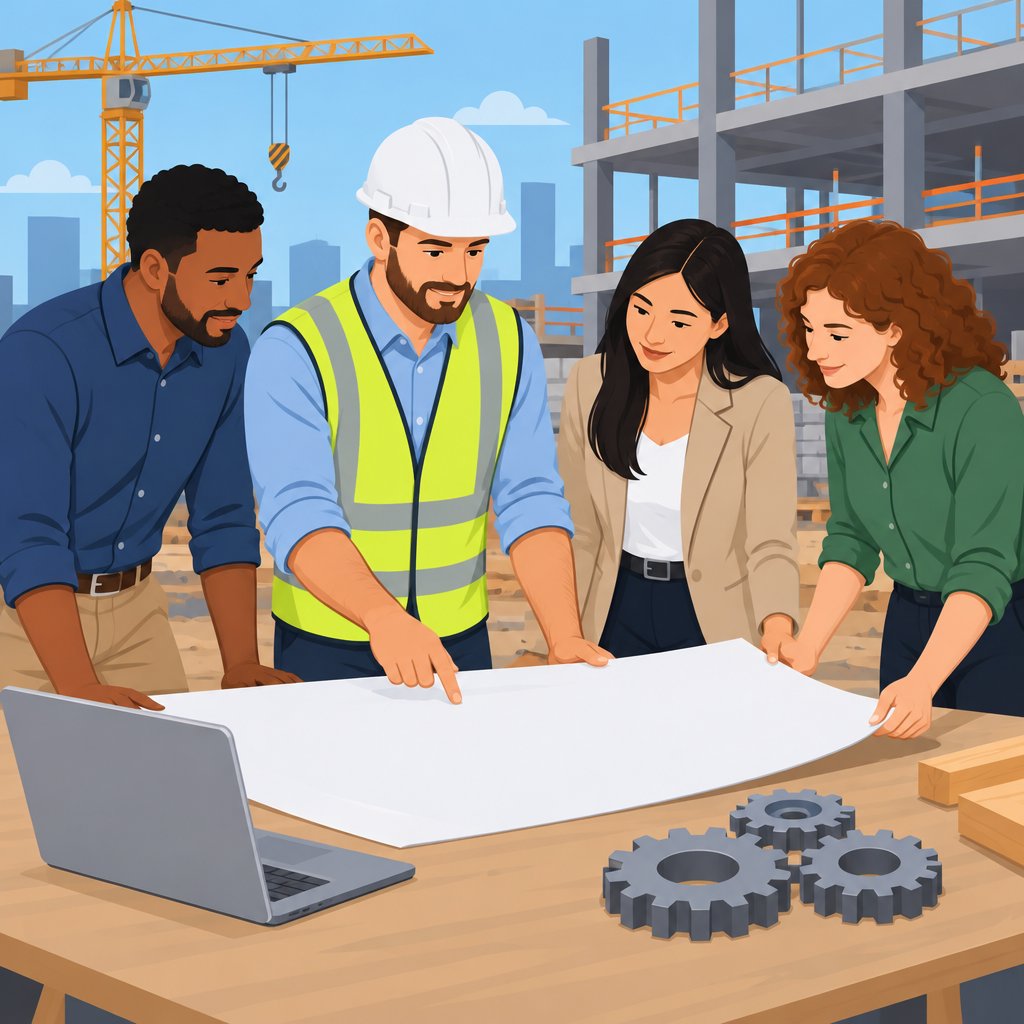
Regular meetings and site visits create opportunities for direct team interaction.
During these sessions, participants clarify misunderstandings and address challenges collectively.
Therefore, face-to-face contact strengthens teamwork and supports a collaborative work environment.
By applying these strategies, construction projects can develop a culture of collaboration.
This culture can support project outcomes while improving team morale and satisfaction.
Collaboration therefore remains an essential part of successful and efficient construction work.
Discover More: Effective Problem-Solving in Construction Projects
Successful Collaboration in Construction Projects
Major construction projects can achieve success when teams collaborate effectively.
These examples show how shared effort supports project completion and stakeholder satisfaction.
Collaboration also encourages creativity, innovation, and efficiency during construction.
Sydney Opera House Construction Collaboration
Collaboration played a crucial role in the Sydney Opera House construction project.
Different teams worked together seamlessly throughout the project.
Their coordinated efforts helped address construction challenges successfully.
Burj Khalifa Project Coordination
The Burj Khalifa project required architects, engineers, and contractors to collaborate closely.
These professionals coordinated their work throughout the construction process.
Their collaboration supported successful completion ahead of schedule.
Empire State Building Renovation
The Empire State Building renovation team collaborated with historical preservation experts.
This partnership preserved the building’s iconic design during modernization.
The project also added modern upgrades and technology.
Consequently, stakeholders, community members, and visitors expressed satisfaction with the results.
Explore Further: How to Make a Good First Impression as a New Mover
Importance of Strong Leadership
Collaborative project environments require strong leadership.
Strong leaders foster teamwork and communication.
Therefore, leadership helps teams work together toward shared project objectives.
Facilitating Collaboration
Project managers play a crucial role in facilitating collaboration.
They encourage open communication among project participants.
In addition, they promote a shared vision that guides team efforts.
Qualities and Skills for Effective Leadership
Effective leadership in construction projects requires strong communication skills.
Leaders also need decision-making skills to guide project activities.
Furthermore, conflict resolution skills help leaders address disagreements effectively.
Uncover the Details: How to Handle Stress as a Warehouse Worker
Collaboration as a Foundation for Sustainable Construction Success
Construction stakeholders should treat collaboration as a core practice for achieving lasting project success.
This approach helps participants communicate clearly while coordinating decisions, responsibilities, and responses throughout the work.
Transform Your Career Today
Unlock a personalized career strategy that drives real results. Get tailored advice and a roadmap designed just for you.
Start NowMoreover, teams can streamline processes, increase efficiency, and reduce errors through consistent cooperation.
As a result, collaborative relationships support stronger decisions and more effective problem-solving during project delivery.
Therefore, stakeholders should actively nurture collaboration to sustain successful outcomes across construction projects.


