




Introduction
Agricultural consultants advise farmers on crop management techniques.
They offer practical insights that can improve yields and support sustainable decisions.
Today, several trends continue to influence crop management practices.
Therefore, consultants must stay informed and adapt their guidance effectively.
Integration of Technology
Technology increasingly shapes modern crop management.
For example, precision farming tools and drones help consultants gather field data efficiently.
Sensors and data analytics support crop health monitoring, yield predictions, and input optimization.
Sustainable Practices
Sustainable practices can reduce agriculture’s environmental impact.
Consultants should promote methods that protect long-term farm viability.
In particular, soil health, water conservation, and biodiversity deserve consistent attention.
Climate Resilience
Climate change creates significant challenges for crop management.
Consultants can recommend varieties that tolerate extreme weather conditions.
They can also help farmers apply adaptive strategies and manage environmental risks.
Market Dynamics
Market dynamics strongly influence effective crop management.
Consultants should assess market trends, consumer preferences, and price fluctuations.
This information can guide planting decisions and encourage suitable crop diversification.
Regulatory Compliance
Regulations also shape responsible crop management.
Consultants should understand local, state, and federal requirements for pesticides, water usage, and land conservation.
By supporting compliance, they help farmers avoid penalties and maintain sustainable operations.
Technology and Data in Modern Crop Management
Technology has transformed modern agriculture by providing tools that improve crop management efficiency.
Precision agriculture and smart farming help farmers monitor crops in real time.
These technologies support timely decisions throughout crop production.
Data analytics help farmers identify trends and make informed management choices.
By analyzing crop information, farmers can optimize decisions that influence yields.
Drones provide aerial surveillance for monitoring crop health.
They also support pesticide application and seed planting.
Agricultural consultants can use technology to gather data and evaluate crop performance.
Consequently, consultants can develop customized solutions for farming needs.
They can use these tools to provide farmers with better insights.
As a result, technology helps consultants improve services and support higher yields.
Technology and data remain essential components of modern crop management.
Sustainable Practices in Agriculture
- Sustainable agriculture continues to gain attention among farmers and agricultural consultants.
- These practices benefit the environment while supporting crop yields.
- Agricultural consultants help farmers transition toward more sustainable methods.
In recent years, agriculture has shifted significantly toward sustainable practices.
Farmers and agricultural consultants recognize methods that protect resources and support long-term profitability.
These methods reduce harmful chemical use and promote biodiversity across agricultural ecosystems.
Consequently, farmers can protect soil health, water quality, and ecosystem stability.
Sustainable practices can also support stronger crop yields.
For example, crop rotation improves soil fertility and helps reduce erosion.
Cover cropping protects soil while supporting long-term field productivity.
Meanwhile, integrated pest management helps farmers address pest problems more effectively.
These approaches can reduce environmental pressures while maintaining productive farming operations.
Transform Your Career Today
Unlock a personalized career strategy that drives real results. Get tailored advice and a roadmap designed just for you.
Start NowAgricultural consultants guide farmers through practical changes to soil conservation and water management.
They also advise farmers on responsible resource utilization.
Furthermore, consultants can recommend sustainable technologies that support efficient crop production.
Precision agriculture tools help farmers optimize production while minimizing environmental impact.
Through expert guidance, farmers can adopt sustainable methods that support environmental health and long-term profitability.
Find Out More: Environmental Scientists: Guardians of Agricultural Health
Climate Change Adaptation
- Climate change significantly affects crop production worldwide.
- Extreme weather events, including droughts and floods, can reduce crop yields.
- Rising temperatures can also affect plant growth and development.
Strategies for Mitigating Climate Change Effects on Agriculture
- Sustainable agricultural practices can help reduce greenhouse gas emissions.
- Precision agriculture techniques can optimize resource use and minimize environmental impact.
- Climate-resilient crop varieties can help farmers adapt to changing conditions.
How Agricultural Consultants Support Climate Adaptation
- Agricultural consultants provide knowledge and resources for addressing climate change challenges.
- They conduct risk assessments and develop customized adaptation strategies for individual farms.
- Consultants help farmers implement sustainable practices that improve resilience and reduce vulnerability.
Farmers can mitigate climate change effects through consultant guidance and sustainable practices.
Collaboration can strengthen agricultural resilience.
These efforts can support food security for future generations.
See Related Content: Food Science Research: Current Trends and Discoveries
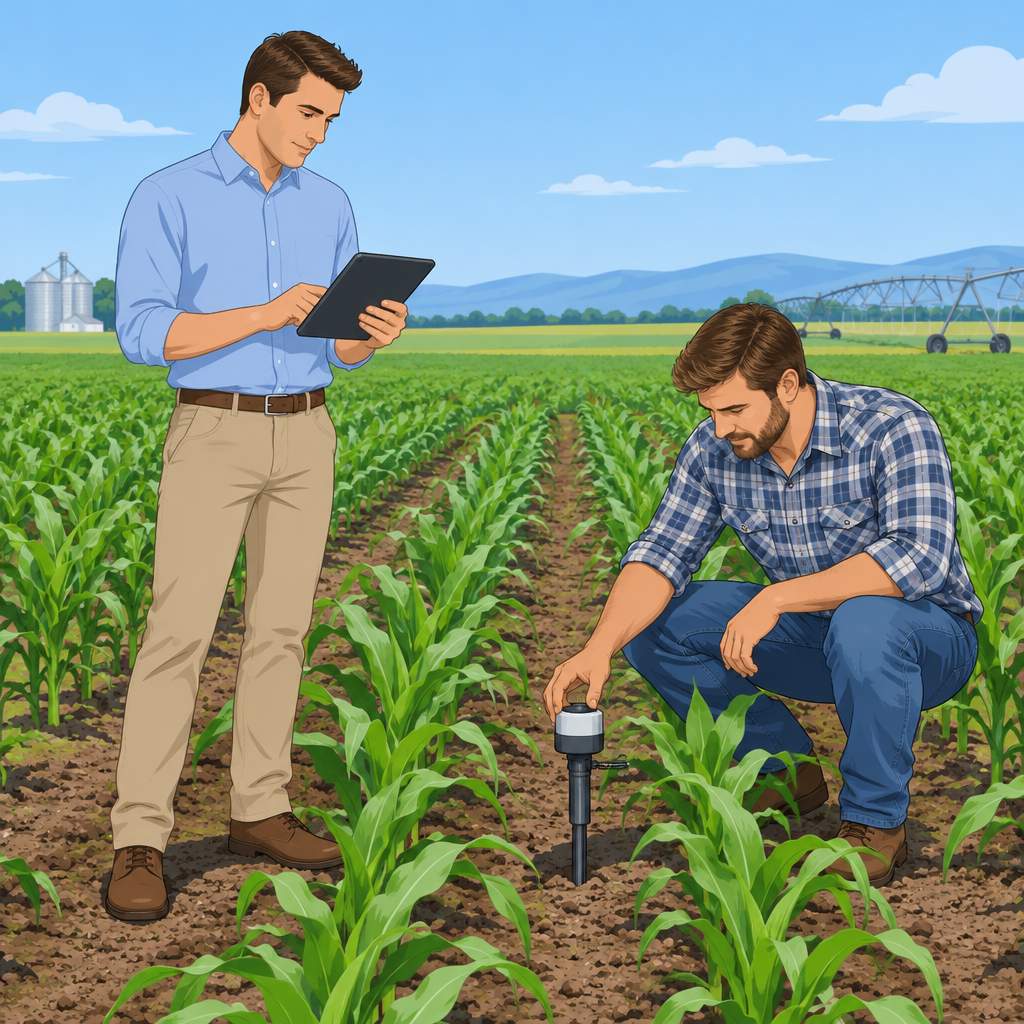
Precision Agriculture
Precision agriculture uses technology and data analysis to optimize crop production.
It helps farmers make informed decisions, reduce waste, and increase productivity.
Moreover, GPS mapping and sensors improve accuracy while saving resources.
- Importance: Precision agriculture helps farmers make informed decisions and increase productivity.
- Efficiency: GPS mapping and sensors improve accuracy while helping farmers save resources.
- Cost Reduction: Farmers minimize expenses by targeting inputs where they are needed most.
- Role of Consultants: Agricultural consultants help farmers adopt precision agriculture practices.
- Implementation: Consultants provide expertise in technology selection, data analysis, and customized recommendations.
- Training: Consultants train farmers to use precision agriculture tools and interpret data.
- Monitoring: Consultants monitor effectiveness and adjust practices as needed.
You Might Also Like: Livestock Health Management Strategies
Crop Health and Disease Management
Managing crop health and disease remains a key challenge for farmers.
Crop diseases can significantly reduce yields and quality, causing financial losses for farmers.
Agricultural consultants help farmers prevent and manage crop diseases effectively.
Challenges in Crop Health and Disease Management
- Identifying diseases at an early stage
- Choosing the right treatment
- Minimizing disease spread
- Managing changing weather patterns
Early disease identification presents one of the main challenges in crop health management.
Some diseases remain hidden until they damage a significant portion of the crop.
Therefore, farmers should monitor crops regularly and seek professional advice when symptoms appear.
Farmers also face challenges when selecting suitable disease treatments.
Various chemical and biological treatments exist, but their effectiveness differs among diseases.
Consultants recommend treatments according to the disease, crop variety, and environmental conditions.
Furthermore, farmers must limit disease spread throughout the field.
Some diseases move quickly between plants and can damage an entire crop.
Crop rotation, resistant varieties, and sanitation practices can reduce disease transmission.
These integrated pest management methods can also reduce reliance on chemical treatments.
Changing weather patterns create additional difficulties for crop health management.
Unpredictable conditions can increase crop vulnerability to certain diseases.
Consultants help farmers choose strategies that address weather-related disease risks.
Integrated Pest Management and Related Strategies
- Implementing integrated pest management practices
- Using biological control agents
- Adopting sustainable farming practices
- Using precision agriculture technologies
Integrated pest management takes a comprehensive approach to crop pests, diseases, and weeds.
This approach emphasizes prevention and environmentally sustainable control methods.
Practices include crop rotation, beneficial insects, and cultural methods that reduce pest populations.
Biological control agents provide another option for managing crop pests.
Predatory insects and parasitic nematodes can act as natural enemies of pests.
Consultants can recommend biological agents within an integrated pest management plan.
This strategy can reduce dependence on chemical pesticides and support sustainable farming.
Sustainable farming practices also support long-term crop health and disease management.
Cover crops, soil conservation, and water management can improve soil health.
Healthy soil can reduce conditions that encourage certain crop diseases.
Transform Your Career Today
Unlock a personalized career strategy that drives real results. Get tailored advice and a roadmap designed just for you.
Start NowConsultants assist farmers with practical sustainable farming methods.
Drones, sensors, and GPS-guided equipment can help farmers monitor crop health.
These tools can support earlier disease detection and more targeted treatments.
Consequently, farmers can make data-driven decisions that improve crop productivity.
Consultants help farmers integrate these technologies into crop management practices.
Responsibilities of Agricultural Consultants
- Providing expert disease management advice
- Offering crop health training and education
- Developing customized disease management plans
- Implementing early detection monitoring systems
They provide guidance on diagnosis, treatment, and disease prevention.
Consultants use their disease knowledge to develop solutions for specific farm conditions.
They also provide training and education on crop health management.
Training helps farmers improve their ability to identify and manage diseases.
As a result, farmers can strengthen crop health and productivity.
Consultants may also conduct workshops and seminars about disease prevention and control.
Additionally, consultants develop customized disease management plans for individual farms.
They assess each farm’s needs, conditions, and disease management challenges.
Then, they outline targeted strategies, timelines, and monitoring systems.
These plans support proactive disease management throughout the crop cycle.
Consultants also establish monitoring systems that support early disease detection.
Scouting programs, remote sensing tools, and disease forecasting models can identify emerging problems.
Early detection allows farmers to respond quickly and limit disease spread.
Timely action can reduce crop damage and related financial losses.
Effective disease management combines expert advice, integrated practices, and careful monitoring.
These measures help farmers protect crop health and maintain productive farming systems.
Agricultural consultants support these efforts through tailored guidance and practical disease management plans.
Learn More: Common Misconceptions About Plant Pathology
Market Trends and Consumer Demand
Market trends and consumer demand strongly influence effective crop management.
Agricultural consultants track these changes to guide farmers effectively.
Consumer preferences also help consultants recommend suitable crop selections.
- Market trends and consumer demand play a crucial role in crop management.
- Agricultural consultants must stay informed about market demands to assist farmers effectively.
- Understanding consumer preferences helps consultants guide farmers in crop selection.
- By identifying market trends, consultants can recommend crop varieties that consumers demand.
- Consumer demand for organic produce has increased in recent years.
Importance of Market Trends and Consumer Demand
Market trends influence crop prices and directly affect farmers’ profitability.
Consumer demand shows farmers which crops deserve priority.
Therefore, production decisions should reflect current market needs.
- Market trends influence crop prices and affect farmers’ profitability.
- Consumer demand indicates which crops farmers should prioritize.
- Aligning production with market demands can help farmers maximize profits.
- Ignoring market trends can cause oversupply or underproduction of certain crops.
- Consultants bridge the gap between farmers and market demands.
Strategies for Agricultural Consultants
Consultants can research market conditions regularly to identify changing consumer demands.
They can also collaborate with farmers when developing responsive production strategies.
Additionally, consultants can recommend diversification and value-added opportunities.
- Regularly research and analyze market trends to anticipate changing consumer demands.
- Collaborate with farmers to develop effective market strategies.
- Provide crop diversification guidance for different consumer preferences.
- Recommend sustainable practices that support demand for eco-friendly products.
- Offer expertise on value-added products to help farmers increase profit margins.
Regulatory Compliance
- Farmers must follow government regulations to protect food safety and environmental sustainability.
- Agricultural consultants help farmers understand and meet these requirements.
- They also support farmers as they apply regulations throughout crop management.
Regulatory compliance plays an essential role in crop management.
Farmers must follow government regulations to protect food safety and environmental sustainability.
These rules help farmers produce safe, high-quality crops.
Compliance protects consumers and limits harmful environmental practices.
Common requirements address pesticides, fertilizers, and other agricultural chemicals.
Farmers must also follow rules for water use, waste management, and land conservation.
These practices help reduce farming’s environmental impact.
Meanwhile, consultants interpret complex requirements and explain practical implementation steps.
Transform Your Career Today
Unlock a personalized career strategy that drives real results. Get tailored advice and a roadmap designed just for you.
Start NowThey develop compliance strategies that match each farm’s specific needs.
Consultants also help farmers track regulatory changes and crop management developments.
Additionally, they provide training, resources, and ongoing support.
They conduct audits and assessments to monitor compliance and identify improvements.
Working together, farmers and consultants can maintain responsible crop management practices.
These efforts support the agriculture industry while protecting the environment.
Agricultural Consulting and the Future of Crop Management
Agricultural consultants must stay updated on key crop management trends to provide valuable support to farmers.
Technology and data-driven solutions now shape consultants’ evolving role in improving crop yields.
By adapting practices and using innovative techniques, consultants help farmers maximize crop productivity and sustainability.
Additionally, consultants must keep learning to address challenges in today’s dynamic agricultural landscape.
Through collaboration, knowledge-sharing, and practical expertise, they can shape the future of crop management.
Additional Resources
Google search results for Agricultural Consultants: Key Trends in Crop Management Agricultural
Bing search results for Agricultural Consultants: Key Trends in Crop Management Agricultural


