




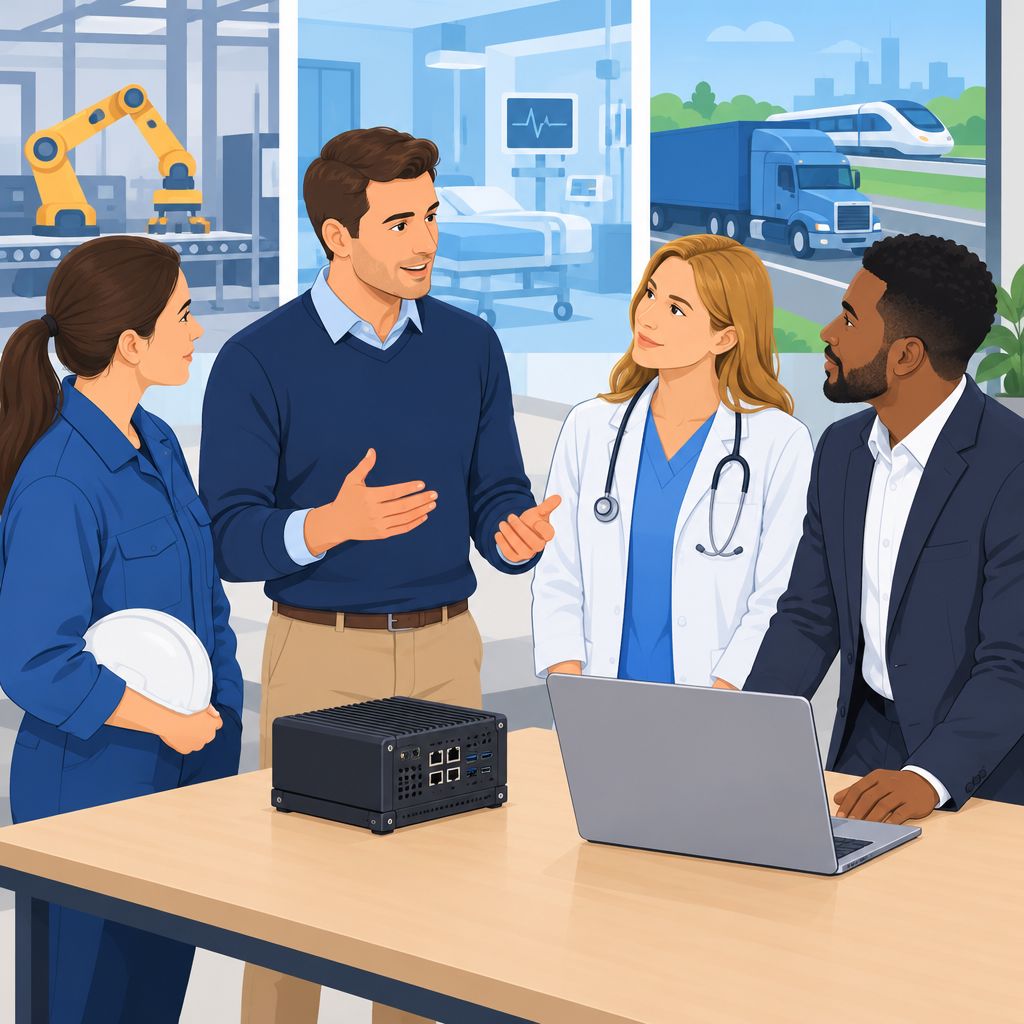
Edge Computing Creates Demand Across Industries
Edge computing processes data closer to its source.
It improves efficiency and reduces latency.
Today, companies increasingly rely on real-time data processing.
Businesses therefore prioritize immediate decision-making.
IoT devices and smart technologies have increased demand for edge computing.
Specialists design and implement systems that process data at network edges.
Their skills support performance and data security in decentralized environments.
Consequently, organizations recruit and retain professionals with edge computing expertise.
Healthcare Needs Rapid Data Processing
Healthcare providers need instant access to medical data.
Medical devices require low-latency connections to support effective patient care.
Furthermore, edge computing enables real-time patient monitoring and data analysis.
As telehealth expands, hospitals and clinics seek edge computing specialists.
Manufacturing Improves Factory Operations
Manufacturers use edge computing to improve operational efficiency.
Smart factories depend on real-time data for predictive maintenance.
By processing information locally, manufacturers reduce downtime and improve productivity.
Therefore, many manufacturing companies seek professionals with edge computing skills.
Transportation Uses Data For Smarter Logistics
Transportation and logistics companies use edge computing for tracking and route optimization.
Real-time analysis strengthens supply chain management and reduces delays.
Meanwhile, smart technologies continue changing logistics operations.
As adoption grows, companies need specialists who understand edge computing infrastructure.
Telecommunications Strengthens Network Performance
Telecommunications companies invest in edge computing to enhance network performance.
They use this technology to support 5G infrastructure and IoT connectivity.
As networks evolve, companies increasingly require edge computing expertise.
This demand creates opportunities for professionals who can support decentralized network environments.
Across these industries, businesses continue prioritizing edge computing capabilities.
As organizations adopt edge solutions, skilled professionals will find significant opportunities.
Overview of Edge Computing
Edge computing changes how organizations process and manage data.
Unlike traditional cloud computing, it moves processing closer to each data source.
This decentralized approach supports real-time analysis and strengthens operational efficiency.
Differences Between Edge and Cloud Computing
Edge computing processes information near endpoint devices.
Traditional cloud computing sends information to centralized data centers.
Therefore, edge systems can respond faster while using network bandwidth more efficiently.
- Processing location: Edge systems process data near its source, while cloud systems use centralized data centers.
- Latency: Edge processing reduces delays because devices receive decisions closer to their operating points.
- Bandwidth usage: Local processing reduces the information that devices transmit to cloud platforms.
- Real-time response: Edge systems analyze information quickly for applications requiring immediate action.
Operational Benefits of Edge Computing
Organizations gain several operational advantages when they adopt edge computing.
These advantages support faster responses, more efficient networks, and stronger local control.
Moreover, edge systems can expand as organizations add more connected devices.
- Reduced latency: Edge computing shortens response times for autonomous vehicles and smart manufacturing systems.
- Bandwidth efficiency: Local processing reduces transmitted data, which improves performance and lowers costs.
- Improved processing: Nearby analysis provides quicker insights and supports faster decisions.
- Enhanced security: Local processing limits data exposure during transmission and keeps sensitive information nearby.
- Scalability: Organizations can add edge devices without overloading centralized systems.
Factors Increasing Demand for Edge Solutions
Several technology trends continue to increase demand for edge computing solutions.
Organizations need faster ways to manage the large data volumes produced by connected systems.
Consequently, edge computing supports real-time applications across multiple sectors.
- Internet of Things: Growing device networks generate data that requires efficient local processing.
- Artificial intelligence: Edge systems provide rapid analysis for real-time artificial intelligence applications.
- Industry 4.0: Smart factories use connected systems and edge processing to optimize operations.
- Healthcare innovation: Edge systems support telemedicine and remote patient monitoring through real-time analysis.
- Smart cities: Urban systems use edge processing to manage smart devices, public services, and resources.
Strategic Role of Edge Computing
Edge computing addresses growing demands for timely data processing across modern industries.
It combines local analysis with connected technologies to improve operational responsiveness.
Transform Your Career Today
Unlock a personalized career strategy that drives real results. Get tailored advice and a roadmap designed just for you.
Start NowAs organizations adopt these technologies, they will need specialists who understand edge computing systems.
Edge Computing Strengthens Telecommunications Networks
Edge computing is transforming the telecommunications industry.
It improves network performance by processing data near its source.
This approach reduces latency and improves data transmission efficiency.
Consequently, telecom companies can provide more responsive customer services.
It also reduces congestion on central data servers.
Real-time applications, including video streaming and gaming, benefit from faster processing.
Furthermore, providers can distribute workloads across multiple edge locations.
Users experience faster connections and smoother performance during periods of high demand.
These improvements can strengthen customer satisfaction and retention.
Edge Computing Supports Practical 5G Deployments
5G represents a major application of edge computing in telecommunications.
Telecom companies use edge infrastructure to manage the substantial traffic generated by 5G.
They place servers closer to users, which enables faster data processing.
This arrangement supports applications that require responsive, real-time interaction.
- Enhanced Mobile Experiences: Verizon uses edge computing to improve mobile experiences in densely populated urban areas.
- Smart City Applications: AT&T integrates edge computing into smart city initiatives for faster IoT responses.
- Remote Healthcare: T-Mobile uses edge computing for telemedicine and quicker transfers between patients and hospitals.
- Augmented and Virtual Reality: Telecom firms use edge technology to deliver applications with minimal latency.
These applications demonstrate how edge computing can expand the capabilities of 5G networks.
Telecommunications Roles Created by Edge Initiatives
The growth of edge computing creates new demand for skilled telecommunications professionals.
Organizations need specialists who can design, operate, and protect distributed infrastructure.
These professionals support reliable services as companies expand their edge initiatives.
- Network Engineers: They design and manage infrastructure while maintaining efficient data flow.
- Data Analysts: They interpret data from edge devices and support informed organizational decisions.
- System Architects: They design scalable, secure, and reliable edge computing systems.
- Cloud Developers: They create applications that use edge computing capabilities effectively.
- Cybersecurity Specialists: They protect edge environments and safeguard sensitive information.
As the industry evolves, demand for these skills will continue to grow.
Investment and Security Challenges at the Edge
Despite its benefits, edge computing presents several challenges for telecommunications companies.
First, providers must make substantial investments in infrastructure upgrades.
These upgrades can require considerable time and financial resources.
Second, companies must secure data processed closer to users.
Distributed environments can create additional vulnerabilities without strong protective measures.
Therefore, cybersecurity specialists play an increasingly important role.
Third, inconsistent protocols can create compatibility problems among different vendors.
Industry standards could simplify integration and encourage collaboration among service providers.
Strategic Growth Through Edge Computing
These challenges also create significant opportunities for telecommunications companies.
Providers that adopt edge computing effectively can strengthen their competitive position.
They can introduce services that attract customers and support revenue growth.
Additionally, 5G-enabled IoT applications may create further opportunities for expansion.
Professionals with relevant technical skills can pursue meaningful career growth in this field.
Network engineers, analysts, architects, developers, and security specialists all support this transition.
Telecommunications companies that invest strategically can prepare for an increasingly digital marketplace.
Explore Further: Understanding Network Architect Job Titles
Healthcare Sector
Healthcare providers increasingly use edge computing to support responsive care and efficient data handling.
The technology analyzes information near its source, helping clinical teams access timely insights.
Hospitals and clinics use wearable monitors and connected medical equipment for this purpose.
Consequently, healthcare organizations need professionals who can manage these technologies effectively.
Real-Time Data Analysis
Healthcare systems increasingly depend on immediate analysis from connected devices.
Transform Your Career Today
Unlock a personalized career strategy that drives real results. Get tailored advice and a roadmap designed just for you.
Start NowLocal servers can receive patient vital signs and provide insights for timely clinical responses.
Furthermore, continuous glucose tracking can help clinicians adjust diabetes treatment proactively.
Edge devices can filter information before transmission to cloud systems.
This process reduces bandwidth demands and helps healthcare networks remain responsive.
Therefore, clinicians can review relevant information sooner and make informed decisions.
Telemedicine Support
Edge computing helps healthcare providers deliver more responsive telemedicine services.
Patients can consult professionals remotely without traveling to healthcare facilities.
Meanwhile, local data processing supports stable connections during virtual consultations.
Wearable devices can track heart rate, oxygen saturation, and sleep patterns.
These devices transmit health information quickly to healthcare providers.
Additionally, automated alerts can encourage earlier responses and strengthen preventative care.
Remote Patient Monitoring
Remote monitoring solutions now support continuous observation beyond traditional clinical settings.
Edge systems analyze information from remote devices without unnecessary processing delays.
As a result, facilities can monitor patients while reducing some in-hospital stays.
Post-operative patients can receive ongoing observation that helps identify potential complications.
Clinicians can also follow chronic illness patients without requiring frequent clinic visits.
This approach improves accessibility and helps providers manage larger patient populations.
Medical Imaging Improvements
Medical imaging systems generate substantial information through MRI and CT examinations.
Edge devices can process initial images before sending them for further review.
This workflow helps radiologists receive usable images more quickly.
Faster processing can support timely diagnoses and treatment planning.
Moreover, nearby imaging software can help healthcare teams examine results efficiently.
Improved access to processed images can also strengthen collaboration among clinical teams.
Healthcare Employment Opportunities
Healthcare organizations increasingly seek specialists who understand edge computing applications.
These professionals help deploy, protect, connect, and improve technology-centered healthcare systems.
Several roles support this transition across clinical, analytical, and technical functions.
- Health Informatics Specialists: They manage health data and design solutions that improve patient information handling.
- Data Scientists: They interpret healthcare datasets and develop algorithms for predictive analysis.
- Cybersecurity Experts: They protect sensitive health information from threats involving connected devices.
- Network Engineers: They maintain reliable connections across healthcare systems using edge infrastructure.
- Clinical Engineers: They integrate edge devices with existing healthcare systems and equipment.
Demand for these roles reflects healthcare’s growing reliance on technology-centered services.
Organizations must invest in professionals who can manage edge systems responsibly and effectively.
Technology-Driven Healthcare Delivery
Edge computing supports faster analysis, more responsive monitoring, and improved healthcare delivery.
Telemedicine and remote monitoring can connect patients with care while reducing unnecessary facility visits.
Medical imaging workflows can also help clinical teams reach decisions more efficiently.
Healthcare stakeholders should prepare their systems and workforce for this continuing technological shift.
You Might Also Like: IT Governance Manager's Role in Incident Response
Smart Factories and IoT-Enabled Manufacturing
Edge computing transforms manufacturing and industrial automation.
Smart factories combine advanced technologies with established manufacturing processes.
Consequently, manufacturers improve production, product quality, and operating costs.
- Instant data processing: IoT devices collect production data, while edge systems analyze it locally.
- Downtime awareness: Sensors monitor equipment health and reveal developing wear or damage.
- Production scheduling: Managers adjust schedules dynamically, using timely operational information.
- Quality control: Continuous monitoring enables immediate manufacturing adjustments and consistent product quality.
Predictive Maintenance and Supply Chain Optimization
Edge computing supports predictive maintenance by analyzing equipment data in real time.
This approach identifies warning patterns before machinery fails.
Therefore, manufacturers reduce unexpected downtime and control maintenance expenses.
- Data-driven insights: Edge devices detect patterns and anomalies across equipment sensor data.
- Maintenance scheduling: Organizations plan repairs during periods that create less disruption.
- Inventory management: Real-time tracking helps organizations prevent stockouts and overstocking.
- Supply chain visibility: Timely information helps teams respond to changing demand and supply problems.
Specialized Careers in Industrial Edge Computing
Manufacturers need specialized professionals as they adopt edge computing and connected production systems.
Transform Your Career Today
Unlock a personalized career strategy that drives real results. Get tailored advice and a roadmap designed just for you.
Start NowThese employees connect devices, interpret operational data, and protect industrial networks.
Additionally, their expertise helps organizations capture the technology’s operational value.
- IoT specialists: They design connected manufacturing solutions and integrate device data.
- Operational technology engineers: They integrate and maintain systems supporting production operations.
- Process control experts: They refine manufacturing controls using information from edge devices.
- Data analysts: They interpret connected-device data and support production decisions.
- Security experts: They defend IoT and edge systems against cyber threats.
Industrial Transformation Through Edge Computing
Edge computing reshapes manufacturing by improving efficiency and strengthening predictive capabilities.
As smart factories expand, organizations will seek professionals who can guide this transformation.
Professionals who develop these skills can pursue rewarding careers in manufacturing and industrial automation.
Learn More: How IT Procurement Specialists Manage Vendor Relationships
Edge computing is transforming automotive and transportation systems.
This technology supports autonomous vehicles, smart traffic systems, and more responsive transportation services.
Edge Computing for Autonomous Vehicle Operations
Automakers increasingly use edge computing to advance autonomous vehicle technology.
Vehicles collect and analyze data from multiple sensors during operation.
This rapid analysis supports decisions required for safe navigation.
Additionally, edge computing accelerates vehicle-to-everything communication.
This communication connects vehicles with other vehicles, infrastructure, and pedestrians.
Consequently, vehicles gain greater awareness of nearby conditions.
They can also respond quickly to road changes and nearby obstacles.
This responsiveness helps prevent accidents and protect passengers.
Smart Traffic Management with Edge Computing
Edge computing also improves traffic management systems.
For example, smart traffic lights analyze traffic patterns in real time.
These systems adjust signal timing to reduce congestion and driver delays.
Moreover, connected traffic systems support faster emergency response.
Emergency responders can receive current traffic updates during critical situations.
They can then navigate congested areas more efficiently.
Traffic data also helps city planners identify congested routes.
Planners can use those insights to develop more efficient transportation networks.
Real-Time Processing for Safer Transportation
Real-time processing provides major benefits across automotive operations.
Quick analysis allows vehicles to respond immediately to changing surroundings.
It also reduces delays when vehicles interpret sensor information.
Furthermore, connected vehicles can exchange information about road conditions and hazards.
They can also share weather information with other connected vehicles.
This exchange strengthens situational awareness and supports safer travel.
Real-time systems can also improve energy efficiency.
Vehicles can optimize routes according to current traffic conditions.
As a result, they can reduce fuel consumption and emissions.
Career Opportunities in Connected Transportation
The growth of edge computing has expanded automotive and transportation careers.
Companies seek specialists who can develop, integrate, and protect connected systems.
Several roles now support innovation across vehicles and transportation infrastructure.
- Automotive Software Engineers: They develop real-time software and vehicle-to-everything communication algorithms.
- Data Analysts: They interpret vehicle data and help improve performance and safety metrics.
- Systems Integration Specialists: They connect edge computing components with vehicle and traffic infrastructure.
- Cybersecurity Experts: They protect connected vehicles and transportation systems from cyber threats.
- Research and Development Engineers: They improve autonomous vehicle safety and efficiency through new technologies.
Future Opportunities for Transportation Innovation
Edge computing continues to reshape automotive and transportation operations.
It strengthens vehicle safety, communication, efficiency, and traffic coordination.
Consequently, transportation companies continue seeking skilled technology specialists.
Software engineers, analysts, integration specialists, and security experts support this development.
Transform Your Career Today
Unlock a personalized career strategy that drives real results. Get tailored advice and a roadmap designed just for you.
Start NowAs edge computing advances, transportation systems can become safer and more efficient.
These developments will create additional opportunities for automotive innovation.
Gain More Insights: Impact of IT Risk Managers on Business Continuity
Retail and E-commerce
Retail and e-commerce sectors experience rapid technological advancements.
Edge computing transforms customer experiences by processing data closer to its source.
This approach improves speed and operational efficiency for retailers.
Furthermore, retailers can personalize services and anticipate customer needs in real time.
Enhancing Customer Experiences
Edge computing helps retailers create personalized customer experiences.
For example, targeted promotions and customized recommendations reflect individual preferences.
Local data analysis helps retailers craft offers that resonate with shoppers.
A customer browsing an online store may receive recommendations based on past purchases.
Consequently, real-time analysis can increase satisfaction and loyalty.
Moreover, edge computing makes retail platforms more responsive.
Shoppers experience reduced latency and faster load times during online journeys.
Quick product information supports consumer decision-making.
Meanwhile, customers enjoy smoother transitions between in-store and online experiences.
Real-Time Inventory Management
Effective inventory management remains crucial for retailers.
Edge computing enables businesses to monitor inventory levels in real time.
Retailers can track stock across multiple locations simultaneously.
This capability reduces the risk of stockouts and overstocking.
For instance, an online order can trigger immediate availability checks across stores.
Therefore, customers receive more accurate delivery timelines.
Real-time information also helps retailers optimize their supply chains.
Applications in Logistics and Supply Chain
Edge computing supports logistics and supply chain management.
Real-time analytics help businesses respond quickly to changing conditions.
For example, retailers can manage fleets with GPS and IoT devices.
They can track shipments in real time and support timely deliveries.
Additionally, these technologies improve route planning.
Traffic and weather analysis helps logistics companies optimize delivery routes.
This efficiency reduces costs and improves customer satisfaction.
Customers can also receive transparent tracking information.
Job Roles in Demand
Edge computing creates demand for skilled professionals across retail and e-commerce.
Businesses continue adding roles as they adopt new technologies.
Several positions now support data-driven retail operations.
- Data Analysts: These professionals analyze data from various sources and support effective marketing strategies.
- E-commerce Platform Developers: These developers maintain robust platforms and support smooth application performance.
- Customer Experience Experts: These specialists study customer behavior and improve personalization techniques.
These roles reflect the growing importance of enhanced digital experiences.
Therefore, professionals with edge computing expertise can find valuable opportunities.
Challenges and Considerations
Despite its benefits, edge computing creates challenges for retailers.
Retailers must invest in suitable infrastructure and technology.
Building a secure edge environment requires careful planning.
Businesses must protect data privacy and security as information collection increases.
Transform Your Career Today
Unlock a personalized career strategy that drives real results. Get tailored advice and a roadmap designed just for you.
Start NowMoreover, staff training helps employees use edge computing systems effectively.
This knowledge allows businesses to maximize their technology investments.
The Future of Retail and E-commerce with Edge Computing
Edge computing will continue shaping the future of retail and e-commerce.
Retailers will increasingly use this technology to improve customer experiences.
As competition grows, personalized services will become essential for retailers.
Additionally, AI and machine learning will expand edge computing applications in retail.
These technologies will help retailers analyze customer data in real time.
Consequently, businesses can continue improving their offerings and service delivery.
Retailers that embrace edge computing can strengthen customer relationships and brand loyalty.
Energy and Utilities Sector
The energy and utilities sector is experiencing a transformative shift through edge computing technologies.
This shift benefits renewable energy management and smart grid technologies.
Organizations increasingly adopting these innovations need more professionals with relevant technical skills.
Edge Computing for Renewable Energy Management
Edge computing helps operators optimize renewable energy resources more effectively.
Wind turbines and solar panels continuously generate large amounts of operational data.
Local processing lets operators make timely adjustments that improve energy efficiency.
- Real-time Data Processing: Local processing minimizes latency and supports responsive energy management.
- Predictive Maintenance: Equipment analysis identifies potential failures before they occur, reducing downtime.
- Optimized Energy Production: Edge devices adjust energy output according to changing demand.
Smart Grid Technologies
Smart grids rely on timely information to manage energy distribution effectively.
Edge computing strengthens smart grid operations through faster local analysis.
These capabilities support reliability, security, and renewable energy integration.
- Improved Grid Reliability: Local analytics detect faults quickly, helping minimize outages.
- Enhanced Security: Decentralized data storage makes widespread cyber-attacks more difficult.
- Distributed Energy Integration: Edge computing connects renewable resources with the broader grid.
Real-time Monitoring and Analysis Applications
Real-time monitoring remains essential for effective energy distribution.
Edge computing lets companies collect and analyze information from multiple sources immediately.
These applications help operators maintain stability and improve energy delivery.
- Grid Monitoring: Sensors measure voltage, current, and frequency to support grid stability.
- Energy Consumption Monitoring: Smart meters show consumers how they use energy.
- Load Balancing: Real-time processing distributes loads and helps prevent overload situations.
- Renewable Energy Forecasting: Local weather data helps predict renewable energy generation.
Career Opportunities in the Energy and Utilities Sector
Edge computing growth creates diverse career opportunities across the energy and utilities sector.
Companies seek professionals who can apply these technologies effectively.
These roles support data management, grid performance, sustainability, cybersecurity, and connectivity.
- Data Engineers: They design systems that collect, process, store, and provide reliable data.
- Grid Analysts: They evaluate smart grid data to improve distribution and reliability.
- Sustainability Consultants: They develop strategies that reduce environmental impact and support compliance.
- Cybersecurity Experts: They protect networked systems from threats and vulnerabilities.
- Network Engineers: They manage infrastructure that supports edge device connectivity and data transmission.
Future Directions for Edge Computing in Energy
Edge computing will become increasingly important for managing energy resources.
Organizations will invest more in technical infrastructure and professional skill development.
Professionals must continue learning about emerging technologies and industry trends.
Energy firms and technology companies will likely strengthen their working relationships.
Such collaboration can encourage innovation and improve service delivery.
The clean energy transition requires advanced solutions, and edge computing can provide them.
Career Prospects in Edge Computing
Industries increasingly seek specialists who can implement and manage edge computing solutions.
Manufacturers hire these professionals to improve efficiency and support real-time operations.
Healthcare organizations also value rapid data access for responsive services and efficient workflows.
Meanwhile, retailers seek talent to strengthen customer experiences and inventory management.
Automotive companies need specialists who support real-time decisions in autonomous vehicle systems.
Therefore, analysts expect the edge computing job market to grow substantially during the next decade.
Companies will continue investing in edge technologies to remain competitive.
This investment should create opportunities for skilled professionals across multiple industries.
As the Internet of Things expands, organizations will need more timely data processing.
Consequently, edge computing should offer varied career paths in emerging fields.
Transform Your Career Today
Unlock a personalized career strategy that drives real results. Get tailored advice and a roadmap designed just for you.
Start NowJob seekers can improve their prospects by developing relevant technical skills.
Training in data analytics, artificial intelligence, and networking can strengthen their qualifications.
Furthermore, professionals can prepare for opportunities by following ongoing advances in edge computing.
Companies need specialists who can guide technology adoption and support organizational change.
Entering this field now may help professionals contribute to its continued development.
Additional Resources
Google search results for Top Industries Hiring Edge Computing Specialists Information Technology
Bing search results for Top Industries Hiring Edge Computing Specialists Information Technology


