




Hardware Engineering and Technological Progress
Hardware engineers design, develop, and test computer hardware components.
They help electronic devices function efficiently and effectively.
Their work supports progress throughout the technology industry.
A Typical Day in Hardware Engineering
Each day begins with checking emails and attending team meetings.
During these meetings, the team discusses project updates.
Next, I analyze design specifications and create schematics for new hardware components.
Then, I collaborate with software engineers to integrate hardware systems.
I conduct rigorous testing to verify functionality and performance.
When issues arise, I troubleshoot them with attention to detail.
This responsibility requires strong problem-solving skills.
Meanwhile, brainstorming sessions help colleagues improve existing hardware designs.
This creative work keeps me engaged and motivated.
It also encourages the team to push technological boundaries.
Additionally, I meet with clients or stakeholders to present project updates.
These discussions also help me gather valuable feedback.
Effective communication helps me explain technical information clearly and concisely.
Before the day ends, I document my progress and update project timelines.
Finally, I prepare tasks for the following day.
Continuous learning helps me stay current with hardware technology advancements.
Hardware Engineering’s Impact on Innovation
Hardware engineers help shape the technology landscape through innovative component development.
They design and develop hardware that supports technological progress.
Their dedication and expertise drive innovation throughout the industry.
Background of a Hardware Engineer
Hardware engineering requires technical education and professional skills.
The role involves focused work within technology-related settings.
Education and workplace conditions shape many professional responsibilities.
- Education requirements and skills needed
- Typical work environment
Education Requirements and Skills Needed
Most hardware engineers need a bachelor’s degree in electrical engineering or computer engineering.
Some advanced positions may require a master’s degree.
Strong analytical skills, problem-solving abilities, and attention to detail support success in this field.
A solid foundation in mathematics and physics helps engineers understand complex hardware systems.
Typical Work Environment
Hardware engineers typically work in office settings within the technology industry.
They may work for computer systems design firms, electronics manufacturers, or telecommunications companies.
These professionals often collaborate with software engineers and designers.
They work together to create products or improve existing ones.
Engineers may also work directly with clients to understand their needs.
Additionally, they can provide technical support for hardware systems.
Some hardware engineers travel to job sites for installations or troubleshooting.
Morning Routine for a Hardware Engineer
- Checking emails and updates at the start of the day.
- Planning daily tasks and setting priorities.
I begin each morning by checking emails and updates for urgent issues or overnight changes.
This review keeps me informed and helps me address critical matters promptly.
Consequently, I can support a smoother start to the workday.
After reviewing the latest information, I plan the tasks ahead.
Transform Your Career Today
Unlock a personalized career strategy that drives real results. Get tailored advice and a roadmap designed just for you.
Start NowI organize responsibilities according to deadlines and importance.
This approach keeps my work structured and helps me focus throughout the day.
Additionally, clear priorities help me handle each task efficiently.
Starting with these activities gives me a clear mindset and a defined sense of purpose.
Because I stay informed and organized, I can respond more effectively to daily challenges.
This routine establishes a positive tone and supports productive work as a hardware engineer.
These morning habits provide a practical foundation for the rest of my workday.
You Might Also Like: How to Stay Updated in the Fast-Changing Full Stack Field
Daily Tasks
- Designing and testing hardware components
- Collaborating with software engineers for integration
- Troubleshooting and fixing issues
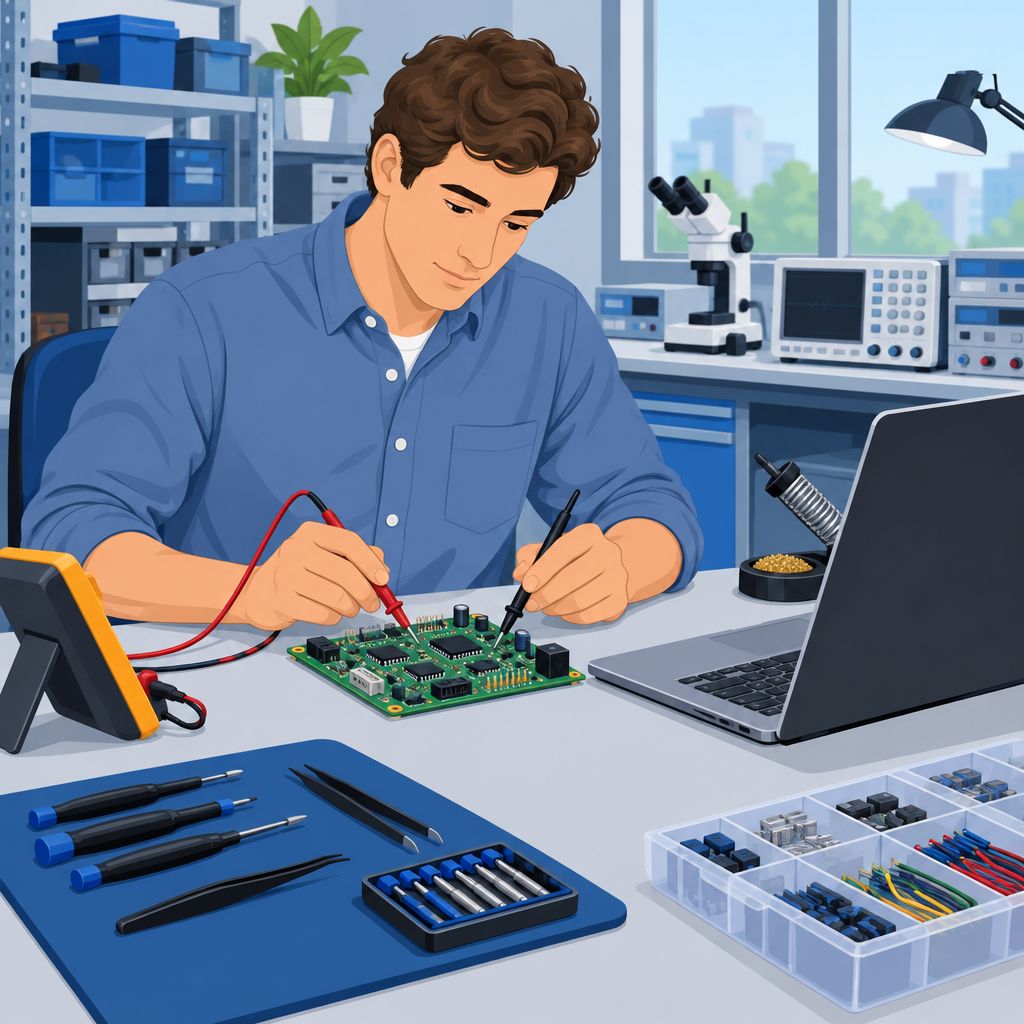
I begin the day by designing and testing hardware components for different projects.
I work with the design team to ensure each component meets its required specifications.
After completing a design, I collaborate with software engineers to integrate the hardware into the larger system.
Clear communication and careful coordination help both parts operate seamlessly.
During testing or integration, I troubleshoot issues through detailed analysis and diagnostic procedures.
I then implement solutions that resolve problems quickly and efficiently.
Throughout the day, I attend cross-functional meetings and provide project updates.
These meetings also help teams identify roadblocks and address emerging challenges.
Furthermore, I research new technologies and industry trends to maintain current knowledge.
This research strengthens my skills and helps me contribute effectively to project work.
Consequently, my role combines technical expertise, problem-solving, and communication.
See Related Content: Top Companies Known for Hiring Systems Integrators
Meetings and Collaboration
- Hardware engineers interact with team members to discuss project progress.
- They join brainstorming and problem-solving sessions to address technical challenges.
- They collaborate with cross-functional teams to deliver integrated hardware solutions.
Meetings and collaboration help hardware engineers keep projects moving toward successful completion.
Team collaboration supports effective communication throughout every hardware project.
Engineers use meetings to share updates, address challenges, and align their efforts.
These discussions help teams make informed decisions and maintain project momentum.
Brainstorming sessions help engineers explore different approaches to technical obstacles.
Colleagues troubleshoot issues together and develop creative solutions during these sessions.
Team members contribute diverse expertise and perspectives when solving complex problems.
Cross-functional collaboration connects hardware engineers with software engineers, industrial designers, and project managers.
These professionals work together as projects require integrated hardware, software, and design elements.
Hardware engineers gain broader project understanding by working with professionals from different disciplines.
They also use varied skill sets to support seamless integration across project components.
Regular interaction strengthens communication and encourages shared responsibility for project outcomes.
Active collaboration helps engineers drive innovation and overcome challenges.
Consequently, teams can deliver high-quality hardware solutions that meet end-user needs.
Learn More: How to Choose the Right IT Consulting Firm
Lunch Break
- Taking a break from work to recharge
- Networking with colleagues or attending industry events
After a busy morning designing and testing hardware components, engineers take a well-deserved lunch break.
They use this time to recharge and refuel for the rest of the day.
During lunch, engineers gather in the cafeteria or break room.
They catch up with colleagues and discuss their current projects.
This informal networking helps engineers exchange ideas and learn from each other’s experiences.
Transform Your Career Today
Unlock a personalized career strategy that drives real results. Get tailored advice and a roadmap designed just for you.
Start NowAdditionally, some hardware engineers attend industry events during their lunch break.
These events can include tech talks, product demonstrations, or networking sessions.
Attending these events helps engineers stay updated on industry trends and innovations.
Lunch networking supports personal and professional growth.
It also fosters a sense of community among colleagues.
Engineers can collaborate on projects, share best practices, and build valuable relationships.
Consequently, they may discover future opportunities through these professional connections.
The lunch break gives hardware engineers time to relax, recharge, and connect with others.
By stepping away from work, engineers return to their projects with refreshed perspectives and renewed energy.
Delve into the Subject: Top IT Security Management Conferences to Attend
Afternoon Responsibilities
As afternoon arrives, a hardware engineer continues advancing projects and prototypes.
The engineer resumes morning work and maintains steady progress.
Meanwhile, experiments and data analysis demand careful observation and methodical problem-solving.
Feedback from teammates and test results guides necessary design adjustments.
- The engineer continues work on projects and prototypes to maintain consistent progress.
- The engineer conducts experiments and analyzes data through careful, methodical problem-solving.
- The engineer adjusts designs after reviewing team feedback and test results.
At this stage, the engineer studies test results or develops solutions to emerging challenges.
Project deadlines and milestones create pressure to maintain forward momentum.
Additionally, collaboration becomes increasingly important because communication supports project success.
The engineer also troubleshoots issues and applies expertise to remove obstacles.
Furthermore, the engineer liaises with manufacturing teams about production feasibility.
These discussions may lead to adjustments that streamline the manufacturing process.
Consequently, afternoon work refines designs and keeps project completion on track.
End of the Day
- Wrapping up tasks for the day
- Reflecting on achievements and challenges faced
- Planning for the next day’s workload
As the day ends, hardware engineers wrap up every task on the to-do list.
They gather their notes and close any open projects.
They also save and organize everything for the next day.
Meanwhile, engineers reflect on the day’s achievements and challenges.
They consider what went well and identify areas for improvement.
They also review the lessons learned from the day’s work.
Next, engineers plan their workload for the following day.
They review their schedules, prioritize tasks, and set clear goals.
This preparation helps them begin the morning with a clear plan.
After completing these steps, hardware engineers sign off with a sense of accomplishment.
They also feel ready for the work that tomorrow may bring.
The Broader Impact of Hardware Engineering
Hardware engineers design, test, and troubleshoot hardware components as part of their daily responsibilities.
Moreover, they advance technology by creating innovative solutions for complex problems.
Therefore, aspiring hardware engineers can pursue this career and contribute to groundbreaking technological developments.
Additional Resources
Google search results for Day in the Life of a Hardware Engineer Information Technology
Bing search results for Day in the Life of a Hardware Engineer Information Technology


