




Role of a School Resource Officer
A School Resource Officer is a law enforcement officer assigned to work within a school setting.
The officer helps ensure safety and security on the school campus.
An experienced SRO brings knowledge and expertise to various situations that may arise at school.
This interview explores the SRO’s role, responsibilities, and impact on the school community.
Background Information on the Experienced School Resource Officer
- Years of experience as an SRO
- Previous law enforcement background
- Special training and certifications
The SRO we interviewed has 10 years of experience working as a School Resource Officer.
Before becoming an SRO, he served as a police officer for five years in a neighboring city.
He holds certifications in crisis intervention, active shooter response, and conflict resolution.
Roles and Responsibilities of a School Resource Officer
- Building positive relationships with students, staff, and parents
- Providing a safe and secure learning environment
- Offering support and guidance to students
The SRO emphasized trust and rapport when working with the school community.
He implements safety protocols and responds to security threats.
Additionally, he mentors students and offers resources for personal or academic challenges.
Challenges Faced by School Resource Officers
- Managing diverse roles and responsibilities
- Addressing mental health issues among students
- Navigating complex school dynamics
Managing security duties alongside counseling and educational initiatives can overwhelm an SRO.
The SRO identified a need for more mental health resources and specialized training.
Effective intervention requires understanding the school’s social and cultural context.
School Resource Officer Responsibilities
School resource officers support safe, positive, and secure school environments.
They coordinate with students, staff, parents, administrators, counselors, and other school stakeholders.
Their responsibilities include security, relationship building, safety education, and conflict response.
Maintaining a Safe School Environment
SROs patrol school grounds regularly to identify and address security concerns.
They monitor entrances and exits while responding promptly to potential threats.
Their visible presence can help students and staff feel protected on campus.
Building Relationships Within the School Community
SROs build trust through open communication with students, staff, and parents.
These relationships help officers understand concerns and provide appropriate support.
They also encourage collaboration that strengthens school culture and community unity.
Educating the School Community About Safety
SROs teach students, staff, and parents about safety and security measures.
They conduct safety drills and present information about cyberbullying and substance abuse.
They also explain personal safety practices and emergency procedures.
Managing Discipline and School Conflicts
SROs address student disputes, behavioral concerns, and school policy violations.
They approach these situations with fairness, empathy, and professionalism.
When necessary, officers mediate conflicts and coordinate with school administrators and counselors.
This collaboration supports a positive learning environment and student well-being.
Supporting a Positive School Environment
SROs combine security responsibilities with education, communication, and conflict support.
Through collaboration, they help schools respond effectively to concerns and emergencies.
Their dedication supports the safety, security, and success of the entire school community.
Gain More Insights: Building a Career as an Independent Bodyguard
Interview With an Experienced School Resource Officer
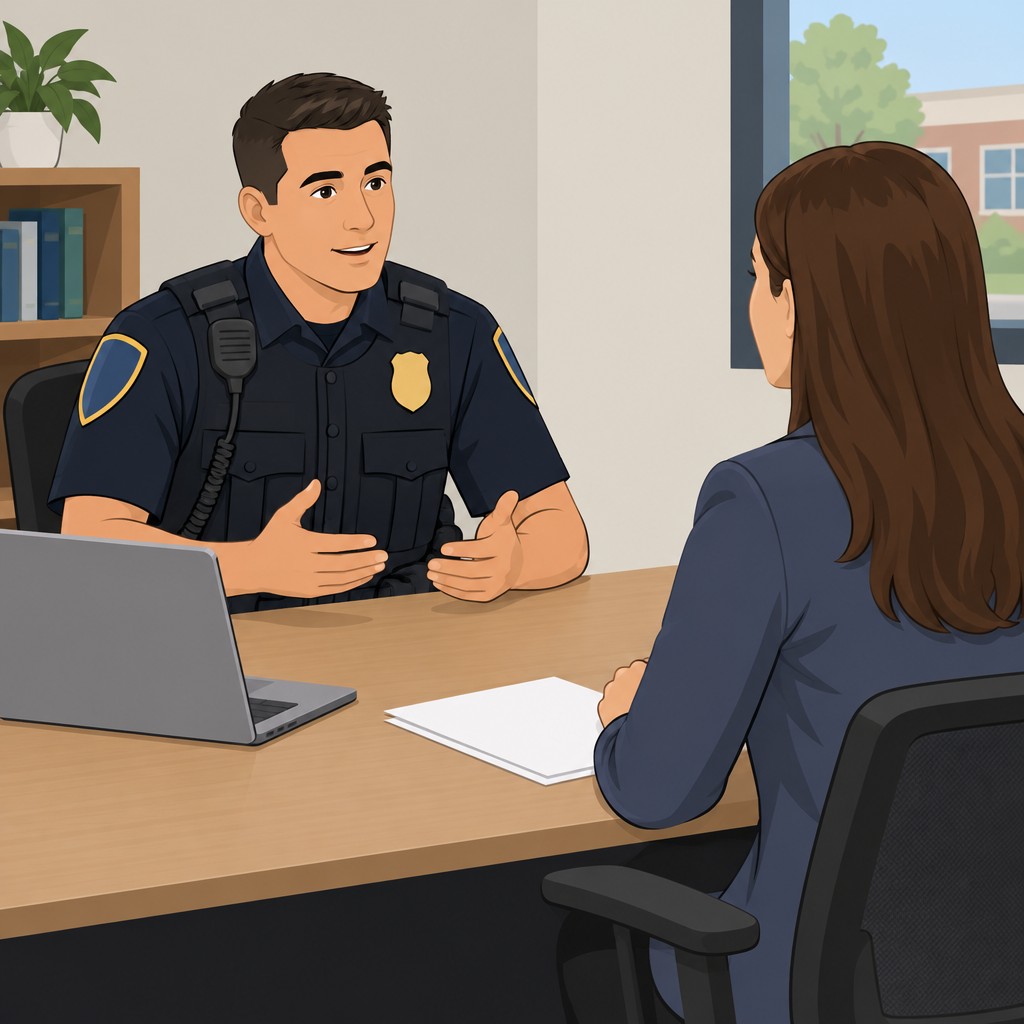
Officer Smith described how experience, relationship building, and mentorship shape his work in the school community.
His perspective shows how an SRO can combine law enforcement skills with student-centered support.
The interview also revealed challenges and practical approaches that guide his daily interactions.
How Experience Shapes School-Based Decision Making
Officer Smith said his earlier police work prepared him for varied situations at school.
That experience helps him de-escalate conflicts before they become more serious.
Additionally, it strengthens his communication with students and clarifies the legal boundaries of his responsibilities.
Challenges Involving Trust and Student Support
Building trust remains one of Officer Smith’s most difficult responsibilities.
Transform Your Career Today
Unlock a personalized career strategy that drives real results. Get tailored advice and a roadmap designed just for you.
Start NowSome students approach law enforcement cautiously because stereotypes and misconceptions influence their expectations.
Therefore, he responds with patience, empathy, and approachability while addressing student concerns.
At the same time, he balances disciplinary matters with his responsibility to model positive behavior.
Building Relationships Throughout the School Community
Officer Smith builds relationships by remaining visible and engaged throughout the school community.
He attends school events and participates in extracurricular activities whenever possible.
These actions create opportunities for positive conversations beyond disciplinary situations.
Consequently, students and staff can feel more comfortable bringing concerns to him.
Mentorship That Encouraged Student Success
One student faced serious challenges at home and at school.
Officer Smith offered consistent guidance, encouragement, and mentorship during that difficult period.
Over time, the student changed direction, graduated high school, and pursued higher education.
The student credited Officer Smith’s support with helping make that transformation possible.
Positive Influence Through Consistent Support
The interview highlights the value of trust, support, and mentorship within school communities.
Officer Smith’s approach demonstrates how consistent engagement can strengthen connections with students and staff.
His example reflects the meaningful difference an SRO can make through safety-focused and supportive interactions.
Explore Further: Difference Between Private Investigator and Detective
Insights and Experiences from an Experienced School Resource Officer
As an experienced School Resource Officer (SRO), I have learned that communication and collaboration help create a safe learning environment.
Strong relationships with school officials help me address concerns effectively.
I also support student well-being while responding to safety needs.
Therefore, I coordinate with school personnel to encourage unity and cooperation.
Communication and Collaboration with School Staff
Regular conversations with administrators reveal the school community’s specific needs and concerns.
Additionally, staff collaboration enables timely information sharing about potential threats or emergencies.
Open communication builds trust among school stakeholders.
- Regular communication helps identify the school’s specific needs and concerns.
- Staff collaboration supports information sharing during potential threats or emergencies.
- Trust encourages unity and cooperation throughout the school community.
Emergency Prevention and Response Strategies
Together, school staff and I develop emergency response plans.
We practice these plans so participants can respond quickly during crises.
Safety drills and security measures prepare the school for various scenarios.
- Emergency response plans help staff act quickly and efficiently during crises.
- Regular safety drills prepare students and staff for different emergencies.
- Controlled access points and surveillance systems can deter potential threats.
Support for Student Mental Health and Well-Being
Positive interactions help me build trusting relationships with students.
I provide a safe space where students can express concerns and seek guidance.
Furthermore, I work with counselors and mental health professionals when students need support.
- Positive interactions help students develop trusting relationships with the SRO.
- A safe space allows students to discuss personal concerns and seek guidance.
- Collaboration with counselors connects students to appropriate support and resources.
Supporting Student Growth Through Safety
My goal combines physical safety with attention to mental health and well-being.
Proactive emergency planning supports a positive, nurturing environment.
This environment helps students thrive and reach their full potential.
Learn More: Preparing for the DEA Agent Fitness Test
Key Conditions for Effective School Resource Officers
During the interview, the experienced School Resource Officer highlighted the importance of building relationships with students and staff.
He also emphasized specialized training for SROs who handle situations that may arise in schools.
Furthermore, dedicated and experienced SROs can help create a safe and secure learning environment for everyone.
Readers can explore additional information about how SROs support school safety and security.
Additional Resources
Google search results for Interview with an Experienced School Resource Officer Protective Services
Bing search results for Interview with an Experienced School Resource Officer Protective Services


