




Forensic Science Career Skills
Forensic science uses scientific methods to analyze evidence within the justice system.
Technology continues to advance the field and increases demand for forensic scientists.
Therefore, aspiring professionals need several skills to perform this work effectively.
Education and Training
A bachelor’s degree in forensic science or a related field typically provides essential preparation.
Specialized training in DNA analysis and toxicology provides additional preparation.
Additionally, formal education helps scientists develop a foundation for evidence analysis.
Attention to Detail
Forensic scientists examine evidence carefully to support accurate findings.
They check details throughout each analysis.
As a result, careful work helps maintain investigation integrity.
Analytical Skills
Forensic scientists analyze complex data and solve problems.
They interpret results and draw conclusions from presented evidence.
Moreover, analytical thinking supports clear evaluations of difficult findings.
Communication Skills
Forensic scientists communicate findings to law enforcement officials, attorneys, and juries.
They present information through writing and speech.
Consequently, strong communication helps others understand the evidence.
Teamwork
Forensic scientists often work as members of teams.
They collaborate with other experts and share relevant information.
Through cooperation, teams can address cases more effectively.
Continuous Learning
Forensic science constantly develops new technologies and techniques.
Scientists must continue learning to remain current in their field.
Therefore, lifelong learning supports effective work as methods change.
Contributions to the Justice System
These skills help aspiring forensic scientists contribute to the justice system.
They also prepare professionals to address complex cases.
By strengthening these abilities, forensic scientists can support effective investigations.
Education and Training for Forensic Scientists
- Forensic scientists typically need a bachelor’s degree in biology, chemistry, or forensic science.
- Relevant study provides the knowledge and skills required for forensic work.
- Hands-on training gives aspiring forensic scientists practical experience.
- Internships and job shadowing provide valuable real-world experience.
- Many employers seek master’s degrees or higher for advanced forensic science positions.
Specialized Skills in Forensic Science
- Forensic scientists use strong analytical skills to examine evidence and draw accurate conclusions.
- Attention to detail helps forensic scientists maintain accuracy and avoid investigative errors.
- Critical thinking helps forensic scientists solve complex problems and make informed decisions.
- Strong communication enables scientists to report findings and testify as expert witnesses.
- Time management helps forensic scientists prioritize tasks and meet deadlines efficiently.
Technical Knowledge for Forensic Analysis
- Forensic scientists need strong knowledge of scientific principles and methods.
- Laboratory techniques and equipment support accurate forensic analysis and experimentation.
- Forensic software and databases help scientists organize and analyze large amounts of data.
- Knowledge of legal procedures helps scientists support evidence admissibility in court.
- Continuous learning helps forensic scientists stay current with technological advancements.
Interpersonal Skills for Collaborative Investigations
- Forensic scientists collaborate with law enforcement agencies, attorneys, and other professionals.
- Teamwork helps colleagues coordinate examinations and share information during case reviews.
- Adaptability helps forensic scientists adjust to new work environments and technologies.
- Empathy and sensitivity help scientists handle sensitive cases compassionately.
- Conflict resolution skills help scientists address disagreements during collaborative criminal justice work.
Analytical Skills in Forensic Science
Strong analytical skills help forensic scientists examine evidence, identify patterns, and draw sound conclusions from data.
These professionals must analyze complex evidence accurately so their findings withstand courtroom scrutiny.
Critical thinking, careful attention to detail, and logical reasoning support reliable forensic analysis.
For example, DNA analysis requires sophisticated techniques to compare samples and identify individuals.
Consequently, DNA findings can play an important role in criminal investigations.
Fingerprint identification also depends on meticulous analytical work.
Forensic scientists examine unique fingerprint patterns and compare them with prints from known individuals.
This process can connect crime scene evidence with individuals and help investigators solve cases.
Therefore, forensic scientists must interpret and evaluate evidence effectively.
Their conclusions must remain accurate, reliable, and defensible in court.
Explore Further: U.S. Marshal Equipment and Gear Overview
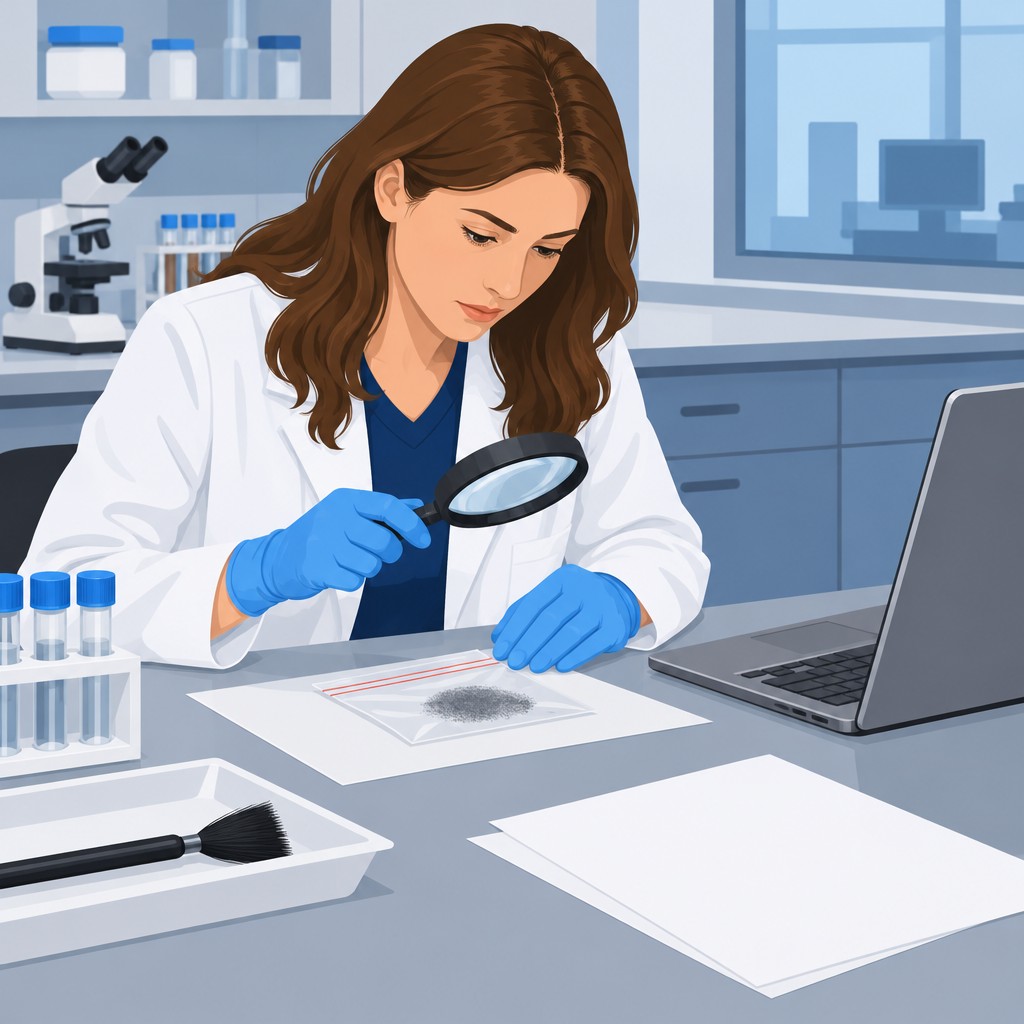
Attention to Detail
Attention to detail is crucial for forensic scientists.
Even a small oversight can profoundly affect a case outcome.
Therefore, forensic scientists must examine and document evidence carefully.
Importance of Detailed Evidence Examination
- Forensic science requires meticulous examination of every piece of evidence.
- Even small evidence items can provide valuable insights into a crime scene.
- Fibre samples, fingerprints, and DNA evidence can help reconstruct events.
However, missed or undocumented details can create critical analytical errors.
Such errors may jeopardize the integrity of an investigation.
Transform Your Career Today
Unlock a personalized career strategy that drives real results. Get tailored advice and a roadmap designed just for you.
Start NowAttention to Detail in Solving Crimes
- In the Green River Killer case, DNA analysis linked Gary Ridgway to numerous murders.
- Careful tire track examination helped identify and arrest crime perpetrators.
- In the Boston Strangler investigation, minor crime scene details supported the apprehension and conviction of the perpetrator.
Consequently, careful examination can determine whether investigators solve a crime.
Forensic scientists strengthen investigations by consistently applying this skill.
Their careful work helps support justice and hold guilty individuals accountable.
Find Out More: Top Challenges Facing Cybersecurity Specialists Today
Communication Skills in Forensic Science
Communication skills help forensic scientists succeed in their careers.
These professionals work with investigators, attorneys, and law enforcement officials.
Therefore, clear communication supports collaboration and successful outcomes.
Collaboration Across Forensic Teams
Forensic scientists communicate with diverse teams throughout their professional work.
They share information with investigators, attorneys, and law enforcement officials.
As a result, effective communication helps these professionals coordinate their efforts.
Communicating Scientific Findings
Forensic scientists must explain findings clearly and accurately to investigators and attorneys.
Because scientific concepts can be complex, they must use accessible language.
Consequently, clear explanations support informed discussions within the criminal justice system.
Writing Clear Forensic Reports
Forensic scientists write reports that detail their findings and analysis.
These documents should present complete information without unnecessary complexity.
Meanwhile, concise writing helps others in the criminal justice system understand the results.
Professional Impact of Communication
Strong communication abilities enhance forensic scientists’ effectiveness in their field.
They can collaborate more successfully with professionals who rely on their work.
In this way, communication strengthens their impact within forensic science.
Discover More: ICE Agent Training: What to Expect and Requirements
Critical Thinking in Forensic Science
Critical thinking helps forensic scientists examine evidence objectively.
It also supports accurate conclusions during forensic investigations.
Without this skill, scientists may introduce inaccuracies into their work.
Critical Thinking Supports Reliable Work
Forensic scientists use critical thinking to approach investigations with rational, objective mindsets.
This approach helps them evaluate information before accepting it as reliable.
Consequently, careful reasoning strengthens the accuracy of forensic outcomes.
Logical and Creative Reasoning
Forensic scientists combine logical and creative thinking when they address complex problems.
They use deductive reasoning to connect evidence and develop possible hypotheses.
Meanwhile, creative thinking helps them consider different explanations for the available facts.
Evaluating Forensic Evidence
When scientists examine evidence, they assess its relevance to the investigation.
They also consider whether the information remains reliable enough for evaluation.
Therefore, critical thinking helps them use valid evidence during forensic work.
Reasoning Toward Sound Conclusions
Forensic scientists base conclusions on factual evidence and scientific principles.
They weigh competing hypotheses before selecting the most logical explanation.
As a result, their reasoning can support accurate and reliable investigative outcomes.
See Related Content: How to Conduct a Security Risk Assessment
Technology Proficiency in Forensic Science
- Proficiency with technology and specialized equipment remains essential for forensic scientists.
- Moreover, technological advances have transformed how forensic scientists examine and interpret evidence.
- For example, forensic scientists commonly use microscopes, DNA sequencers, and spectrophotometers during their work.
- Additionally, forensic analysis software and database management systems support efficient forensic investigations.
- Consequently, technology proficiency helps forensic scientists analyze evidence more efficiently and accurately.
- Furthermore, familiarity with current developments helps professionals improve investigative techniques and remain informed.
- Therefore, forensic scientists must continually update their skills as new technologies and tools emerge.
- Training programs and workshops can strengthen proficiency with specialized equipment and software.
- Likewise, collaboration with technology and software experts helps forensic scientists track field advancements.
- This proficiency supports complex casework and accurate forensic results.
Importance of Collaboration in Forensic Science Investigations
Collaboration is essential in forensic science because multiple disciplines often address complex cases together.
Forensic scientists coordinate with law enforcement, other experts, and legal professionals throughout investigations.
This teamwork supports thorough analysis and helps investigators evaluate evidence accurately.
Working Closely with Law Enforcement and Forensic Experts
Forensic scientists work with law enforcement agencies to gather evidence, analyze data, and provide courtroom testimony.
Transform Your Career Today
Unlock a personalized career strategy that drives real results. Get tailored advice and a roadmap designed just for you.
Start NowMeanwhile, investigators can share relevant insights and leads that help scientists focus their analysis.
Additionally, DNA analysts, toxicologists, and ballistics experts contribute specialized knowledge when evidence requires broader examination.
Collaboration with Legal Professionals
Legal professionals, including prosecutors and defense attorneys, rely on forensic evidence when building cases.
Therefore, forensic scientists must explain findings accurately and help ensure evidence meets courtroom requirements.
These discussions also clarify the legal standards that findings must satisfy before presentation in court.
Enhancing Accuracy and Efficiency in Forensic Investigations
Collaboration combines expertise and resources from several disciplines during forensic investigations.
As a result, teams can examine evidence more completely and use specialized techniques when needed.
Furthermore, coordinated work helps maintain reliable findings and supports efficient investigative decisions.
- Law enforcement agencies can provide insights and leads that help forensic scientists direct their analysis.
- Experts from different forensic fields can apply specialized knowledge to complex evidence.
- Legal professionals can help confirm that collected evidence satisfies admissibility standards.
Through coordinated work, forensic scientists can examine investigations from multiple professional perspectives.
This approach strengthens the reliability and accuracy of their findings.
Effective collaboration therefore supports thorough investigations that follow legal standards.
Skills and Rewards of a Forensic Science Career
Successful forensic scientists combine careful observation, sound judgment, and clear communication.
Moreover, a strong scientific background helps them handle demanding responsibilities effectively.
They must also remain composed while working under pressure.
Forensic science offers diverse and challenging work that requires continuous learning.
Professionals must regularly update their knowledge as technology and techniques advance.
Additionally, this career suits people who want to solve crimes and support justice.
By applying their skills, forensic scientists can help bring criminals to justice.
They can also provide closure for victims and their families.
Therefore, this field offers intellectually stimulating work with meaningful effects on society.
Additional Resources
Google search results for Skills Needed to Succeed as a Forensic Scientist Protective Services
Bing search results for Skills Needed to Succeed as a Forensic Scientist Protective Services


