




Introduction
U.S. Marshals play a crucial role in law enforcement.
They help ensure the safety of citizens.
They also apprehend fugitives.
Brief Overview of U.S. Marshals
U.S. Marshals protect federal courts.
They apprehend fugitives as part of their responsibilities.
Additionally, they transport prisoners.
Importance of Proper Equipment and Gear for U.S. Marshals
Proper equipment and gear support the work of U.S. Marshals.
This equipment helps them perform their duties effectively.
It also helps them perform their duties safely.
U.S. Marshal Badge
U.S. Marshal badges serve as iconic symbols of authority in law enforcement.
They represent responsibility, honor, and service during official duties.
Furthermore, their design and visibility help the public recognize marshals.
Significance of the Badge
- The badge represents authority and responsibility.
- It serves as a symbol of honor and service.
- Additionally, it distinguishes marshals from other law enforcement officers.
Design and Features of the Badge
- The badge typically uses metal and intricate details.
- It bears the U.S. Marshals Service emblem.
- Moreover, it includes a unique identification number.
Use of the Badge in Identifying U.S. Marshals
- Marshals wear the badge on their outermost garment for visibility.
- They display it during official duties and ceremonies.
- Therefore, the badge enables quick recognition by the public.
The U.S. Marshal badge symbolizes authority, honor, and accountability in law enforcement.
Firearms
U.S. Marshals use various firearms to address different situations.
These weapons support their duties during law enforcement operations.
Each firearm provides specific capabilities for different operational needs.
- The Glock 17 is a reliable, lightweight 9mm semiautomatic pistol with a high-capacity magazine.
- The Smith & Wesson M&P is a versatile pistol available in 9mm, .40 S&W, and .45 ACP.
- The Remington 870 is a pump-action shotgun valued for stopping power and close-range versatility.
- The AR-15 is a modular rifle recognized for accuracy and long-range capabilities.
Firearms Training
Firearms handling forms an important part of a U.S. Marshal’s duties.
Proper training helps Marshals use weapons safely and effectively.
The training combines classroom instruction, practical exercises, and firearms qualifications.
Basic Firearms Training
U.S. Marshals receive instruction in firearms handling, safety, marksmanship, and tactics.
Practical exercises help Marshals develop safe and effective firearms skills.
Range qualifications measure their proficiency with assigned firearms.
Firearms Qualification
Marshals regularly complete firearms qualification tests.
These tests assess accuracy, speed, and decision-making under pressure.
The results demonstrate whether Marshals can perform effectively in real-world situations.
Tactical Training
Marshals learn tactical firearms techniques for challenging field situations.
Their instruction includes close-quarters combat, cover, and concealment.
Team-based tactics help Marshals respond effectively to threats.
Scenario-Based Training
Scenario-based training recreates situations that Marshals may encounter during field operations.
These simulations allow Marshals to practice decision-making and communication.
They also reinforce firearms skills within a controlled environment.
Firearm Safety
Firearm safety helps U.S. Marshals prevent accidents, injuries, and potential liabilities.
Safe practices also support responsible conduct during law enforcement operations.
Furthermore, consistent safety procedures protect both Marshals and members of the public.
- Proper handling and storage help prevent accidental discharges.
- Safety protocols help protect innocent bystanders during operations.
- Careful handling preserves evidence during investigations and legal proceedings.
- Consistent safety practices can strengthen public trust in law enforcement.
- Following safety guidelines can reduce legal risks associated with improper firearm use.
Firearms support the work of U.S. Marshals in varied operational situations.
Comprehensive training helps Marshals use these weapons with competence and care.
By prioritizing safety, Marshals can serve the public professionally and responsibly.
Learn More: Top Challenges Facing Cybersecurity Specialists Today
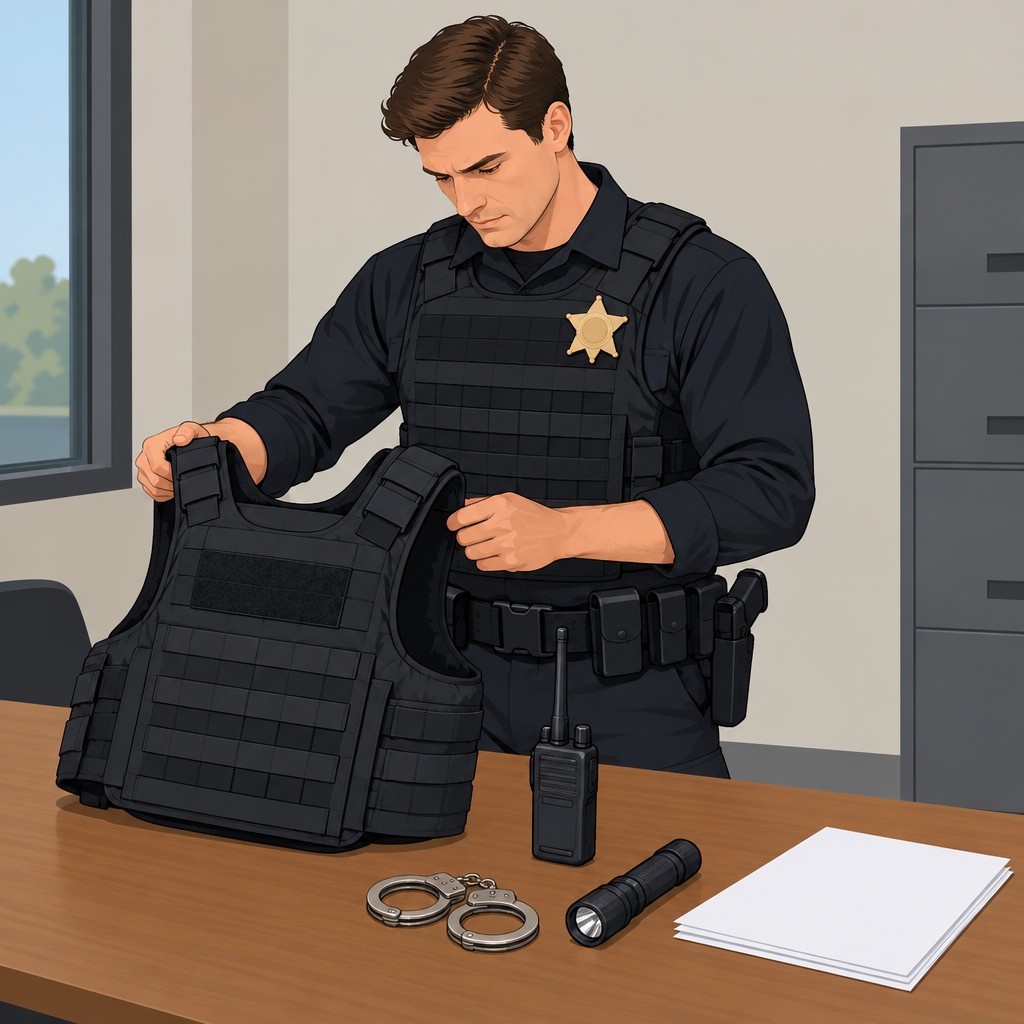
Importance of Body Armor for U.S. Marshals
Body armor gives U.S. Marshals vital protection during dangerous and high-risk situations.
Because their duties can involve threats, protective equipment supports safer operations.
Transform Your Career Today
Unlock a personalized career strategy that drives real results. Get tailored advice and a roadmap designed just for you.
Start NowTherefore, marshals must select equipment that matches the risks they may face.
Types of Body Armor Used
U.S. Marshals typically use soft armor and hard armor.
Soft armor uses flexible materials such as Kevlar and remains lightweight.
It protects against handgun threats, while hard armor uses rigid ceramic or metal plates.
- Soft armor provides lightweight protection against handguns.
- Hard armor protects against rifles and higher-caliber weapons.
Levels of Protection Provided by Body Armor
Manufacturers rate body armor according to the protection level it provides.
These ratings range from Level I through Level IV.
Marshals should weigh these levels against the specific risks they may face.
- Level I protects against small-caliber handguns.
- Level II protects against higher-caliber handguns.
- Level IIIA guards against most handguns and some shotgun rounds.
- Level III protects against rifle rounds up to 7.62mm.
- Level IV protects against armor-piercing rifle rounds.
These armor options help U.S. Marshals carry out their duties with necessary protection.
Discover More: ICE Agent Training: What to Expect and Requirements
Communications Equipment
Communication helps U.S. Marshals coordinate operations efficiently.
During operations, they use several devices to remain connected.
These tools support secure and discreet communication.
- Communication devices used by U.S. Marshals:
- U.S. Marshals rely on advanced communication devices during operations.
- Primary tools include handheld radios, earpieces, and encrypted communication systems.
- These devices support secure and discreet communication during law enforcement operations.
- Importance of effective communication in law enforcement:
- Effective communication helps U.S. Marshals coordinate efforts and share intelligence.
- It also helps protect officers during demanding law enforcement operations.
- Clear, timely communication helps marshals respond to threats quickly and decisively.
- Features of communication equipment used:
- Communication devices are rugged, reliable, and resistant to interference.
- Many devices provide long battery life, secure encryption, and system compatibility.
- Advanced devices may offer GPS tracking and emergency alert features.
- Noise-cancelling technology supports clear communication in noisy environments.
Explore Further: How to Conduct a Security Risk Assessment
Tactical Gear
Tactical gear helps U.S. Marshals perform their duties safely and effectively.
The equipment supports officers during high-stress situations and law enforcement operations.
Each item serves a specific purpose during field activities and official duties.
Types of Tactical Gear Used by U.S. Marshals
U.S. Marshals use several types of equipment during their assignments.
These items help officers carry essential supplies and respond to changing conditions.
Furthermore, the equipment supports protection, mobility, visibility, and operational readiness.
- Body armor helps protect officers from ballistic threats during high-risk operations.
- Tactical vests provide storage for ammunition, weapons, and other essential items.
- Firearms include handguns, shotguns, and rifles for self-defense and apprehension duties.
- Tactical boots provide protection, support, and traction across various terrains.
- Flashlights assist officers during low-light situations and search operations.
Purpose of Tactical Gear in Law Enforcement
Tactical gear enhances officer safety and efficiency during demanding law enforcement situations.
For example, body armor helps protect officers from gunfire and other ballistic threats.
Meanwhile, tactical vests organize ammunition, radios, handcuffs, and first aid supplies.
Firearms give U.S. Marshals tools for defending themselves and others against dangerous suspects.
Training Required for Using Tactical Gear
U.S. Marshals complete extensive training before using tactical gear in different scenarios.
Training covers firearm handling, equipment maintenance, suspect engagement, and tactical communication.
Marshals also practice situational awareness, pressure-based decision-making, and teamwork.
Regular drills and simulations help U.S. Marshals remain prepared for field situations.
Delve into the Subject: Salary and Benefits for Campus Security Officers
Surveillance Equipment
Surveillance equipment helps U.S. Marshals gather intelligence during law enforcement operations.
It also supports suspect tracking and public safety efforts.
Furthermore, marshals can combine several tools to monitor activity and collect information.
Types of Surveillance Equipment Used by U.S. Marshals
Several tools help U.S. Marshals observe suspects and document investigative information.
Each device provides a specific capability during surveillance operations.
Therefore, teams can select equipment according to their surveillance objectives.
- Cameras capture visual evidence and help monitor suspect behavior.
- GPS trackers help U.S. Marshals follow vehicle or individual movements in real time.
- Listening devices help investigators gather information from conversations.
- Binoculars provide long range visibility while observers remain at a distance.
- Night vision goggles support surveillance during low light or nighttime conditions.
Importance of Surveillance in Law Enforcement Operations
Surveillance helps law enforcement monitor criminal activity and gather evidence.
It also enables U.S. Marshals to support public safety during investigations.
By using surveillance equipment effectively, agencies can identify potential threats to the community.
Techniques for Using Surveillance Equipment Effectively
Effective surveillance requires planning, discretion, communication, and coordinated equipment use.
Teams should establish clear objectives before deploying surveillance tools.
They should also protect operational security while sharing important information.
Transform Your Career Today
Unlock a personalized career strategy that drives real results. Get tailored advice and a roadmap designed just for you.
Start Now- Plan ahead by developing a clear strategy and identifying key objectives.
- Stay discreet to avoid drawing attention to surveillance activities.
- Rotate positions and equipment regularly to reduce the risk of detection.
- Coordinate communications so teams can share critical information promptly.
- Use multiple tools together for broader coverage and stronger intelligence gathering.
These techniques help U.S. Marshals gather intelligence and track suspects effectively.
They also support community safety and security during law enforcement operations.
Equipment That Supports U.S. Marshal Operations
U.S. Marshals need appropriate equipment and gear to perform their duties effectively.
Firearms, body armor, communication devices, and vehicles support their official responsibilities.
Each item helps protect marshals, civilians, and fellow law enforcement officers.
High-quality equipment can support safety during life-threatening situations.
Core Equipment Priorities for U.S. Marshals
U.S. Marshals must ensure that their equipment supports safe and effective operations.
They should prioritize reliable tools that match the demands of their duties.
Proper preparation helps marshals carry out missions while supporting public and officer safety.
- Proper equipment helps U.S. Marshals fulfill their duties.
- Firearms, body armor, communication devices, and vehicles support their work.
- Quality gear helps protect marshals, civilians, and other officers.
- Appropriate equipment can support safety during dangerous situations.
Additional Resources
Google search results for U.S. Marshal Equipment and Gear Overview Protective Services
Bing search results for U.S. Marshal Equipment and Gear Overview Protective Services


