




Airport Security Technology and TSA Responsibilities
As frontline personnel in airport security, TSA officers play a crucial role in keeping travelers safe.
They screen passengers and baggage to prevent threats from entering secure areas.
Security technology plays a vital role in enhancing the capabilities of TSA officers.
Advanced tools include body scanners, X-ray machines, and explosive detection systems.
These technologies help officers identify potential threats more effectively and efficiently.
Overview of TSA Officer Responsibilities
TSA officers help implement security technology at airports and transportation hubs.
- Officers conduct security screenings and use advanced equipment to detect threats.
- They monitor security checkpoints and enforce TSA regulations and protocols.
- They collaborate with other agencies to share intelligence and strengthen security measures.
- They report suspicious activities and security breaches to appropriate authorities.
- They maintain current knowledge of emerging threats and security technologies.
Training for Security Technology Operations
- TSA officers complete rigorous training in equipment operation and scan interpretation.
- They receive specialized instruction in identifying prohibited items and handling security incidents.
- Ongoing professional development keeps officers informed about changing security protocols.
- Strong communication skills support effective interactions with passengers and colleagues.
- Critical thinking and problem-solving skills help officers address security challenges.
Security Technologies Used in Airport Screening
TSA officers use security technology to support passenger screening and prevent potential threats.
These tools help officers examine baggage and screen travelers at airport checkpoints.
- X-ray machines for baggage screening: X-ray machines scan luggage contents to identify prohibited items and hidden threats.
- Body scanners for detecting hidden threats: Body scanners detect non-metallic threats hidden under clothing.
- Metal detectors for screening passengers: Metal detectors identify metal objects that may pose security risks.
Each technology supports airport security measures.
Together, these tools help officers strengthen screening and protect travelers.
As technology advances, TSA officers must stay informed about available security tools.
See Related Content: Tips for Passing the CBP Officer Entrance Exam
Importance of Proper Security Technology Use
Security technology plays a critical role in strengthening airport security measures.
Advanced systems help TSA officers detect potential threats efficiently.
Proper technology use also supports effective responses to security concerns.
- Advanced technology improves threat detection efficiency.
- Proper implementation helps prevent security breaches and terrorist attacks.
TSA officers can identify potential threats before those threats escalate.
Furthermore, ineffective technology use can create serious security risks.
Those risks can compromise passenger safety.
TSA Officers and Security Technology Implementation
TSA officers operate security technology at airports.
They also support the implementation of security technology systems.
Their responsibilities require training, monitoring, and continued adaptation.
- TSA officers receive training to operate security technology effectively.
- They use their training to identify potential threats.
- They monitor security systems and support proper maintenance.
- They adapt to new technologies and changing security protocols.
- They collaborate with technology experts to improve system effectiveness.
Challenges Affecting Security Technology Implementation
TSA officers encounter several challenges when implementing security technology.
Technical problems can interrupt system performance.
Officers must address these problems promptly.
- Technical issues may require prompt troubleshooting.
- Training requirements can make consistent proficiency difficult.
- Rapid technological changes require continuous adaptation.
- Limited resources can restrict effective implementation and maintenance.
Additionally, TSA officers must maintain proficiency as systems evolve.
Resource constraints may affect their ability to maintain security technology.
These challenges can reduce technology effectiveness when officers cannot address them properly.
Security Benefits of Effective Technology Use
Effective security technology strengthens airport security measures.
Well-trained TSA officers can operate these systems more effectively.
Addressing implementation challenges helps airports protect passengers from potential threats.
Therefore, airports should equip officers to manage security technology properly.
Discover More: Correctional Officer Job Outlook 2025
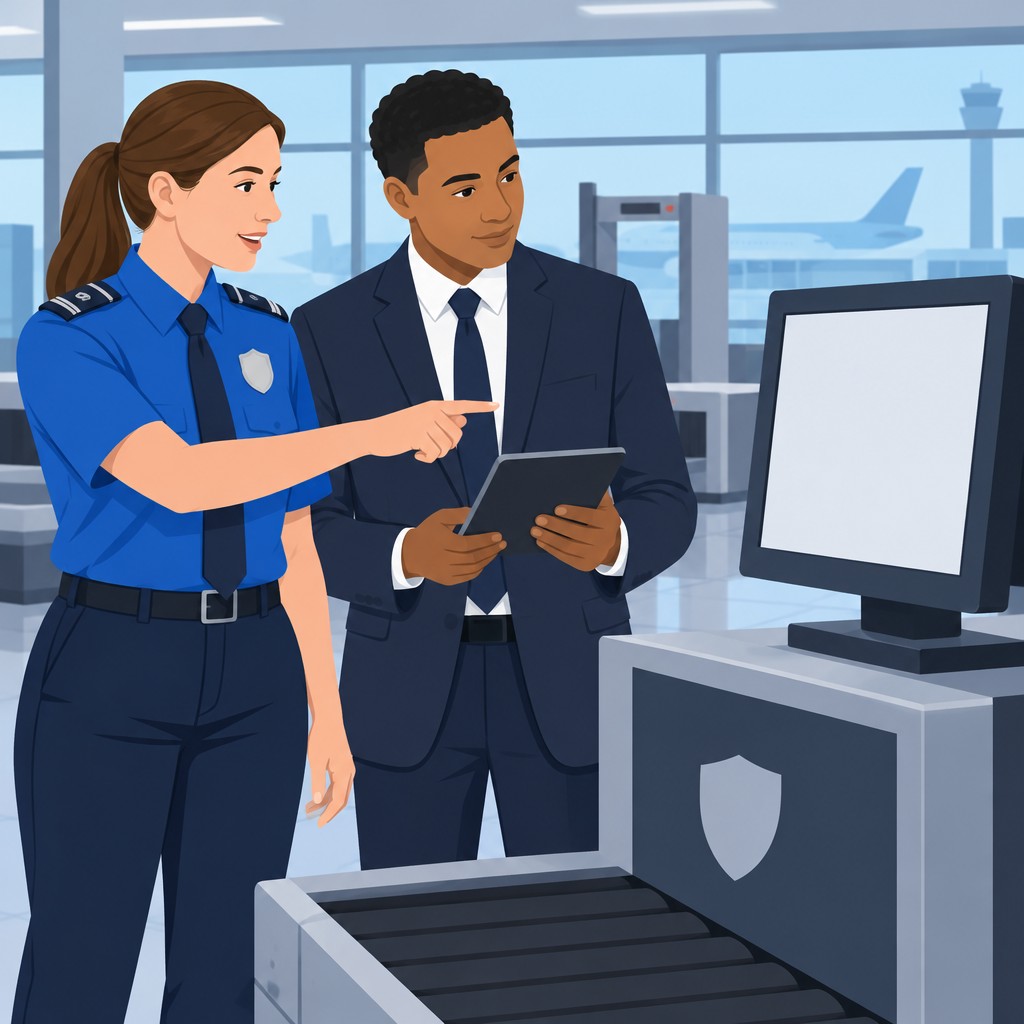
Challenges Faced by TSA Officers
TSA officers face challenges when they implement and operate security technologies.
These challenges include adapting to technological changes and addressing unexpected equipment problems.
Additionally, officers must respond carefully when security systems produce false alarms.
- Keeping up with evolving technology
- Dealing with false alarms and technical issues
Keeping Up with Evolving Technology
Rapid technological advancements require TSA officers to update their skills and knowledge regularly.
As security systems change, officers must learn how to use new functions effectively.
Regular training helps officers operate and monitor security equipment during daily operations.
For example, officers work with x-ray machines, body scanners, and explosive detection systems.
These systems help officers identify potential threats and support passenger and crew safety.
Transform Your Career Today
Unlock a personalized career strategy that drives real results. Get tailored advice and a roadmap designed just for you.
Start NowFurthermore, emerging threats require officers to adapt their approach to aviation security.
They must identify weaknesses in existing technologies and help address them effectively.
Collaboration with industry partners can support the development of innovative security solutions.
Managing False Alarms and Technical Issues
False alarms and equipment problems can complicate security screenings.
Metal accessories, medical devices, or baggage irregularities may trigger false alarms.
Consequently, these alerts can create delays and inconvenience for passengers.
Specialized training helps officers distinguish harmless items from potential threats.
Officers use critical thinking and careful observation when making decisions.
They must also make accurate judgments in fast-paced and demanding environments.
Technical problems may involve software malfunctions or equipment calibration errors.
Therefore, officers need a strong understanding of security system operations.
They must diagnose and resolve problems quickly to limit disruptions to airport operations.
Uncover the Details: State Trooper Mental Health: Coping Strategies
Collaboration with Other Security Agencies
- Law enforcement agencies enhance security measures through collaboration.
- Security agencies share information and intelligence to prevent threats.
As a TSA officer, collaboration with other security agencies supports my work in security technology implementation.
This approach helps safeguard airports and protect passengers and staff.
Moreover, coordinated security efforts strengthen the airport environment.
Working with Law Enforcement to Enhance Security Measures
TSA officers work closely with law enforcement to strengthen airport security.
These partnerships include local, state, and federal agencies.
Together, we enhance airport security measures and address potential threats effectively.
Furthermore, law enforcement agencies contribute expertise and resources.
This support helps officers strengthen security protocols.
By coordinating efforts, agencies can protect against various security risks.
They can also respond swiftly when incidents arise.
Additionally, law enforcement investigative capabilities help identify and apprehend individuals who threaten aviation security.
Information sharing and coordinated action help agencies stay ahead of potential threats.
These efforts support safety for everyone at the airport.
Sharing Information and Intelligence to Prevent Threats
Agencies also share information and intelligence to prevent threats before they materialize.
Exchanging data and insights clarifies the security landscape.
As a result, partners can address emerging risks proactively.
TSA officers receive information about potential threats, including new vulnerabilities or emerging terrorist tactics.
This awareness helps officers adjust security measures when necessary.
Moreover, shared intelligence can reveal concerning behavior patterns or suspicious activities.
Partners can then monitor and investigate potential threats collaboratively.
This cooperation helps safeguard the airport environment.
It also supports safety for passengers and personnel.
Learn More: U.S. Marshals' Duties in Court Security Explained
Training and Development Programs
TSA officers undergo regular training to improve their security technology skills.
These programs help officers stay informed about technological advancements in security.
Comprehensive training equips officers to operate and maintain various security systems and devices.
By improving their abilities, officers strengthen security measures at transportation facilities.
Transform Your Career Today
Unlock a personalized career strategy that drives real results. Get tailored advice and a roadmap designed just for you.
Start NowCareer Advancement in Security Technology
Training and development programs create opportunities for career advancement within security technology.
Officers can specialize in specific security technology areas and assume leadership roles.
Specialized programs cover body scanners, x-ray machines, and explosive detection systems.
These programs deepen officers’ understanding and improve their ability to identify potential threats.
Additionally, hands-on exercises simulate real-life security scenarios in controlled environments.
Officers practice using security technology and strengthen their responses during security incidents.
By investing in training, the TSA demonstrates its commitment to traveler security.
These programs benefit officers and improve security operations at transportation facilities.
They also empower officers to use security technology effectively across the transportation sector.
TSA Officers’ Contribution to Airport Safety
TSA officers strengthen airport operations by using security technology responsibly.
They also support safer and more efficient screening processes.
Moreover, their vigilance helps address potential security threats.
Security Technology Responsibilities
TSA officers operate body scanners, X-ray machines, and explosive detection systems.
Specialized training helps them use these tools during passenger screening.
Consequently, officers can identify potential threats more effectively.
Protecting Airport Safety
Their work helps maintain airport security and protect passengers from harm.
They remain at the forefront of efforts to prevent dangerous items from entering airports.
Through continued vigilance, TSA officers help preserve safer airport environments.
Public Appreciation for TSA Officers
Travelers should recognize the dedication TSA officers demonstrate each day.
They can show support by acknowledging the sacrifices officers make for public safety.
Furthermore, travelers should advocate for TSA officers’ well-being in the workplace.
Additional Resources
Bing search results for TSA Officer's Role in Security Technology Implementation Protective Services


