




Introduction:
A border patrol agent helps safeguard the nation’s borders and enforce immigration laws.
They support national security by preventing unauthorized individuals from entering the country.
Responsibilities at Border Crossings
- Inspecting vehicles, travelers, and cargo at designated ports of entry
- Detecting and preventing unauthorized entry, contraband, and weapons
At designated ports of entry, agents inspect vehicles, travelers, and cargo for compliance with applicable laws and regulations.
They review passports, visas, and other required permits during these inspections.
Agents also examine vehicles physically for hidden compartments or suspicious items.
They question travelers about visit purposes and compare answers with submitted documentation.
These interviews help agents identify unauthorized entry attempts or harmful intentions.
Agents use X-ray scanners, drug-sniffing dogs, and surveillance equipment to detect potential threats.
When people enter without authorization, agents may apprehend and detain them.
They then process those individuals for deportation or other legal actions, as necessary.
Agents also intercept contraband, including drugs, counterfeit goods, and other illegal items.
They confiscate detected contraband to protect the country’s safety and security.
Additionally, agents identify and intercept smuggled firearms, explosives, and other dangerous weapons.
Firearms safety and handling training helps agents respond appropriately to weapon-related threats.
Their work requires vigilance, technical skill, and thorough inspection practices.
These duties demand consistent attention while agents address varied security concerns at border crossings.
Surveillance and Monitoring
Border patrol agents use surveillance to monitor activity in areas beyond designated border crossings.
- Agents use cameras, drones, and sensors to monitor border areas effectively.
- They patrol remote, rugged areas on foot, horseback, or ATVs to detect illegal crossings.
- When sensors or cameras detect suspicious activity, agents respond quickly and investigate.
- Agents gather intelligence about smuggling routes, human trafficking operations, and other illegal activities.
- They coordinate with other law enforcement agencies to share information and support surveillance efforts.
These activities help agents detect and deter illegal crossings and criminal activity along the border.
Therefore, agents remain vigilant and proactive while monitoring border areas.
Find Out More: School Resource Officers and Student Relationships
Immigration Enforcement Responsibilities
- Detaining and processing individuals who entered the country without authorization
- Coordinating with Immigration and Customs Enforcement for removal proceedings
Border Patrol agents play a crucial role in immigration enforcement.
They detain and process individuals who entered the country without authorization.
Agents apprehend people who crossed the border without authorization and begin procedures addressing their immigration status.
Additionally, agents coordinate with Immigration and Customs Enforcement during removal proceedings.
This collaboration helps process individuals for deportation in a timely and efficient manner.
Immigration enforcement requires sound judgment and careful adherence to established procedures.
Agents follow strict protocols when detaining and processing individuals for removal.
They also ensure that legal requirements govern each enforcement action.
Furthermore, agents monitor changes in immigration laws and policies affecting enforcement efforts.
By reviewing current regulations and procedures, agents can carry out their responsibilities effectively.
Their work supports border security and maintains the integrity of the immigration system.
Gain More Insights: Essential Protective Service Jobs in the U.S. That Save Lives
Search and Rescue Operations
- Assisting in locating and rescuing individuals who are lost or injured near the border
- Collaborating with other law enforcement agencies and emergency services for effective response
Border patrol agents play a crucial role in search and rescue operations along the border.
They are trained to respond quickly and efficiently when individuals face distress, injury, or disorientation.
When agents receive a request, they act swiftly to locate people who need help.
They often navigate difficult terrain and challenging weather conditions to reach individuals in distress.
Additionally, agents collaborate with local police, fire departments, and medical personnel during emergencies.
These partnerships help agencies coordinate their response near the border.
Effective communication and teamwork support successful search and rescue operations.
Transform Your Career Today
Unlock a personalized career strategy that drives real results. Get tailored advice and a roadmap designed just for you.
Start NowAgents share information, resources, and expertise with partner agencies.
Furthermore, search and rescue training prepares agents for varied emergency scenarios.
Agents learn to navigate hazardous terrain safely and provide medical assistance to injured individuals.
Through training, collaboration, and rapid response, agents help save lives along the border.
See Related Content: Impact of Climate Change on Wildland Firefighting
Interagency Cooperation
Border Patrol Agents work closely with federal, state, and local law enforcement agencies.
This collaboration strengthens border security operations and improves coordinated responses.
- Agents share intelligence with other agencies about potential threats and criminal activities along the border.
- Furthermore, agencies collaborate on joint operations by combining resources and expertise against border-related crimes.
- Clear communication helps agencies coordinate efforts, exchange information, and respond quickly to emerging situations.
- Building trust creates positive relationships that support successful interagency cooperation and collaboration.
- During emergencies or high-risk situations, agents coordinate responses with other agencies for unified action.
Consequently, interagency cooperation enables agents to work seamlessly with other agencies and combat criminal activities effectively.
See Related Content: Effective Communication for Campus Security Officers
Community Engagement Responsibilities
Building relationships with border communities remains a crucial responsibility for Border Patrol Agents.
Agents engage local residents to gather valuable information and build trust.
Additionally, they educate the public about border security measures.
- Agents explain why maintaining secure borders matters to the community.
- Moreover, agents encourage residents to report suspicious activities.
Public tips help agents identify potential threats and prevent illegal crossings.
Strong community relationships enhance agents’ effectiveness in securing the border.
They also support safety for residents and travelers.
Community engagement provides a proactive approach to border security efforts.
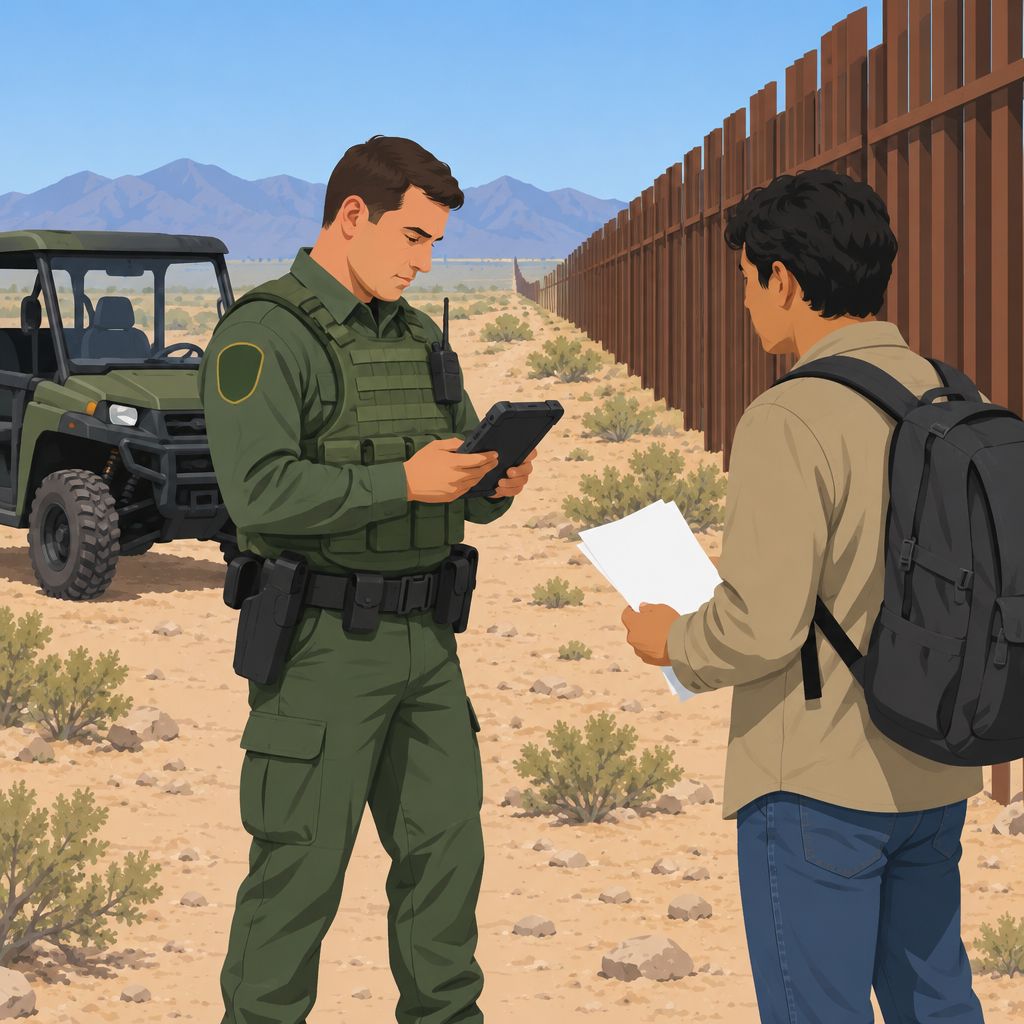
Training and Development
Training and development help border patrol agents prepare for their duties.
Regular instruction reinforces the skills agents need to perform their responsibilities.
Continuous development supports efficient performance and border protection.
Training Sessions
Agents participate in regular training sessions.
These sessions cover firearms, self-defense, immigration laws, and cultural awareness.
Such instruction helps agents stay sharp and updated on essential skills.
- Agents receive training in firearms, self-defense, immigration laws, and cultural awareness.
Staying Updated
Agents must stay updated on the latest technologies.
They also learn techniques that enhance border security efforts effectively.
Consequently, continuous training helps agents perform their duties efficiently.
Border Patrol Agents must follow policies and procedures to support national safety and security.
Adherence to Policies and Procedures
- Following Department of Homeland Security protocols promotes consistency and accountability in Border Patrol operations.
- Additionally, agents must handle sensitive information and evidence confidentially to protect ongoing investigations.
- Consistent policy compliance protects the Border Patrol’s integrity and credibility.
- Agents must also stay informed about policy updates through continuous training and education.
- Finally, established procedures improve operational efficiency, reduce errors, and support a unified approach to border security.
Following these guidelines helps agents perform their responsibilities consistently.
Careful information handling also supports the country’s safety and security.
Border Security and Law Enforcement Duties
Border patrol agents protect border security through patrol duties, legal enforcement, and careful operational decisions.
They detect unauthorized activity and respond when individuals enter the country illegally.
Additionally, agents apprehend individuals who cross the border without authorization.
Agents also search for contraband and seize items that violate applicable laws.
Operational Requirements for Border Patrol Agents
Agents operate vehicles, vessels, and surveillance equipment while monitoring border areas.
They often work in remote and challenging environments to maintain effective coverage.
Furthermore, agents must understand immigration laws and regulations governing their jurisdiction.
Their vigilance supports effective enforcement and helps protect the nation’s borders.
Additional Resources
Google search results for Key Responsibilities of a Border Patrol Agent Protective Services
Bing search results for Key Responsibilities of a Border Patrol Agent Protective Services


