




Community Health Worker Programs
Community health worker programs use trained individuals to deliver healthcare services within local communities.
These programs help bridge gaps in access to essential healthcare services.
Additionally, community health workers promote health education, prevent disease, and support vulnerable populations.
Community Health Needs Assessment
Needs assessments identify the community’s specific health needs.
They also reveal which health issues require the most urgent attention.
Program planners gather demographic and health behavior data from community members.
- Identify the community’s specific health needs.
- Determine the most pressing health issues requiring attention.
- Gather demographic and health behavior data from community members.
This assessment serves as a crucial first step in developing a community health worker program.
Program planners can tailor interventions more effectively after identifying local health needs.
An in-depth analysis examines each prevalent health issue within the community.
Planners consider prevalence, severity, and potential effects on population well-being.
Prioritizing urgent issues helps developers direct resources toward areas with the greatest potential impact.
Demographic and health behavior data also support culturally sensitive and relevant program design.
These details reveal challenges and barriers that community members may face when seeking health care.
Relevant demographic factors include age, gender, race, and socioeconomic status.
Program developers use these factors to tailor interventions for the population they serve.
Health behaviors include smoking, diet, and exercise habits.
Such behaviors provide insights into possible causes of poor health outcomes.
Planners can use this information to promote healthier lifestyles and prevent chronic diseases.
Mission and Goals for a Community Health Worker Program
A clear mission statement gives a community health worker program direction and purpose.
It also guides decisions and daily program activities.
Key stakeholders should help create the statement.
Community members, health workers, and program administrators can share values and priorities.
- Establish a clear program mission statement.
- Define achievable goals for improving community health outcomes.
- Align the mission and goals with identified community needs.
A strong mission statement remains clear, concise, and compelling.
It should express the program’s commitment to community health and well-being.
Consequently, the statement can build shared purpose among those involved.
Defining Achievable Program Goals
Program goals help measure progress and demonstrate the program’s impact.
Effective goals should remain specific, measurable, achievable, relevant, and time-bound.
These standards help program leaders track progress and adjust activities when necessary.
Goals should address the community’s unique needs and challenges.
They should also reflect findings from completed needs assessments.
This alignment helps the program address important health concerns effectively.
Mission-aligned goals keep program activities focused and coordinated.
Each intervention should support the program’s purpose and desired health improvements.
Clear direction helps the program serve community needs and strengthen health outcomes.
Gain More Insights: Community Health Worker Certification Programs in U.S.
Recruiting and Training Community Health Workers
Recruiting and training community health workers requires deliberate planning and sustained investment.
Qualified, prepared workers strengthen program delivery and help staff respond effectively to community needs.
Ongoing guidance supports consistent performance and helps workers remain effective in their roles.
- Develop a recruitment strategy that attracts qualified individuals to community health worker roles.
- Provide comprehensive training that builds essential skills and practical knowledge.
- Offer ongoing support and supervision to promote success in the role.
Community Health Worker Recruitment Strategy
Begin by identifying the qualities and qualifications required for community health worker positions.
Strong candidates show compassion, communicate clearly, and build trusting relationships with community members.
Transform Your Career Today
Unlock a personalized career strategy that drives real results. Get tailored advice and a roadmap designed just for you.
Start NowThey should understand social determinants of health and demonstrate cultural competence.
Reach diverse communities by partnering with local organizations, churches, and community centers.
Community connections can strengthen trust and support meaningful engagement with residents.
Comprehensive Training for Community Health Workers
Provide training in basic health education, communication, advocacy, and resource navigation.
Include instruction about health issues that affect the community.
Use interactive activities so workers can apply new knowledge confidently.
Role-playing exercises, case studies, and simulations can strengthen practical learning.
Offer additional training opportunities to keep workers informed about interventions and available resources.
Ongoing Support and Supervision
Support workers after training as they manage challenging situations and develop their skills.
Assigning a mentor or supervisor gives each worker access to guidance and encouragement.
Regular check-ins allow workers to discuss experiences and address concerns promptly.
Debriefing sessions can help workers process their experiences and maintain effective performance.
A supportive environment helps workers feel valued and may strengthen long-term retention.
Investing in recruitment, training, and supervision empowers workers to improve community health and well-being.
Find Out More: Public Health Social Workers and Chronic Disease Management
Establishing Partnerships and Collaborations
Strong partnerships help community health worker programs build stable foundations and improve sustainability.
Regular communication helps stakeholders identify community needs and opportunities for collaboration.
These relationships connect health programs with expertise, resources, funding, research, and policy support.
- Identify healthcare providers, local organizations, and government agencies as key community stakeholders.
- Engage stakeholders regularly to assess needs and identify opportunities for collaboration.
- Build partnerships that strengthen the program foundation and enhance long-term sustainability.
- Collaborate with local organizations to leverage their expertise and resources.
- Establish government partnerships to access funding opportunities and policy support.
- Create a network with health programs to share best practices and mutual support.
- Foster academic partnerships to support research and evaluate program impact.
- Engage businesses and nonprofits to address social determinants of health.
- Develop Memorandums of Understanding with partners to formalize commitments and expectations.
- Hold regular meetings and joint planning sessions to maintain alignment and track progress.
Find Out More: Disability Services Coordinators: Building Empathy
Designing Tailored Health Education Programs
Program planners should design health education and outreach activities around each community’s identified needs.
First, surveys and focus groups can reveal residents’ concerns, priorities, and preferred learning methods.
These findings help teams tailor messages, services, and activities effectively.
Additionally, planners should consider cultural, linguistic, and socioeconomic factors when developing inclusive programs.
Such attention helps residents access information and participate comfortably.
Meanwhile, local healthcare providers, organizations, and stakeholders can strengthen program design and delivery.
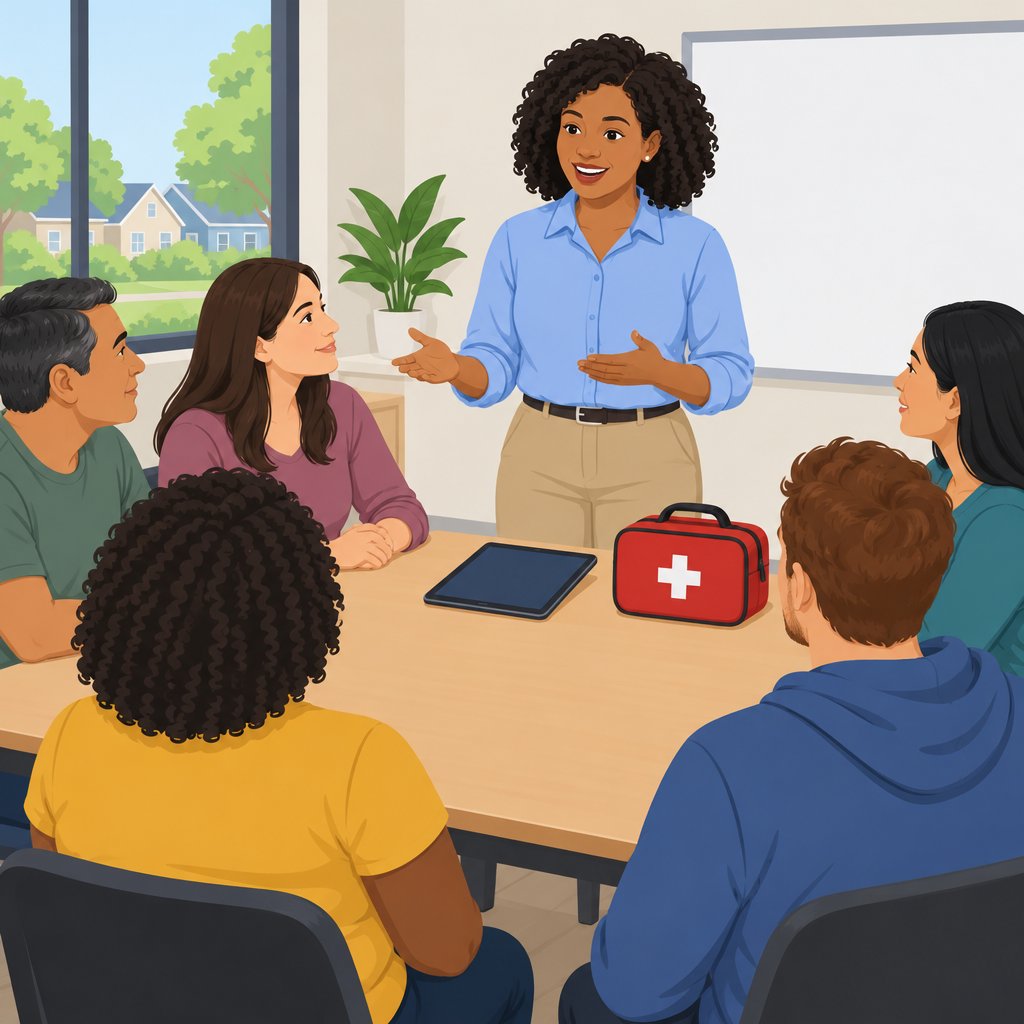
Engaging Residents Through Community Activities
Community events can engage residents while promoting practical, healthy behaviors.
Health fairs, nutrition classes, exercise classes, and informational sessions can address varied health topics.
Furthermore, group exercises and cooking demonstrations can make learning interactive and enjoyable.
Encouraging active participation helps residents develop ownership of program activities.
Shared activities can also build community support for lasting behavior change.
Therefore, organizers should create welcoming opportunities for residents to ask questions and practice skills.
Providing Personalized Health Support
Home visits and individual counseling provide personalized support and guidance.
During one-on-one sessions, health workers can address specific concerns and clarify health information.
They can also offer emotional support while building trust and rapport.
Risk assessments help workers identify needs, provide resources, and develop personalized action plans.
Follow-up visits and check-ins can monitor progress and reveal emerging challenges.
Workers can then modify plans as individuals’ needs change.
Evaluating and Adapting Program Activities
Effective implementation requires coordinated activities, continuing evaluation, and flexibility.
Program teams should work with stakeholders to review participation, feedback, and emerging needs.
Regular reflection allows teams to strengthen useful activities and address barriers.
Transform Your Career Today
Unlock a personalized career strategy that drives real results. Get tailored advice and a roadmap designed just for you.
Start NowAdaptable programs can respond more appropriately to each community’s circumstances.
Empowering individuals remains central to promoting health equity and improving community well-being.
With sustained support, residents can help shape activities that reflect their priorities.
Find Out More: Career Advancement Opportunities for Probation Officers
Collecting Program Data
- Gather information on program activities, outcomes, and community health metrics.
- Use surveys, interviews, and focus groups to assess the program’s impact on participants.
- Additionally, use existing health data and indicators to track progress and identify improvement areas.
Evaluating Program Effectiveness
- Assess how effectively the program has met its goals and objectives.
- Then, analyze data to determine whether community health has improved.
- Consider feedback from participants, stakeholders, and partners throughout the evaluation process.
Program Adjustments Based on Evaluation Findings
- Identify challenges or barriers that may hinder program success.
- Next, modify program activities, strategies, or objectives according to evaluation findings.
- Engage stakeholders to gather input about potential adjustments and improvements.
Improving Program Outcomes
- Implement changes based on evaluation results to strengthen program impact.
- Continuously monitor progress and adjust strategies to achieve better outcomes.
- Finally, document and share successes and lessons learned for future program development.
Advocacy for Policy Change and Sustainable Funding
Advocating for policy changes can strengthen community health worker programs.
These changes can address social determinants of health and create a supportive program environment.
Moreover, sustainable funding secures long-term success and stability for the program.
Without adequate funding, the program may struggle to meet community needs.
It may also face discontinuation.
Engaging policymakers, funders, and community leaders raises awareness and builds support.
Through strong relationships, the program can expand its reach and impact.
Community Health Worker Programs Strengthen Community Well-Being
Developing community health worker programs improves healthcare access in underserved areas.
These programs promote preventive care and address health disparities within communities.
Moreover, trained community health workers bridge gaps between healthcare providers and residents.
Community health worker programs promote healthy behaviors and increase health literacy.
With continued investment and support, these programs can improve community health outcomes.
Therefore, public health leaders should recognize community health workers’ value and prioritize their roles.
Investing in these programs benefits individuals and strengthens the well-being of entire communities.
Continued advocacy can expand community health worker programs and create healthier, more resilient communities.
Additional Resources
Google search results for Developing a Community Health Worker Program Social and Human Services
Bing search results for Developing a Community Health Worker Program Social and Human Services


