




School Social Workers and Behavioral Support
A school social worker plays a critical role in addressing behavioral issues among students.
These professionals provide support and interventions that help students manage behavioral challenges.
Schools must address behavioral issues to create a safe and supportive learning environment for everyone.
This section explores why school social workers play an essential role in addressing behavioral issues.
Identifying Behavioral Issues
Early identification of behavioral issues helps schools provide timely intervention and support.
Recognizing concerns early can prevent academic and social setbacks for students.
It also encourages collaboration among students, families, teachers, and school staff.
Recognizing Potential Behavioral Issues
Social workers must understand developmental stages and age-appropriate behavior.
They should monitor behavioral patterns while considering environmental factors.
Withdrawal, aggression, and frequent mood changes may signal underlying concerns.
Techniques for Recognizing Behavioral Concerns
Building trusting relationships helps staff understand each student’s usual behavior.
Additionally, observations across classrooms, playgrounds, and cafeterias reveal meaningful differences.
Open communication with teachers, parents, and school staff provides valuable context.
Regular screenings and assessments can reveal recurring behavior patterns.
Staff training strengthens the school’s ability to recognize concerns.
Behavior charts, checklists, and tracking systems can provide useful data.
Assessment and Evaluation of Behavioral Issues
School social workers assess behavioral issues as part of student support.
They identify contributing factors and develop appropriate responses.
This process combines information from several sources and assessment methods.
- Explore behavioral assessment and evaluation processes.
- Collaborate with teachers, parents, and other professionals.
- Use assessment tools and evaluation techniques.
Collaboration During Behavioral Assessment
School social workers gather information from people who regularly interact with the student.
Teachers describe classroom behaviors, recurring patterns, and academic performance indicators.
Parents provide perspectives about behavior at home and in other social settings.
Parental involvement helps professionals understand the student’s behavior more completely.
Psychologists, counselors, and special education staff also contribute relevant information.
The team uses these perspectives to create a comprehensive behavioral assessment.
Assessment Tools and Techniques
School social workers use several tools to evaluate student behavior.
These tools include standardized assessments, behavior checklists, observations, interviews, and self-report measures.
Professionals compare information from these methods to identify behavioral patterns.
They also examine possible triggers and factors that influence behavioral challenges.
This information guides targeted intervention plans for individual students.
Through comprehensive assessment, school social workers tailor support to student needs.
Find Out More: Developing Volunteer Appreciation Programs
Intervention Strategies
Schools need a multifaceted approach to address behavioral issues effectively.
These strategies should respond to students’ varied needs and support academic success.
School social workers can combine several interventions to promote positive behavior change.
- Discussing various intervention strategies for addressing behavioral issues
- Individualized intervention plans based on assessment results
- Incorporating evidence-based practices in intervention
Discussing Various Intervention Strategies
School social workers can use several strategies to address behavioral issues effectively.
These strategies include counseling, behavior modification techniques, group therapy, and social skills training.
By combining these approaches, social workers can address diverse student needs and encourage positive behavior change.
Individualized Intervention Plans Based on Assessment Results
Before choosing an intervention, school social workers must assess factors contributing to a student’s behavioral issues.
Assessment results help social workers create plans that target specific areas of concern.
Transform Your Career Today
Unlock a personalized career strategy that drives real results. Get tailored advice and a roadmap designed just for you.
Start NowThese plans should reflect each student’s unique needs and strengths.
Incorporating Evidence-Based Practices in Intervention
School social workers should also use evidence-based practices during intervention.
Research and empirical evidence provide a sound foundation for intervention strategies.
These practices can improve effectiveness, accountability, and ethical practice.
Supporting Student Progress
Together, these strategies create a comprehensive response to behavioral challenges.
Individualized planning helps align intervention with each student’s circumstances and strengths.
Evidence-based methods help social workers support positive behavior change and academic success.
Gain More Insights: Technology and Youth Work: Leveraging Digital Tools
Collaboration with School Staff
School staff collaboration supports effective responses to student behavioral issues.
Teachers, administrators, counselors, and psychologists contribute different forms of support.
Together, school personnel can create a supportive network for students who need help.
Roles of Teachers, Administrators, and Specialized Staff
Teachers identify and manage behavioral issues within their classrooms.
Administrators provide resources and support for addressing behavioral concerns across the school.
Counselors and psychologists offer specialized expertise for complex behavioral issues.
- Teachers play a vital role in identifying and managing classroom behavioral issues.
- Administrators provide school-wide support and resources for behavioral concerns.
- Counselors and psychologists address complex behavioral issues with specialized expertise.
Relationships Among School Personnel
Open communication helps staff members address behavioral issues effectively.
Teamwork builds trust and strengthens collaboration among school personnel.
Regular meetings and check-ins help staff maintain shared expectations.
- Staff members use open communication to coordinate behavioral support.
- Teamwork creates trust among professionals supporting students.
- Regular meetings keep staff members informed about behavioral concerns.
Training and Support for School Staff
Professional development strengthens staff members’ skills in managing behavioral issues.
Behavior management resources give staff practical ways to support students.
Ongoing support helps staff promote a positive and inclusive school environment.
- Professional development improves staff skills for addressing behavioral issues.
- Behavior management strategies empower staff to support students effectively.
- Staff support contributes to a positive and inclusive school environment.
Teamwork for Student Support
School staff collaboration supports comprehensive responses to behavioral issues.
Strong relationships help professionals coordinate their efforts around student needs.
A culture of teamwork helps create conditions where students can thrive.
Find Out More: Common Tools Used by Mental Health Technicians
Parent Partnerships in Behavioral Support
Working with parents strengthens responses to student behavioral concerns.
Parents offer important insight into their child’s behavior and daily experiences.
Therefore, their perspective can clarify circumstances that influence the child’s actions.
- Parents contribute valuable insight during behavioral planning.
- Partnerships align support across home and school.
- Resources help parents address concerns at home.
Social workers can involve parents during assessment and intervention planning.
Open communication helps families and schools coordinate expectations and responses.
Building trust encourages parents to share concerns, observations, and practical ideas.
Meanwhile, consistent communication creates a more supportive environment for the child.
Social workers can provide educational materials about positive parenting techniques.
They can also refer families to external professionals when specialized assistance becomes appropriate.
At home, parents can apply agreed strategies and reinforce behavioral expectations.
These shared efforts promote consistency across the child’s home and school environments.
Additionally, family circumstances can guide more responsive support planning.
Understanding those circumstances helps professionals address factors that may affect behavior.
Parent involvement also supports the child’s ongoing behavioral growth.
Through this partnership, families and schools can strengthen the child’s opportunity for success.
Discover More: Health Educator Career Paths and Opportunities
Transform Your Career Today
Unlock a personalized career strategy that drives real results. Get tailored advice and a roadmap designed just for you.
Start NowCounseling for Behavioral Concerns
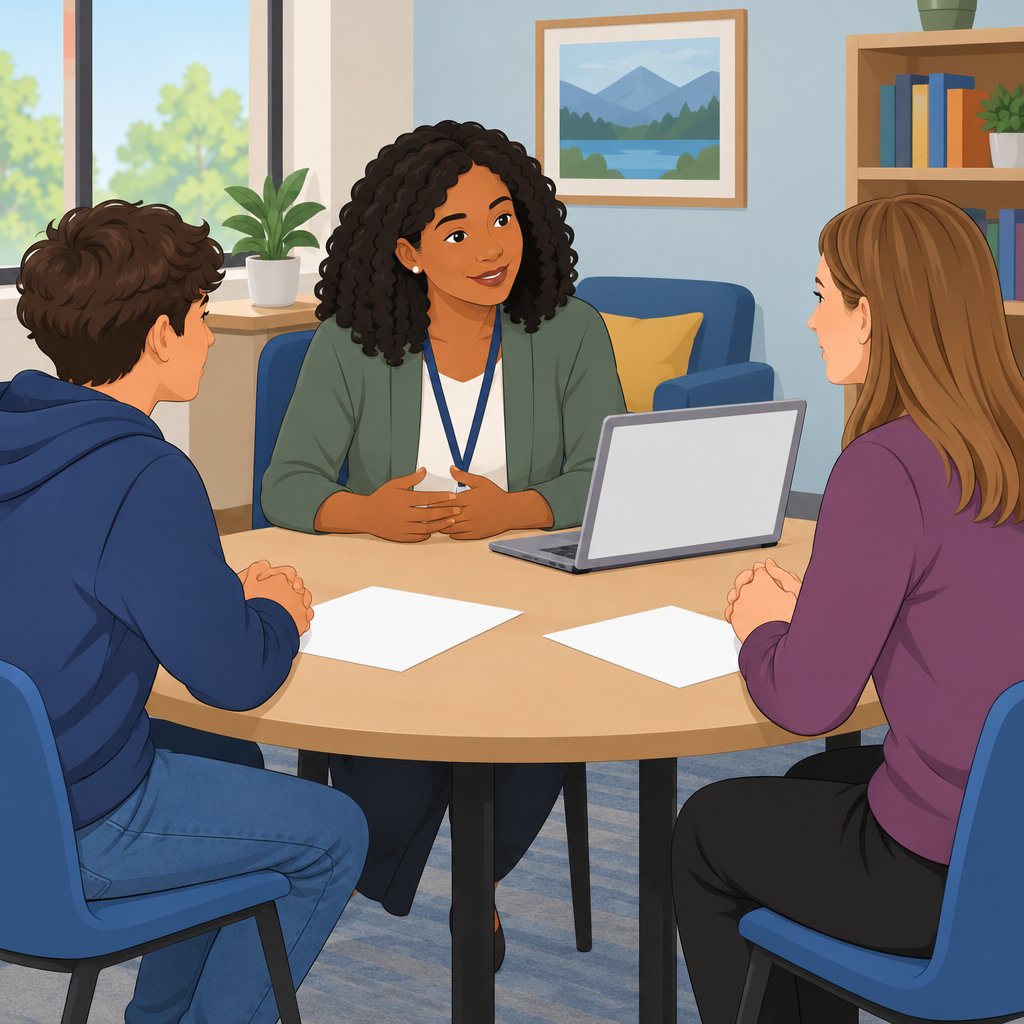
School social workers provide counseling that helps students address behavioral concerns.
They may meet with students individually or facilitate focused group sessions.
These conversations give students a safe, nonjudgmental space to express emotions and concerns.
Addressing Underlying Behavioral Factors
Therapeutic interventions explore factors contributing to each student’s behavior.
Social workers use evidence-based techniques to strengthen students’ coping mechanisms.
They also help students develop stronger social and emotional skills.
Coordinating Support with Families and Teachers
Social workers coordinate with teachers and parents to build consistent support plans.
They share classroom strategies that help teachers respond to behavioral concerns effectively.
Likewise, they discuss home-based approaches with parents to encourage consistency.
Connecting Students with Specialized Services
Some students need specialized support from outside mental health professionals.
In those cases, social workers arrange referrals and support a smooth transition.
They follow up with providers to monitor treatment-plan progress.
Supporting Students’ Academic and Social Growth
Through these services, social workers help students manage behavioral challenges.
This support can strengthen students’ academic and social participation.
Consistent guidance helps students thrive in academic and social environments.
Prevention and Early Intervention
School social workers can address behavioral issues through prevention and early intervention.
These efforts identify concerns before they escalate.
They also support a positive learning environment for students.
Importance of Prevention and Early Intervention
Early action can reduce harmful effects on students, peers, and the wider school community.
It can also keep behavioral concerns from becoming harder to address.
Therefore, timely support strengthens the school’s response to emerging needs.
Proactive Strategies for Preventing Escalation
Schools can use proactive strategies to reduce escalation.
These strategies involve students, teachers, and parents.
They also establish consistent supports across the school community.
- Educate students, teachers, and parents about early warning signs of behavioral issues.
- Provide social-emotional learning programs that enhance students’ coping skills.
- Create a positive school climate that promotes respectful behavior.
- Establish clear and consistent behavior expectations and consequences.
Support Before Behavioral Issues Worsen
School social workers support students experiencing behavioral challenges.
They explore underlying issues and create individualized interventions.
They also connect students with suitable resources and services.
Benefits of Coordinated Behavioral Support
School social workers help schools address behavioral issues and strengthen student support.
Meanwhile, collaboration among teachers, parents, and community members enables effective intervention.
Consequently, positive behavioral support can improve student success, well-being, and academic achievement.


