




School Social Workers and Bullying Prevention
Defining the Role: School social workers play a crucial role in supporting students’ social and emotional well-being.
Introducing the Topic: Bullying prevention is a critical aspect of creating a safe and inclusive school environment.
Importance of School Social Workers: Additionally, school social workers address bullying through their expertise in social-emotional learning.
Assessment and Direct Student Support
School social workers assess student needs related to bullying and social challenges.
They develop intervention plans that address identified concerns.
Additionally, they provide individual and group counseling for affected students.
They support students who display bullying behaviors or experience victimization.
Professional Skills and Student Strategies
School social workers receive training in crisis intervention, conflict resolution, communication, and behavior management.
These skills help them work effectively with diverse student populations.
Moreover, they implement social-emotional learning programs within school settings.
They also facilitate peer mediation and conflict resolution strategies.
Family Partnerships and Support Services
School social workers collaborate with families facing parenting challenges, communication issues, or difficult family dynamics.
These factors may contribute to bullying behaviors among students.
Therefore, social workers offer parenting workshops and family counseling.
They also provide referrals that help families manage social and emotional challenges.
Collaboration With School Staff
School social workers cooperate with staff to create safe and inclusive learning environments.
They provide professional development and training focused on bullying prevention strategies.
Furthermore, they coordinate school-wide initiatives that encourage positive social behaviors.
These initiatives also strengthen peer relationships throughout the school.
Community Partnerships and Student Well-Being
School social workers build partnerships with community organizations and mental health agencies.
They connect students and families with additional resources for ongoing support.
These partnerships expand services for students experiencing bullying or other social challenges.
Through coordinated support, social workers promote respect, empathy, inclusion, and student well-being.
Overview of Bullying in Schools
Bullying involves repeated aggressive behavior intended to harm others.
It can occur through verbal, physical, social, or cyberbullying behaviors.
Additionally, about 20% of students report experiencing bullying.
Moreover, bullying can seriously affect students’ mental health.
It can also negatively affect students’ academic performance.
Learn More: Integrating Technology in Domestic Violence Counseling
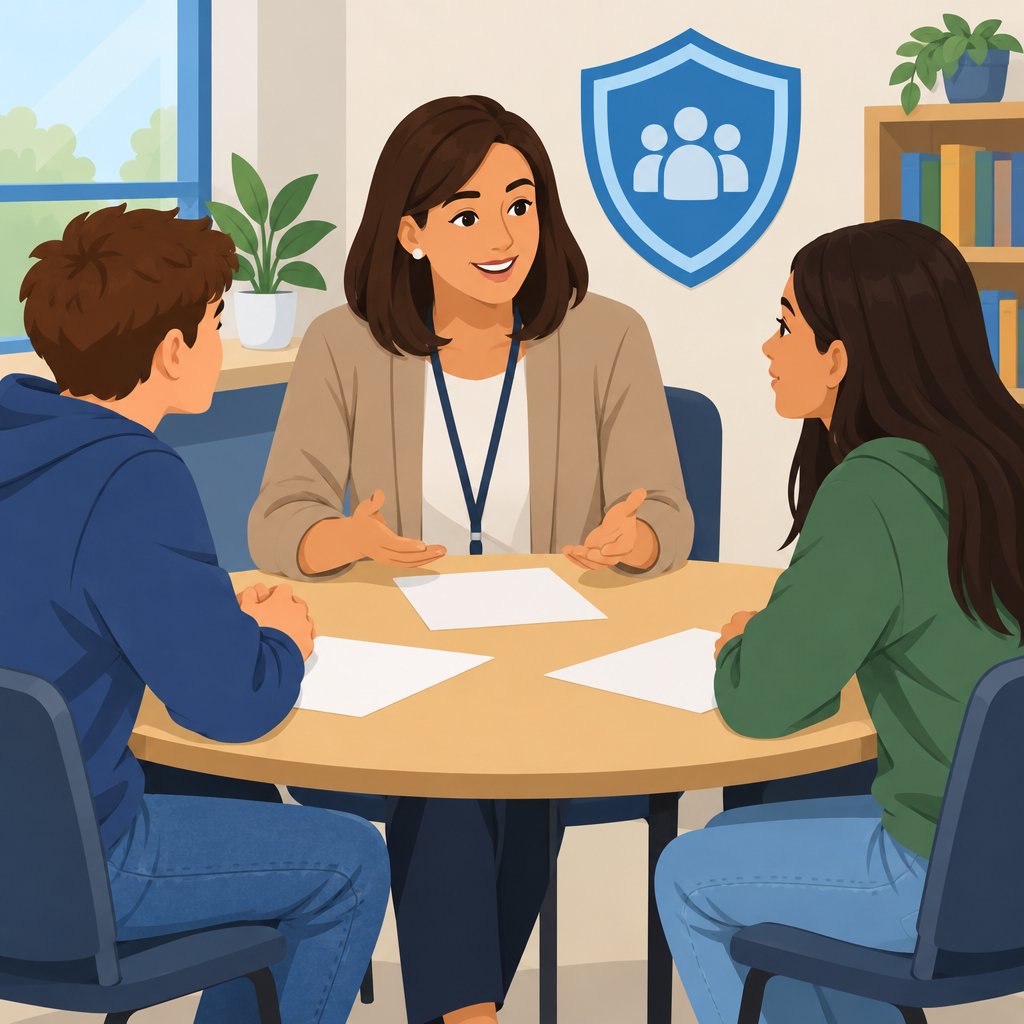
Strategies Used by School Social Workers in Bullying Prevention
School social workers use proactive strategies to help prevent bullying in schools.
These professionals address social, emotional, and behavioral issues that students may face.
They also support efforts that promote safe and inclusive school environments.
Proactive Approaches
School social workers implement programs that encourage positive relationships and reduce bullying risks.
- They organize campaigns that teach students, teachers, and parents about bullying’s harmful effects.
- They coordinate peer mentoring programs that encourage positive relationships and support vulnerable students.
- They conduct classroom sessions that teach empathy, conflict resolution, and communication skills.
Collaboration with Teachers and Administrators
School social workers collaborate with teachers and administrators to create supportive environments where bullying receives consistent attention.
- They help develop policies and protocols for addressing bullying incidents and consequences.
- They provide training that helps staff identify and respond to bullying behavior effectively.
- They meet with school leaders to review prevention efforts and make necessary adjustments.
Early Intervention and Support
School social workers intervene early and support students affected by bullying or displaying bullying behavior.
- They provide counseling that helps bullied students cope with emotional effects.
- They lead group therapy sessions that address underlying issues and encourage positive behaviors.
- They refer students to external resources and mental health professionals when additional support becomes necessary.
These strategies help schools build safer and more inclusive environments.
School social workers support conditions that allow all students to thrive without fear of bullying.
Their collaboration and early interventions strengthen school-wide bullying prevention efforts.
Uncover the Details: Daily Responsibilities of Housing Coordinators
Importance of Social-Emotional Learning in Bullying Prevention
School social workers promote social-emotional learning among students.
Transform Your Career Today
Unlock a personalized career strategy that drives real results. Get tailored advice and a roadmap designed just for you.
Start NowThey create safe, supportive environments where students develop skills for navigating social interactions effectively.
These skills help students build healthy relationships and respond constructively to social challenges.
Empathy supports respectful relationships.
School social workers teach students to understand and appreciate other people’s experiences.
As students develop compassion, they become more likely to respect differences.
This understanding can reduce conflicts and discourage bullying behavior.
Communication helps students resolve conflicts.
School social workers teach students to express feelings and opinions respectfully.
They also encourage students to listen carefully and participate in open dialogue.
Consequently, students can cooperate more effectively and address disagreements constructively.
Conflict resolution skills guide students through disagreements.
School social workers teach strategies for managing emotions during difficult interactions.
Students use these strategies to seek peaceful and mutually beneficial solutions.
Therefore, they can handle conflicts without resorting to bullying behavior.
Programs That Support Positive School Relationships
Schools can integrate several initiatives to strengthen social-emotional learning.
These initiatives help students feel safe, respected, and supported.
Together, these efforts promote healthy relationships and help prevent bullying incidents.
- Social-emotional learning curriculum
- Peer mediation programs
- Anti-bullying campaigns
- Restorative justice practices
- Mental health support groups
Uncover the Details: Technology's Role in Modern Employment Specialist Practices
Addressing Mental Health Issues Related to Bullying
Bullying often causes anxiety, depression, and low self-esteem among affected students.
School social workers provide counseling and support to students who experience bullying.
Early identification and treatment can help prevent future bullying incidents.
Moreover, therapeutic interventions give students a safe space to express emotions and process bullying trauma.
Social workers collaborate with mental health professionals to connect students with necessary support and resources.
They also advocate for policies and programs that promote mental wellness.
These efforts help create a school culture that values empathy and respect.
Through individual and group counseling, social workers teach coping strategies and strengthen resilience.
In some cases, they guide families supporting their child’s mental health during and after bullying.
Addressing bullying-related mental health needs helps create a safe, supportive school environment.
This environment helps students thrive and reach their full potential.
Uncover the Details: Mental Health Technician vs. Psychiatric Nurse
Community Partnerships in Bullying Prevention
School social workers build partnerships with community resources to strengthen bullying prevention efforts.
These partnerships connect schools with mental health professionals, law enforcement, and community leaders.
Together, these partners support safer and more inclusive environments for students.
-
Collaboration with External Organizations
School social workers partner with nonprofit groups, counseling centers, and community service agencies.
These organizations provide resources and support to students who experience bullying.
Such partnerships address student needs while promoting a safer, more inclusive school environment.
-
Partnerships with Mental Health Professionals
Mental health professionals help identify issues that may contribute to bullying behavior.
School social workers coordinate intervention strategies, counseling services, and support for victims and perpetrators.
This collaboration helps students address underlying concerns connected to bullying.
-
Partnerships with Law Enforcement
Law enforcement partnerships support responses to serious bullying cases involving possible criminal behavior.
School social workers and officers can coordinate actions that protect student safety and promote accountability.
They can also explain legal consequences and encourage respect and responsibility.
-
Community Involvement in Bullying Prevention
Community leaders help create supportive environments that encourage positive behavior and reduce bullying.
School social workers engage local businesses, organizations, and residents in prevention efforts.
Community events, workshops, and awareness campaigns can promote empathy, understanding, and respect for diversity.
These efforts extend kindness and acceptance beyond school walls.
Evaluation and Monitoring of Bullying Prevention Efforts
School social workers evaluate bullying prevention programs to support student safety and well-being.
They monitor program effects and determine whether prevention efforts meet student needs.
Additionally, they use collected information to improve strategies and strengthen school safety.
Methods for Assessing Program Effectiveness
School social workers observe student interactions to identify changes in behavior and relationships.
They also conduct surveys and interviews to gather perspectives from students and other participants.
Furthermore, they review incident reports to assess bullying patterns and prevention outcomes.
- Observing interactions between students
- Conducting surveys and interviews
- Reviewing incident reports
Importance of Data Collection and Regular Evaluation
Data collection promotes accountability and transparency within bullying prevention efforts.
Transform Your Career Today
Unlock a personalized career strategy that drives real results. Get tailored advice and a roadmap designed just for you.
Start NowIt also provides evidence-based outcomes that help social workers evaluate their interventions.
Regular evaluations reveal patterns and trends that can guide future prevention decisions.
- Ensures accountability and transparency
- Provides evidence-based outcomes
- Helps identify patterns and trends
Analyzing Trends and Adjusting Prevention Strategies
School social workers analyze evaluation findings to identify emerging bullying-related issues.
They adapt prevention strategies when data shows that existing approaches need improvement.
They also collaborate with students, teachers, and parents to gather useful feedback.
- Identifying emerging issues
- Adapting strategies based on data
- Collaborating with stakeholders for feedback
Through ongoing monitoring, school social workers make informed decisions about bullying prevention programs.
Their analysis supports adjustments that can create a safer and more inclusive school environment.
School Social Workers’ Impact on Bullying Prevention
School social workers support students who experience bullying and students who bully.
They address underlying issues and help students build healthy relationships.
By intervening early, they provide resources that strengthen safety and support throughout the school.
Consequently, their dedication helps create a positive school climate where every student can thrive.
They also promote student mental health and well-being through their expertise.


