




Quality Inspection and Regulatory Compliance
Quality inspectors help ensure products meet specific standards before reaching the market.
Compliance with regulations is essential.
It helps maintain product safety, quality, and consumer trust across various industries.
The Responsibilities of Quality Inspectors
Quality inspectors play a crucial role in product quality and regulatory compliance.
Their responsibilities demand careful attention to detail and a thorough understanding of industry requirements.
They support consistent quality by examining products, recording issues, and communicating important findings.
- Conducting inspections to ensure products meet quality standards
- Identifying defects or non-compliance issues
- Documenting findings and reporting to management
Conducting Product Inspections
Inspectors examine products against quality standards set by companies or regulatory bodies.
They check physical appearance, functionality, damage, defects, and deviations from established requirements.
They use measurement devices, testing equipment, and visual inspection methods during assessments.
These methods help them evaluate product quality and performance carefully.
Identifying Defects and Non-Compliance Issues
Inspectors identify defects or non-compliance issues that could affect product quality or safety.
They compare observed conditions with established standards and investigate likely causes.
When they find defects, they record each problem’s nature and severity accurately.
They may collect samples or perform additional tests to confirm their findings.
Documenting Findings and Reporting to Management
After inspections, inspectors prepare detailed reports describing defects, deviations, and compliance issues.
These records help track product quality and compliance status.
Inspectors also communicate important findings to management.
Prompt reports help management address issues, apply corrective measures, and prevent similar problems.
The Impact of Quality Inspection Work
Quality inspectors help prevent substandard products from reaching consumers.
Their early findings can reduce costly recalls or rework.
They also support consumer safety and protect company reputation.
Their commitment to quality and compliance contributes to business success and sustainability.
Industry-Specific Regulatory Requirements
Government agencies establish industry-specific rules that guide inspections across different products and services.
These requirements protect consumers while directing organizations toward consistent quality practices.
Therefore, inspectors need to identify the rules governing their particular industry.
Food inspectors verify safety controls and labeling requirements under FDA regulations.
Automotive inspectors, meanwhile, follow safety and performance standards established by organizations such as NHTSA.
Understanding those frameworks helps inspectors evaluate products against applicable expectations.
Monitoring Regulatory Changes
Regulatory requirements change as technologies develop and new risks emerge.
Consequently, inspectors must monitor updates that could affect product acceptance or inspection procedures.
Missing a revised requirement can expose an organization to fines, legal consequences, or reputational harm.
Continuous education helps inspectors recognize and respond to regulatory changes.
They can attend seminars, participate in workshops, and pursue relevant industry certifications.
These efforts help organizations avoid preventable errors while sustaining product quality.
Training and Certification Pathways
Training and certification give inspectors the knowledge needed to perform accurate evaluations.
Certification programs differ by industry but commonly address quality control, inspection methods, and regulatory compliance.
Additionally, on-the-job instruction provides practical experience with field-specific tasks.
Inspectors combine formal learning with hands-on practice to strengthen their professional judgment.
This preparation helps them identify non-compliance issues and support corrective actions.
Through continued development, inspectors can contribute effectively to organizational quality goals.
Transform Your Career Today
Unlock a personalized career strategy that drives real results. Get tailored advice and a roadmap designed just for you.
Start NowExplore Further: Challenges in Quality Control for Small-Scale Farmers
Inspection Techniques for Compliance
- Visual inspections identify visible product defects and irregularities.
- Precise measurements verify compliance with required regulatory specifications.
- Additionally, hardness testers, spectrophotometers, and coordinate measuring machines verify quality standards.
- Randomly selected samples represent overall product quality during inspection procedures.
- Detailed inspection, measurement, and testing records support compliance requirements.
- Organized documentation remains complete and accessible for regulatory review.
- Accurate records help quality inspectors track trends and identify potential issues.
- Regular documentation audits keep required information current and compliant.
You Might Also Like: Plant Pathology Journals and Publications
Quality inspectors help organizations maintain compliance with applicable regulations.
They must communicate effectively with stakeholders throughout the production process.
This communication helps teams address potential compliance concerns before they escalate.
Collaboration with Production Teams and Suppliers
- Quality inspectors work closely with production teams and suppliers to align processes with regulations.
- Additionally, inspectors communicate with stakeholders to address potential issues proactively.
- This collaboration creates a workflow that prioritizes compliance and quality throughout production.
Feedback on Quality Issues
- Quality inspectors identify and report quality issues to the appropriate stakeholders.
- By providing timely feedback, inspectors help teams resolve problems before they escalate.
- This feedback loop keeps stakeholders informed about quality standards and compliance expectations.
Corrective Actions for Compliance Issues
- When regulations are not met, quality inspectors help implement corrective actions.
- First, inspectors assess the situation and identify the compliance issue’s root cause.
- They then develop and apply a plan to resolve the issue efficiently.
Effective stakeholder communication supports regulatory compliance throughout production.
Collaboration, feedback, and corrective actions help inspectors maintain consistent quality standards.
These practices also help resolve compliance issues promptly and efficiently.
Find Out More: How to Perform Irrigation System Audits
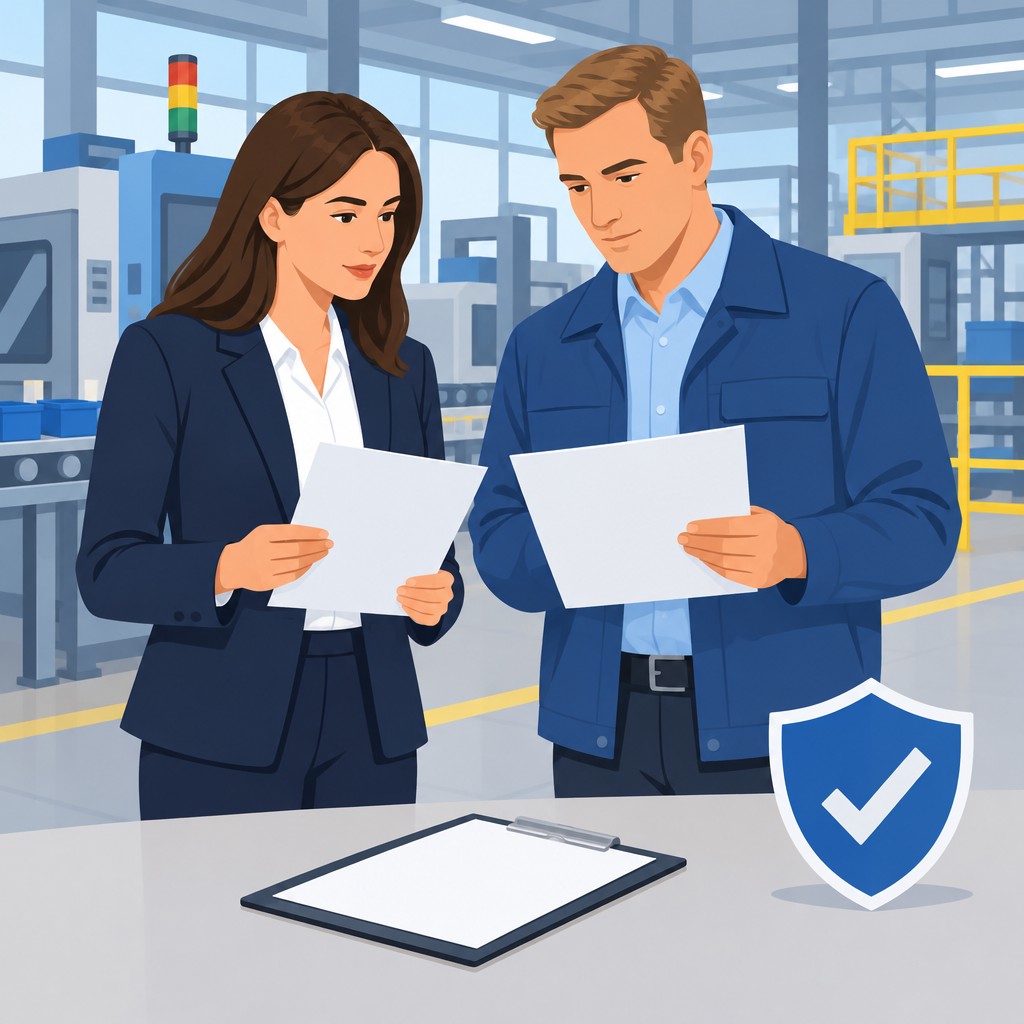
Quality Control Plans for Production
Companies can develop quality control plans that help products meet applicable regulatory standards.
These plans define detailed production guidelines and procedures for employees to follow.
Furthermore, documented instructions clarify responsibilities and support consistent quality practices.
Teams should update each plan when regulations or industry practices change.
Continuous Compliance Monitoring
Production teams can monitor compliance continuously to identify regulatory deviations quickly.
Real-time data collection and analysis reveal trends and potential risks.
Consequently, companies can apply corrective actions before issues escalate into non-compliance.
Constant oversight also helps teams address problems promptly during production.
Audits and Inspections Across Production
Audits and inspections at multiple production stages verify adherence to applicable regulations.
Trained professionals can conduct on-site visits, review documents, and test samples.
They should understand regulatory requirements and hold authority to enforce compliance.
Regular reviews reveal improvement opportunities and support consistent process performance.
These activities can help prevent costly recalls and regulatory fines.
Moreover, demonstrated quality and safety practices can strengthen trust with customers and regulators.
Quality Records and Corrective Actions
Quality control records should capture procedures, monitoring results, audit findings, and corrective actions.
Clear records help employees understand required responsibilities and procedures.
Management can use these records to demonstrate commitment to quality and safety.
Learn More: Implementing Precision Agriculture on Small Farms
Importance of Following Safety Regulations
Quality inspectors help ensure that products meet safety standards.
Safety regulations protect consumers from harm and help prevent accidents.
Furthermore, compliance builds consumer trust and strengthens organizational credibility.
Addressing Risks Related to Product Quality
Quality inspectors identify potential risks and hazards during product inspections.
By addressing these risks, inspectors help prevent issues that could cause product recalls.
Additionally, inspections help manufacturers improve product quality and reliability while reducing defects.
Protecting Consumers from Faulty Products
Quality inspectors verify that products meet safety and quality standards before reaching consumers.
By identifying issues early, inspectors help prevent injuries and other consumer harm.
Inspections also protect consumers from purchasing products that may not perform as expected.
Therefore, quality inspectors support consumer safety and well-being by helping organizations follow applicable regulations.
Handling Non-Compliance Situations
Quality inspectors must handle regulatory non-compliance situations effectively.
They should investigate causes, implement corrective measures, and communicate with authorities when necessary.
These actions help organizations address violations and support continued compliance.
Transform Your Career Today
Unlock a personalized career strategy that drives real results. Get tailored advice and a roadmap designed just for you.
Start Now- Investigating root causes of non-compliance
- Implementing corrective and preventive actions
- Communicating with regulatory authorities when necessary
Investigating Root Causes of Non-Compliance
Quality inspectors must conduct thorough investigations when non-compliance occurs.
They can review documentation and interview staff during the investigation.
Inspectors can also examine processes to identify the underlying cause.
Understanding the cause helps inspectors develop effective corrective plans.
Those plans can reduce the risk of similar non-compliance occurring again.
Implementing Corrective and Preventive Actions
After identifying the root cause, inspectors must implement corrective actions.
These actions return affected processes to compliance.
Inspectors may update procedures or provide additional training.
They may also change equipment or facilities when necessary.
Additionally, inspectors should develop preventive measures for future compliance.
This proactive approach supports compliance over the long term.
Communicating with Regulatory Authorities When Necessary
Inspectors may need to contact regulatory authorities about serious non-compliance.
They may also report recurring issues and request guidance.
This communication helps organizations address issues under applicable regulations.
Open communication also helps inspectors learn about regulatory updates.
Those updates may affect inspection activities and compliance requirements.
Collaboration with authorities supports continuous compliance and strong quality standards.
Quality Inspectors and Regulatory Compliance
Quality inspectors verify that products, processes, and facilities meet applicable regulatory standards.
They also help organizations demonstrate compliance through careful and consistent evaluations.
Therefore, their work supports regulatory adherence across company operations.
Business and Consumer Protection
Quality inspectors help companies avoid costly fines and penalties by identifying regulatory shortcomings.
Furthermore, their inspections preserve product integrity and help protect consumers.
Effective inspections also help organizations address concerns before they create legal difficulties.
Product Quality and Safety
Quality inspectors provide an important safeguard for products intended for consumer use.
They identify potential issues early in production and help prevent defective products from reaching the market.
As a result, inspections support safer products and more reliable production outcomes.
Continuous Training and Development
Quality inspectors need continuous training to remain current with changing regulations and industry standards.
Regular development strengthens their ability to evaluate products and processes accurately.
Consequently, well-trained inspectors can fulfill their duties more effectively and support ongoing compliance.
Their expertise helps protect consumers while reducing regulatory risks for their organizations.
Additional Resources
Google search results for How Quality Inspectors Ensure Compliance with Regulations Agricultural
Bing search results for How Quality Inspectors Ensure Compliance with Regulations Agricultural


