




Environmental Scientists and Agricultural Health
Environmental scientists protect agricultural health by monitoring and analyzing environmental factors.
Agricultural health supports food security, environmental sustainability, and economic stability.
This section explains how scientists identify threats, implement solutions, and foster sustainable practices.
Environmental scientists assess environmental conditions that influence agricultural operations.
They help farmers adopt methods that protect resources while supporting productive crop and livestock systems.
Their findings connect environmental stewardship with practical agricultural decisions.
Environmental Monitoring in Agriculture
Environmental scientists monitor and analyze how agricultural practices affect surrounding environmental conditions.
They research sustainable methods that reduce harm while maintaining agricultural productivity.
They also translate scientific findings into recommendations for agricultural decision-making.
Environmental Conditions Supporting Farm Health
Scientists evaluate soil quality, water resources, and air pollution levels affecting farms.
They recommend ways to improve soil fertility and reduce unnecessary pesticide use.
In addition, they guide waste management practices that protect crops, livestock, and nearby ecosystems.
Scientific Tools for Agricultural Assessment
Environmental scientists combine field measurements with digital analysis to evaluate agricultural environments.
These techniques reveal changes in land, soil, water, and air conditions.
Consequently, farmers can use scientific evidence to plan activities and manage resources.
- Satellite imagery tracks land-use and vegetation-cover changes, revealing areas at risk of environmental degradation.
- GIS analyzes spatial data and creates maps for agricultural planning and natural-resource management.
- Soil testing measures nutrients, pH, and other factors affecting crop growth for tailored fertilization plans.
- Water-quality analysis detects contaminants and pollutants, guiding conservation practices that protect aquatic ecosystems.
- Air monitoring measures nitrogen oxides, sulfur dioxide, and particulate matter from agricultural activities.
Together, these practices support sustainable agriculture while protecting soil fertility and environmental conditions.
They help balance agricultural productivity with environmental conservation.
Improving Crop Yields and Quality
Environmental scientists help improve crop production through sustainable farming and careful resource management.
They evaluate environmental conditions that influence crop growth, yield, and quality.
Furthermore, their work supports productive agriculture while protecting soil and water resources.
Utilizing Sustainable Farming Practices
Environmental scientists promote crop rotation, cover cropping, and integrated pest management.
These practices help farmers maintain productive fields while reducing environmental pressures.
Moreover, sustainable methods support long-term crop production and resource conservation.
Monitoring and Evaluating Soil Health
Environmental scientists work with soil scientists to assess soil health and fertility.
They use these evaluations to identify conditions that support optimal crop growth.
Consequently, farmers can make more informed decisions about soil management.
Identifying and Addressing Nutrient Deficiencies
Soil tests reveal nutrient deficiencies that may limit crop development.
Environmental scientists interpret test results and recommend appropriate fertilizers.
As a result, farmers can improve nutrient availability and crop yields.
Optimizing Water Management
Environmental scientists develop strategies that improve water use in agriculture.
They help ensure that crops receive adequate irrigation without unnecessary water use.
Additionally, efficient irrigation supports crop growth and responsible resource management.
Role of Soil Scientists in Soil Health Assessment
Soil scientists examine soil composition and its relationship with crop growth.
Their assessments help identify conditions that influence fertility and agricultural productivity.
Therefore, soil science provides essential information for effective crop management.
Assessing Soil Structure and Composition
Soil scientists analyze structure, texture, pH levels, and nutrient availability.
These measurements show how soil composition may affect crop development.
In turn, farmers can use this information to guide soil management decisions.
Identifying Soil Contaminants
Soil scientists investigate contaminants that may threaten crop health.
They identify substances such as heavy metals and pesticides in agricultural soils.
Transform Your Career Today
Unlock a personalized career strategy that drives real results. Get tailored advice and a roadmap designed just for you.
Start NowEarly identification helps guide responses that protect soil quality and crops.
Recommendation of Soil Amendments
Soil scientists recommend amendments after evaluating soil conditions.
These amendments can improve fertility and support healthier soil.
Ultimately, improved soil conditions can contribute to better crop production.
Implementing Soil Conservation Practices
Soil scientists support conservation practices that protect agricultural soils.
These practices help prevent erosion and maintain soil quality.
Over time, conservation supports continued crop productivity and healthier farmland.
Significance of Pest Control and Disease Management
Environmental scientists help control pests and diseases that affect crop yield and quality.
They combine monitoring, prevention, and biological approaches to manage agricultural threats.
These efforts support healthier crops and reduce unnecessary chemical use.
Implementing Integrated Pest Management
Environmental scientists promote integrated pest management techniques.
These techniques use natural enemies while reducing reliance on pesticides.
Consequently, farmers can manage pests while limiting chemical impacts.
Monitoring and Early Detection of Diseases
Environmental scientists monitor crops for early signs of disease.
They use early detection methods to identify potential outbreaks.
Prompt action can help prevent diseases from spreading widely across crops.
Developing Disease-Resistant Crop Varieties
Environmental scientists collaborate with plant breeders on disease-resistant crop varieties.
These varieties can withstand common pests and diseases more effectively.
As a result, crop resistance can support stable yields and improved quality.
Implementing Biocontrol Methods
Environmental scientists use biocontrol methods to manage pest populations naturally.
For example, they may introduce predator insects that attack agricultural pests.
This approach can reduce chemical use while supporting effective pest control.
Agricultural Sustainability and Food Security
Environmental scientists connect sustainable practices with improved crop production.
Their soil, water, pest, and disease management supports agricultural sustainability.
These contributions help protect food security for future generations.
You Might Also Like: Food Science Research: Current Trends and Discoveries
Environmental Scientists and Food Safety
Environmental scientists monitor food safety standards across agricultural and processing operations.
They work with farmers, food processors, and government agencies to support regulatory compliance.
Through inspections, audits, and assessments, they verify that food products meet required safety regulations.
Water and Air Quality Testing
Water and air quality testing helps prevent contamination during food production.
Environmental scientists test water sources to confirm that they meet required safety standards.
They also evaluate air quality, reducing environmental risks that could affect food products.
Preventing Contamination and Foodborne Illnesses
These professionals help prevent contamination and foodborne illnesses through targeted control measures.
They identify contamination sources and implement steps that control pathogens and other contaminants.
As a result, their work helps protect consumers and supports safer food production.
Environmental Scientists Protect Public Health
Environmental scientists serve as guardians of agricultural health and food safety.
Their monitoring, testing, and regulatory work helps ensure that food remains safe for consumption.
By controlling contamination risks, they help safeguard public health.
See Related Content: Livestock Health Management Strategies
Conservation and Sustainable Practices
Environmental scientists promote sustainable farming practices to protect agricultural ecosystems over time.
Transform Your Career Today
Unlock a personalized career strategy that drives real results. Get tailored advice and a roadmap designed just for you.
Start NowThey guide conservation efforts and natural resource management across farming landscapes.
Their work connects resource protection with continued food production.
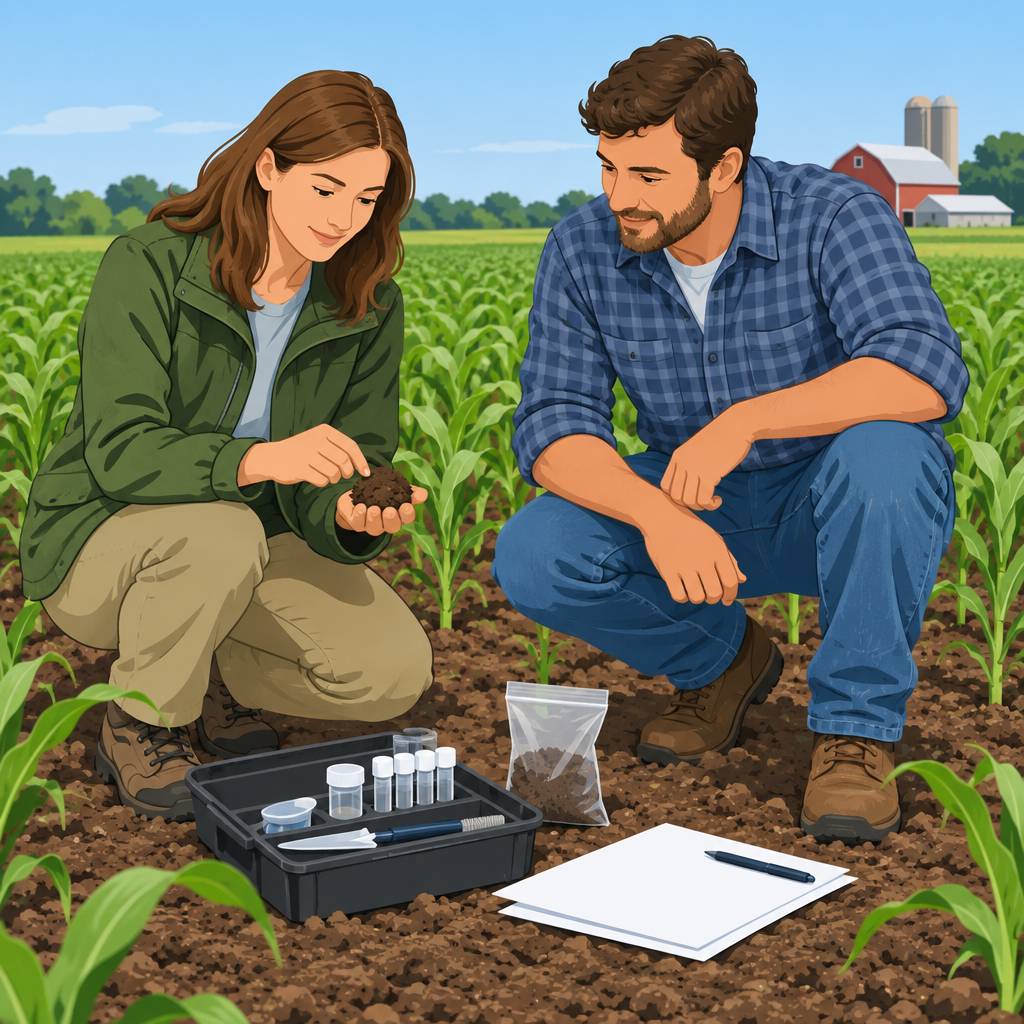
Promoting Sustainable Farming Practices
Environmental scientists help farmers conserve soil, water, and biodiversity.
They reduce environmental impacts by encouraging organic methods and fewer chemical inputs.
Additionally, they promote crop rotation, cover crops, and integrated pest management.
- Farmers use conservation practices to protect soil, water, and biodiversity.
- Organic methods and fewer chemical inputs can reduce environmental impacts.
- Crop rotation helps farmers maintain soil fertility and prevent erosion.
- Cover crops protect soil and support long-term farm sustainability.
- Integrated pest management reduces reliance on harmful pesticides.
- Agroforestry systems combine trees with crops to benefit farmers and ecosystems.
Environmental Scientists and Conservation Efforts
Environmental scientists research how farming practices affect habitats and wildlife.
They work with conservation organizations to protect endangered species and strengthen biodiversity.
Meanwhile, restoration projects can repair ecosystems degraded by agriculture or other human activities.
- Research helps scientists assess agriculture’s effects on natural habitats and wildlife.
- Conservation organizations use scientific guidance to protect endangered species.
- Habitat restoration projects help repair ecosystems damaged by agriculture.
- Protected areas help preserve important habitats for wildlife.
- Wildlife corridors connect fragmented habitats and support species migration.
- Public education encourages conservation and sustainable land use.
Climate Change and Agricultural Adaptation
Climate change threatens agricultural productivity through shifting seasons, pests, diseases, and water scarcity.
Droughts and floods can damage crops and livestock, affecting food security and livelihoods.
Rising temperatures and changing rainfall can alter crop distribution and reduce yields.
- Environmental scientists study climate change effects on agriculture.
- They develop adaptation strategies that help farmers manage changing conditions.
- Climate-resilient crops can help farmers respond to environmental stresses.
- Water-saving irrigation techniques can improve water management during scarcity.
- Sustainable land management can reduce climate-related agricultural impacts.
Through collaboration, environmental scientists support conservation and sustainable food production.
They work with farmers, conservation organizations, and policymakers to protect agricultural ecosystems.
You Might Also Like: Common Misconceptions About Plant Pathology
Collaboration for Agricultural Health
Environmental scientists collaborate with farmers and agricultural stakeholders to support agricultural health.
This partnership helps communities apply practical methods while pursuing sustainable agriculture.
Together, they connect environmental knowledge with farming decisions and broader environmental care.
Working Alongside Farmers
Environmental scientists work directly with farmers to identify risks affecting agricultural health.
They study evidence, analyze data, and recommend strategies that address those risks.
Farmers can then use this guidance to make informed decisions for their operations.
Cooperation and Communication
Strong cooperation helps agricultural health projects respond to environmental challenges.
Moreover, clear communication allows scientists and stakeholders to share knowledge, expertise, and resources.
This exchange supports improved farming practices while helping protect natural resources.
Successful Agricultural Health Projects
Several agricultural health projects demonstrate the value of scientist-farmer collaboration.
One farming community used integrated pest management to reduce harmful pesticide use.
The approach also improved crop yields, showing how coordinated action can support farms.
Elsewhere, farmers adopted sustainable practices in a region affected by soil erosion.
These practices preserved soil fertility, limited runoff, and protected water quality.
Find Out More: The Importance of Pruning in Vineyards
Future Trends and Challenges
- Environmental science and agriculture continue to develop through technology, research, and sustainable practices.
- Environmental scientists face complex challenges when addressing agricultural health issues.
- Continued research and innovation remain essential for protecting agriculture and the environment.
Emerging Trends in Environmental Science and Agriculture
Environmental scientists continue adapting to new developments in agriculture.
Precision agriculture helps farmers use resources efficiently while reducing environmental impacts.
This technology supports more sustainable farming practices.
Scientists also increasingly emphasize soil health and restoration.
Cover cropping and no-till farming can improve soil fertility and quality.
These methods maintain soil structure, reduce erosion, and support healthy microbial activity.
Additionally, biodiversity conservation receives greater attention across agricultural landscapes.
Scientists enhance biodiversity by incorporating native plants and creating wildlife corridors.
Agroforestry practices also support biodiversity and long-term agricultural sustainability.
Challenges Affecting Agricultural Health
Despite technological and research advances, environmental scientists face significant agricultural health challenges.
Climate change creates serious risks for agriculture.
Transform Your Career Today
Unlock a personalized career strategy that drives real results. Get tailored advice and a roadmap designed just for you.
Start NowExtreme weather, shifting growing seasons, and increased pest pressures threaten food security and crop productivity.
Scientists also manage concerns involving pesticides and fertilizers.
They must balance effective pest management with environmental protection.
This balance can reduce chemical effects on ecosystems and human health.
Antibiotic resistance in livestock creates additional concerns for animal health and food safety.
Agricultural expansion can also destroy natural habitats and degrade ecosystems.
Scientists must support sustainable land use while protecting biodiversity and meeting population needs.
Research and Innovation for Agricultural Sustainability
The complexity of agricultural health issues requires continued environmental science research.
Researchers should develop sustainable farming practices and improve soil health.
They should also reduce agriculture’s vulnerability to climate change.
Technological innovation and data analysis can improve understanding of agricultural health issues.
Drones and satellite imagery provide information about crop health and soil conditions.
These tools also support better water management and more effective decisions.
Interdisciplinary collaboration remains essential for addressing agricultural health challenges.
Environmental scientists, agronomists, policymakers, and industry stakeholders can develop comprehensive solutions together.
Such cooperation can advance environmental and agricultural sustainability.
Environmental scientists help guide agriculture toward a more sustainable future.
They can protect agricultural health by applying research, innovation, and responsible environmental practices.
Continued progress will help safeguard agriculture and the environment for future generations.
Environmental Science Supports Sustainable Agriculture
Environmental scientists safeguard agricultural health through research and expertise.
They analyze climate change, pollution, and biodiversity loss to develop sustainable agricultural solutions.
Their guidance helps farmers protect soil, conserve water, and preserve biodiversity.
They monitor air, water, and soil quality to evaluate environmentally responsible farming practices.
They work with farmers, policymakers, and other stakeholders to support sustainable agriculture policies.
Consequently, their conservation efforts help protect ecosystems and support food security.
Society should recognize and support environmental scientists who advance sustainable agriculture.
People can engage with agricultural initiatives, support research, and advocate for environmental protection policies.
Together, we can support agriculture that coexists harmoniously with the environment.
Additional Resources
Google search results for Environmental Scientists: Guardians of Agricultural Health Agricultural
Bing search results for Environmental Scientists: Guardians of Agricultural Health Agricultural


