




Biotechnology and Its Societal Role
Biotechnology uses living organisms or biological systems to develop products and processes.
It supports important industries, including agriculture, medicine, and environmental conservation.
Biotechnology specialists advance research by manipulating biological systems and improving existing technologies.
Innovative Solutions in Biotechnology
Specialists develop methods that improve crop yields and strengthen agricultural production.
They also create vaccines and develop biofuels for various applications.
Through research and experimentation, these professionals introduce new solutions to biological challenges.
Advances in Healthcare
Biotechnology specialists develop personalized medicines that address individual healthcare needs.
Furthermore, they work on gene therapies and diagnostic tools.
These developments help improve healthcare outcomes through targeted research and biological innovation.
Environmental Conservation Strategies
Specialists develop bioremediation strategies that support environmental conservation.
They create sustainable agricultural practices and reduce waste through bioconversion processes.
These approaches connect biotechnology research with practical environmental objectives.
Ethical Responsibilities in Research
Biotechnology specialists address ethical concerns related to genetic engineering.
They evaluate research and applications according to established ethical standards.
Consequently, ethical consideration remains an important part of responsible biotechnology development.
Collaboration Across Sectors
Biotechnology specialists collaborate with researchers, government agencies, and industry partners.
These partnerships help move innovations from laboratories toward the market.
Collaboration therefore connects scientific research with practical applications.
Continuous Professional Development
Biotechnology specialists pursue ongoing professional development throughout their careers.
They monitor emerging technologies and research trends within the field.
This continuous learning helps specialists maintain current knowledge and support further innovation.
Biotechnology’s Broader Impact
Biotechnology specialists contribute to improved food security through agricultural research.
Their medical work advances treatments and supports improved healthcare outcomes.
At the same time, their environmental efforts promote more sustainable practices.
Overview of Biotechnology Specialists
Biotechnology specialists apply biological knowledge to develop products and technologies.
Their work supports human health, agriculture, environmental science, and food production.
They combine research, technical skills, and collaboration to address complex challenges.
Definition of Biotechnology Specialists
Biotechnology specialists understand genetics, molecular biology, bioinformatics, and related scientific fields.
They use this expertise to research, develop, and implement biological solutions.
Furthermore, they adapt scientific methods to meet practical needs across several industries.
Skills and Qualifications for Biotechnology Specialists
Most biotechnology specialists earn degrees in biotechnology, molecular biology, genetics, or related disciplines.
They need strong analytical abilities and effective problem-solving skills.
They also require a thorough understanding of biological processes and laboratory techniques.
Additionally, they analyze data and design experiments to evaluate scientific questions.
Clear communication helps them collaborate effectively with interdisciplinary teams.
Biotechnology Specialists Across Key Industries
Biotechnology specialists contribute to pharmaceuticals, agriculture, environmental science, and food production.
Their research supports new treatments, improved crops, and more sustainable practices.
In pharmaceuticals, they develop biologics, vaccines, and gene therapies.
These products address diseases at the molecular level.
In agriculture, specialists create crops that resist pests, drought, and diseases.
Transform Your Career Today
Unlock a personalized career strategy that drives real results. Get tailored advice and a roadmap designed just for you.
Start NowConsequently, farmers can increase yields while reducing chemical pesticide and fertilizer use.
Environmental specialists develop bioremediation techniques that use microorganisms to remove pollution.
They also design sustainable practices that reduce industrial environmental impacts.
Meanwhile, food specialists improve crop nutrition and develop biofortified foods.
They also create alternative protein sources to support global food security.
Notable Contributions from Biotechnology Specialists
Biotechnology specialists have advanced healthcare, agriculture, environmental sustainability, and food production.
Their research has produced practical applications across multiple fields.
The following examples illustrate several important contributions.
- They developed insulin production methods using genetically engineered bacteria.
- They created genetically modified organisms with improved traits.
- They advanced gene editing technologies such as CRISPR-Cas9.
- They produced biofuels from renewable sources, including algae and bacteria.
- They developed personalized medicine based on genetic profiling.
Development of Genetically Modified Crops
Biotechnology specialists have developed genetically modified crops.
These crops resist pests, diseases, and environmental stresses.
Consequently, they can increase yields and improve nutritional content.
Improvement of Crop Yields and Pest Resistance
Biotechnology specialists have improved crop yields through efficient use of sunlight and nutrients.
They have also created crops that resist pests.
Therefore, farmers can reduce their reliance on chemical pesticides.
Impact on Food Security and Sustainability
These agricultural advances support food security and sustainability.
More resistant crops can help maintain food production during environmental stress.
Thus, biotechnology can help provide a stable food supply for a growing global population.
Additional Agricultural Applications
Specialists have also advanced several related agricultural applications.
These efforts address nutrition, storage, climate pressures, energy, and soil health.
- Biotechnology specialists enhance nutrient content in crops.
- They reduce post-harvest losses through improved storage techniques.
- They develop drought-tolerant crops to address climate change.
- They create biofuels from agricultural waste products.
- They improve soil health through bioremediation techniques.
These innovations help farmers increase productivity and reduce agriculture’s environmental impact.
They also support food security for future generations.
Explore Further: Entomology Journals: Top Publications to Follow
Advancements in Medicine and Healthcare
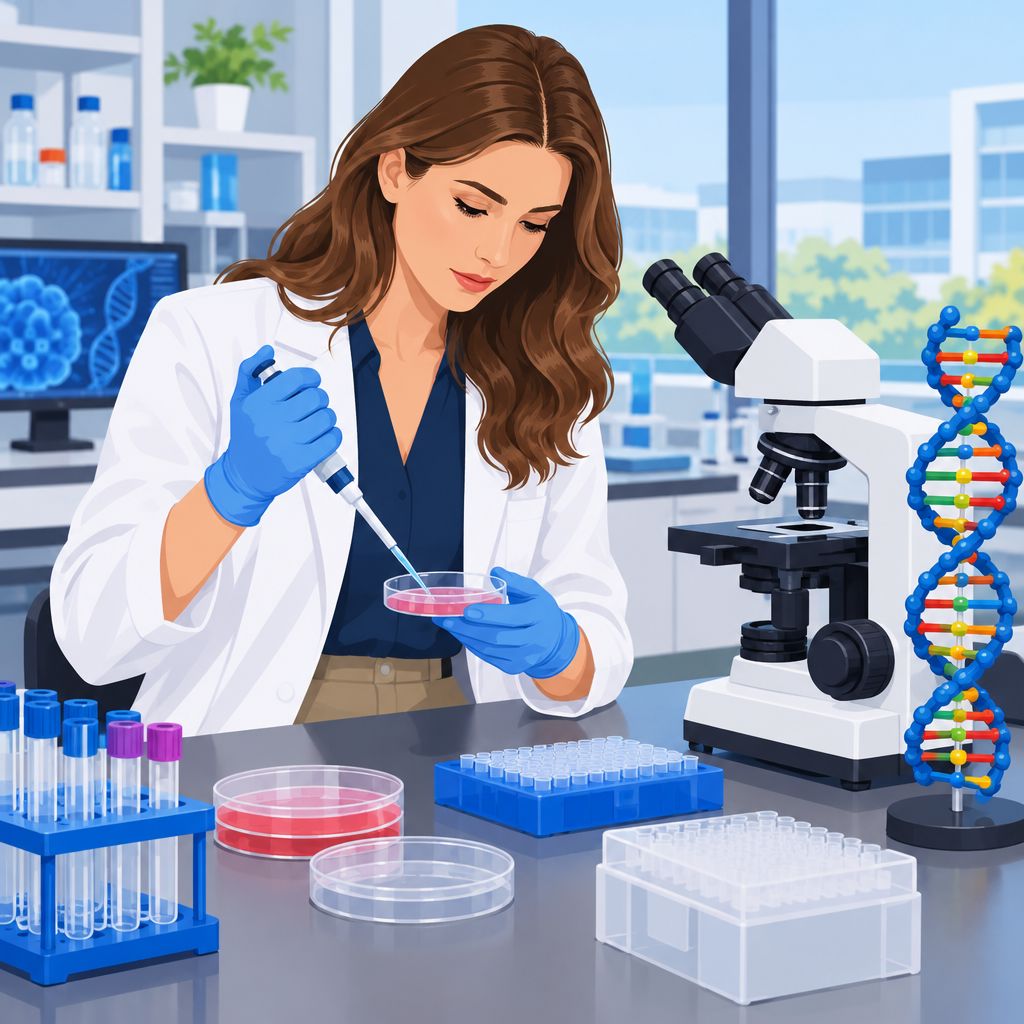
Biotechnology specialists have transformed how healthcare professionals prevent, detect, and treat diseases.
They combine genetic engineering, diagnostic technologies, and genetic analysis to address complex medical needs.
These advances support earlier intervention, more precise treatment, and stronger protection against infectious diseases.
Development of Vaccines and Pharmaceuticals
Biotechnology specialists use genetic engineering techniques to develop vaccines for several diseases.
Examples include COVID-19, influenza, and hepatitis.
These vaccines help prevent infectious disease spread and protect lives worldwide.
Contribution to Disease Diagnosis and Treatment
Furthermore, biotechnology specialists have advanced disease diagnosis and treatment through innovative technologies.
PCR helps detect disease-related genetic material, while gene sequencing reveals important biological information.
Consequently, clinicians can identify diseases earlier and manage them more accurately.
Role in Personalized Medicine and Gene Therapy
Personalized medicine uses an individual’s genetic makeup to guide treatment decisions.
Therefore, specialists can tailor therapies to genetic profiles, improving efficacy and reducing side effects.
Gene therapy corrects faulty genes linked to genetic disorders and may offer potential cures.
Effects on Patient Care and Disease Prevention
Together, these advances have changed how healthcare systems prevent, diagnose, and treat disease.
Life-saving vaccines, diagnostic tools, and personalized treatments can improve patient outcomes.
They also help reduce the global burden of disease.
You Might Also Like: Precision Agriculture: Benefits for Large-Scale Farms
Environmental Impact and Sustainability
Biotechnology specialists support environmental sustainability through practical biological methods.
They apply expertise to restore ecosystems, manage waste, and develop renewable energy.
Transform Your Career Today
Unlock a personalized career strategy that drives real results. Get tailored advice and a roadmap designed just for you.
Start NowThese approaches can reduce pollution while creating useful resources.
- Bioremediation of contaminated sites
- Waste management solutions
- Contribution to renewable energy production
Bioremediation of Contaminated Sites
Bioremediation uses organisms to remove or neutralize contaminants in soil, water, and air.
Specialists use bacteria, fungi, and plants to break down hazardous substances.
Consequently, biological treatment can restore environmental health more sustainably than conventional methods.
Waste Management Solutions
Biotechnology specialists develop sustainable solutions for managing waste in densely populated urban areas.
They use composting, anaerobic digestion, and microbial decomposition to process organic waste.
These processes produce biofuels, fertilizers, and biogas while reducing landfill waste.
Contributions to Renewable Energy Production
Biotechnology specialists develop bioenergy technologies that use biological systems to generate sustainable energy.
They produce renewable fuels such as ethanol, biodiesel, biogas, and biohydrogen.
Furthermore, bioenergy can reduce reliance on fossil fuels and lower greenhouse gas emissions.
Broader Sustainability Benefits
Together, these practices address pollution, waste, and energy demands through biological innovation.
They also transform organic materials into energy sources and useful environmental resources.
Through this work, biotechnology specialists help advance a greener and more sustainable future.
You Might Also Like: Career Path: Becoming a Seed Technologist
Biotechnology specialists play a crucial role in research and innovation.
They push the boundaries of science and technology.
Their work supports groundbreaking discoveries.
Role in Genetic Engineering and Cloning
Biotechnology specialists manipulate organisms’ genetic makeup to produce desired traits or outcomes.
This expertise makes genetic engineering a key area of their work.
They also lead cloning research for breeding and medical research.
Advancements in Synthetic Biology
Synthetic biology designs and constructs new biological parts, devices, and systems.
Biotechnology specialists drive innovation through this interdisciplinary field.
They use engineered biological systems to create materials, chemicals, and fuels for healthcare and agriculture.
Contribution to Scientific Discoveries and Breakthroughs
Biotechnology specialists have contributed to discoveries across medicine, agriculture, and environmental science.
Their expertise in biological systems has advanced research in these fields.
These contributions demonstrate how specialists shape future science and technology.
Discover More: How to Become a Precision Agriculture Specialist
Ethical Foundations in Biotechnology
Biotechnology offers important possibilities for healthcare, agriculture, and environmental conservation.
However, these possibilities require ethical practices that protect people and the environment.
Ethical guidelines help prevent misuse, support informed consent, and maintain transparency.
Additionally, specialists protect individual rights, confidential information, and social justice.
Regulatory Frameworks for Biotechnology
National and international regulatory frameworks oversee the ethical conduct of biotechnology research and development.
These frameworks guide safe practices, reduce potential risks, and maximize benefits.
The FDA, EPA, and NIH assess the safety and efficacy of biotechnological products and processes.
Therefore, biotechnology specialists follow regulatory requirements when seeking project and product approval.
Specialist Responsibilities for Safety and Compliance
Biotechnology specialists prioritize safety, uphold ethical standards, and comply with applicable regulations.
They design and implement protocols that assess risks associated with biotechnological activities.
Moreover, specialists monitor environmental impacts and conduct research transparently.
They collaborate with agencies, industry partners, and stakeholders to develop responsible practices.
Regular audits, inspections, and reviews help specialists verify compliance with regulations and ethical guidelines.
Transform Your Career Today
Unlock a personalized career strategy that drives real results. Get tailored advice and a roadmap designed just for you.
Start NowCollaboration and Interdisciplinary Approach
Biotechnology specialists recognize collaboration with other disciplines as crucial to project success.
They work with chemistry, physics, and computer science experts to gain varied perspectives and skills.
As a result, interdisciplinary teams can address complex problems and develop innovative solutions.
Importance of Collaboration Across Disciplines
Different disciplines help biotechnologists examine challenges from complementary perspectives.
Each collaborator contributes specialized knowledge that strengthens research and problem-solving efforts.
Therefore, collaboration can reveal solutions that isolated teams might miss.
Teamwork Among Scientists, Engineers, and Policymakers
Biotechnology specialists often join teams that include scientists, engineers, and policymakers.
Scientists contribute biology and genetics expertise, while engineers support technology and design.
Meanwhile, policymakers address ethical and legal implications during research and implementation.
Collaboration in Addressing Global Challenges
Through this teamwork, biotechnology specialists address food security, environmental conservation, and healthcare.
They use genetic engineering, bioprocessing, and bioinformatics to develop sustainable solutions.
These efforts can improve crop yields, reduce pollution, and enhance medical treatments.
Continued Support for Biotechnology Specialists
Biotechnology specialists have made significant contributions to medicine, agriculture, and environmental science.
Their work drives innovation, producing new treatments, improving crop yields, and creating sustainable responses to environmental challenges.
Therefore, society must support and recognize these specialists to sustain advances in biotechnology and its applications.
By acknowledging their contributions and providing resources, we can foster conditions for further biotechnology breakthroughs.
Additional Resources
Google search results for Notable Contributions of Biotechnology Specialists Agricultural
Bing search results for Notable Contributions of Biotechnology Specialists Agricultural


