




Introduction
An irrigation system audit is a detailed assessment of an irrigation system’s efficiency and effectiveness.
It evaluates system performance, identifies potential issues, and recommends improvements.
Regular audits help ensure that irrigation systems operate optimally, conserve water, and deliver suitable amounts to plants.
They also help prevent water waste, reduce utility costs, and maintain healthy landscapes.
This blog post covers the steps involved in conducting an irrigation system audit.
It identifies needed tools, key components to inspect, and common problems to address.
Irrigation System Components
- An irrigation system includes controllers, valves, pipes, and sprinklers.
- Controllers manage the timing and duration of each irrigation cycle.
- Meanwhile, valves control water flow, and pipes transport water throughout the landscape.
- Sprinklers distribute water evenly across designated landscape areas.
Importance of Each Irrigation Component
- Controllers schedule water delivery efficiently, which helps reduce waste and conserve resources.
- Additionally, valves regulate water flow and help prevent overwatering or underwatering.
- Pipes carry water from the source to designated irrigation areas.
- Finally, sprinklers distribute water evenly and support healthy plant growth.
Identifying and Locating Irrigation Components
- Controllers usually sit near power sources and connect to valves through wires.
- Valves generally appear at irrigation line beginnings, where they control water flow.
- Pipes may run underground or above ground along the landscape layout.
- Sprinklers sit strategically across lawns or gardens for uniform water distribution.
Common Irrigation System Issues
An irrigation audit can reveal leaks, clogs, misaligned sprinklers, and controller malfunctions.
These problems can reduce distribution uniformity and increase unnecessary water use.
Therefore, auditors should observe system operation and inspect equipment carefully.
Leaks
Leaks may develop in pipes, fittings, valves, or sprinkler heads.
They waste water and lower system pressure, which can disrupt uniform distribution.
During operation, auditors should inspect wet spots, pools, and soggy areas near equipment.
Additionally, hissing or gurgling sounds can signal escaping water.
Clogs
Debris, sand, or mineral buildup can block pipes, nozzles, filters, and emitters.
Consequently, restricted flow creates uneven watering, with some areas receiving too much or too little water.
Auditors should check for reduced flow, dry spots, and irregular watering patterns.
They should clean or replace blocked components when necessary.
Misaligned Sprinklers
Misaligned sprinklers can spray sidewalks, driveways, and other non-landscaped areas.
Meanwhile, poor positioning can leave dry spots or overwater selected areas.
Auditors should watch each spray pattern while the system operates.
They can then adjust sprinkler direction or position to improve coverage.
Controller Malfunctions
A faulty controller can cause overwatering, underwatering, or irregular watering schedules.
Programming errors, damaged sensors, weak batteries, and worn wiring can affect controller performance.
During an audit, reviewers should compare programmed settings with the intended watering schedule.
They should also inspect sensors, batteries, and wiring for damage or wear.
Repairs or replacements can restore reliable control.
Improving Water Use Through Timely Repairs
Prompt repairs can restore proper flow and coverage across the landscape.
They can also reduce wasted water caused by leaks, overspray, and incorrect schedules.
Regular attention helps the system provide appropriate water more efficiently.
Uncover the Details: Implementing Precision Agriculture on Small Farms
Conducting an Irrigation System Walk-Through
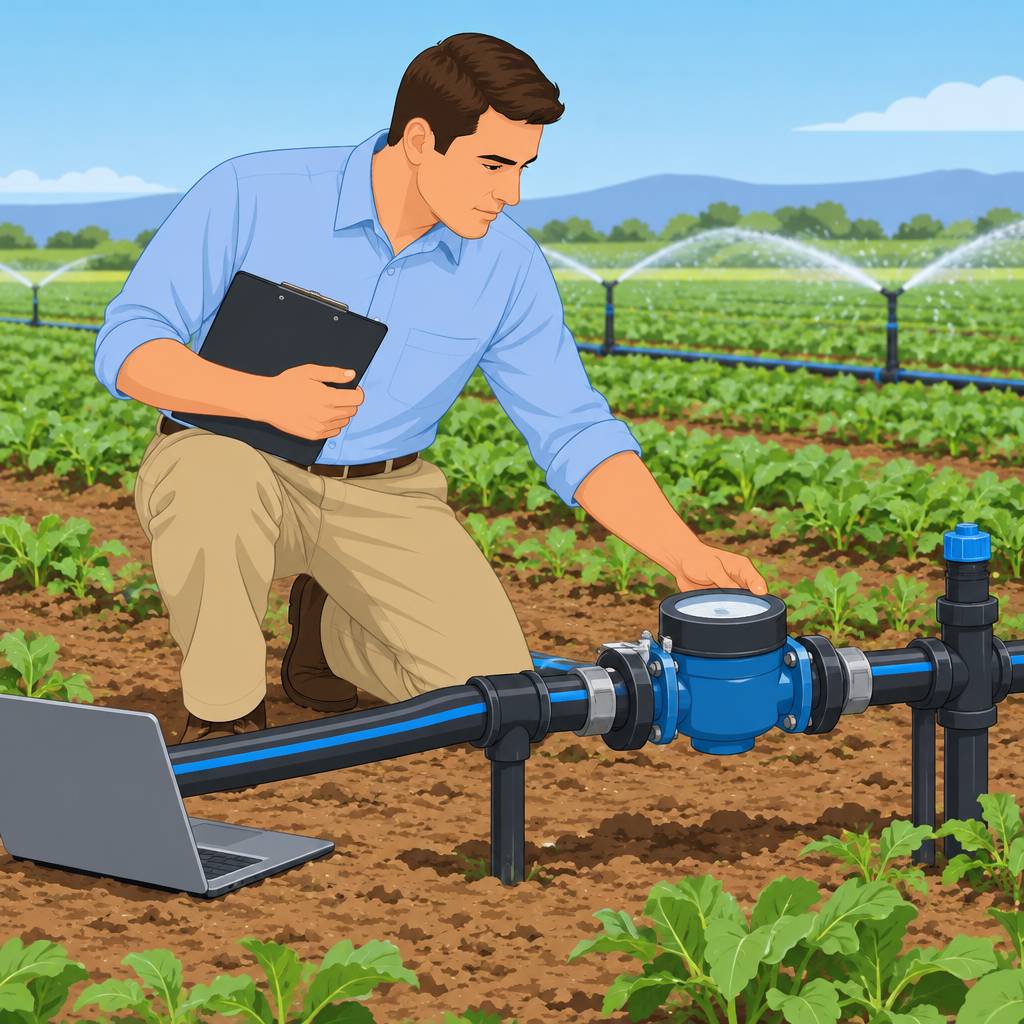
A system walk-through physically inspects the entire irrigation system.
It helps identify issues and inefficiencies that affect system performance and water efficiency.
Therefore, inspect each area carefully and document conditions that require attention.
- First, walk around the entire property to visually inspect the irrigation system.
- Check pipes, fittings, valves, and sprinkler heads for leaks.
- Next, look for pooling water or soggy landscape areas that indicate overwatering.
- Identify dry spots caused by misaligned or blocked sprinkler heads.
- Observe water coverage and distribution to confirm adequate irrigation throughout each area.
- Then, take notes and document every issue or inefficiency observed during the walk-through.
- Finally, note areas that may need adjustments or repairs to improve system efficiency.
Address identified problems through appropriate adjustments or repairs.
These actions support efficient system performance and water use.
Discover More: How to Build a Successful Career as an Irrigation Specialist
Water Distribution Uniformity
Water distribution uniformity describes how evenly irrigation water reaches an area.
This measurement helps ensure that all plants receive adequate water for healthy growth.
Even water coverage supports consistent moisture levels throughout the irrigated area.
Methods for Testing Water Distribution Uniformity
Catch can tests measure the water collected across an irrigation zone.
Transform Your Career Today
Unlock a personalized career strategy that drives real results. Get tailored advice and a roadmap designed just for you.
Start NowPlace catch cans in a grid pattern across the irrigation zone.
Run the irrigation system for a set amount of time, then measure each can.
- Place catch cans in a grid pattern across the irrigation zone.
- Run the irrigation system for a set amount of time.
- Measure the water collected in every catch can.
- Calculate the average application rate for each catch can.
- Compare the results to determine uniformity.
Other methods include distribution uniformity coefficients and sprinkler pattern tests.
Benefits of Uniform Water Distribution
Uniform water distribution supports efficient water use and conservation.
It prevents overwatering in some areas while other areas receive too little water.
Consistent moisture levels also help prevent plant stress.
Plants receiving uniform water are more likely to thrive and produce healthy yields.
Discover More: Marketing Challenges Faced by Small Farms
Evaluating Controller Settings and Programming
Controller settings determine when and how long each irrigation zone operates.
Reviewing these settings helps match watering schedules with weather conditions and plant needs.
Careful programming also supports efficient water usage throughout the landscape.
Accessing and Reviewing Controller Settings
First, locate the controller and open its settings menu.
Next, review each watering schedule and zone setting.
Also, check the controller for error messages or alerts.
- Locate the controller and access the settings menu.
- Review current watering schedules and zone settings.
- Check for error messages or alerts displayed on the controller.
- Record any issues or discrepancies in the settings.
Adjusting Watering Schedules for Weather and Plants
Weather conditions can change the amount of water that plants require.
Plant requirements also vary across different areas of the landscape.
Adjust the controller whenever current conditions change watering needs.
- Consider the current weather conditions in your area.
- Determine the water requirements of your plants and landscaping.
- Increase or decrease watering frequency according to weather and plant needs.
- Use controller programming to make necessary adjustments.
Programming Practices for Efficient Water Usage
Effective programming aligns watering schedules with specific plant requirements.
Seasonal adjustments help account for changing weather patterns.
Zone watering directs water toward the areas that need it.
- Set watering schedules according to specific plant requirements.
- Use seasonal adjustments for changing weather patterns.
- Implement zone watering to target specific areas efficiently.
- Review and update programming regularly for efficient water usage.
Review controller settings regularly to keep irrigation schedules responsive to current needs.
Effective programming helps the irrigation system support plants while using water efficiently.
See Related Content: How to Choose the Right Agricultural Consultant
Analyzing Water Usage Data
- Using water bills and meter readings to quantify usage
- Comparing applied water with plant requirements
- Identifying opportunities to improve irrigation efficiency
Water usage analysis helps auditors evaluate irrigation efficiency and make informed decisions.
Water bills show total consumption across a specific period.
Auditors can divide billing data into smaller intervals to identify usage patterns.
Meter readings provide more precise information about daily or weekly consumption.
Comparing applied water with plant requirements helps auditors evaluate irrigation performance.
Excess application wastes water and may damage plants.
Insufficient application can stress plants and reduce growth.
Usage data can reveal zones that receive more water than necessary.
Auditors can adjust irrigation schedules or recommend more efficient equipment.
These findings support targeted conservation measures and improve system performance.
Establishing an Irrigation System Maintenance Plan
- Set up a regular maintenance schedule for the irrigation system.
- Use preventative maintenance to minimize potential issues.
- Monitor the system and make adjustments as needed.
A comprehensive maintenance plan supports proper irrigation system operation.
Regular maintenance also helps the system operate efficiently.
Furthermore, proactive care can reduce repairs and water waste.
Setting Up a Regular Maintenance Schedule
Start by creating a regular schedule for maintaining the irrigation system.
Include tasks such as checking for leaks and inspecting valves.
Also, adjust sprinkler heads to ensure that the system operates correctly.
Using Preventative Maintenance to Minimize Issues
Regularly check for leaks and repair them promptly.
Transform Your Career Today
Unlock a personalized career strategy that drives real results. Get tailored advice and a roadmap designed just for you.
Start NowThis approach helps prevent water waste and landscape damage.
Additionally, inspect valves to confirm that they function correctly.
Monitoring and Adjusting the Irrigation System
Ongoing monitoring helps identify issues before they become significant problems.
Make necessary adjustments to keep the system operating smoothly.
Seasonal adjustments can account for changing weather and landscape needs.
Consistent monitoring supports efficient operation and helps prevent water waste.
Benefits of Regular Irrigation Audits
- Regular irrigation system audits ensure efficient water use and prevent water waste.
- Implementing these steps can reduce costs and improve plant health.
- A well-maintained irrigation system benefits both you and the environment.
Additional Resources
Google search results for How to Perform Irrigation System Audits Agricultural
Bing search results for How to Perform Irrigation System Audits Agricultural


