




Precision Agriculture for Small Farms
Precision agriculture uses technology to optimize crop yields and reduce input costs.
Small farms can maximize productivity by using limited resources carefully.
This approach helps farmers connect technology with practical field decisions.
Benefits for Small Farm Efficiency
Farmers can use data to guide daily choices.
Consequently, they can improve efficiency and support higher yields.
Targeted input applications also help reduce waste and strengthen profitability.
Technology Supports Increased Efficiency
GPS-guided equipment can help small farms streamline field operations.
Meanwhile, drones can support field mapping and crop health monitoring.
Farmers can then identify areas needing attention and take corrective action.
Resource Optimization Through Precision
Precise fertilizer, pesticide, and irrigation applications can minimize waste.
This targeted method can also reduce environmental impact and farm expenses.
Furthermore, lower chemical use supports more efficient resource management.
Data-Informed Farm Decisions
Farmers can collect information about crop growth and soil conditions.
Weather patterns provide additional context for interpreting farm data.
By studying trends, farmers can adjust practices and minimize risks.
Long-Term Value for Small Farms
Small farms can improve sustainability by adopting precision agriculture practices.
They can also strengthen competitiveness through more informed management.
Therefore, technology adoption can support productivity while respecting limited resources.
Benefits of Precision Agriculture on Small Farms
Implementing precision agriculture on small farms offers several operational advantages.
These advantages help farmers improve daily operations.
They can also increase productivity through data-driven decisions.
Increased Efficiency and Cost Savings
- Precision agriculture helps farmers optimize fertilizer, pesticide, and water use.
- GPS-guided machinery reduces overlap and minimizes resource waste.
- Efficient resource use can also reduce labor costs through accurate or automated tasks.
Improved Crop Yields and Quality
- Precise input application gives crops appropriate nutrients and protection for better growth.
- Monitoring tools can detect pest infestations or nutrient deficiencies early.
- Data analysis helps farmers make informed decisions that improve crop performance.
Reduced Environmental Impact
- Targeted applications reduce the environmental footprint of farming practices.
- Soil moisture sensors help conserve water and prevent over-irrigation.
- Precision application reduces chemical use, pollution, and harm to ecosystem health.
Precision agriculture can support sustainable farming practices on small farms.
Farmers can use technology and data-driven methods to improve efficiency and productivity.
These practices can also improve profitability while reducing environmental impacts.
Key Technologies in Precision Agriculture
Small farms can use several technologies to collect field information.
These tools help farmers observe conditions and guide practical field decisions.
GPS systems, sensors, and drones provide different types of agricultural information.
- GPS technology for mapping and monitoring
- Sensors for monitoring soil conditions and crop health
- Drones for aerial imaging and data collection
GPS Technology for Mapping and Monitoring
GPS systems help farmers map their land and monitor field activities.
Farmers can track planting progress and harvesting progress with GPS technology.
Detailed field maps can guide planting patterns and irrigation strategies.
Sensors for Soil Conditions and Crop Health
Farmers can place sensors in soil to monitor moisture, nutrients, and temperature.
These devices provide data about crop health and changing field conditions.
Farmers can use this information to guide irrigation, fertilization, and pest control.
Drones for Aerial Imaging and Data Collection
Drones capture high-resolution images that show crop conditions from above.
Farmers can identify crop stress or disease more quickly through aerial images.
Drones also collect information about soil quality, plant health, and irrigation effectiveness.
These technologies give farmers useful tools for managing their fields.
Farmers can combine collected information with timely decisions about crop care.
Using these tools can help small farms improve crop yield and quality.
You Might Also Like: How to Build a Successful Career as an Irrigation Specialist
Transform Your Career Today
Unlock a personalized career strategy that drives real results. Get tailored advice and a roadmap designed just for you.
Start Now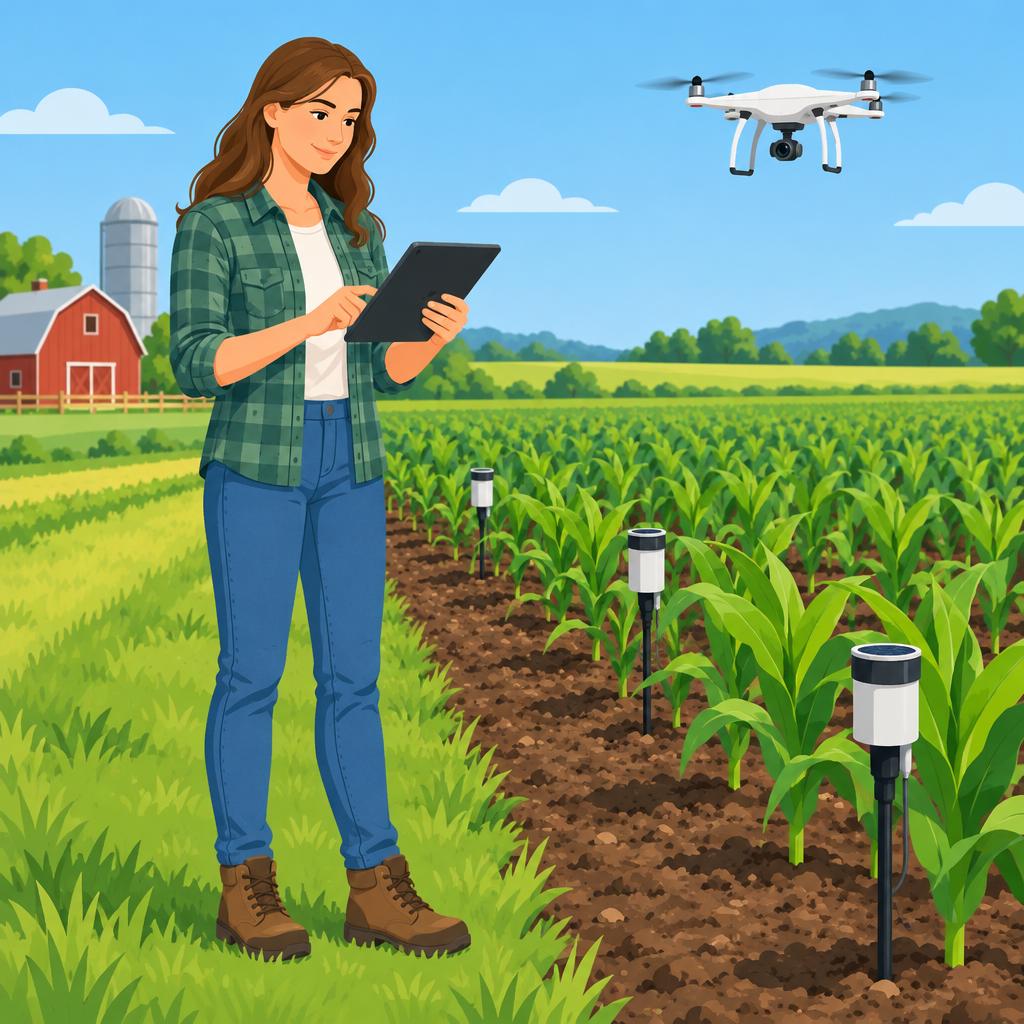
Challenges in Implementing Precision Agriculture on Small Farms
Small farms can face several obstacles when adopting precision agriculture technologies.
These obstacles may affect financial planning, technical decisions, and daily farm operations.
However, farmers can address these challenges through practical planning and appropriate support.
High Initial Investment Costs
Precision agriculture tools often require substantial initial spending.
Small farmers may struggle to finance equipment, software, and related services.
Consequently, financial constraints can delay technology adoption.
Limited Technical Expertise
Many small-scale farmers may lack the skills needed to use precision agriculture tools effectively.
They may need help interpreting information and applying it to field decisions.
Therefore, limited expertise can reduce the value of new technology.
Data Management and Integration Issues
Precision agriculture practices can generate large amounts of data.
Small farmers may find this information difficult to organize and interpret.
Moreover, they may struggle to integrate data into everyday decision-making.
Access to Reliable Technology
Small farms may have limited access to current and dependable precision agriculture technology.
Suppliers may not always provide suitable options for smaller operations.
As a result, farmers may find complete adoption difficult.
Resistance to Change
Some farmers may hesitate to replace familiar practices with new technologies.
They may question whether unfamiliar tools will suit their operations.
Additionally, this hesitation can slow the implementation process.
Infrastructure Limitations
Rural small farms may experience limited connectivity and internet access.
Power supply limitations can also disrupt the use of digital equipment.
Consequently, weak infrastructure can prevent farmers from using technology consistently.
Scalability Challenges
Many precision agriculture technologies target larger farming operations.
Small farmers may struggle to adapt those systems to their available scale.
Thus, technology that works for large farms may not fit smaller operations easily.
Regulatory Hurdles
Small farmers may need to navigate rules involving data privacy and technology use.
Environmental requirements can create additional responsibilities for farm operators.
Furthermore, compliance processes may consume time and create uncertainty.
Seasonal Variability
Weather conditions can change across seasons and influence farm decisions.
Crop yields and market demand may also vary during the year.
Therefore, seasonal changes can affect the effectiveness of precision agriculture practices.
Limited Industry Support
Small farmers may struggle to find adequate support from industry stakeholders.
Suppliers, service providers, and government agencies may not offer sufficient assistance.
Without dependable support, farmers may encounter more difficulties during implementation.
Practical Progress for Small Farm Technology Adoption
Addressing these obstacles can help small farmers use precision agriculture more effectively.
Careful technology choices can support efficiency, sustainability, and profitability.
By finding suitable solutions, small farms can unlock more value from precision agriculture.
Learn More: Marketing Challenges Faced by Small Farms
Strategies for Overcoming Precision Agriculture Challenges
Small farms can overcome implementation challenges with practical support strategies.
These strategies address financial, educational, and technical barriers.
Together, they can help farmers adopt precision agriculture more effectively.
Transform Your Career Today
Unlock a personalized career strategy that drives real results. Get tailored advice and a roadmap designed just for you.
Start Now- Seek financial assistance through grants or loans
- Attend training workshops or courses
- Partner with agricultural technology companies for support
Financial Assistance for Precision Agriculture
Financial constraints can make precision agriculture difficult for small farms.
Farmers can seek grants or loans designed to support transitions to precision agriculture.
These resources can provide capital for needed technology and equipment.
Some grants may also fund training programs and workshops.
Training for Precision Agriculture Management
Education supports successful implementation of precision agriculture on small farms.
Farmers can attend workshops or courses to learn current technologies and farming practices.
These sessions may cover soil health management, data analysis, and equipment maintenance.
Consequently, farmers can strengthen their knowledge and make informed farm decisions.
Partnerships with Agricultural Technology Companies
Technology companies can provide expertise and resources that small farms may lack.
These partnerships may include technical support, training, and access to advanced technology.
Farmers can receive guidance when selecting and implementing tools for their needs.
Personalized support can help them gain greater value from precision agriculture.
Financial assistance, education, and partnerships can help small farms address adoption barriers.
These approaches can support successful use of precision agriculture.
Delve into the Subject: How to Choose the Right Agricultural Consultant
Successful Small Farm Precision Agriculture Examples
Small farms often face unique challenges when adopting precision agriculture techniques.
However, several success stories show how these farms can benefit from practical technology.
These examples demonstrate strategies, challenges, and outcomes from successful farm implementations.
Smith Family Farm Improves Vegetable Production
The Smith Family Farm operates as a small-scale organic vegetable farm.
The farm adopted precision agriculture to improve crop yields and reduce waste.
- The farm invested in soil sensors and GPS technology to monitor moisture levels.
- It used this information to identify precise locations for water and fertilizer applications.
- Initially, equipment costs created a barrier, while employee training presented another challenge.
- Eventually, the farm increased crop yields by 20 percent and reduced water usage by 30 percent.
Johnson Dairy Farm Strengthens Herd Management
Johnson Dairy Farm operates as a small dairy operation.
The farm adopted precision agriculture to improve herd management and optimize feeding practices.
- Staff used RFID tags to track each cow’s milk production, health data, and feeding habits.
- The farm used this information to create personalized feeding plans.
- Integrating RFID technology with existing systems proved complex, and staff needed data training.
- Consequently, the farm increased milk production by 15 percent and reduced feed costs by 10 percent.
These examples show how small farms can adapt precision agriculture to their specific operational needs.
By addressing adoption challenges, farmers can improve efficiency, productivity, and sustainability.
You Might Also Like: Managing Farm Infrastructure and Equipment
Importance of Data Collection and Analysis
Data collection and analysis support precision agriculture on small farms.
They help farmers understand crop health, soil conditions, and weather patterns.
Consequently, farmers can make informed decisions, optimize resources, and improve yields.
Making Informed Decisions
Farmers use collected data to guide important operational decisions.
For example, data reveals conditions that influence crop management choices.
Therefore, analysis helps farmers use resources strategically while supporting productive operations.
Types of Data Collected
Small farms collect several data types to support precision agriculture practices.
Each type provides information about field conditions, crops, or farm equipment.
Together, these sources help farmers assess operations from multiple perspectives.
- Field sensors monitor temperature, moisture levels, and nutrient content.
- Drones and satellites provide imagery that reveals crop and field conditions.
- Farm machinery records operational information from tractors and irrigation systems.
Improving Farm Operations Through Data
Farmers can analyze collected data to improve daily farm operations.
Moreover, data analysis helps them identify operational needs and potential improvements.
These applications can reduce waste, control costs, and support efficient production.
- Sensor analysis helps farmers apply fertilizers and pesticides where needed.
- Machinery data helps farmers predict maintenance needs and prevent breakdowns.
- Combined data supports planting, irrigation, and harvesting decisions.
By using data effectively, farmers can increase productivity and reduce environmental impacts.
Artificial Intelligence and Machine Learning in Small-Farm Agriculture
Artificial intelligence and machine learning will shape future precision agriculture on small farms.
These tools help farmers interpret information for crop management, pest control, and irrigation decisions.
Transform Your Career Today
Unlock a personalized career strategy that drives real results. Get tailored advice and a roadmap designed just for you.
Start NowFurthermore, they can help farmers use available resources carefully and support productive operations.
Automation can reduce manual work, save labor, and limit errors during routine farming tasks.
Farmers can also monitor crop health, identify diseases earlier, and estimate yields more accurately.
Integration with Smart Farming Practices
Another future trend combines precision agriculture with broader smart farming practices.
Farmers may connect sensors, drones, and data analytics to coordinate field activities.
For example, aerial imagery from drones can complement information from soil sensors.
This combined approach gives farmers a more complete view of farm conditions.
Moreover, integrated tools can help farmers respond to changing environmental conditions and market demands.
These practices may support responses to climate change and fluctuating market prices.
Long-Term Value of Precision Agriculture
Precision agriculture helps small farms use resources more efficiently.
It can also improve crop yields while reducing environmental impact.
Therefore, small farmers can strengthen daily practices, support sustainability, and maintain long-term productivity with these technologies.
Additional Resources
Google search results for Implementing Precision Agriculture on Small Farms Agricultural
Bing search results for Implementing Precision Agriculture on Small Farms Agricultural


