




Importance of Agricultural Science Projects
Agricultural science projects give students hands-on experience in the field.
These projects help students apply theoretical knowledge in practical settings.
Moreover, innovative projects broaden students’ understanding of agricultural practices.
They also let students explore technologies and techniques that can enhance productivity.
Importance of Hands-on Learning in Agri-science Projects
- Practical experience helps students understand agriculture beyond textbooks.
- Hands-on projects show students how agri-science concepts apply in real-world settings.
- Engaging activities strengthen critical thinking and problem-solving skills.
- Experiments help students understand complex ideas by seeing them in action.
- Project work fosters teamwork, communication, and collaboration among students.
Innovative Agri-Science Project Ideas
Innovative agri-science projects offer students many opportunities to explore agriculture.
These activities can strengthen understanding while supporting sustainable practices in farming.
Moreover, students can investigate practical solutions through varied experiments and designs.
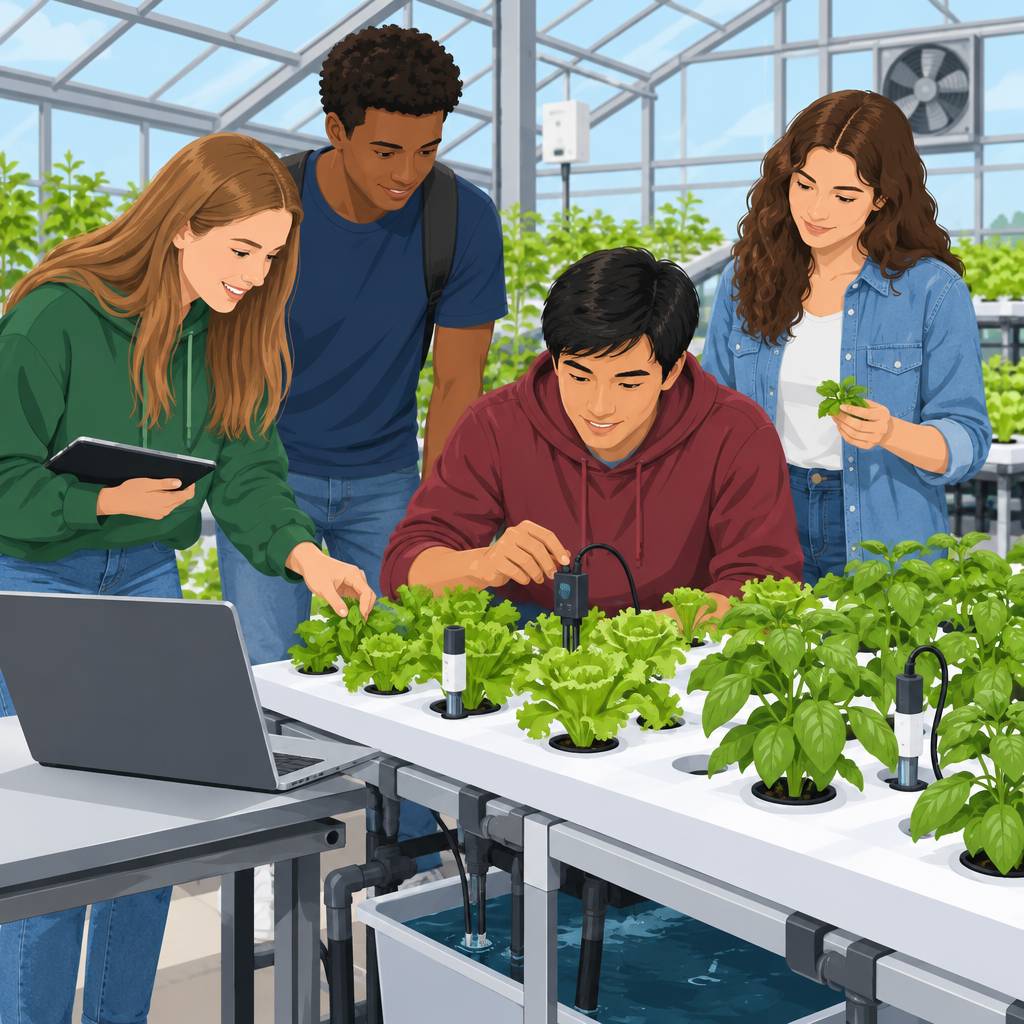
- Hydroponics systems: Students can build hydroponic systems, test nutrient solutions, and monitor plant growth without soil.
- Soil testing experiments: Students can compare soils by measuring pH, nutrients, and organic matter to evaluate fertility.
- Sustainable farm practices: Students can develop conservation methods, including crop rotation, cover cropping, and integrated pest management.
- Vertical farming systems: Students can design stacked growing systems to use space efficiently and increase crop yields.
- Food waste reduction strategies: Students can reduce agricultural waste by improving harvest efficiency, post-harvest handling, and preservation.
- Robotics in agriculture: Students can build robots for seeding, weeding, or harvesting while examining agricultural automation.
- Environmental impact assessments: Students can assess farming effects on soil health, water quality, biodiversity, and sustainable alternatives.
- Biotechnology in agriculture: Students can study genetically modified crops, crop breeding advances, and biotechnology debates.
- Urban agriculture initiatives: Students can plan rooftop gardens, community gardens, or urban hydroponic farms to address food security.
- Agri-tech innovations: Students can explore drones, sensors, and smart farming tools for crop monitoring, irrigation, and pest management.
These project ideas encourage innovation and creativity within agri-science education.
They can also help students contribute meaningful solutions to agricultural challenges.
Find Out More: Importance of Quality Control in Agricultural Exports
Collaboration Opportunities with Local Farms and Research Institutions
Students can explore partnerships with community organizations to strengthen agri-science projects.
Local experts can guide student initiatives with practical knowledge and professional support.
These partnerships connect classroom learning with agricultural work and research.
- Explore partnerships with community organizations to enhance student projects.
- Work with field experts who can guide and support student initiatives.
Benefits of Collaboration
Local farms and research institutions provide valuable opportunities for practical learning.
Students can examine agricultural trends, technologies, and workplace expectations.
As a result, students develop skills that support future agri-science careers.
Enhanced Learning Through Field Experience
Farmers and researchers help students apply classroom knowledge to real agricultural situations.
This approach reinforces scientific concepts through observation, practice, and discussion.
Furthermore, students strengthen critical thinking and problem-solving skills through authentic tasks.
Access to Agricultural Resources
Collaborating organizations may provide equipment, technologies, and specialized learning resources.
Students can also receive mentorship from professionals with relevant field experience.
This exposure may support internships, research opportunities, and future career planning.
Professional Networking Opportunities
Students build relationships with farmers, researchers, and other agricultural professionals.
These connections can encourage future collaborations and provide professional guidance.
Over time, students can develop networks that support their agricultural career development.
Real-World Agricultural Applications
Partnerships allow students to contribute to projects with practical agricultural applications.
They may investigate crop yields, soil health, fertility, or sustainable farming practices.
Consequently, students gain experience that can distinguish them in the employment market.
Hands-On Project Responsibilities
Students can participate in fieldwork, data collection, and agricultural experiments.
These activities develop technical skills and deepen understanding of farming processes.
Additionally, shared responsibilities encourage teamwork, leadership, and professional accountability.
Professional Development Through Mentorship
Experts expose students to diverse perspectives, innovative approaches, and agricultural best practices.
Mentorship helps students understand industry challenges and recognize possible opportunities.
Therefore, students can build confidence, adaptability, and stronger problem-solving abilities.
Long-Term Academic and Career Benefits
Partnerships can influence students’ academic interests and future career goals.
Research and project experiences can inspire continued interest in agricultural innovation.
Ultimately, these opportunities prepare students to address complex challenges in agriculture.
Building Stronger Agri-Science Pathways
Local collaborations connect students with professionals, resources, and meaningful agricultural work.
Students gain practical abilities while developing relationships across the agricultural community.
These experiences can prepare students for continued growth in the agri-science field.
Transform Your Career Today
Unlock a personalized career strategy that drives real results. Get tailored advice and a roadmap designed just for you.
Start NowFind Out More: Work-Life Balance Tips for Agricultural Laborers
Technology in Modern Agriculture
Technology helps agriculture become more efficient, productive, and sustainable.
Advanced tools help farmers monitor crops, soil, and livestock more effectively.
These tools support better decisions and can improve agricultural outcomes.
Precision Agriculture and Resource Management
Technology enables farmers to apply water, fertilizers, and pesticides more precisely.
Precision applications can reduce waste and limit environmental impacts.
Students can study these practices through technology-focused agri-science projects.
Technology Integration in Agri-Science Projects
Students can incorporate technological solutions into their agri-science research.
Drones, sensors, and data analysis software can provide valuable research information.
These tools help students conduct research, monitor experiments, and analyze results efficiently.
Drone Applications in Agri-Science Research
Drones can collect detailed information about crops and field conditions.
Students can compare drone images across different crop growth stages.
This information can help students identify crop problems and assess development.
- Drones with multispectral cameras can map crop health and reveal nutrient deficiencies or pest infestations.
- Drones can monitor soil moisture, temperature variations, and other field conditions.
- High-resolution drone images can help students track plant growth at different stages.
Sensor Applications in Agri-Science Research
Sensors allow students to collect measurements directly from agricultural environments.
Students can use sensor readings to examine soil, weather, and livestock conditions.
Real-time measurements can support informed decisions about crops and animals.
- Soil sensors can measure moisture, nutrient content, and pH levels.
- Weather sensors can record temperature, humidity, wind speed, and precipitation.
- Livestock sensors can monitor animal health and behavior.
Data Analysis in Agri-Science Research
Data analysis helps students interpret measurements and experimental results.
Students can identify trends and develop conclusions from organized research data.
Advanced analysis methods can reveal patterns within larger agricultural datasets.
- Statistical analysis software can help students evaluate experiments and identify trends.
- Machine learning algorithms can support crop yield predictions and planting schedule analysis.
- Big data analytics can reveal patterns and correlations within agricultural information.
Technology and the Future of Agri-Science
Technology enables students to conduct more advanced agri-science research.
Students can use collected evidence to make data-driven decisions.
These projects can address agricultural challenges and support new solutions.
As technology evolves, students can explore new approaches to agricultural research.
These opportunities can support more sustainable, efficient, and productive agriculture.
Find Out More: Impact of Climate Change on Plant Diseases
Sustainability in Agri-Science Projects
Sustainable agri-science projects help students support responsible farming practices.
They also encourage students to protect natural resources while developing agricultural solutions.
Furthermore, these projects connect agricultural innovation with environmental stewardship.
Encouraging Sustainable Farming Practices
Students can examine how soil health supports productive and sustainable agriculture.
They can also investigate farming methods that protect resources and support biodiversity.
Additionally, students can evaluate renewable energy and ecological approaches within agricultural systems.
- Students can study soil health and sustainable crop rotation practices.
- They can explore organic farming methods that reduce chemical inputs.
- Students can investigate agroforestry and its benefits for sustainable farming.
- They can examine alternative energy sources, such as solar power, in agriculture.
- Students can discuss how biodiversity supports healthy farm ecosystems.
Considering Environmental Impact
Students should assess how agricultural activities affect the environment.
They can measure resource use and explore strategies that conserve water and reduce waste.
Moreover, agri-science projects can address climate change adaptation and mitigation.
- Students can examine carbon footprints in agriculture.
- They can explore sustainable water management practices that conserve water resources.
- Students can discuss how monoculture farming affects soil health and biodiversity.
- They can investigate agri-science strategies for climate change adaptation and mitigation.
- Students can explore ways to reduce food waste and promote food security.
These projects can strengthen students’ responsibility toward farms and the environment.
Consequently, students may develop solutions that support both farmers and the planet.
Learn More: Challenges Faced by Plant Pathologists
Showcasing Student Projects Through Presentations
Presentations and competitions give agri-science students practical ways to share innovative projects with wider audiences.
Additionally, public showcases can increase recognition and attract funding or other resources for promising work.
Students also connect with professionals, educators, and peers who may support future collaborations or mentorship.
Transform Your Career Today
Unlock a personalized career strategy that drives real results. Get tailored advice and a roadmap designed just for you.
Start Now- Increased exposure helps students present their ideas and research to larger audiences.
- Public recognition may help students attract funding or other useful resources.
- Networking connects students with industry professionals, educators, and peers.
- These connections can encourage collaboration, mentorship, and future partnerships.
- Expert feedback helps students improve their work and refine their ideas.
- Constructive criticism encourages students to think critically and creatively about their projects.
- Presenting publicly builds confidence and strengthens students’ communication skills.
Agri-Science Competitions for Student Innovation
Agri-science competitions give students platforms to demonstrate knowledge, skills, and creativity.
Meanwhile, competition tasks help participants apply classroom learning to practical agricultural challenges.
These experiences can strengthen critical thinking while deepening students’ understanding of agricultural issues.
- Competitions can provide awards, scholarships, and other forms of recognition.
- Recognition can strengthen students’ confidence and validate their hard work.
- Participants learn from peers who share similar interests and passions.
- Peer interaction encourages collaboration and the exchange of ideas.
- Real-world challenges help students develop practical problem-solving abilities.
- Competition experience can help students understand agricultural issues more deeply.
- Participation can help students demonstrate skills to potential employers.
- Competitions can also help students build professional networks and explore career opportunities.
Together, these opportunities help students communicate ideas, strengthen abilities, and connect with like-minded individuals.
They can also support student development and contribute to continued progress in agricultural science.
Educational Support for Future Agricultural Innovation
Hands-on agri-science projects support student development in the field.
They provide practical experience and encourage innovation.
Furthermore, educators should invite students to develop unique project ideas.
Students can also deepen their knowledge by collaborating with experts.
Through active participation, students cultivate critical thinking and understand agriculture more deeply.
These projects benefit individual learners and contribute to agricultural industry advancement.
Therefore, educators must promote and support these initiatives.
Such support helps shape agriculture’s future.
Ultimately, hands-on projects create valuable learning opportunities and nurture students’ passion for innovation.
Encouraging exploration and collaboration helps students succeed in the field.
Additional Resources
Google search results for Innovative Projects for Agri-Science Students Agricultural
Bing search results for Innovative Projects for Agri-Science Students Agricultural


