




Introduction
Agricultural economics and technological advancements closely influence modern farming practices.
Understanding technology’s impact on agriculture supports sustainable food production.
This section explores innovation, data analytics, and technology adoption challenges.
Evolution of Agricultural Economics
In ancient times, agriculture relied primarily on manual labor and basic tools.
These limitations restricted production capacity.
As civilizations advanced, farmers improved their practices and increased productivity.
The Industrial Revolution transformed agricultural economics.
Machinery and innovation revolutionized farming practices.
Consequently, farms adopted mechanization and improved efficiency.
During the twentieth century, the Green Revolution changed agricultural economics significantly.
High-yielding varieties, chemical fertilizers, and advanced irrigation significantly boosted crop productivity.
Today, the agricultural sector continues to adopt technological advancements.
Precision farming, genetic modification, and drones improve efficiency and sustainability.
Economic Theories Shaping Agriculture
Economic theories have shaped agricultural practices and policies.
For example, supply and demand influence agricultural pricing and production decisions.
Additionally, economies of scale encourage farmland consolidation.
Large-scale machinery can increase efficiency and reduce costs.
Market equilibrium theory helps farmers balance supply and demand.
Therefore, producers can pursue optimal production levels and stable prices.
Cost-benefit analysis helps farmers evaluate agricultural practices and investments.
This approach supports more informed decisions.
Government Policies Influencing Agriculture
Government policies significantly influence agricultural economics.
For instance, subsidies can alter production decisions and market prices.
Moreover, tariffs and quotas affect international agricultural markets.
These trade measures influence exports and imports.
Environmental regulations shape farming practices for long-term viability.
Food safety standards also protect consumers.
Meanwhile, government investment in agricultural research fosters innovation.
Such investment supports technological advancement in the sector.
These policies drive innovation and sustainable growth.
Technological Advancements in Agriculture
Technology now supports data-driven decisions, targeted resource use, crop monitoring, and improved agricultural productivity.
Farmers can combine precision tools, modified seeds, and drones to address different crop management needs.
However, adoption also introduces financial, environmental, technological, and ethical considerations.
Key Agricultural Technologies
Precision agriculture uses data analysis to help optimize crop yields.
Genetically modified crops can resist pests and support higher yields.
Drones assist with surveillance, crop monitoring, and pesticide spraying.
Benefits of Technology Adoption
Technology can improve farming efficiency and productivity.
Automated tools can reduce manual labor while supporting consistent crop management.
Precise resource applications can improve crop quality and limit unnecessary use.
- Technology increases efficiency and productivity.
- Technology reduces the need for manual labor.
- Technology can improve crop quality.
- Precision tools improve resource application.
Challenges of Technology Adoption
Farmers may face high initial costs when adopting advanced agricultural technologies.
Transform Your Career Today
Unlock a personalized career strategy that drives real results. Get tailored advice and a roadmap designed just for you.
Start NowTechnology adoption can increase dependence on technological systems.
GMOs can raise ethical concerns, while technology may create environmental impacts.
- Advanced technologies can require high initial costs.
- Technology adoption can increase dependence on technological systems.
- Technology may create environmental impacts.
- GMOs can raise ethical concerns.
Examples of Technology Implementation
Several examples show how agricultural technologies support farming decisions and crop management.
These applications include precision systems, genetically modified seeds, and drone-based monitoring.
Each example addresses challenges involving planting, pests, diseases, irrigation, or observation.
- John Deere’s precision agriculture technology helps farmers make data-driven planting, harvesting, and crop management decisions.
- Monsanto’s genetically modified seeds help farmers combat pests and diseases, increasing yields and reducing chemical usage.
- Drones help farmers detect early disease or infestation signs and optimize irrigation practices.
Discover More: How to Build Trust as an Agricultural Loan Officer
Economic Effects of Agricultural Technology
Technological advancements have transformed farming methods and created important economic effects.
Advanced tools influence farm operations, production costs, and profitability.
These changes affect farmers, consumers, and the broader economy.
Increased Efficiency and Productivity
New technologies help farmers improve efficiency and productivity.
Advanced machinery, equipment, and digital tools streamline operations and reduce manual labor.
Farmers can also optimize resources and improve the quality of their produce.
Consequently, higher yields and lower input costs can increase farm profitability.
Evaluating Agricultural Technology Investments
Farmers should conduct a cost-benefit analysis before adopting new agricultural technologies.
This process compares technology costs with expected benefits and financial returns.
Farmers can assess yield potential, labor savings, and improvements in crop quality.
Therefore, they can prioritize investments that offer stronger economic returns.
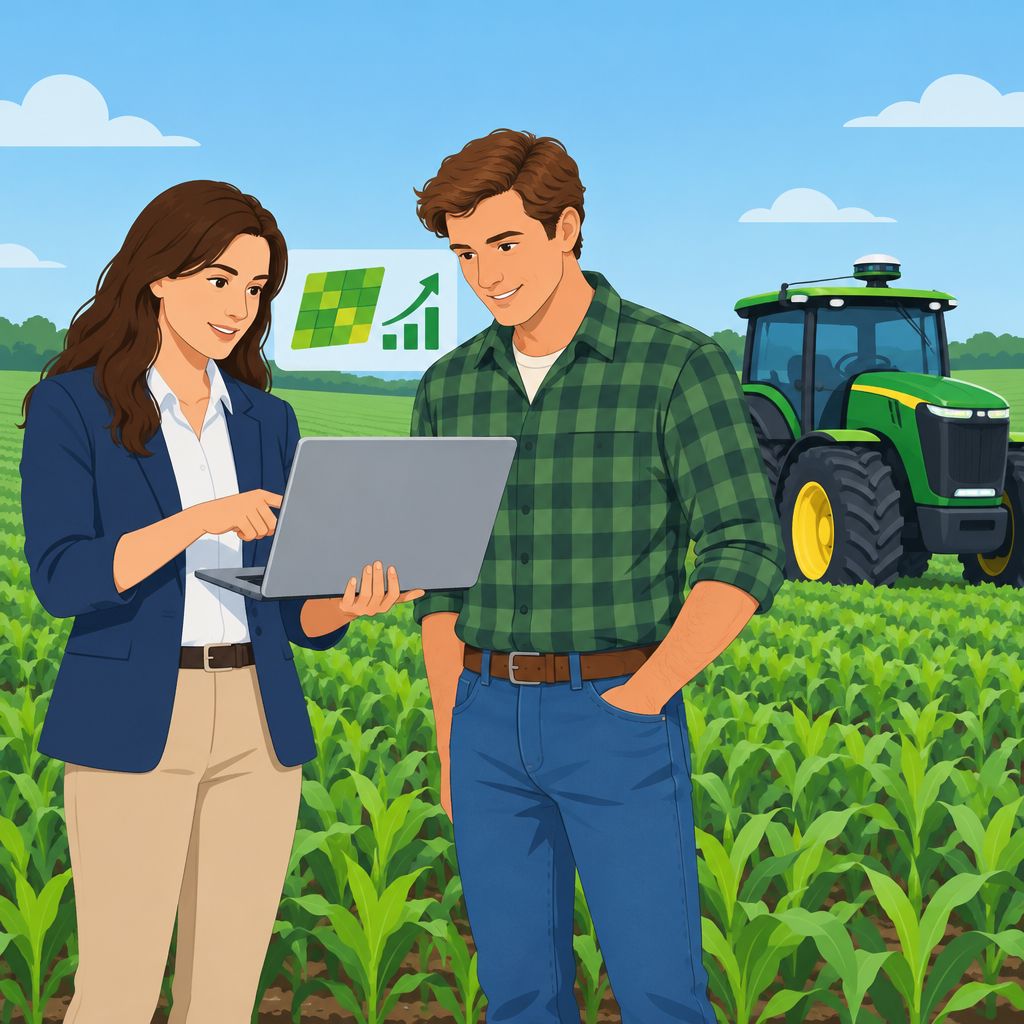
Economic Implications for Agricultural Stakeholders
Technology adoption creates economic implications throughout the food production chain.
Farmers, consumers, and the broader economy experience different benefits from these changes.
Moreover, productivity gains can support sustainability, food security, and economic development.
- Farmers: Precision tools can improve profitability, reduce risks, and support more sustainable operations.
- Consumers: Improved farming methods can increase access to diverse, affordable, and high-quality food products.
- Healthier Food Options: Genetic engineering and bioengineering can produce nutrient-rich crops that address consumer preferences.
- Overall Economy: Higher agricultural productivity can increase food supplies and lower food prices.
- Economic Development: Agricultural growth can create jobs and strengthen national development.
These effects connect farm efficiency with consumer access and broader economic development.
They also support sustainability and food security across local and global food systems.
You Might Also Like: How to Improve Farm Efficiency and Productivity
Challenges of Adopting New Technologies in Agriculture
New agricultural technologies can improve farming efficiency and sustainability.
Yet farmers and the industry face challenges that can slow widespread adoption.
These barriers can affect agricultural productivity and sustainable farming practices.
Resistance from Traditional Farmers Toward Technology
Traditional farmers often follow established practices and may resist significant changes.
Fear of unfamiliar methods can discourage farmers from adopting new technologies.
Education and supportive policies can help farmers understand technology’s practical benefits.
- Traditional farmers often maintain deep-rooted practices and beliefs that resist change.
- Some farmers hesitate because they fear unfamiliar technology or prefer established methods.
- Education and awareness programs can explain the benefits of adopting new technologies.
- Government policies and incentives can encourage farmers to modernize their operations.
Environmental Impact and Agricultural Sustainability
Farmers and communities increasingly examine how new technologies affect the environment.
Sustainable practices help preserve natural resources and protect surrounding ecosystems.
Research can guide technologies that support long-term environmental stewardship.
- New agricultural technologies can create concerns about environmental effects.
- Farmers may question technologies that could harm soil health or water quality.
- Potential effects on biodiversity can also influence technology adoption decisions.
- Research and development can promote technologies that support sustainable agriculture.
Technology Access in Developing Countries and Rural Areas
Many developing countries and rural areas face limited access to agricultural technology.
Infrastructure weaknesses can prevent farmers from using advanced digital tools.
Cooperation can help expand access and reduce technology gaps among farmers.
- Limited internet connectivity can hinder the implementation of advanced technologies.
- Inadequate electricity access can also restrict technology use in rural areas.
- High costs may prevent developing-country farmers from purchasing expensive technologies.
- Governments, businesses, and nonprofit organizations can collaborate to improve technology access.
Addressing these barriers requires education, research, collaboration, and supportive policies.
These efforts can help agriculture become more efficient and environmentally sustainable.
Delve into the Subject: Importance of Seed Storage Conditions
Emerging Directions in Agricultural Technology
Agricultural economics and technology continue evolving as farmers seek greater productivity, efficiency, and sustainability.
These changes respond to shifting conditions and increasing demands within agricultural operations.
Transform Your Career Today
Unlock a personalized career strategy that drives real results. Get tailored advice and a roadmap designed just for you.
Start NowSeveral emerging trends now influence how farmers manage resources, crops, and business decisions.
Artificial Intelligence and Big Data in Agriculture
Artificial intelligence can analyze extensive data to support decisions about crop yields, soil health, and weather patterns.
Big data analytics can reveal market trends and consumer preferences for farmers.
Consequently, these tools help farmers make more informed operational choices.
Farmers can use artificial intelligence to optimize yields and monitor changing soil conditions.
Automation and Robotics in Farming Practices
Automation and robotics are reshaping farming practices through precise and efficient task performance.
Automated systems can plant, harvest, and irrigate crops with greater accuracy.
This precision can increase yields and reduce waste.
Furthermore, robotics can reduce labor costs and address labor shortages.
They can also perform tasks that are dangerous or difficult for humans.
Climate Change and Agricultural Technology Adoption
Climate change makes technology adoption increasingly important for agricultural operations.
Unpredictable and extreme weather patterns encourage farmers to seek adaptive solutions.
Drought-resistant crops, precision irrigation systems, and climate-smart practices can help mitigate these effects.
Therefore, technology supports greater resilience and sustainability in agriculture.
Future Opportunities for Agricultural Innovation
These technologies can improve crop yields, reduce costs, and strengthen farm management.
Farmers can use analytical systems, automation, and climate-focused practices to address evolving challenges.
Technological innovation therefore offers opportunities for continued agricultural growth and improved resource management.
You Might Also Like: The Role of Conservation Scientists in Disaster Response
Case Studies of Successful Agricultural Technology Integration
Technology has transformed agricultural operations by improving efficiency, sustainability, and profitability.
Farms and companies now apply tools that support precise management and informed decisions.
These examples show how technology can strengthen production while reducing resource use and operating expenses.
- XYZ Farms implemented precision agriculture techniques using drones and GPS technology.
- That approach increased crop yields by 20% and reduced water use by 15%.
- It also improved the farm’s profitability and sustainability practices.
- ABC Company adopted automated irrigation systems and soil sensors for data-driven decisions.
- Those systems increased overall crop production by 25% and reduced labor costs by 30%.
- They also enhanced crop quality and minimized resource wastage.
Effects of Technology on Crop Yields and Profitability
Technology has improved crop yields by making farm tasks more precise and responsive.
Automation increases efficiency during planting, watering, and harvesting.
Data tools also help farmers manage resources, quality, and operational risks.
- Automation improves efficiency during planting, watering, and harvesting.
- Precision agriculture tools provide real-time data for better decision-making.
- Reduced waste and optimized resources contribute to increased profits.
- Precise monitoring and environmental control improve crop quality.
- Technology enables crop diversification and risk management strategies.
Lessons for Farmers and Related Industries
These case studies provide practical guidance for farmers and related industries.
Technology investments can support long-term benefits when users apply them thoughtfully.
Successful adoption also requires learning, collaboration, and responsible resource management.
- Technology investments can create long-term benefits and competitive advantages.
- Data-driven methods strengthen decision-making and operational efficiency.
- Collaboration with technology experts can accelerate adoption.
- Continuous learning helps users respond to rapidly changing agricultural conditions.
- Sustainable practices and responsible technology use support agriculture’s future.
Farmers and industries can use these lessons to pursue sustainable growth and profitability.
They can also adapt technology as agricultural needs continue changing.
Future Directions for Agricultural Economics
Technological advancements have transformed how agricultural systems produce, manage, and distribute food.
For example, precision farming and data analytics have increased efficiency and productivity across the agricultural sector.
Looking ahead, agricultural economics will depend on continued innovation and adaptation to emerging technologies.
Meanwhile, climate change and food security challenges make sustainability and resilience essential for agriculture.
Therefore, the industry must embrace technological advancements to address these pressures effectively.
Farmers, policymakers, and stakeholders should remain informed about developments in agricultural technology.
Additionally, collaboration and knowledge-sharing can help build a more sustainable and efficient agricultural ecosystem.
Such cooperation can support future generations.
Readers can participate in discussions, workshops, and training programs focused on agricultural economics and technological advancements.
Through continued engagement, participants can support a more resilient and productive agricultural sector.
Additional Resources
Google search results for Agricultural Economics and Technological Advancements Agricultural
Transform Your Career Today
Unlock a personalized career strategy that drives real results. Get tailored advice and a roadmap designed just for you.
Start NowBing search results for Agricultural Economics and Technological Advancements Agricultural


