




Importance of Animal Nutritionists in Improving Livestock Health
Animal nutritionists play a crucial role in supporting livestock well-being through balanced diets.
They understand the specific dietary needs of different livestock types.
They formulate diets that support optimal growth, reproduction, and overall health.
Creating Balanced Diets
Animal nutritionists address nutritional deficiencies that can affect livestock health.
They help prevent diseases by providing livestock with essential nutrients.
They also improve immune function through appropriate dietary planning.
Customized Nutrition Plans
Animal nutritionists tailor plans according to each animal’s age, breed, weight, and activity level.
They consider seasonal variations, environmental conditions, and production goals when designing diets.
This personalized approach balances proteins, carbohydrates, vitamins, and minerals for each animal.
Monitoring and Adjustment
Animal nutritionists regularly monitor livestock health and performance.
They assess nutrition plans using feedback and collected data.
They adjust diets continuously to support long-term livestock health and productivity.
Education and Qualifications of Animal Nutritionists
Animal nutritionists need focused education to develop effective dietary recommendations.
Formal study builds knowledge of animal nutrition, health, and feeding requirements.
Practical training and continuing education strengthen their professional preparation.
Typical Education and Training Requirements
Most animal nutritionists earn bachelor’s degrees in animal science, nutrition, or related fields.
Many professionals pursue master’s degrees or PhD programs in animal nutrition.
Internships and relevant work experience provide valuable practical exposure.
- Animal nutritionists typically hold bachelor’s degrees in animal science, nutrition, or related fields.
- Advanced degrees can support deeper study in animal nutrition.
- Hands-on experience helps professionals apply nutritional knowledge in practical settings.
- Continuing education keeps professionals informed about current research and trends.
Importance of a Strong Foundation
A strong foundation helps nutritionists design diets that support animal health and performance.
It also enables them to assess feeding habits, ingredients, and nutritional values.
This knowledge supports informed decisions when professionals develop feeding programs.
- Understanding anatomy and physiology supports appropriate diet formulation.
- Knowledge of animal behavior helps professionals design suitable feeding programs.
- Familiarity with feed ingredients supports balanced dietary planning.
- Awareness of nutrition’s effects guides decisions about animal health and performance.
These qualifications equip animal nutritionists to create optimized nutrition programs.
As a result, their preparation can support healthier livestock through informed nutritional management.
Customized Feeding Programs
Animal nutritionists create feeding programs that match the specific needs of livestock.
They assess metabolism, nutrient use, health status, age, weight, breed, and activity level.
These considerations help nutritionists provide appropriate nutrients in balanced proportions.
Dietary Assessment and Feed Design
Nutritionists select feed ingredients that support each animal’s nutritional requirements.
They include proteins, vitamins, minerals, and carbohydrates in suitable amounts.
They also adjust diets for animals with specific health conditions or dietary restrictions.
- Nutritionists analyze dietary requirements for different livestock species.
- They consider individual differences when designing feeding programs.
- They develop balanced diets from suitable feed ingredients.
- They address special dietary needs caused by health conditions.
Health and Performance Support
Nutritionists monitor livestock health and performance after introducing feeding programs.
They adjust diets when monitoring shows that changes could improve health or productivity.
Balanced feeding helps prevent nutritional deficiencies and supports healthy development.
- Proper nutrition supports immune function and disease resistance.
- Targeted diets support reproductive health and fertility.
- Specialized programs promote growth and skeletal development in young animals.
- Continuous monitoring helps optimize animal health and productivity.
You Might Also Like: Salary Expectations for Food Safety Specialists
Animal nutritionists monitor livestock health to support optimal performance and well-being.
They also evaluate feeding programs by reviewing animal health, production, and nutrient use.
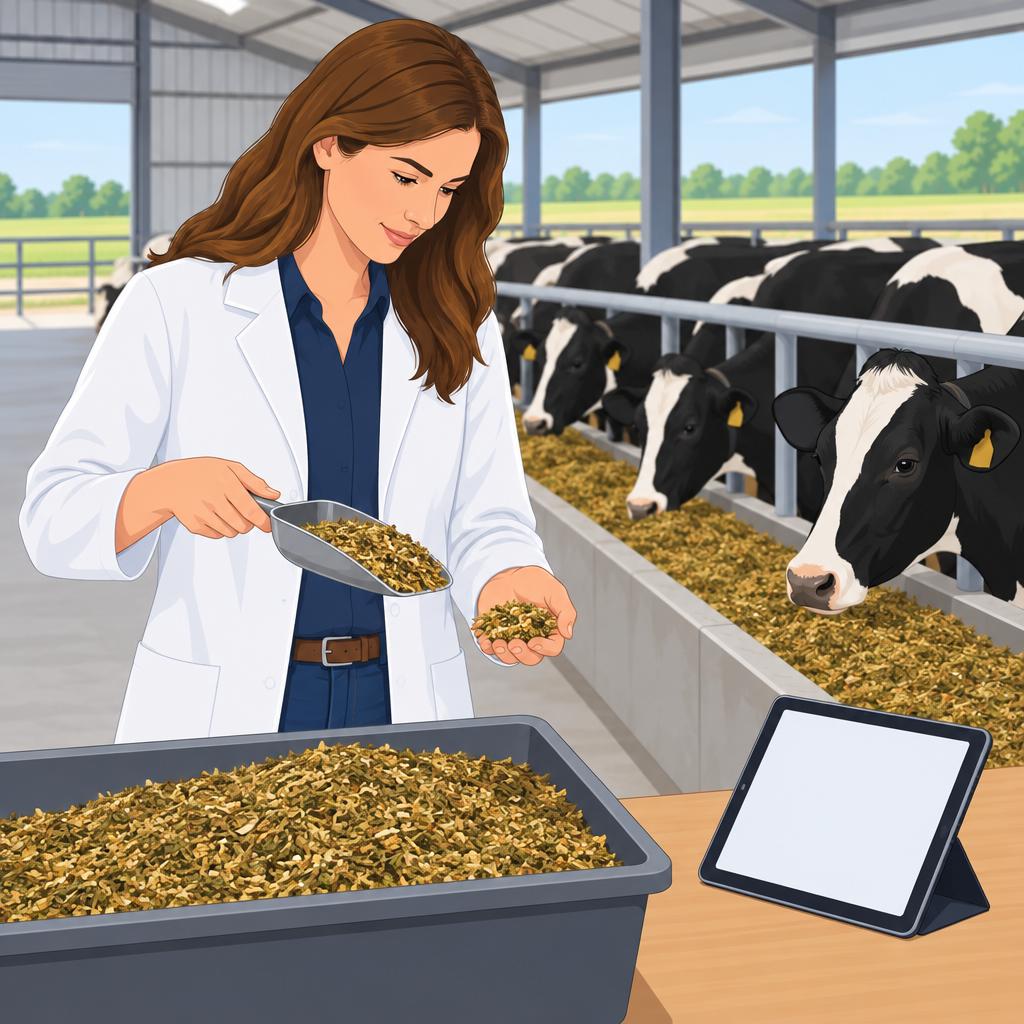
Regular Monitoring of Livestock Health
- First, animal nutritionists conduct physical examinations to identify signs of health problems.
- They monitor weight and body condition to assess each animal’s nutritional status.
- Additionally, they observe behavior and feed intake to evaluate livestock health and well-being.
- Regular blood tests and fecal analyses help detect underlying health concerns.
- Meanwhile, nutritionists work with veterinarians to develop comprehensive livestock health monitoring plans.
Evaluation of Feeding Programs
- First, animal nutritionists analyze feed to assess its nutritional content and quality.
- They track growth rates, milk production, and reproductive success to evaluate feeding programs.
- Furthermore, they monitor feed efficiency and conversion rates to measure feeding effectiveness.
- Regular reviews of feed consumption and nutrient intake help optimize feeding programs.
- Finally, nutritionists gather feedback from producers and farm workers about health and performance effects.
By monitoring livestock health and performance, nutritionists identify opportunities to improve feeding practices.
As a result, their evaluations support better livestock well-being and productivity.
Gain More Insights: The Role of Technology in Agricultural Consulting
Implementing Dietary Adjustments
- Animal nutritionists analyze livestock needs and adjust feeding programs accordingly.
- They consider factors like age, weight, breed, and health status to customize diets.
- Flexibility helps ensure optimal nutrition for each animal’s well-being.
- Regular evaluations help nutritionists identify necessary changes for animal health.
How Nutritionists Adjust Feeding Programs
Animal nutritionists closely monitor livestock health and performance to determine whether dietary adjustments are required.
They use body condition scoring, performance metrics, and laboratory analysis to assess nutritional needs.
Transform Your Career Today
Unlock a personalized career strategy that drives real results. Get tailored advice and a roadmap designed just for you.
Start NowBy observing behavior, physical appearance, and overall well-being, nutritionists identify dietary deficiencies or excesses.
This evaluation helps them tailor feeding programs to meet specific requirements.
Consequently, livestock receive balanced nutrients that support growth, production, and overall health.
Flexibility in Dietary Adjustments
Flexibility in dietary adjustments helps nutritionists optimize animal health.
Individual animals may have unique nutritional needs.
Age, sex, weight, breed, and physiological status can influence dietary requirements.
Therefore, nutritionists adapt feeding programs to address these individual needs.
This approach helps prevent health issues related to overnutrition or undernutrition.
It also allows nutritionists to respond quickly when an animal’s condition changes.
As a result, livestock receive appropriate nutrients to support their well-being.
Delve into the Subject: Importance of Credit Analysis in Agricultural Loans
Research and Innovation in Animal Nutrition
Ongoing research drives new feeding strategies and supplements for livestock.
It helps nutritionists explore ways to improve animal health and well-being.
These efforts support evidence-based decisions for animals under their care.
Importance of Research in Animal Nutrition
Research clarifies dietary requirements across species and breeds.
It also helps identify nutrient deficiencies.
Consequently, nutritionists can develop solutions that address those deficiencies.
Advances in Feeding Strategies
Nutritionists develop feeding strategies that support animal health and performance.
These strategies consider age, breed, and activity level.
Therefore, livestock can receive nutrition plans suited to their circumstances.
Role of Supplements in Livestock Health
Supplements help fill nutritional gaps in livestock diets.
They can support overall health and well-being.
Meanwhile, nutritionists research and test new supplements for livestock.
Staying Current with Advancements in the Field
Nutritionists maintain current knowledge through continuous education.
They participate in conferences and seminars to learn about developments.
They also consult scientific journals and research publications for updated information.
Collaboration with Industry Partners
Nutritionists collaborate with feed manufacturers and researchers.
Together, they develop and test feeding strategies and supplements.
This process helps assess whether products and methods are effective and safe.
Impact of Research on Livestock Health
Research and innovation influence livestock health.
Tailored strategies and supplements can support health, productivity, and quality of life.
Thus, nutritionists help advance care through new nutritional approaches.
Discover More: How Plant Pathologists Study Bacterial Diseases
Collaborating with Veterinarians and Farmers
Animal nutritionists work closely with veterinarians and farmers to support livestock health and well-being.
Veterinarians contribute medical expertise, while farmers provide daily observations of livestock.
Together, these professionals coordinate decisions that support animal health and farm management.
Importance of Collaboration
Regular communication helps professionals share information about livestock health and nutritional requirements.
Each professional contributes distinct knowledge, which strengthens problem-solving and decision-making.
Moreover, collaboration helps teams identify potential health issues before animal health declines.
- Enhanced communication: Professionals share valuable information about livestock health and nutrition.
- Expertise exchange: Veterinarians, farmers, and nutritionists combine their specialized knowledge.
- Early detection: Regular collaboration helps teams address potential health issues promptly.
Benefits of a Collaborative Approach
Joint planning addresses nutritional needs alongside broader livestock health requirements.
Transform Your Career Today
Unlock a personalized career strategy that drives real results. Get tailored advice and a roadmap designed just for you.
Start NowTeams can design nutrition programs for each livestock type on the farm.
Additionally, shared decisions can streamline livestock management processes and improve efficiency.
- Comprehensive care: Professionals address nutritional needs and overall livestock health together.
- Optimized nutrition programs: Combined expertise supports tailored programs for different livestock types.
- Improved efficiency: Collaboration supports effective management practices for animals and farms.
This coordinated approach helps professionals provide appropriate care for livestock.
It also supports practical farm management through shared knowledge and timely decisions.
Animal nutritionists improve livestock health by formulating balanced diets.
They assess nutrient requirements according to age, breed, and production goals.
Additionally, these specialists evaluate environmental conditions, metabolism, and digestive efficiency.
Through analysis, they design feeding strategies that optimize animal performance.
By correcting deficiencies, nutritionists help prevent disease and support livestock well-being.
Meanwhile, they monitor diets and adjust nutrient levels to support growth.
They recommend feed supplements, additives, and management practices that improve outcomes.
Consequently, proper nutrition can increase reproduction rates and product quality.
It also strengthens productivity across livestock operations.
Thus, their work supports healthy, productive animals.
Additional Resources
Google search results for How Animal Nutritionists Improve Livestock Health Agricultural
Bing search results for How Animal Nutritionists Improve Livestock Health Agricultural


