




Introduction
Poultry scientists specialize in poultry nutrition, genetics, and behavior.
Additionally, animal welfare directly affects poultry health and productivity.
Therefore, poultry scientists support welfare through research, best practices, and protective policies.
Training and Education of Poultry Scientists
Poultry scientists build expertise through education, practical experience, and a commitment to animal well-being.
Their training covers poultry biology, behavior, welfare, health, and environmental management.
This preparation helps them improve living conditions and support healthy flocks.
Qualifications and Background
Poultry scientists typically study animal science, veterinary medicine, or biology.
Most professionals hold at least a bachelor’s degree before entering the field.
Many also pursue master’s degrees or Ph.D. qualifications.
Advanced degrees provide deeper knowledge of poultry biology, behavior, and welfare.
Specific Knowledge and Skills
Poultry scientists need strong knowledge of poultry anatomy, physiology, and nutrition.
They also study animal behavior and welfare to promote suitable living conditions.
Furthermore, biosecurity knowledge helps them prevent diseases and protect flock health.
Scientists must understand how temperature and ventilation affect poultry.
They use data analysis skills to evaluate findings and guide improvements.
Research methods help them investigate welfare concerns systematically.
Strong communication skills help them share recommendations with others.
Education, experience, and concern for animal well-being prepare scientists for this work.
Poultry Welfare Research
Animal welfare research helps poultry scientists understand how chickens and other poultry species experience their environments.
These scientists study behavioral needs to support appropriate care and healthy living conditions.
Consequently, research findings can guide decisions about poultry management.
Studying Poultry Behavior
Poultry scientists use several methods to study behavior and assess welfare.
First, observational studies reveal how chickens interact with one another, their surroundings, and caregivers.
Researchers also use video monitoring systems to track poultry movements and interactions in real time.
This technology supports large-scale data collection and helps scientists identify behavioral trends and patterns.
Methods for Assessing Animal Welfare
- Behavioral Observations: Scientists observe chickens to assess well-being and identify distress, aggression, or illness.
- Health Checks: Regular checks help identify diseases or injuries so caregivers can address problems promptly.
- Environmental Monitoring: Scientists monitor temperature, humidity, and air quality to maintain comfortable farm environments.
- Quality of Life Assessments: Scientists consider food, water, movement space, and social interaction when evaluating poultry quality of life.
Together, these methods provide evidence about poultry welfare on farms.
Scientists can then make informed decisions about living conditions and care practices.
These decisions support the well-being of chickens and other poultry species.
See Related Content: Ethical Considerations for Agricultural Loan Officers
Poultry scientists play a critical role in developing and enforcing welfare standards for poultry farms.
- They collaborate with industry stakeholders to create guidelines outlining best practices for animal care.
- These standards cover housing conditions, nutrition, and health management for poultry.
- Scientists conduct research to identify effective methods for promoting animal well-being.
- They evaluate existing practices and recommend improvements based on scientific evidence.
By implementing welfare standards, poultry scientists help ensure the well-being of animals in the industry.
- These standards provide farmers with a framework for meeting their animals’ needs.
- They promote humane treatment and responsible stewardship of poultry resources.
- Standards also help mitigate health risks and improve overall farm productivity.
- Enforcing these guidelines helps maintain high animal welfare across the industry.
Explore Further: How Agricultural Economists Support Farm Businesses
Collaborating with Industry Stakeholders
Industry stakeholders help poultry scientists turn welfare research into practical improvements.
Farmers, veterinarians, and policymakers contribute different expertise to poultry welfare efforts.
These partnerships connect scientific knowledge with everyday decisions affecting birds.
Working with Farmers
Poultry scientists share research findings and practical recommendations with farmers.
They advise producers about animal husbandry, nutrition, and housing conditions.
Scientists also conduct on-farm trials to evaluate welfare interventions.
Farmers apply suitable recommendations within their own poultry operations.
This cooperation keeps welfare research practical, feasible, and relevant to real farms.
Transform Your Career Today
Unlock a personalized career strategy that drives real results. Get tailored advice and a roadmap designed just for you.
Start NowEngaging with Veterinarians
Poultry scientists work with veterinarians to strengthen medical care for birds.
They develop disease prevention strategies, vaccination programs, and treatment protocols together.
Scientific evidence helps veterinarians make welfare-focused health decisions.
Veterinarians monitor bird health and well-being on poultry farms.
This partnership helps reduce unnecessary suffering and supports healthier birds.
Partnering with Policymakers
Poultry scientists provide research-based recommendations to policymakers.
They support regulations and guidelines addressing poultry welfare.
Scientists also help officials develop and implement welfare standards.
Policymakers regulate practices involving housing systems, transportation, and bird care.
Consequently, welfare considerations become part of legislative frameworks.
Importance of Partnerships in Implementing Welfare Practices
Partnerships help stakeholders coordinate welfare improvements across poultry production.
They combine practical experience, medical knowledge, scientific evidence, and regulatory insight.
As a result, stakeholders can address welfare challenges more effectively.
Enhancing Knowledge Sharing
Collaborating stakeholders exchange information, experience, and practical expertise.
Farmers, veterinarians, policymakers, and scientists share methods that support poultry welfare.
These exchanges encourage continuous learning and innovation in animal care.
Knowledge sharing also keeps stakeholders informed about research and welfare advancements.
Therefore, cooperation can improve welfare throughout the poultry supply chain.
Fostering a Culture of Collaboration
Partnerships create networks of people committed to improving animal welfare.
Different sectors can address complex welfare challenges through coordinated action.
Collaboration encourages unity and cooperation across the poultry industry.
Shared goals keep animal well-being central to collective decisions.
Consequently, stakeholders can apply welfare practices more consistently.
Driving Sustainable Change
Partnerships support lasting changes in poultry production.
Stakeholders combine diverse perspectives to develop impactful welfare initiatives.
Collaborative efforts can encourage industry-wide standards benefiting birds and the environment.
Farmers, veterinarians, policymakers, and scientists must contribute to sustainable progress.
This unified approach places welfare practices within poultry production values.
Advancing Ethical Poultry Production
Effective partnerships connect welfare goals with practical poultry production decisions.
Stakeholders can improve bird well-being by combining their responsibilities and expertise.
Through continued cooperation, the poultry industry can advance ethical animal care.
Explore Further: How to Start a Career in Farm Management
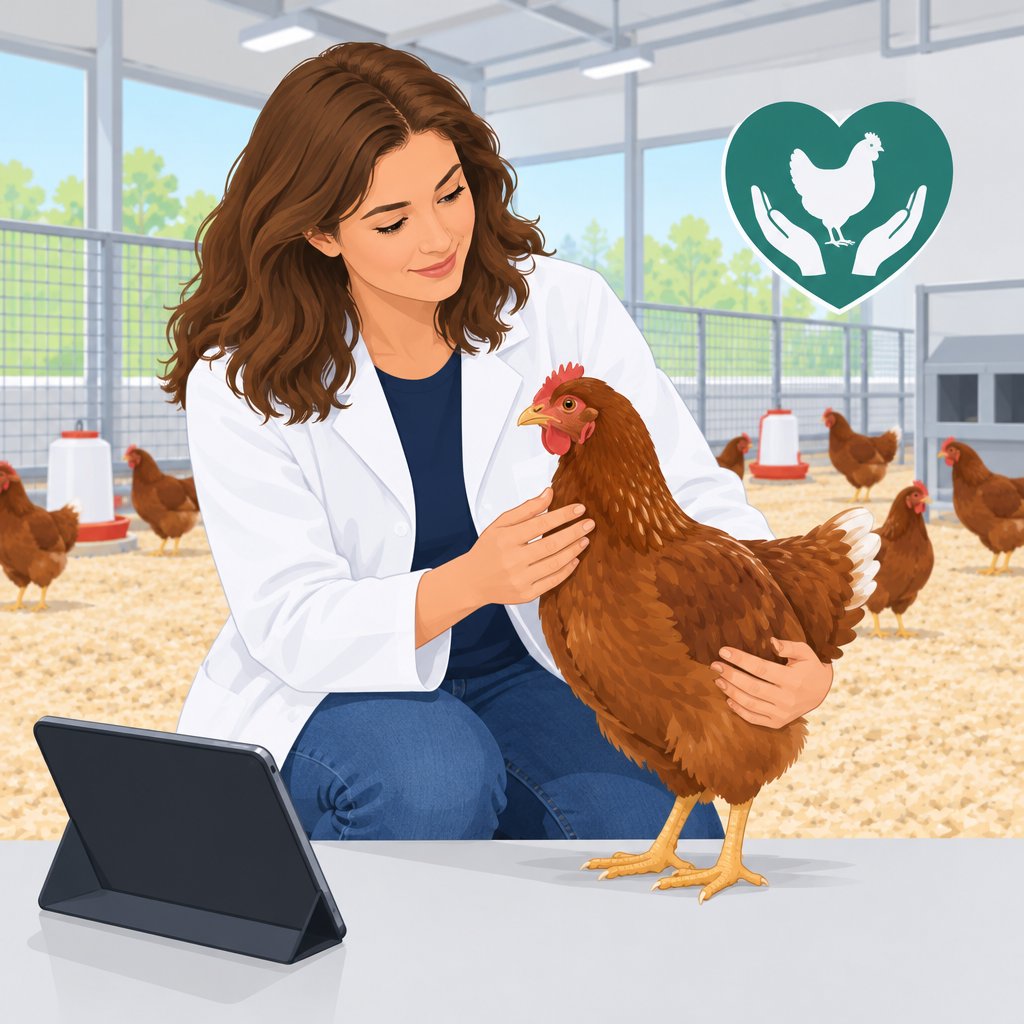
Regular Welfare Assessments
Poultry scientists regularly monitor welfare practices to identify problems and improve animal care.
They assess bird behavior, physical condition, flock interactions, and environmental conditions.
They also maintain detailed records of health concerns, treatments, stress, and discomfort.
- Scientists observe bird behavior, body condition, and flock interactions.
- They check weight, feather condition, appearance, illness, and injury.
- Environmental audits examine housing, temperature, ventilation, and lighting.
- Detailed records track health history, treatments, stress, and discomfort.
Evaluating Welfare Interventions
Research studies help scientists determine whether welfare interventions achieve their intended results.
Meanwhile, small-scale trials allow scientists to assess interventions before wider implementation.
Data analysis reveals trends, while farmer feedback helps scientists refine practical approaches.
- Scientists compare groups with and without specific welfare interventions.
- Small-scale trials test new interventions before broader implementation.
- Data analysis identifies trends that may require welfare improvements.
- Farmer feedback helps scientists evaluate intervention success and make adjustments.
Improving Welfare Practices
Evaluation findings guide improvements in training, cooperation, guidelines, and farm practices.
Continuous education helps farmers and workers apply effective animal welfare practices.
Transform Your Career Today
Unlock a personalized career strategy that drives real results. Get tailored advice and a roadmap designed just for you.
Start NowFurthermore, updated guidelines can reflect current research and proven care methods.
- Ongoing training teaches farmers and workers effective welfare practices.
- Scientists collaborate with veterinarians, industry organizations, and regulatory agencies.
- Updated guidelines incorporate evaluation findings and current best practices.
- Innovative technologies and housing systems can improve animal welfare.
Maintaining High Welfare Standards
Consistent monitoring helps poultry scientists maintain strong welfare standards on poultry farms.
Regular evaluation identifies weaknesses and supports timely improvements in animal care.
Through these efforts, scientists help farms protect bird health, comfort, and well-being.
Uncover the Details: Role of Agricultural Policy Analysts in U.S. Agriculture
Animal welfare in poultry farming depends partly on training and support for poultry farmers.
Poultry scientists educate farmers about practical welfare practices.
They help farmers apply these practices during daily poultry care.
Educating and Training Farmers
- Poultry scientists conduct workshops and training sessions about animal welfare.
- They explain proper handling, feeding practices, and overall bird care.
- Scientists demonstrate handling techniques that minimize stress and support bird well-being.
- Farmers learn to identify distress or illness signs and address them promptly.
- Training programs emphasize hygiene practices that help maintain poultry health and welfare.
Resources and Support for Farmers
- Poultry scientists provide manuals and guides covering animal welfare practices.
- They offer online resources, webinars, and video tutorials about welfare standards.
- Scientists collaborate with veterinarians and nutritionists to provide comprehensive farmer support.
- Farmers can seek consultation about specific welfare-related concerns.
- Financial support may help farmers make modifications that improve animal welfare.
Training, resources, and support help farmers follow welfare practices.
Collaboration among scientists, farmers, veterinarians, and nutritionists supports poultry welfare.
These efforts help maintain poultry well-being and uphold welfare standards in the industry.
Advancing Poultry Welfare Through Scientific Practice
Poultry scientists help protect poultry welfare across the industry.
Through scientific advances, they improve birds’ living conditions, health, and quality of life.
Their welfare-focused decisions also support a more sustainable and ethical poultry industry.
Furthermore, their commitment to high care standards encourages progress throughout agriculture.
This work benefits both poultry and the industry that cares for them.
As knowledge and technology advance, poultry scientists will continue shaping future welfare practices.
Their dedication safeguards and improves poultry well-being over time.
Additional Resources
Google search results for How Poultry Scientists Ensure Animal Welfare Agricultural
Bing search results for How Poultry Scientists Ensure Animal Welfare Agricultural


