




Introduction
A poultry scientist plays a crucial role in sustainable farming practices.
They research and develop innovative techniques to improve poultry production efficiency and sustainability.
As climate change and food security challenges increase, sustainable farming practices become more important.
This article discusses how poultry scientists promote sustainability in poultry farming.
Poultry Nutrition and Health Research
Poultry scientists study feed requirements to help birds remain healthy and productive.
They design feeding regimes that match poultry needs and support efficient production.
Their health research examines diseases and infections affecting flock performance.
By identifying health risks, they develop prevention and control strategies.
These strategies can reduce reliance on antibiotics while supporting bird well-being.
Innovative Practices for Sustainable Poultry Farming
Poultry scientists investigate alternative feed sources, including insect-based and plant-based options.
These options may reduce the environmental burden associated with poultry production.
They also evaluate housing systems that improve animal welfare and conserve resources.
Meanwhile, management research helps farmers apply technology more efficiently.
This work encourages practical improvements across poultry operations.
Strategies for Reducing Environmental Impact
Poultry scientists assess water, energy, and land use on poultry farms.
They identify opportunities to minimize waste and pollution.
Working with farmers, they promote management practices that protect water quality.
They also support efforts to reduce greenhouse gas emissions and conserve natural resources.
Consequently, sustainable methods can lower the industry’s environmental footprint.
Collaborating with Farmers and Industry Professionals
Poultry scientists collaborate with farmers and industry professionals to support sustainable farming practices.
They exchange information with these stakeholders and identify challenges affecting poultry farming.
Together, they develop innovative solutions that address those challenges and support shared sustainability goals.
Providing Guidance on Best Practices
Poultry scientists guide farmers on practical poultry management practices.
For example, they advise farmers about proper nutrition, housing, disease prevention, and animal welfare.
This guidance helps farmers apply informed approaches across daily poultry management.
Sharing Knowledge and Expertise
Poultry scientists share their field knowledge with farmers and industry professionals.
They may conduct training sessions and workshops to explain relevant practices.
Additionally, they provide technical support that helps stakeholders improve farming practices.
Working Together to Achieve Sustainability Goals
Farmers, industry professionals, and poultry scientists work together to pursue sustainability goals.
They seek to reduce environmental impact and optimize resource use.
They also promote animal welfare while supporting more sustainable poultry farming.
Delve into the Subject: How Animal Nutritionists Support Farm Management
Educating the Community on Sustainable Farming
Poultry scientists educate communities about sustainable farming practices.
They organize workshops and training sessions for poultry farmers.
These activities explain why sustainable practices matter in poultry farming.
Hosting Workshops and Training Sessions
Workshops address efficient feed management, waste management, and disease prevention.
Poultry scientists share their expertise and experience during these sessions.
As a result, farmers gain guidance for implementing sustainable practices on their farms.
Engaging with Students and the Public
Poultry scientists engage students and the public to raise awareness about sustainable farming.
They visit schools and universities to discuss poultry farming’s environmental impact.
Transform Your Career Today
Unlock a personalized career strategy that drives real results. Get tailored advice and a roadmap designed just for you.
Start NowThese discussions also explain the importance of sustainable practices.
Promoting Awareness of Sustainable Practices
Poultry scientists collaborate with government agencies, nonprofit organizations, and industry partners.
They participate in conferences, seminars, and symposiums to share research findings.
Through these activities, they encourage broader adoption of sustainable poultry farming practices.
Explore Further: The Role of Drones in Modern Irrigation Practices
Disease Prevention and Management
Poultry scientists develop vaccines and treatments that help prevent and manage diseases affecting poultry health.
Additionally, they work with veterinarians and farmers to create biosecurity measures that reduce outbreak risks.
Through genetic selection and breeding, they develop disease-resistant breeds that support poultry health and well-being.
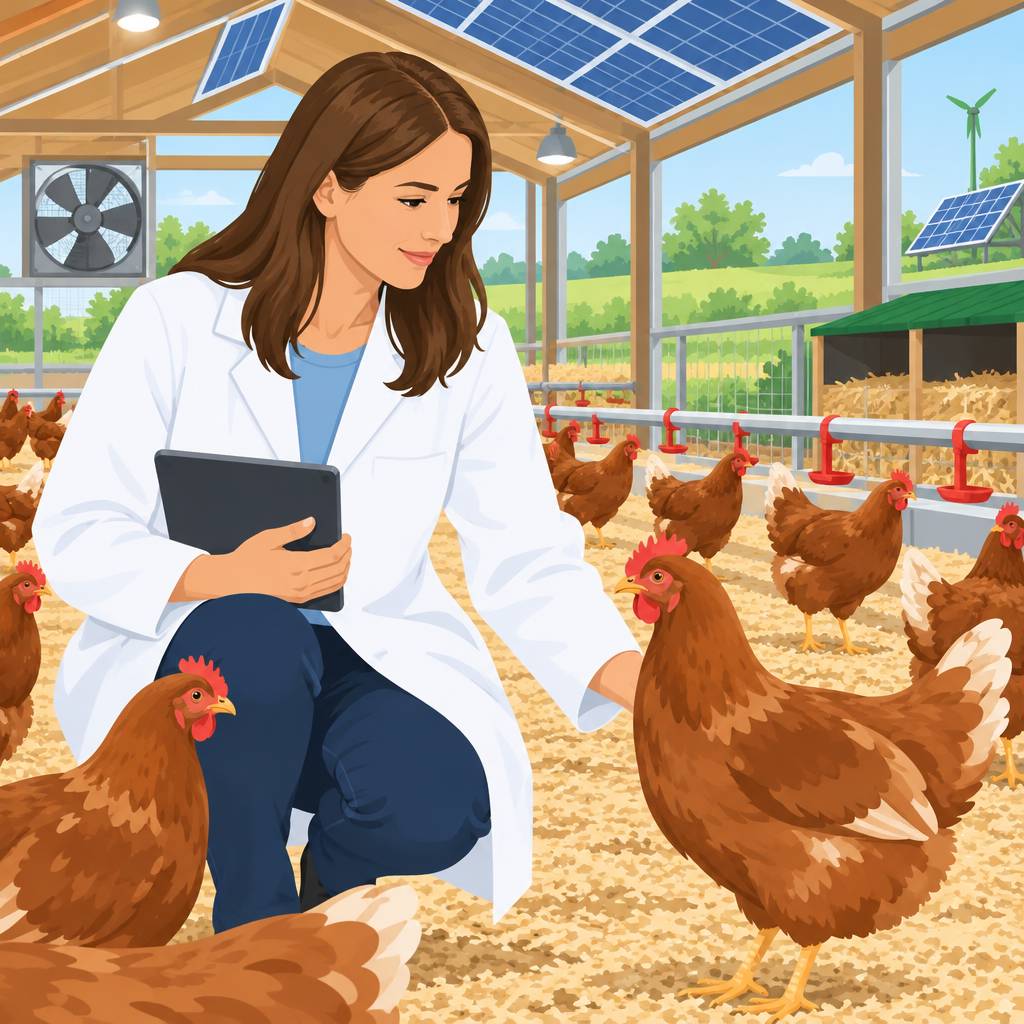
Waste Management Solutions
Poultry scientists develop waste management practices that reduce pollution and environmental impact.
They research disposal and recycling technologies, including composting poultry litter for fertilizer.
Consequently, efficient systems can reduce greenhouse gas emissions and strengthen sustainability in poultry farming.
Enhanced Animal Welfare Standards
Poultry scientists study housing, handling, and transportation practices to improve animal welfare standards.
They collaborate with industry stakeholders to develop guidelines that prioritize poultry well-being.
Through research and education, they encourage humane practices that provide better living conditions for poultry.
Gain More Insights: Role of an Agricultural Loan Officer Explained
Supporting Sustainable Farming Initiatives
Poultry scientists conduct research to improve sustainable farming practices and technologies.
They work with farmers to implement methods that reduce environmental impact and enhance animal welfare.
As a result, their research supports the growth of sustainable farming initiatives.
Participating in Agricultural Programs
These scientists participate in local and national agricultural programs to follow industry trends and developments.
By collaborating with other professionals, they support sustainable farming practices.
Therefore, their participation helps advance agricultural programs and industry knowledge.
Advocating for Sustainable Policies
Poultry scientists advocate for policies that promote sustainability within the industry.
They engage with policymakers and provide scientific evidence for environmentally friendly practices.
This evidence helps policymakers develop decisions and regulations that support sustainability.
Encouraging Collaboration and Knowledge Sharing
In addition, poultry scientists encourage collaboration and knowledge sharing throughout the industry.
They exchange ideas and best practices to foster innovation and continuous improvement.
Consequently, their efforts help drive sustainable farming methods across the sector.
Uncover the Details: How Agricultural Loan Officers Support Farmers
Sustainable Outcomes in Poultry Farming
Poultry scientists strengthen sustainable farming by applying scientific knowledge to production decisions.
They help farms operate efficiently while reducing environmental pressures.
Moreover, their work supports animal welfare and food security.
They also address antibiotic resistance, waste management, and resource conservation.
Consequently, their research helps farmers respond to complex sustainability challenges.
Research, innovation, and education help these experts advance resilient agricultural systems.
Therefore, stakeholders should recognize poultry scientists as important contributors to sustainable farming.
Support for sustainable methods can encourage farms to adopt responsible best practices.
These practices can protect the environment and strengthen communities.
Finally, sustainable agriculture can help secure food supplies for future generations.
Additional Resources
Google search results for Poultry Scientist's Role in Sustainable Farming Agricultural
Bing search results for Poultry Scientist's Role in Sustainable Farming Agricultural
Transform Your Career Today
Unlock a personalized career strategy that drives real results. Get tailored advice and a roadmap designed just for you.
Start Now


