Genetics in Seed Technology
Genetics studies genes and heredity.
It plays a fundamental role in seed technology.
Scientists use genetic knowledge to improve plant traits and productivity.
This work supports the development of superior seeds.
These seeds can withstand environmental stresses and produce higher yields.
Furthermore, genetic advances have transformed seed technology.
Scientists can develop genetically modified crops with resistance to pests, diseases, and herbicides.
Consequently, these crops can support efficient and sustainable agricultural production.
Farmers and consumers can benefit from these improvements.
Genetics also enables the development of hybrid seeds.
These seeds can express superior traits, including increased yield potential and better quality.
Additionally, hybrid seeds can adapt to various growing conditions.
Such advances contribute to global food security and agricultural sustainability.
Therefore, genetics provides essential tools for enhancing plants and advancing agriculture.
Improved seeds can support food security for future generations.
Historical Foundations of Genetics in Seed Technology
Genetic knowledge has influenced seed technology for centuries.
Gregor Mendel established important genetic principles through nineteenth-century experiments with pea plants.
His findings created a foundation for modern genetics and seed technology applications.
Later, Watson and Crick discovered DNA’s structure in 1953.
That discovery eventually supported genetic engineering techniques used in seed technology.
Genetic Techniques for Improving Seeds
Meanwhile, hybridization became an important seed improvement technique during the early twentieth century.
Breeders cross genetically distinct plants to produce offspring with desirable traits.
This approach supported the development of high-yielding and disease-resistant crop varieties.
Furthermore, researchers discovered genetic markers during the 1980s.
Marker-assisted selection helped breeders identify plants with specific genetic characteristics more efficiently.
Genetics in Modern Seed Technology
Genetic research has enabled scientists to develop genetically modified crops.
These crops can provide increased yields and improved resistance to pests and diseases.
Consequently, genetically modified crops address challenges involving food security and environmental sustainability.
Genetic research also supports seed banks that preserve plant genetic diversity.
Additionally, faster DNA analysis helps breeders create crop varieties suited to changing environmental conditions.
Genetic Modification Techniques
- Traditional breeding crosses plants with desired traits to produce offspring that express those traits.
- Hybridization combines the genetics of two different plants to create a new variety.
- Marker-assisted selection uses genetic markers to identify desirable traits early in breeding.
Impact of Genetic Engineering
- Genetic engineering enables precise modifications to plant DNA.
- This approach accelerates the development of new crop varieties.
- Scientists can introduce genes from different species to provide disease resistance or drought tolerance.
Role of CRISPR Technology
- CRISPR technology enables targeted modifications to plant genetic codes.
- It streamlines the process of editing seed genetics.
- CRISPR can knock out specific genes or introduce new genes with precision.
Explore Further: Seasonal Trends in Agricultural Loan Applications
Seed Quality and Traits
Genetics plays a crucial role in determining seed quality and traits.
Different genetic combinations can produce seeds with varying characteristics.
For example, some traits make seeds more resistant to pests or diseases.
Additionally, genetic diversity within seed populations supports resilience and adaptability.
Seeds with diverse genetic backgrounds can better survive changing environmental conditions.
This diversity ensures that some seeds possess traits suited to new challenges.
Therefore, selecting desirable genetic traits supports crop improvement.
Farmers and breeders choose seeds with specific characteristics to enhance yields.
Improved traits can include higher nutrient content, environmental stress resistance, and faster growth.
Transform Your Career Today
Unlock a personalized career strategy that drives real results. Get tailored advice and a roadmap designed just for you.
Start NowBreeders call the selection of seeds with these traits genetic selection.
Genetic selection involves evaluating seeds according to their genetic makeup.
Furthermore, plants can pass inherited traits to their offspring through seeds.
Consequently, breeders can cultivate and enhance desirable traits across generations.
Genetic technologies help researchers identify and manipulate genes linked to desirable traits.
As a result, breeders can develop seeds with desired qualities more quickly and precisely.
Ultimately, genetic advances in seed technology support more resilient and productive crops.
Uncover the Details: Pest Control Advisor: Role in Food Safety
Genetically Modified Organisms (GMOs) and Seed Technology
Genetically modified organisms (GMOs) remain debated in seed technology.
People discuss their effects on human health, the environment, and food security.
These concerns shape ongoing evaluations of their agricultural uses.
Benefits of GMOs in Agriculture
- GMOs can increase crop yields, making farming more efficient and cost-effective.
- Additionally, engineered resistance to pests and diseases can reduce chemical pesticide use.
- Some modifications help crops tolerate drought, extreme temperatures, and other harsh conditions.
- Furthermore, these changes can improve food quality and nutritional value for consumers.
Drawbacks and Concerns
- GMOs may cross-breed with non-GMO crops, creating unintended consequences.
- Moreover, people continue to question their long-term effects on human health.
- Some individuals also worry about potential allergic reactions.
- GMOs may reduce crop genetic diversity and contribute to biodiversity loss.
- Finally, GMO patents raise ethical questions about ownership and food supply control.
The Role of Genetics in Creating GMOs
- Genetics enables scientists to modify plant DNA for agricultural purposes.
- Researchers insert genes from organisms such as bacteria or viruses into plant DNA.
- Consequently, these inserted genes can give crops specific traits.
- Such traits can provide resistance to pests, diseases, and herbicides.
- They can also help crops tolerate environmental stresses.
- Genetic modification therefore expands seed technology and supports enhanced crop traits.
Uncover the Details: Horticulture: A Day in the Life of a Professional
Genetics and Sustainable Agriculture
Genetics helps farmers choose suitable plant varieties for sustainable agriculture.
By studying plant genetics, farmers can make informed planting and management decisions.
Moreover, genetic research supports seed varieties that need fewer agricultural inputs.
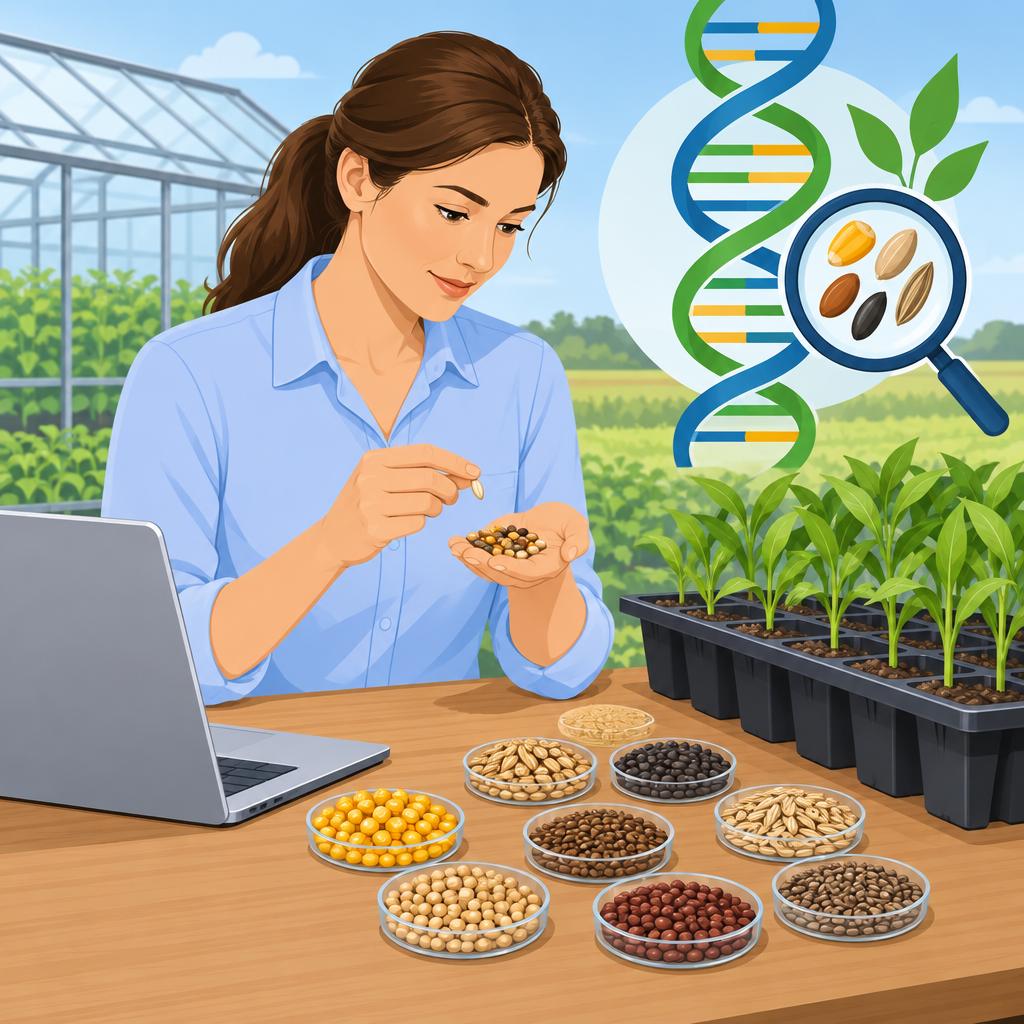
Benefits of Genetic Research
Researchers develop varieties that improve harvest performance and support more efficient farming.
These varieties can also withstand pests, diseases, and difficult environmental conditions.
Additionally, genetic research can improve the nutritional content of crops.
- Improved crop yields
- Resistance to pests and diseases
- Tolerance to environmental stresses
- Enhanced nutritional content
Genetics and Climate Change
Genetic research can produce crops that adapt more effectively to changing climatic conditions.
As a result, resilient varieties can help maintain food supplies during climate-related disruptions.
Furthermore, researchers can develop plants that use water more efficiently in affected regions.
- Development of drought-resistant varieties
- Enhanced carbon sequestration in plants
- Improvement of soil fertility
- Reduced greenhouse gas emissions from agriculture
Genetic Research for Food Security
Genetic research strengthens crop resilience and supports a more stable food system.
It can also expand nutritional diversity through improved and biofortified crops.
In addition, improved storage traits can help crops remain usable for longer periods.
- Enhanced crop resilience
- Increased nutritional diversity
- Improved crop storage and shelf life
- Development of biofortified crops
Therefore, genetics supports sustainable agriculture, food security, and climate change responses.
Continued research can help farmers develop resilient crops for future growing conditions.
These efforts can contribute to a more sustainable food system for future generations.
Explore Further: Challenges Faced by Extension Agents Today
Regulations Governing Genetic Modification in Seeds
Governments and regulatory agencies oversee genetic modification in seed technology.
These rules require genetically modified seeds to meet safety standards before market release.
Furthermore, regulators monitor new genes to assess risks to the environment and human health.
Seed companies submit detailed data and conduct testing to show safety and efficacy.
Ethical Considerations in Seed Genetic Engineering
Ethical concerns include biodiversity preservation, consumer choice, and long-term environmental effects.
Critics warn that altered seeds may create unintended consequences for ecosystems.
They also question effects on traditional farming practices and corporate control over seed distribution.
Therefore, ethical debates emphasize transparency, informed consent, and democratic decision-making.
Challenges in Enforcing Genetic Modification Seed Laws
Biotechnology advances quickly, making genetic modification laws difficult to enforce.
Regulatory agencies may struggle to evaluate emerging genetic engineering technologies.
Moreover, compliance monitoring requires sophisticated tests and resources that some regions lack.
Limited international coordination further complicates enforcement across different regulatory systems.
Transform Your Career Today
Unlock a personalized career strategy that drives real results. Get tailored advice and a roadmap designed just for you.
Start NowResponsible Governance of Seed Technology
Effective seed laws support the safe, effective, and ethical use of genetically modified seeds.
By addressing ethical concerns, regulators and industry stakeholders can encourage responsible practices.
Continued oversight and stronger coordination can help support sustainable seed technology.
Future Trends in Genetics and Seed Technology
Genetics and seed technology could transform agriculture through gene editing, genome sequencing, and predictive analytics.
These advances may support tailored seed varieties for modern farming challenges.
Furthermore, collaboration can guide innovation while addressing ethical and environmental considerations.
Predictions for Future Advancements
CRISPR technology may enable precise gene editing during seed development.
Meanwhile, improved genome knowledge can support more targeted breeding strategies.
Artificial intelligence and machine learning may strengthen seed trait prediction and selection.
- CRISPR technology may support precise gene editing in seed development.
- Enhanced plant genome knowledge can guide targeted breeding strategies.
- Artificial intelligence and machine learning can assist seed trait prediction and selection.
Potential Applications of Genetic Technologies
Genetic technologies may produce drought-resistant, disease-resistant, and high-yielding seed varieties.
Additionally, breeders could customize seed traits for environmental conditions and market demands.
Accelerated breeding cycles may deliver improved seed products more quickly.
- New technologies may develop drought-resistant, disease-resistant, and high-yielding seed varieties.
- Breeders could customize traits for specific environmental conditions and market demands.
- Faster breeding cycles may support quicker delivery of improved seed products.
Importance of Continued Genetic Research
Continued research can help crops adapt to changing climate conditions.
Moreover, genetic innovation can support sustainable agriculture for a growing global population.
Researchers may also enhance seed nutrient content to improve human health and nutrition.
- Research can help crops adapt to changing climate conditions.
- Genetic innovation can support sustainable agriculture for a growing global population.
- Researchers may enhance seed nutrient content for improved human health and nutrition.
Scientists, breeders, and industry stakeholders must continue collaborating to guide seed technology innovation.
They should also consider ethical responsibilities, environmental effects, and long-term benefits for farmers and consumers.
Consequently, genetics could shape a more diverse and technologically advanced seed industry.
Genetics and the Future of Seed Technology
Genetics enables researchers to develop high-yielding, disease-resistant, and climate-resilient crop varieties.
Through genetic engineering, researchers can tailor seeds to meet farmers’ specific needs and challenges worldwide.
Moreover, genetic innovation can support sustainability while addressing food security and environmental concerns.
Continued research can improve seed technology and produce more efficient, resilient crops.
By applying genetic knowledge, agricultural practices can become more productive while reducing farming’s environmental impact.
Ultimately, genetics can help shape agriculture toward a more sustainable and productive future.
Additional Resources
Google search results for The Role of Genetics in Seed Technology Agricultural
Bing search results for The Role of Genetics in Seed Technology Agricultural