




Introduction
Insect research is crucial for understanding ecosystems and agriculture.
This blog post will cover the basics of insect research for beginners.
Researching insects helps us learn about biodiversity and pest control strategies.
Insects play a vital role in pollination, decomposition, and food chains.
This guide will provide tips on conducting fieldwork, collecting specimens, and analyzing data.
Understanding insect behavior and ecology is essential for conservation efforts.
As a beginner in insect research, it is important to start with small projects.
Through research, we can develop sustainable practices that benefit both humans and insects.
Insect research also helps us understand the impacts of climate change on ecosystems.
By studying insects, we can gain valuable insights into biological processes and adaptations.
Understand the Basics of Insect Research
Insect research involves studying different aspects of insects and their interactions with the environment.
It is important to study insects because they play crucial roles in ecosystems such as pollination and decomposition.
Various types of insect research include taxonomy, behavior studies, ecology research, and population dynamics.
Importance of Studying Insects
Insects are the most diverse group of organisms on Earth, with over a million known species and many more undiscovered.
Studying insects helps us understand their ecological roles such as pest control, nutrient cycling, and disease transmission.
Insect research is essential for conservation efforts because many insect species face threats from habitat loss and climate change.
Different Types of Insect Research
Taxonomy
Taxonomy is the science of classifying and naming organisms based on their physical and genetic characteristics.
Taxonomic research helps us understand diversity and relationships among insect species along with their evolutionary history.
Behavior Studies
Behavior studies focus on the actions and interactions of insects such as mating behavior, foraging patterns, and communication signals.
Understanding insect behavior is essential for pest management, conservation, and predicting responses to environmental changes.
Ecology Research
Ecology research explores the relationships between insects and their environment, including other organisms, abiotic factors, and habitats.
Ecological studies help us understand the roles of insects in ecosystems, food webs, and nutrient cycling processes.
Population Dynamics
Population dynamics studies changes in insect populations over time, including factors like birth rates, death rates, and dispersal patterns.
This research is crucial for predicting impacts of insect outbreaks, climate change, and invasive species on ecosystems.
By understanding the basics of insect research, the importance of studying insects, and the different types of insect research, beginners can start conducting their own projects.
They can thus contribute to our knowledge of these fascinating and diverse organisms.
Always follow ethical guidelines, use appropriate sampling methods, and consult experts to ensure validity and reliability of your research findings.
Research Methods
Research methods in insect research are diverse and vary depending on study goals.
Researchers use a combination of field and laboratory techniques.
These methods help gather data on insect populations and behavior.
Overview of Research Methods Used in Insect Research
There are several common research methods applied in insect research.
These include field observation, experimental studies, genetic analysis, and population surveys.
- Field observation: Researchers observe insects in natural habitats.
- Experimental studies: Researchers design experiments to test hypotheses.
- Genetic analysis: Researchers study genetic diversity and relatedness.
- Population surveys: Researchers estimate population sizes and trends.
Types of Traps Used to Collect Insects
Traps are commonly used to collect insect specimens for study.
Several trap types are used to attract and capture insects.
- Malaise traps: These use a tent-like structure to capture flying insects.
- Pitfall traps: Containers buried to catch crawling insects.
- Light traps: Use light to attract nocturnal insects into containers.
- Bait traps: Use bait to lure insects into containers.
Techniques for Sampling Insects in the Field
Sampling insects in the field is essential for understanding populations and ecology.
Researchers use various techniques to collect insect samples in natural settings.
- Hand collecting: Uses nets, tweezers, and tools to gather insects manually.
- Beating trays: Vegetation is shaken over trays to dislodge insects.
- Suction sampling: A suction device collects insects from vegetation or soil.
- Transect surveys: Researchers walk paths and count or collect insects at intervals.
By combining these methods and techniques, researchers gain valuable insights.
They better understand insect populations, behaviors, and interactions in nature.
Learn More: The Role of Conservation Scientists in Policy Making
Setting Up an Insect Research Study
When conducting an insect research study, follow a systematic approach to ensure reliable results.
Transform Your Career Today
Unlock a personalized career strategy that drives real results. Get tailored advice and a roadmap designed just for you.
Start NowHere are the key steps to setting up your insect research study:
Choosing a Research Question
- Identify a specific question or problem you want to address in your study.
- Ensure that your research question is clear, focused, and impactful.
- Consider the feasibility of addressing the research question given your resources and expertise.
- Consult with colleagues, mentors, or experts in the field to refine your research question.
Determining Study Site and Location
- Select a study site that is relevant to your research question and study objectives.
- Consider factors such as accessibility, habitat diversity, and insect abundance when choosing a study site.
- Obtain necessary permits or permissions to conduct research in the selected study site.
- Ensure that the study site is representative of the larger ecosystem or population of interest.
Planning for Data Collection and Analysis
- Develop a detailed data collection protocol outlining the methods and tools you will use to collect data.
- Consider the frequency and duration of data collection sessions to capture variation in insect behavior or abundance.
- Select appropriate data analysis techniques based on the nature of your research question and data collected.
- Prepare data management strategies to organize, store, and analyze the data efficiently.
Carefully planning and setting up your insect research study ensures that your research is well-designed.
Your study also becomes rigorous and valuable to the scientific community.
Explore Further: Biological Control Methods in Plant Pathology
Identifying Insect Species
Identifying insect species is a crucial aspect of insect research.
Accurate species identification is essential for understanding insect behavior.
It also helps in studying ecology and interactions with their environment.
Overview of Insect Identification
- Observation of physical characteristics
- Examination of wings, legs, antennae, and body shape
- Use of a magnifying glass for detailed examination
- Comparison with field guides or online resources
Identification can be done in the field or in a lab setting.
Proper lighting and tools are necessary for accurate identification.
Tools and Resources for Identifying Insects
- Field guides specific to insect species
- Online databases and identification keys
- Entomological societies and experts for guidance
- Entomology textbooks for detailed information
Utilizing a combination of resources can help in confirming the identification of insect species accurately.
Importance of Accurate Species Identification
- Understanding the insect’s role in the ecosystem
- Developing effective pest management strategies
- Conducting research on insect behavior and traits
- Preserving biodiversity and ecosystem balance
Accurate identification is the foundation for further research and conservation efforts related to insect species.
Learn More: How to Stay Updated as a Pest Control Advisor
Behavioral Studies
When conducting research on insects, understanding their behavior is crucial for accurate data collection.
Here is an overview of conducting behavioral studies on insects.
Observational Techniques
- Direct observation: Watching insects in their natural habitat without interfering with their behavior.
- Record keeping: Maintaining a detailed log of the observed behaviors, including frequency and duration.
- Video recording: Using cameras to capture insect behavior for later analysis and review.
- Experimental manipulation: Modifying the environment to observe how insects react to changes.
Importance of Understanding Insect Behavior in Research
- Predator-prey interactions: Knowledge of insect behavior helps in understanding predator-prey dynamics.
- Reproduction and mating rituals: Studying behavior aids in learning about mating rituals and reproductive strategies.
- Foraging behavior: Understanding how insects find food sources can lead to better pest management strategies.
- Communication signals: Behavior studies help decipher communication signals used by insects for social interactions.
By utilizing observational techniques and recognizing the importance of behavior in research, beginners can effectively conduct insect studies.
Find Out More: Digital Resources Provided by Extension Agents
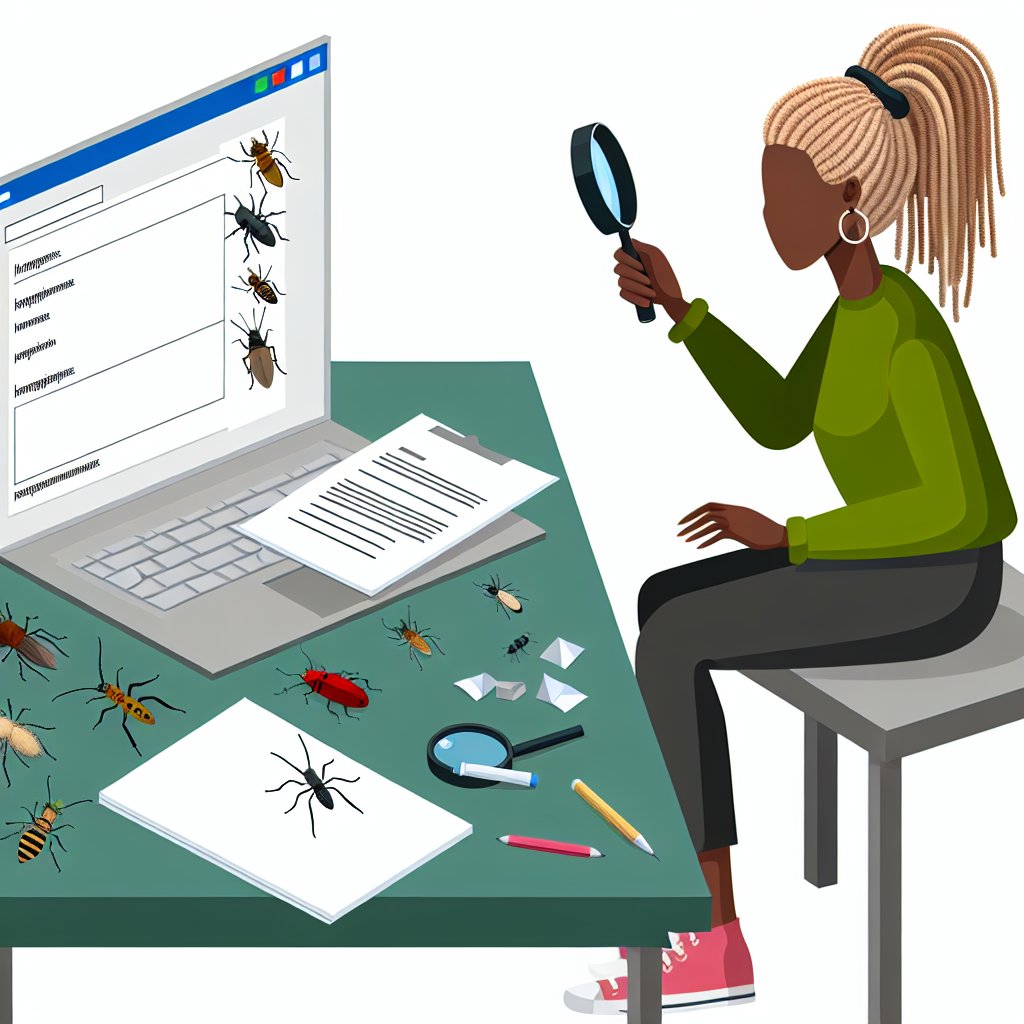
Data Collection and Analysis
Methods for Collecting Data on Insects
- Direct observation: Watch insects in their natural habitat and record their behavior.
- Pitfall traps: Set up containers to capture crawling insects for study.
- Sweep nets: Use nets to catch flying insects in the air or vegetation.
- Malaise traps: Collect insects that fly into a trap that funnels them into a container.
- Berlese funnel: Extract insects from soil or leaf litter by using heat and light.
Overview of Data Analysis Techniques
- Quantitative analysis: Use statistical methods to analyze data on insect populations.
- Qualitative analysis: Interpret descriptive data to understand insect behavior and ecology.
- GIS mapping: Create maps to visualize insect distribution and habitat preference.
- DNA barcoding: Identify insect species through genetic analysis techniques.
- Image analysis: Use software to analyze images of insects for morphological data.
Interpreting and Presenting Research Findings
- Statistical significance: Determine if research results are valid based on statistical tests.
- Graphs and figures: Present data using visual aids like charts, graphs, and diagrams.
- Written reports: Document research methods, results, and conclusions in a detailed report.
- Peer review: Submit research findings for evaluation by other experts in the field.
- Conference presentations: Share research at scientific conferences to get feedback and insights.
Ethical Considerations in Insect Research
When conducting insect research, it is crucial to adhere to ethical considerations.
These considerations ensure the well-being of the insects involved.
They also help maintain the integrity of the study.
Importance of Ethical Considerations in Research
Ethical considerations are essential in insect research to prevent harm to subjects.
They also respect insect rights and maintain scientific credibility.
- Prevents harm to insect subjects
- Respects the rights of insects
- Maintains scientific credibility
Guidelines for Ethical Insect Research
Researchers should follow several guidelines to meet ethical standards during insect research.
- Obtain necessary permits and approvals
- Minimize stress and discomfort for insects
- Use humane euthanasia methods when necessary
- Keep accurate records of procedures
- Ensure proper care and housing of insects
Ensuring the Welfare of Insects During Research
Researchers must prioritize insect welfare throughout the research process.
This commitment helps maintain ethical standards in the study.
- Provide appropriate nutrition and hydration
- Monitor insect behavior and health regularly
- Handle insects carefully to prevent injury
- Minimize the duration of experiments to reduce stress
- Implement proper handling and release protocols
Following ethical guidelines while prioritizing insect welfare enables responsible research.
Researchers can contribute valuable insights to the field of entomology.
Essential Considerations for Beginning Insect Research
We have discussed key points to consider when conducting insect research as a beginner.
Careful planning of your research is important to achieve meaningful results.
Choosing the right method significantly improves the quality of your study.
Recording accurate data ensures valuable contributions to the field.
Beginners should embrace the fascinating world of insect research.
Do not hesitate to ask questions or seek guidance from experienced researchers.
By taking the first step into insect research, you can expand our understanding.
Your efforts will help reveal more about these vital organisms and ecosystems.
Additional Resources
Insect Identification: Experts and Guides to ID That Bug You Found
[Guide] Community Tips, Tricks, and Known Issues : r/ManorLords