




Plant Pathologists and Crop Health
Plant pathologists study plant diseases and their causes.
They identify and control diseases that can harm crop production.
Additionally, their work supports efforts to protect agricultural productivity.
Importance of Disease Resistance Breeding in Plants
Disease resistance breeding reduces crop losses caused by pathogens.
It develops plant varieties with built-in defenses against common diseases.
Moreover, this approach can minimize chemical pesticide use and support sustainable agriculture.
Plant Pathologists’ Contribution to Disease Resistance Breeding
Plant pathologists work closely with breeders to identify genes responsible for disease resistance.
They apply pathology knowledge to select useful genetic traits for breeding programs.
Through research and experimentation, they develop new varieties with enhanced disease resistance.
Challenges in Disease Resistance Breeding
Pathogens constantly evolve, creating new challenges for resistance breeding.
Climate change affects disease spread, so pathologists must adapt their strategies.
Therefore, collaboration among pathologists, breeders, and farmers remains crucial.
Overview of Plant Pathologists
- Plant pathologists identify plant diseases.
- They manage diseases that affect plant health and crop production.
- Their work supports healthy crops and food security.
Definition of Plant Pathologists
Plant pathologists are scientists who study plant diseases, their causes, and control methods.
They investigate problems that affect plant growth.
Therefore, they help maintain productive crops.
Responsibilities in Plant Disease Management
Plant pathologists conduct research to identify and understand plant diseases.
They use molecular biology, genetics, and epidemiology to study plant pathogens.
By analyzing samples and conducting experiments, they determine effective disease management methods.
Importance for Healthy Crops and Food Security
Their work helps ensure healthy crops and food security.
By managing diseases, they help prevent crop losses, food shortages, and economic damage.
Additionally, they support disease-resistant crop development through breeding programs.
Role of Plant Pathologists in Disease Resistance Breeding
Plant pathologists support disease resistance breeding by studying pathogens and affected plants.
They identify disease threats that breeders must address.
Their findings guide strategies for developing resistant plant varieties.
Disease Resistance Breeding in Plants
Disease resistance breeding selects plant varieties with genetic resistance to specific pathogens.
Breeders use these selections to develop varieties that withstand particular diseases.
This approach can reduce the need for chemical treatments.
Plant Pathologists’ Contributions to Resistant Varieties
Plant pathologists identify genetic markers associated with disease resistance.
They help develop breeding programs that use those resistance characteristics.
They also test new varieties to determine their disease resistance.
Examples of Successful Disease Resistance Breeding
Several breeding projects have targeted diseases that threaten important crops.
These projects demonstrate how resistance breeding can address different pathogen pressures.
The examples include efforts involving tomatoes, wheat, and citrus trees.
- Breeders developed tomato varieties resistant to late blight, a devastating fungal disease.
- Breeders developed wheat varieties resistant to stem rust, a major global wheat threat.
- Researchers cultivated citrus trees resistant to citrus greening disease.
Plant pathologists provide disease and genetics expertise for resistance breeding programs.
They collaborate with plant breeders, geneticists, and agricultural researchers.
Those collaborations help create resilient varieties and support a sustainable food supply.
Learn More: How Quality Inspectors Ensure Compliance with Regulations
Techniques Used in Disease Resistance Breeding
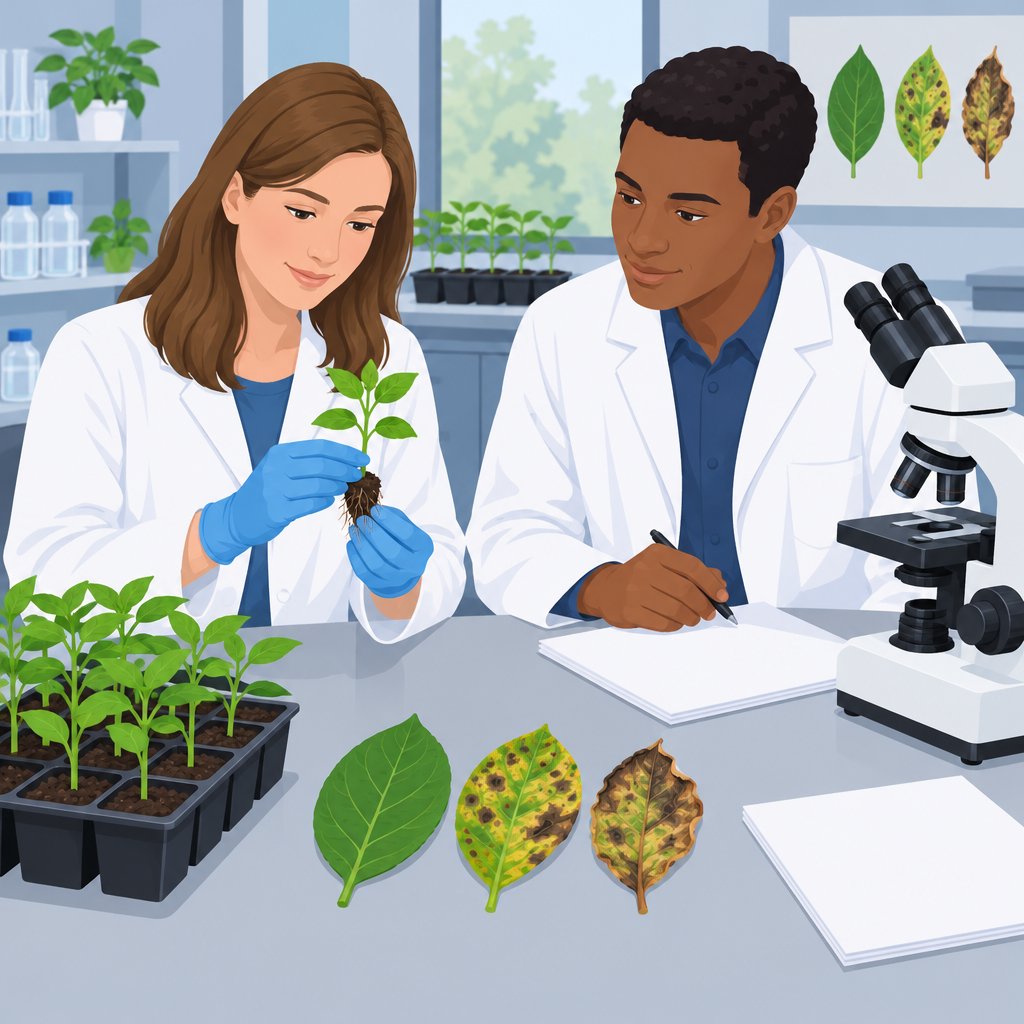
Plant pathologists use genetic modification and traditional breeding to improve crop resistance.
They also collaborate with breeders and geneticists to develop effective disease-resistant varieties.
These approaches help address disease pressures while supporting food security and sustainable agriculture.
Transform Your Career Today
Unlock a personalized career strategy that drives real results. Get tailored advice and a roadmap designed just for you.
Start Now- Genetic modification enhances plant resistance to diseases.
- Traditional breeding selects useful disease resistance traits.
- Collaboration supports effective resistance breeding programs.
Genetic Modification of Plants for Disease Resistance
Plant pathologists introduce genes that help plants resist specific diseases.
Researchers insert these genes into plant genomes to strengthen pathogen defense.
This method helps when plants lack natural resistance to prevalent diseases.
Therefore, scientists can tailor plant genetics for improved protection.
Traditional Breeding for Disease Resistance Traits
Plant pathologists and breeders select parent plants with desirable resistance traits.
They cross-pollinate selected parents to produce offspring with stronger disease resistance.
Breeders often repeat this process across multiple generations.
Eventually, selection helps establish the desired level of resistance.
Collaboration Among Pathologists, Breeders, and Geneticists
Effective disease resistance breeding requires cooperation among plant pathologists, breeders, and geneticists.
Pathologists identify disease pressures and select appropriate resistance traits.
Breeders apply plant genetics knowledge to develop improved resistant varieties.
Geneticists clarify the genetic basis of resistance traits for targeted breeding.
Discover More: Challenges in Quality Control for Small-Scale Farmers
Challenges in Disease Resistance Breeding
Disease resistance breeding helps researchers develop crops that withstand harmful plant diseases.
However, plant pathologists face several obstacles while pursuing this goal.
These challenges require careful research, adequate resources, and responsible decisions.
- Plant pathogens evolve rapidly and can create new disease threats.
- Limited funding and resources restrict disease resistance research.
- Genetic modification raises ethical concerns during crop improvement.
Rapid Evolution of Plant Pathogens
Plant pathogens can evolve quickly and produce new diseases that threaten crops.
Therefore, plant pathologists must monitor changing disease threats during resistance breeding.
They also develop resistance strategies that address these evolving pathogens.
Limited Funding and Research Resources
Research teams often work with limited funding and resources.
Consequently, they may struggle to conduct extensive studies and resistance tests.
Additional support would help researchers develop resistant crop varieties more effectively.
Ethical Considerations in Genetic Modification
Genetic modification can enhance disease resistance in plants.
Nevertheless, this approach raises ethical concerns about developing modified crop varieties.
Plant pathologists must address these concerns while meeting safety and regulatory standards.
Supporting Future Crop Protection
Plant pathologists play an important role in protecting the food supply.
Continued research can help them overcome challenges in disease resistance breeding.
Successful innovation can produce crops with resistance to a variety of diseases.
Gain More Insights: Plant Pathology Journals and Publications
Future Prospects in Disease Resistance Breeding
Plant pathologists help develop disease-resistant crops that support sustainable agriculture.
Moreover, technological advances are transforming resistance breeding through efficient and targeted methods.
New gene-editing tools, including CRISPR-Cas9, could accelerate resistant crop development.
These advances may help researchers respond more effectively to agricultural disease threats.
Technological Advances in Disease Resistance Breeding
Modern sequencing techniques help researchers identify plant disease-resistance genes more quickly.
Additionally, bioinformatics tools analyze large datasets and clarify plant-pathogen interactions.
High-throughput screening allows researchers to evaluate large plant populations for resistance efficiently.
Meanwhile, researchers are exploring nanotechnology to deliver resistance traits into plant cells.
Increased Sustainability and Agricultural Productivity
Disease-resistant crops reduce chemical pesticide use and support environmentally friendly farming.
Furthermore, resistant varieties can withstand disease pressure and improve yields.
Farmers can minimize disease-related crop losses by cultivating resistant varieties.
Transform Your Career Today
Unlock a personalized career strategy that drives real results. Get tailored advice and a roadmap designed just for you.
Start NowImproved plant health through resistance breeding strengthens agricultural sustainability.
Continued Research and Collaboration
Ongoing research helps scientists address evolving pathogens and their resistance mechanisms.
Effective strategies require collaboration among plant pathologists, breeders, geneticists, and agronomists.
Moreover, sharing knowledge and resources across disciplines can produce important breeding breakthroughs.
Investment in research and collaboration supports a resilient and productive agricultural sector.
Explore Further: How to Perform Irrigation System Audits
Research That Strengthens Crop Protection
Plant pathologists study diseases to support resistance breeding.
They identify resistant varieties and help develop new resistant strains.
Furthermore, their knowledge helps protect crops from devastating diseases.
Their research increases crop yield and improves food security.
By understanding pathogens, they develop effective disease management strategies.
Benefits for Food Security and Sustainable Agriculture
Their efforts strengthen global food security and sustainable agriculture.
Moreover, disease resistance breeding helps protect the food supply.
Society should recognize plant pathologists’ important contributions.
Continued support can sustain their impact on agriculture.
Additional Resources
Google search results for Plant Pathologists and Disease Resistance Breeding Agricultural
Bing search results for Plant Pathologists and Disease Resistance Breeding Agricultural


