




Plant Pathology and Agricultural Sustainability
Plant pathologists study plant diseases and develop solutions that protect crops from harmful pathogens.
They support plant health while helping agriculture remain productive and sustainable.
This work benefits farmers, consumers, and the broader environment.
Roles in Plant Disease Management
They investigate disease causes, identify pathogens, and create strategies for managing and preventing plant diseases.
Additionally, they reduce disease effects on productivity and help maintain a stable food supply.
Through research and practical guidance, they address threats affecting cultivated plants.
Importance to Agricultural Production
These specialists help farmers protect crops, increase yields, and reduce losses.
By controlling diseases, they strengthen food security and support sustainable agricultural practices.
Furthermore, their expertise helps agriculture respond to plant health challenges.
Research and Collaboration Responsibilities
They research emerging diseases and develop plant varieties with stronger disease resistance.
They also recommend effective management practices that farmers can apply.
Moreover, they collaborate with agencies and scientists to address plant health issues and environmental concerns.
Plant Health and Agricultural Well-Being
Plant pathologists protect plant health through careful disease research and practical solutions.
Their efforts support sustainable agriculture and help safeguard food security.
Consequently, farmers and consumers benefit from healthier, more productive plants.
Education and Training Required
Becoming a plant pathologist requires education, practical experience, and possibly certification or licensing.
Aspiring professionals build knowledge through relevant degree programs and specialized coursework.
They also develop practical skills through fieldwork, laboratory research, and plant disease diagnosis.
Educational Background Needed to Become a Plant Pathologist
A bachelor’s degree provides the typical foundation for pursuing a career in plant pathology.
Many professionals pursue graduate studies to expand their knowledge and skills.
Relevant programs combine scientific coursework with practical training and research methods.
- A bachelor’s degree may focus on plant pathology, biology, botany, or a related field.
- A master’s or doctoral degree can support advanced work in plant pathology.
- Common coursework covers plant diseases, microbiology, genetics, and research methods.
- Fieldwork and laboratory research help students develop practical diagnostic skills.
Certification or Licensing Requirements
Certification is not always mandatory for plant pathologists.
However, professional certification can demonstrate expertise and strengthen job prospects.
Licensing requirements may vary according to the state where professionals practice.
- The American Phytopathological Society offers certification through an examination.
- State licensing may require specific education and professional experience.
Internship or Practical Experience Necessary for the Field
Hands-on experience helps aspiring plant pathologists apply classroom knowledge in professional settings.
Internships and research assistantships provide opportunities to practice essential technical skills.
Professional networking can connect students with experts, professors, researchers, and career opportunities.
- Research projects can provide guidance from experienced plant pathologists.
- Field surveys help trainees practice disease diagnosis and pest management.
- Networking can support internship opportunities and future career advancement.
Duties and Responsibilities of Plant Pathologists
Plant pathologists study plant diseases and their effects on agricultural crops.
They investigate disease causes, identify symptoms, and develop practical management strategies.
Additionally, these professionals cooperate with specialists across agriculture and plant science.
- Conducting research on plant diseases and their causes
- Identifying and diagnosing plant diseases
- Developing strategies to prevent and control plant diseases
- Collaborating with other professionals in agriculture and plant science
Researching Plant Diseases and Their Causes
Plant pathologists research diseases affecting different plant species.
They examine disease causes, symptoms, and effects on plant health.
This knowledge helps them develop effective prevention and control strategies.
Identifying and Diagnosing Plant Diseases
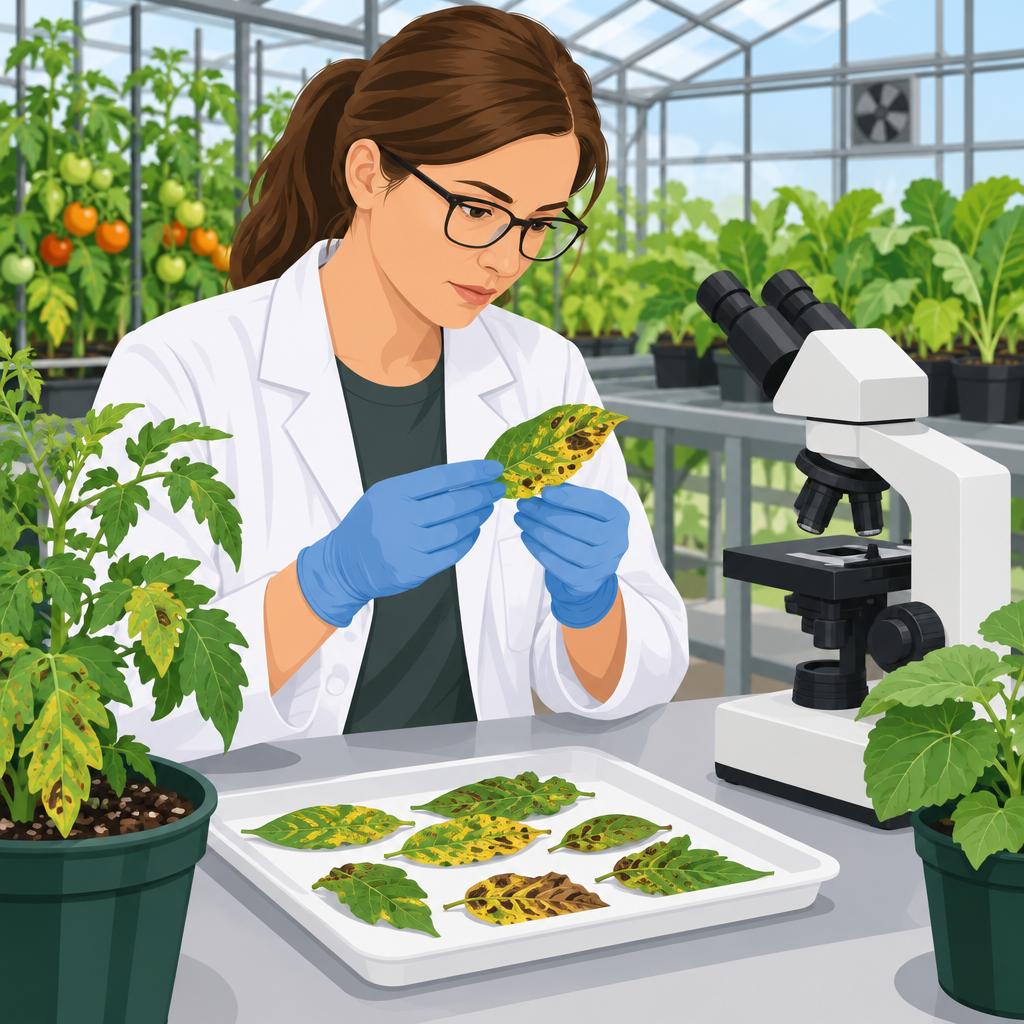
Plant pathologists identify and diagnose diseases through specialized knowledge and careful observation.
They combine laboratory tests with field observations to determine the source of plant health problems.
Accurate diagnoses support targeted treatments and appropriate control measures.
Preventing and Controlling Plant Diseases
Pathologists use research findings and diagnostic results to guide disease management.
They recommend cultural practices and disease-resistant plant varieties when appropriate.
They also apply integrated pest management techniques to reduce crop losses.
Collaborating Across Agriculture and Plant Science
Plant pathologists collaborate with agronomists, horticulturists, plant breeders, and extension specialists.
Transform Your Career Today
Unlock a personalized career strategy that drives real results. Get tailored advice and a roadmap designed just for you.
Start NowThese professionals share knowledge and expertise to address plant health challenges.
Such cooperation supports comprehensive approaches to disease management and crop resilience.
Find Out More: The Economics of Horticulture: What You Need to Know
Work Environments
Plant pathologists work in diverse professional environments.
They study plant diseases, develop solutions, and educate others about plant pathology.
Their workplaces range from research institutions and universities to farms and plant nurseries.
Research Institutions, Universities, and Government Agencies
Plant pathologists often work in research institutions, universities, and government agencies.
They conduct experiments, analyze data, and publish research papers.
These settings provide advanced laboratories and equipment for detailed plant disease research.
Furthermore, colleagues collaborate to address complex diseases and develop practical solutions.
Many plant pathologists also mentor students and teach plant pathology courses.
Through teaching, they help train future scientists and share knowledge about plant diseases.
Consulting for Agricultural Companies and Farms
Some plant pathologists consult for agricultural companies or farms.
They advise clients about disease management, pest control, and crop protection strategies.
During farm visits, they assess disease outbreaks and recommend suitable treatments.
They also develop integrated pest management plans to help protect crops.
Additionally, plant pathologists may help companies develop biopesticides and disease-resistant crop varieties.
This work requires strong knowledge of plant pathology principles and practical applications.
Field Work in Farms and Plant Nurseries
Plant pathologists conduct fieldwork in farms, plant nurseries, and other outdoor settings.
They study diseases in natural environments and observe symptoms firsthand.
They collect samples, conduct experiments, and recommend ways to manage disease outbreaks.
Fieldwork reveals interactions among plants, pathogens, and environmental factors.
These observations provide insights that laboratory work alone cannot offer.
Effective fieldwork requires knowledge of plant biology, soil health, and climatic conditions.
Travel for Field Research and Conferences
Plant pathologists may travel for field research, conferences, and workshops.
These opportunities support collaboration with international colleagues and exposure to new research developments.
Field research trips allow them to study diseases across different geographic regions and ecosystems.
They can also adapt research techniques to diverse environments.
At conferences, plant pathologists present findings and learn about current advances.
They may network with experts, join panel discussions, or lead specialized workshops.
Gain More Insights: Utilizing Renewable Energy in Farm Operations
Skills and Qualities Needed
Plant pathologists need technical knowledge to understand and manage plant diseases.
They also apply critical thinking when examining symptoms, interpreting data, and developing disease management strategies.
Additionally, effective communication helps them collaborate with professionals and share research findings clearly.
Strong Background in Plant Science and Biology
- Plant pathologists need a deep understanding of plant biology and science to identify and treat diseases effectively.
- Knowledge of plant anatomy, physiology, and pathology supports accurate diagnosis and disease management.
- Furthermore, proficiency in botany, microbiology, genetics, and related fields supports research and experimentation.
Analytical Thinking and Problem-Solving Skills
- Plant pathologists examine data, identify patterns, and draw meaningful conclusions through strong analytical thinking.
- They use critical thinking to solve complex problems and develop strategies for controlling and preventing diseases.
- Moreover, analytical skills help them interpret research findings and apply effective disease management practices.
Attention to Detail and Accuracy in Research
- Attention to detail helps plant pathologists observe, document, and analyze plant diseases accurately.
- They follow meticulous research methods to reduce errors and improve the reliability of their findings.
- In addition, accurate records help plant pathologists document outcomes and advance knowledge in plant pathology.
Communication Skills for Collaboration and Presentations
- Effective communication helps plant pathologists collaborate with researchers, scientists, and other professionals.
- They convey research findings, recommendations, and insights clearly to colleagues, stakeholders, and the public.
- Strong communication skills also support research publication, presentations, and education about plant diseases.
Therefore, plant pathologists combine technical expertise, critical thinking, attention to detail, and communication skills.
By strengthening these qualities, they contribute to effective disease diagnosis, management, and prevention.
Find Out More: Top Skills for Effective Agricultural Educators
Salary and Career Outlook
Plant pathologists help agriculture, forestry, and horticulture manage diseases affecting plants.
They also support crop health through specialized knowledge and practical disease control.
Consequently, their work contributes to reliable food production and sustainable plant management.
Transform Your Career Today
Unlock a personalized career strategy that drives real results. Get tailored advice and a roadmap designed just for you.
Start NowAverage Salary Range for Plant Pathologists
Plant pathologists typically earn competitive salaries that reflect their expertise and experience.
Education, location, and employer can influence the amount professionals earn.
According to the BLS, plant scientists, including plant pathologists, earned a median annual wage of $65,160 in May 2020.
Salaries can range from $45,000 to more than $100,000 annually, depending on several factors.
Job Growth and Demand in the Field
The Bureau of Labor Statistics projects seven percent employment growth for plant scientists from 2020 to 2030.
This rate exceeds the average projected growth for all occupations.
Rising food demand increases the need to improve crop yields.
At the same time, agriculture faces continuing challenges from plant diseases.
Opportunities for Advancement and Specialization
Plant pathologists can advance by earning advanced degrees, certifications, or specialized training.
These options can strengthen expertise in focused areas of plant pathology.
Some professionals pursue research and academic roles at universities, research institutions, or government agencies.
Others choose industry positions, consulting work, or agricultural extension services.
Factors Influencing Salary in the Field
Several factors influence a plant pathologist’s salary, including education, experience, location, employer, and responsibilities.
Advanced degrees, certifications, and relevant training may support higher earnings.
Metropolitan areas or regions with strong demand may offer higher salaries than rural areas.
Meanwhile, agriculture, research, government, and consulting employers may provide competitive pay and benefits.
These career options offer varied paths for professionals interested in plant health and sustainability.
Uncover the Details: How Animal Nutritionists Improve Livestock Health
Challenges and Rewards in Plant Pathology
- Working in plant pathology can involve long hours and physically demanding tasks.
- However, the profession offers abundant and fulfilling rewards.
- Plant pathologists make significant contributions to agriculture and plant health.
- They help prevent crop diseases and support food security for the population.
- Moreover, helping farmers and growers provides personal satisfaction.
- Plant pathologists work closely with agricultural professionals to prevent crop loss and maximize yields.
- By managing plant diseases, they support sustainable agriculture and environmental stewardship.
- Their work saves crops and protects the economic livelihoods of farmers and communities.
Although plant pathology presents real challenges, its rewards create meaningful impact across agriculture and plant health.
Plant Pathology and Crop Protection
Plant pathologists study plant diseases and develop effective management methods.
They investigate disease causes and provide practical solutions.
To diagnose diseases accurately, they use specialized tools and techniques.
Meanwhile, research helps them understand how diseases spread and develop in plants.
They analyze data and develop strategies that prevent disease.
Additionally, they work closely with farmers and agricultural professionals to implement management practices.
Their recommendations help control plant diseases effectively.
Contributions to Food Security and Sustainable Agriculture
Plant pathologists help protect crop yields and support food security.
By studying diseases, they help safeguard agricultural production and prevent crop losses.
Their efforts also support sustainable agriculture and environmental conservation.
Furthermore, they promote plant and ecosystem health.
People interested in plant pathology can pursue opportunities that support agricultural science.
Studying plant diseases enables individuals to contribute to global food security.
Their expertise and research remain important for sustainable agriculture.
Additional Resources
Google search results for What Does a Plant Pathologist Do? Agricultural
Bing search results for What Does a Plant Pathologist Do? Agricultural


