




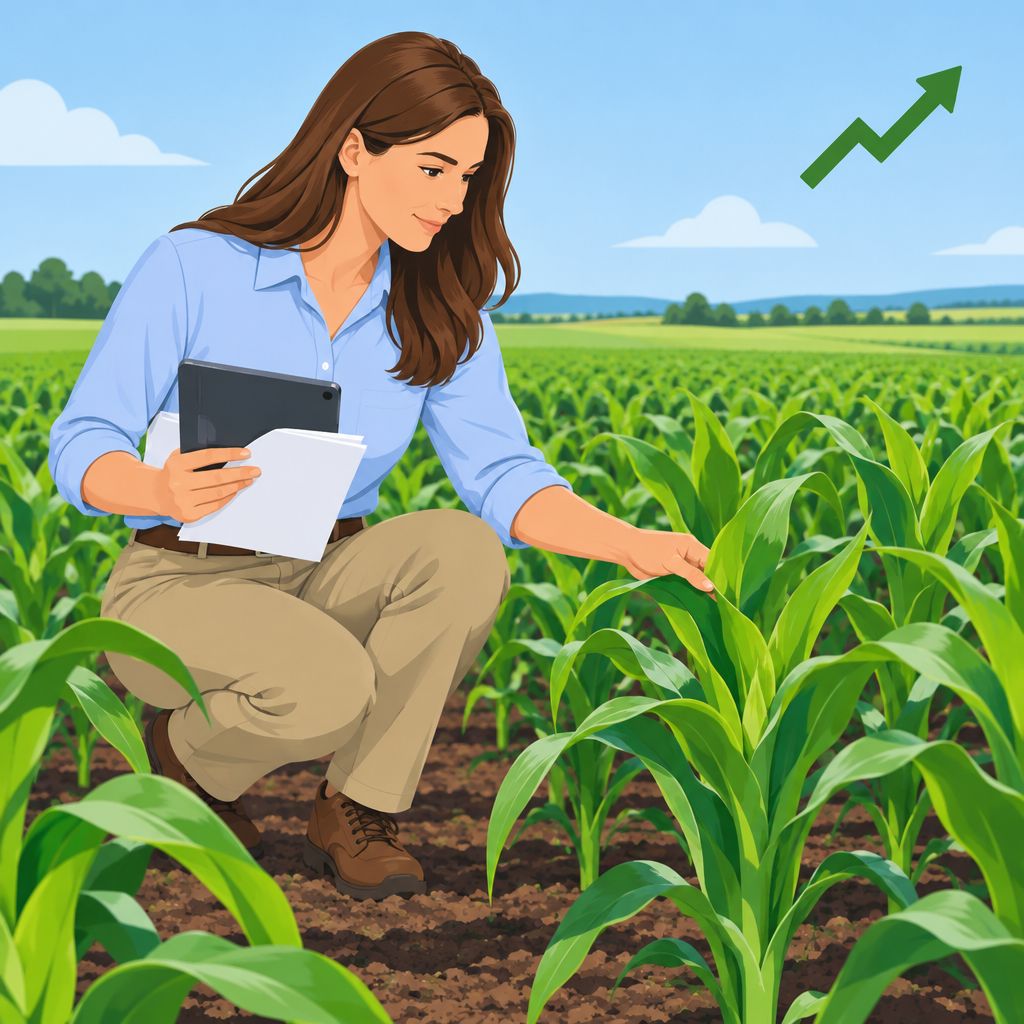
An agronomy consultant provides scientific advice that helps farmers manage crops effectively.
These professionals support efficient production while encouraging sustainable farming practices.
They help farmers make informed decisions that can improve crop yields.
Their expertise includes soil health, pest management, crop rotation, and related practices.
Without expert guidance, farmers may rely on ineffective or unsuitable management methods.
Ultimately, agronomy consultants help farmers increase profits while reducing environmental impacts.
Education and Training for Agronomy Consultants
Becoming an agronomy consultant requires strong preparation in agricultural sciences.
Education builds the knowledge needed to understand crops, soils, pests, and environmental factors.
Practical training then helps candidates apply that knowledge in real-world situations.
Educational Requirements
- A bachelor’s degree in agronomy, agriculture, soil science, or a related field usually provides the minimum qualification.
- Advanced degrees, including master’s degrees or PhDs, may support specialized roles and advancement opportunities.
- Coursework in plant and soil sciences, crop management, pest management, and environmental science builds foundational knowledge.
Importance of Practical Experience
- Internships and on-the-job training programs help candidates gain hands-on experience and practical agronomy skills.
- Research work or collaboration with experienced agronomists reveals the daily responsibilities of this career.
- Practical experience lets candidates apply theory, solve problems, and respond to real-world situations.
Academic study and practical experience together prepare aspiring agronomy consultants for this challenging field.
Agronomy Consulting Specializations
- Agronomy consulting includes crop management, soil health, and pest control specializations.
- Each specialization requires distinct skills and knowledge for professional success.
- Crop management consultants maximize crop yields and improve farm productivity.
- Soil health specialists analyze soil components to optimize nutrients and improve fertility.
- Pest control experts develop strategies against pests and diseases threatening crop production.
Choosing a Specialization
- Choose a specialization that matches your interests and career goals.
- Consider your passion and assess how it aligns with your long-term objectives.
- Reflect on your strengths and weaknesses before selecting a suitable specialization.
- Research job markets and demand for different agronomy consulting specialties.
- Furthermore, networking with professionals can provide insights into different specializations.
- Seek experienced agronomy consultants who can provide practical guidance and mentorship.
Delve into the Subject: Educational Pathways for Aspiring Environmental Scientists
Building a Professional Agronomy Network
Networking plays an important role in establishing a successful agronomy consulting practice.
Strong connections can expand your client base and provide valuable industry insights.
They also help you remain informed about changing trends, technologies, and research.
Networking Benefits Across Agriculture
Professional relationships can connect you with potential clients who may need your services later.
Industry contacts can also offer advice, referrals, and perspectives from agricultural professionals.
Additionally, connections with other consultants can support collaboration and shared resources.
- Networking helps you establish relationships with potential clients who may need your services in the future.
- It keeps you connected with professionals who can provide advice and referrals.
- Strong relationships with other consultants can create collaboration opportunities and provide shared resources.
- Professional networking can provide access to technologies, trends, and research that improve consulting services.
Ways to Connect with Agriculture Professionals
Attend conferences, trade shows, and networking events to meet potential clients and industry professionals.
Meanwhile, online communities and professional associations can help you connect with like-minded people.
Sharing your expertise through events or publications can attract people who need agronomy services.
- Attend industry conferences, trade shows, and networking events to meet potential clients and professionals.
- Join online forums, social media groups, and professional associations related to agronomy.
- Offer to speak at industry events or write articles for agricultural publications.
- Collaborate with other agronomy consultants on projects or research initiatives.
- Use LinkedIn and other professional platforms to display your skills and experience.
- Attend courses, workshops, and seminars to learn about trends and build professional relationships.
Active networking can position you as a trusted and knowledgeable agronomy consultant.
As your relationships grow, you can reach more potential clients and discover useful opportunities.
Consistent engagement also helps you remain informed and responsive within the agriculture industry.
Gain More Insights: How to Integrate Organic Farming with Irrigation
Developing Technical Skills
- Technical skills are crucial for success as an agronomy consultant.
- These skills include data analysis, GIS mapping, and precision agriculture.
- Data analysis helps consultants interpret information and provide actionable insights to clients.
- GIS mapping helps consultants visualize spatial data for effective decision-making.
- Precision agriculture uses technology to optimize farming practices and improve efficiency.
Resources for Skill Development
- Online courses provide a convenient way to enhance technical skills.
- Coursera, Udemy, and edX offer courses in data analysis.
- Esri provides training in GIS mapping for agricultural applications.
- Trimble offers workshops on precision agriculture technologies.
- Conferences and seminars can also expand knowledge and skills.
Find Out More: Agricultural Technician Salary Insights
When you start an agronomy consulting career, business development can expand your client base.
This focus also helps you build a stronger reputation within the agriculture industry.
Additionally, effective promotion can help potential clients recognize your expertise and services.
Marketing and Promotion Advice
Marketing and promotion show potential clients how your agronomy consulting services can support their needs.
A clear personal brand makes your expertise easier for prospective clients to understand.
Therefore, consistent communication can strengthen trust and increase awareness of your consulting business.
- Develop a professional website that presents your services, testimonials, and contact information.
- Use social media to share industry insights, present success stories, and engage potential clients.
- Network with agriculture professionals to build relationships and gain referrals.
- Consider advertising or sponsored content to reach a larger audience and attract new clients.
Strategic Client Acquisition Approaches
Client acquisition supports the long-term growth of an agronomy consulting business.
Industry events can create opportunities to meet potential clients and demonstrate your knowledge.
Moreover, collaborative relationships can connect you with additional agricultural clients.
- Attend industry events, trade shows, and conferences to connect with potential clients.
- Offer introductory consultations or workshops to demonstrate your value and build trust.
- Collaborate with agricultural businesses, research institutions, or government agencies to find new opportunities.
- Ask satisfied clients for referrals and use their positive feedback to attract new business.
Discover More: Professional Associations for Dairy Scientists
Continuing Education
Staying current with industry trends and advancements is crucial for success as an agronomy consultant.
Here are several recommendations for continuing education opportunities.
- Attend Conferences: Participate in agronomy conferences to network with professionals and learn about current research and technologies.
- Obtain Certifications: Pursue certifications such as Certified Crop Adviser or Certified Professional Agronomist to strengthen your credibility.
- Join Professional Associations: Membership in organizations like the American Society of Agronomy provides resources, training, and networking opportunities.
- Take Online Courses: Use platforms like Coursera or Udemy to study agronomy topics at your own pace.
- Stay Updated on Research: Read industry publications, journals, and newsletters to follow current findings and agronomic practices.
- Engage in Field Trials: Participate in field trials to gain practical knowledge about emerging technologies and agronomic practices.
- Collaborate with Experts: Build relationships with agronomy experts and researchers to gain insights and career mentorship.
Investing in continuing education enhances your knowledge and skills while demonstrating your commitment to professional growth.
This commitment also supports excellence in agronomy consulting.
Work-Life Balance Challenges for Agronomy Consultants
As an agronomy consultant, you may struggle to balance professional duties with personal life.
Transform Your Career Today
Unlock a personalized career strategy that drives real results. Get tailored advice and a roadmap designed just for you.
Start NowLong field hours, farm travel, and client meetings often demand substantial time.
These demands can reduce personal time and affect your well-being.
Strategies for Managing Stress and Preventing Burnout
However, practical strategies can help you manage stress and protect your work-life balance.
Use the following approaches to support your well-being in this demanding field.
- Set clear boundaries between work and personal time, and avoid work calls during off hours.
- Take regular breaks throughout the day to recharge, refocus, and prevent burnout.
- Exercise regularly through walking or workouts to reduce stress and improve your mood.
- Delegate suitable tasks to colleagues or employees to lighten your workload.
- Practice self-care through reading, bathing, hiking, or other relaxing activities.
- Seek support from a mentor, counselor, or trusted friend when challenges arise.
- Prioritize important tasks first by creating a focused to-do list.
- Set achievable goals to reduce stress and celebrate small victories.
- Unplug from technology and social media to reduce the strain of constant connectivity.
- Practice mindfulness through meditation or deep breathing to improve focus and remain calm.
These strategies can help you manage the demands of agronomy consulting more effectively.
Your well-being matters as much as your work, so prioritize self-care and activities that bring relaxation.
Building a Career in Agronomy Consulting
An agronomy consulting career combines education, experience, and networking.
These elements can help you begin work in this rewarding field.
Passion for agriculture can motivate you to support farmers and improve productivity.
Key Steps for Entering the Profession
- Gain relevant education in agronomy, soil science, and crop production.
- Obtain hands-on experience through internships or entry-level positions.
- Develop strong communication and problem-solving skills.
- Build a professional network within the agriculture industry.
- Consider certifications or licenses to enhance your professional credibility.
Starting Your Professional Path
Begin by researching suitable educational programs and seeking practical experience.
Next, connect with professionals and continue developing skills relevant to agronomy consulting.
With dedication, hard work, and persistence, you can build a successful career in this field.
Additional Resources
Google search results for How to Start Your Career as an Agronomy Consultant Agricultural
Bing search results for How to Start Your Career as an Agronomy Consultant Agricultural


