




Route planning plays a crucial role in transportation, logistics, and tourism.
It determines efficient and cost-effective paths to destinations.
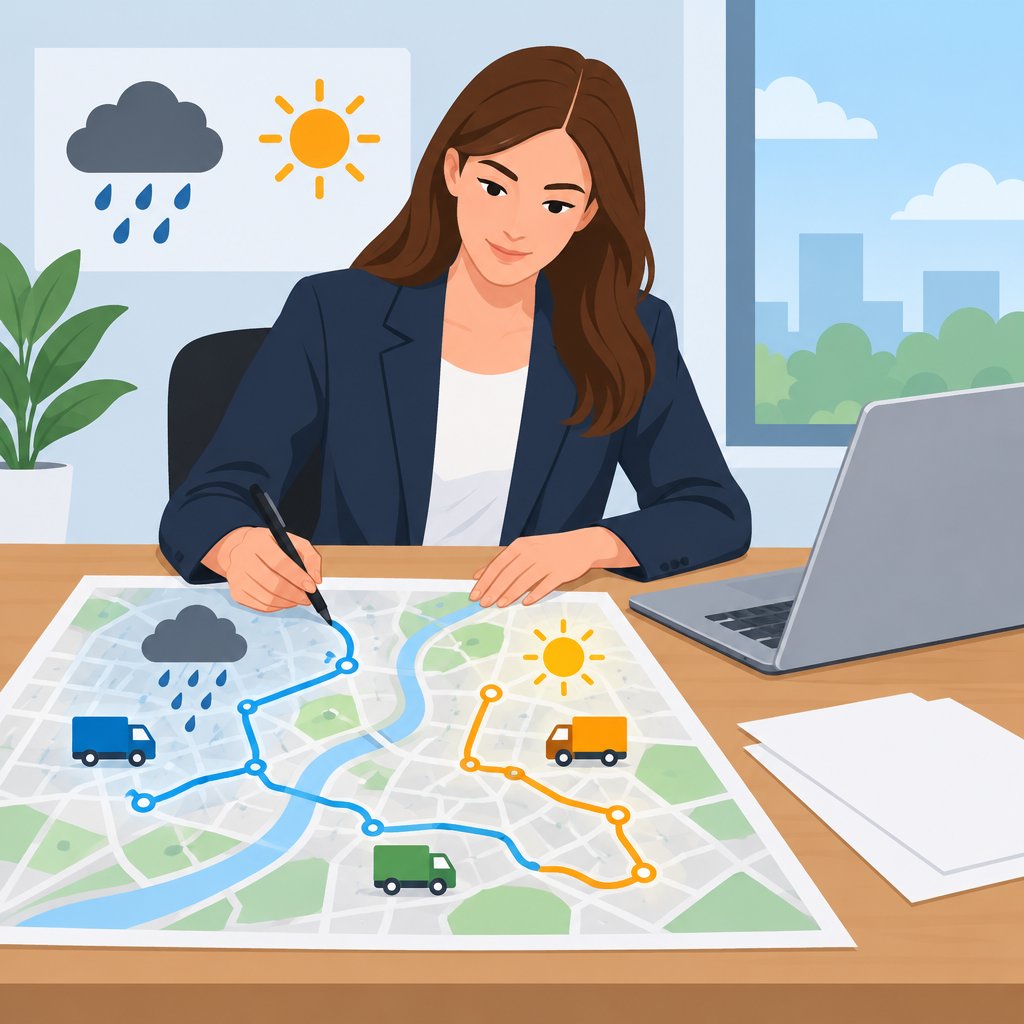
Weather conditions strongly influence route decisions, travel time, fuel use, and journey safety.
Why Weather Matters
Businesses must consider weather when they plan routes.
Adverse conditions, including snowstorms, heavy rain, and strong winds, can close roads or create delays.
These disruptions can interrupt intended routes and increase costs for businesses that depend on timely deliveries.
Furthermore, hazardous conditions can threaten drivers, passengers, and cargo.
Efficiency and Cost Savings
Businesses can improve operations and reduce costs by including weather conditions in route planning.
When severe weather affects an area, vehicles can use alternative routes to maintain schedules.
These changes can save time, reduce fuel consumption, and limit transportation costs.
Moreover, avoiding disruptions helps companies provide timely, reliable service and strengthen customer satisfaction and loyalty.
Safety First
Companies should prioritize safety when they plan routes around changing weather conditions.
They can analyze weather forecasts and adjust routes to reduce exposure to hazardous road conditions.
This approach can help prevent accidents and injuries involving drivers and passengers.
Additionally, safety-focused decisions protect personnel and assets while supporting responsible business practices.
Weather Information for Route Planning
Weather forecasts give planners information about conditions that may affect journeys.
They reveal temperature, precipitation, wind speed, and visibility along potential routes.
Therefore, organizations can prepare safer schedules and respond to changing conditions.
Forecasts Support Informed Transportation Decisions
Forecast data helps route planners anticipate operational challenges before vehicles or vessels depart.
Airlines assess wind patterns and turbulence predictions when selecting flight paths and altitude levels.
They also use these details to manage fuel consumption and support passenger comfort.
Real-Time Updates Improve Route Adjustments
Real-time updates show current conditions along an active route.
Delivery companies can reroute trucks away from flooded roads or snow-covered highways.
Consequently, timely adjustments can reduce delays and help maintain scheduled deliveries.
Industry Applications of Weather Forecasts
Several industries integrate weather information into their transportation decisions.
Each industry applies forecasts according to its operating environment and safety requirements.
The main applications appear in aviation, shipping, and ground transportation.
- Airlines use forecasts for flight planning, fuel management, and passenger safety.
- Shipping companies use weather data to chart routes, avoid storms, and protect cargo.
- Trucking companies use forecasts to adjust routes, schedules, and delivery operations.
Weather Factors That Affect Flight Safety
High wind speeds can reduce aircraft stability.
Therefore, flight teams should avoid strong headwinds or crosswinds whenever possible.
Fog, rain, or snow can reduce visibility and increase accident risks.
Rain, snow, and hail can change runway conditions and cause delays or cancellations.
Extreme temperatures can affect aircraft performance, fuel consumption, and engine efficiency.
Weather Effects on Route Safety and Efficiency
Tailwinds can increase aircraft speed and improve fuel efficiency.
However, headwinds can extend flight times and increase fuel consumption.
Poor visibility may require diversions or delays, reducing operational efficiency.
Wet or icy runways can increase braking and landing distances.
Cold temperatures can cause icing, while hot temperatures can reduce engine performance.
Weather Integration in Route Planning Tools
Route planning software can combine weather information with operational decisions.
Real-time data helps pilots and dispatchers evaluate changing conditions.
Moreover, weather-aware planning can reduce exposure to hazardous conditions.
Transform Your Career Today
Unlock a personalized career strategy that drives real results. Get tailored advice and a roadmap designed just for you.
Start NowAirlines can also select routes that limit fuel consumption and delays.
Finally, avoiding weather-related diversions can reduce costs for airlines and passengers.
These capabilities support safer and more efficient air travel operations.
You Might Also Like: Day-to-Day Duties of an Inventory Control Specialist
Weather-Related Route Planning Challenges
Weather conditions can create serious challenges for route planning and transportation operations.
Companies can reduce disruptions by using forecasts and preparing alternative travel plans.
The following cases show how weather decisions affected deliveries, shipments, and passenger safety.
Hurricane Warning on a Coastal Route
A trucking company planned deliveries along a coastal route despite an active hurricane warning.
Severe weather stranded the trucks and delayed the company’s deliveries.
Better forecasting and contingency planning could have helped the company reroute its trucks.
- The company ignored the hurricane warning during its route planning process.
- Stranded trucks caused delivery delays and financial losses.
- The disruption also damaged the company’s reputation.
- An alternate route could have reduced the operational impact.
Heavy Snowfall in a Mountainous Area
A logistics company scheduled winter deliveries through a mountainous area.
Heavy snowfall blocked the roads, stranded trucks, and delayed shipments.
The company could have selected another route or rescheduled deliveries after reviewing forecasts.
- Blocked roads created a backlog of orders.
- Customers submitted complaints about delayed shipments.
- The disruption increased operational costs for the logistics company.
- Forecast information could have supported earlier scheduling decisions.
Foggy Conditions on a Highway
A bus company operated a highway route known for frequent foggy conditions.
Dense fog reduced visibility and contributed to a major accident involving multiple vehicles.
The company could have rerouted the buses or postponed the trip after reviewing forecasts.
- The accident caused injuries and medical expenses.
- The company faced potential legal implications after the incident.
- Damage to the company’s reputation followed the accident.
- Forecast awareness could have supported a safer operating decision.
Contingency Planning for Weather Disruptions
These cases demonstrate how weather conditions can disrupt transportation routes and schedules.
Companies can reduce risks by combining weather forecasts with flexible route planning.
Robust contingency plans can help organizations limit delays, losses, and safety risks.
You Might Also Like: Port Operations Manager: Regulatory Compliance Role
Weather conditions strongly influence route planning decisions.
They affect journey safety, efficiency, and success.
Accurate, real-time weather information supports better planning decisions.
Technology and Solutions for Weather-Informed Route Planning
Technology has changed how planners use weather information during route planning.
Modern tools combine weather data with route information to support better travel decisions.
These solutions help travelers and logistics professionals plan safer, more efficient journeys.
Real-Time Weather Monitoring
Real-time monitoring provides current weather conditions along travel routes.
Planners can use updated information to make informed route decisions.
They can also adjust routes when adverse conditions develop.
- Technology enables real-time monitoring of weather conditions along travel routes.
- Current weather information supports informed route planning decisions.
- Monitoring systems help planners avoid adverse weather conditions.
GPS Integrated with Weather Data
GPS technology can combine location information with current weather data.
This integration helps planners evaluate routes according to changing conditions.
It also supports alternative routes and detours when weather disrupts travel.
- GPS technology combined with weather data provides useful route planning insights.
- Integrated systems support route optimization based on current conditions.
- GPS tools help identify alternative routes and detours during disruptions.
AI and Machine Learning for Weather Prediction
Artificial intelligence and machine learning can predict developing weather patterns.
These models improve forecasting accuracy for route planning.
Predictive analytics helps planners anticipate changes and select suitable routes.
- Artificial intelligence and machine learning algorithms predict weather patterns.
- AI-driven models improve forecasting accuracy for route planning.
- Predictive analytics helps planners anticipate weather changes.
These technologies expand how planners use weather information.
Real-time monitoring, GPS integration, and AI predictions support smarter decisions.
As a result, travelers and logistics professionals can pursue safer, more efficient journeys.
Find Out More: Balancing Work and Life as a Professional Courier
Best Practices for Integrating Weather Information into Route Planning
Route planners should consider forecasts before selecting routes.
Transform Your Career Today
Unlock a personalized career strategy that drives real results. Get tailored advice and a roadmap designed just for you.
Start NowBefore departure, teams can review conditions across the planned journey.
Meanwhile, real-time updates help planners adjust routes when conditions change.
- Consider weather forecasts when planning routes.
- Review weather conditions along the route before departure.
- Use real-time weather updates to adjust routes as needed.
- Collaborate with meteorologists for accurate weather predictions.
- Implement alternative routes during severe weather events.
- Communicate potential weather-related delays to drivers.
- Monitor weather patterns throughout the journey for changes.
- Use technology for current weather information while traveling.
- Develop contingency plans for unexpected weather disruptions.
- Prioritize safety by choosing routes that match current conditions.
Suggestions for Adjusting Routes Proactively
Proactive planning helps teams respond before weather disrupts travel.
Additionally, traffic updates can reveal congestion caused by weather events.
Flexible schedules and detours allow planners to manage changing conditions.
- Stay informed about forecasts for the planned route.
- Plan potential detours or delays caused by weather conditions.
- Monitor traffic updates for congestion caused by weather events.
- Consider seasonal weather patterns for long-distance routes.
- Adjust departure times to avoid adverse weather conditions.
- Keep route plans flexible when weather changes suddenly.
- Consult weather experts about upcoming weather systems.
- Optimize routes around weather-related closures or restrictions.
- Use historical weather data to anticipate future trends.
- Reevaluate routes periodically as forecasts become available.
Importance of Collaboration between Weather Experts and Route Planners
Weather experts and route planners bring complementary knowledge to transportation decisions.
Therefore, collaboration improves responses to changing conditions and potential disruptions.
Shared information also supports safer, more coordinated route adjustments.
- Enhance predictions of weather-related route disruptions.
- Support proactive decisions that reduce weather-related delays.
- Improve communication about changing conditions and route adjustments.
- Coordinate responses to weather impacts on routes.
- Align forecast data with route planning strategies.
- Provide planners with expert insights into weather patterns.
- Strengthen responses to sudden weather changes.
- Encourage information sharing during route planning decisions.
- Minimize risks associated with adverse weather conditions.
- Promote continuous improvement in route planning processes.
Gain More Insights: Importance of Teamwork in the Seaman Profession
Weather Effects Across Transportation Modes
Weather conditions shape operational decisions across air, road, rail, and maritime transportation.
Each mode faces different hazards that can disrupt schedules, routes, and safe movement.
Therefore, transportation providers adjust plans when forecasts identify dangerous conditions.
Air Transportation
Air operators monitor weather closely because conditions can quickly affect flight schedules.
Thunderstorms, fog, and high winds can create operational challenges during air travel.
Consequently, airlines may change itineraries to protect passengers and maintain efficient operations.
- Flight schedules can change because of thunderstorms, fog, or high winds.
- Airlines use advanced weather forecasting systems to anticipate possible disruptions.
- Airlines may delay, divert, or cancel flights to protect travelers.
- Passengers often receive advance notices about weather-related itinerary changes.
Road Transportation
Road operators face safety concerns when rain, snow, or ice affects travel conditions.
These hazards can increase accidents, slow traffic, and disrupt delivery schedules.
Accordingly, transportation companies may revise routes or postpone journeys.
- Heavy rain, snowstorms, and icy conditions can make roads hazardous.
- Transportation companies monitor forecasts before adjusting routes or delivery times.
- Authorities may close roads or impose restrictions during extreme conditions.
- Drivers should travel carefully and follow recommended detours during severe weather.
Rail Transportation
Rail services can experience interruptions when weather damages tracks or obstructs operations.
Snow, flooding, and extreme heat each create distinct challenges for rail networks.
Rail operators therefore evaluate current conditions before continuing regular service.
- Snow accumulation, flooding, and extreme heat can delay trains.
- Extreme heat can cause tracks to buckle and interrupt service.
- Operators use real-time weather data to assess risks and guide decisions.
- Maintenance crews clear tracks or repair weather-related damage.
- Passengers may face delays or cancellations during severe weather.
Maritime Transportation
Maritime operators monitor severe weather because storms can threaten vessels and crews.
High waves and strong winds can make ocean travel especially hazardous.
As conditions worsen, captains may alter routes or delay port activities.
- Storms, high waves, and strong winds can create serious risks at sea.
- Captains and navigators use forecasts to avoid hazardous areas.
- Ports may restrict operations or close during adverse weather.
- Companies may delay cargo shipments or reroute them through alternate ports.
Weather Adaptation Across Transportation Industries
Various industries adapt route planning strategies to reduce weather-related risks.
They use contingency plans, collaborate with meteorological agencies, and apply advanced technology.
As a result, companies can improve operations, protect passengers, and limit weather-related disruptions.
Weather Considerations for Route Planning Outcomes
Weather conditions significantly affect transportation route efficiency and safety.
Therefore, planners should prioritize weather forecasting when they design transportation routes.
Forecasts help businesses anticipate delays, accidents, and operational disruptions.
Additionally, planners can use weather information to support better route decisions.
This approach helps organizations improve operational efficiency and protect travelers.
Moreover, businesses can use weather information to strengthen customer satisfaction.
Individuals should also take forecasts seriously when planning their journeys.
By incorporating forecasts, planners can support smoother transportation services.
Additional Resources
Google search results for Impact of Weather on Route Planning Decisions Transportation and Logistics
Bing search results for Impact of Weather on Route Planning Decisions Transportation and Logistics


