




Port Operations Management
Port operations managers oversee daily activities at a port.
They help maintain efficient and smooth operations.
Their role includes planning, organizing, coordinating, and managing port activities.
Port Automation in the Shipping Industry
Port automation has become increasingly important in the shipping industry.
It helps ports streamline operations, increase efficiency, and reduce human errors.
The concept dates back to the late twentieth century.
Recent advancements include automated cranes, automated guided vehicles, and software systems.
Current Trends in Port Automation
Port automation continues to expand across the maritime industry.
Ports increasingly adopt automated technologies to improve efficiency, reduce costs, and strengthen workplace safety.
These developments are changing how terminals manage containers, vehicles, cranes, and operational information.
Technologies Used in Automated Port Operations
Several technologies now support faster and more coordinated terminal activities.
For example, automated equipment can complete repetitive container-handling tasks with greater consistency.
Meanwhile, integrated software connects equipment, vehicles, and terminal processes.
- Automated stacking cranes use advanced sensors and software to handle containers autonomously within terminals.
- Automated guided vehicles transport containers without drivers, streamlining movement throughout terminal areas.
- Remote-controlled ship-to-shore cranes operate from central control rooms, supporting precise container handling.
- Automated terminal operating systems coordinate different technologies and optimize overall terminal performance.
Efficiency and Cost Benefits of Automation
Automation helps port operators increase productivity while reducing dependence on manual processes.
Additionally, automated workflows can minimize delays, improve safety, and support more flexible operations.
As a result, terminals can handle larger cargo volumes with fewer resources and lower operating costs.
Examples of Automated Port Projects
Major ports worldwide demonstrate how automated equipment can support large-scale container handling.
These projects combine cranes, vehicles, and software to improve throughput and operational coordination.
The following ports illustrate different approaches to implementing automation across terminal operations.
- The Port of Rotterdam uses automated stacking cranes, automated guided vehicles, and terminal operating systems.
- These technologies help Rotterdam handle over 14 million TEUs annually while reducing operational costs.
- The Port of Singapore uses remote-controlled cranes and automated container terminals to support efficient operations.
- The Port of Shanghai employs automated cranes, automated guided vehicles, and robotic container handlers.
- These systems have increased Shanghai’s throughput capacity and operational efficiency.
Future Direction of Port Automation
Port automation enables terminals to optimize processes and remain competitive in global markets.
Furthermore, expanding automation can help ports manage growing cargo volumes while maintaining operational safety.
As technology develops, new innovations will continue transforming how ports operate.
Challenges in Implementing Port Automation
Ports face several obstacles when they introduce automated systems.
Integrating new technologies with existing systems requires careful planning, coordination, and investment.
Managers must protect daily operations while they introduce unfamiliar equipment and software.
- Complex integration of new technologies
- Resistance from the existing workforce
- High initial implementation costs
- Potential operational disruptions
- Staff training requirements
Furthermore, ports must evaluate financial returns before committing substantial resources to automation.
They also need contingency plans that address problems during the transition.
Workforce Effects of Job Displacement
Automation can remove manual and repetitive tasks from port operations.
Consequently, some employees may lose roles that automated systems can perform.
Displaced workers may struggle to find new employment without relevant skills.
This situation can create financial instability, job insecurity, and personal stress.
Workers need support while they adjust to changing employment requirements.
Port managers can provide retraining, career counseling, and assistance with alternative employment.
These measures can help affected employees develop skills for available roles.
Strategies for Workforce Adaptation
Port managers should involve employees in discussions about automation before implementation begins.
Clear communication can explain the reasons for change and address workforce concerns.
Employee participation can also build trust during the transition.
- Involve employees in decision-making
- Explain automation benefits clearly
- Provide hands-on training
- Offer manuals and online learning resources
- Encourage feedback and collaboration
- Recognize employee adaptation efforts
Hands-on workshops can teach employees how to operate and maintain automated systems.
Additionally, supportive workplaces can encourage continuous learning and constructive feedback.
Career development opportunities can motivate employees to participate actively in technological change.
Transform Your Career Today
Unlock a personalized career strategy that drives real results. Get tailored advice and a roadmap designed just for you.
Start NowDelve into the Subject: How Dock Workers Contribute to Shipping Efficiency
Future of Port Automation
Port automation has transformed cargo handling and process management in recent years.
Technology will continue driving innovation across the industry.
Future systems can improve how ports move goods and coordinate work.
Autonomous Vehicles and Drones
Autonomous vehicles and drones could transport cargo within ports.
These technologies may streamline operations, increase efficiency, and reduce costs.
Additionally, their development could strengthen automation capabilities across port activities.
Artificial Intelligence in Port Operations
Artificial intelligence and machine learning can help optimize port operations.
By analyzing real-time data, these systems can support better management decisions.
Consequently, ports may improve performance through faster, data-informed planning.
Automation and Port Competitiveness
Ports must invest in automation and embrace innovation to remain competitive.
Automated cargo handling, inventory management, and logistics planning can improve efficiency.
These systems can also reduce turnaround times and operating costs.
Furthermore, data analytics and business intelligence tools can reveal operational improvements.
Real-time performance metrics can help managers make informed decisions.
These approaches can help ports stay competitive in a rapidly changing market.
Gain More Insights: Warehouse Supervisor: Safety Protocols and Procedures
Case Studies
Rotterdam has implemented automation across various aspects of its operations.
Automated cranes and robotic technology have significantly increased the port’s efficiency and throughput.
Singapore has pioneered automation within its advanced port operations.
Automated container handling and logistics systems have reduced turnaround times and improved overall productivity.
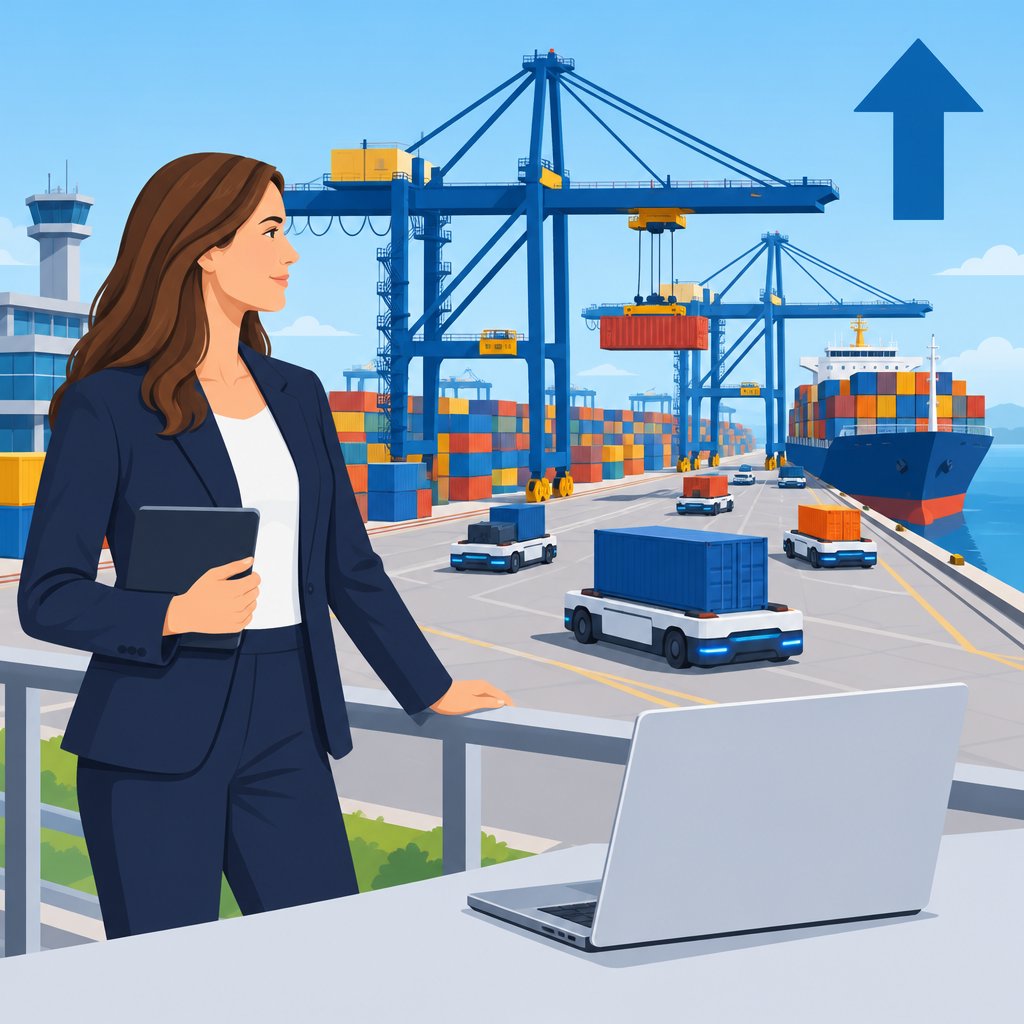
Strategic Planning Behind Successful Port Automation
Successful ports demonstrate that strategic planning supports effective automation.
Ports that invest in cutting-edge technology often achieve significant operational improvements.
Furthermore, a clear implementation roadmap helps ports guide automation across their operations.
Operational Effects of Port Automation
Before automation, ports often faced congestion, delays, and cargo-handling inefficiencies.
Afterward, streamlined processes helped these ports achieve faster turnaround times.
Additionally, automation increased their capacity to handle larger cargo volumes.
Lessons for Ports Planning Automation
Other ports can learn valuable lessons from these successful automation efforts.
Thorough planning helps teams prepare for operational changes.
Moreover, ports should invest in suitable technology and train staff to adapt to automation.
See Related Content: Interview Tips for Supply Chain Analyst Positions
Environmental Impact of Automation
Port automation significantly affects the environment, supporting sustainability and reducing port carbon footprints.
It also helps ports optimize processes and reduce waste.
- Evaluation of the sustainability benefits of port automation
- Discussion of automation’s role in decreasing port carbon footprints
- Analysis of automation’s role in meeting environmental regulations
Automated port operations support maritime sustainability by improving processes and reducing waste.
Furthermore, automation streamlines port activities and improves energy efficiency.
As a result, ports can lower emissions and reduce their carbon footprints.
Automation also helps ports meet environmental standards and limit pollution in port cities.
Additionally, automated systems can improve overall environmental performance.
Explore Further: Warehouse Supervisor Salary: What to Expect
Operational Gains from Port Automation
Port automation is shaping the future of port operations.
Transform Your Career Today
Unlock a personalized career strategy that drives real results. Get tailored advice and a roadmap designed just for you.
Start NowAutomation increases efficiency, reduces costs, and improves safety.
These benefits are driving transformation across port operations.
Technology Driving Port Transformation
AI, IoT, and robotics are revolutionizing port operations.
These technologies streamline processes and enhance productivity.
They also optimize overall performance across port activities.
Strategic Importance of Automated Port Operations
Automation helps ports remain competitive in the rapidly evolving shipping industry.
It supports operational efficiency and gives ports a competitive edge.
Furthermore, automation can help future-proof port operations.
Port Automation and Sustainable Growth
Ports should embrace automation to stay competitive and sustainable in the shipping industry.
Investing in these technologies can drive growth and enhance customer service.
It also helps ports adapt to changing market demands.


