




Introduction
A Port Operations Manager plays a crucial role in the customs clearance process.
Additionally, customs clearance supports the smooth functioning of port operations.
Therefore, effective clearance helps ports handle goods efficiently.
Role of the Port Operations Manager
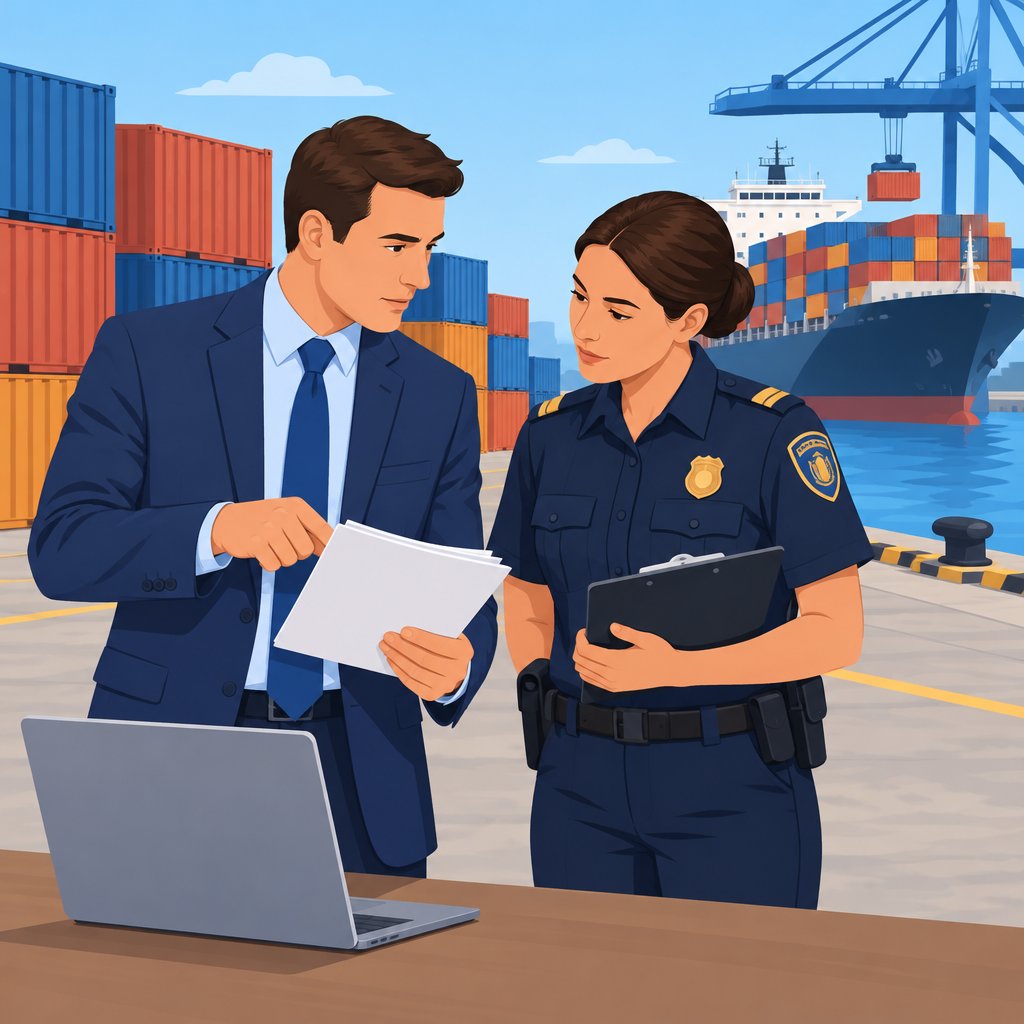
The manager coordinates with customs officials to clear imported goods.
Furthermore, the manager ensures compliance with customs regulations and documentation requirements.
The manager also manages communication among shipping companies, customs brokers, and other stakeholders.
Finally, the manager oversees cargo inspections and verification to meet customs standards.
Importance of Customs Clearance
Customs clearance facilitates the efficient movement of goods into and out of the port.
Moreover, it helps prevent delays and disruptions in port operations.
It also ensures that regulatory authorities receive the proper tariffs and duties.
As a result, customs clearance supports security and safety throughout the port and its surroundings.
Responsibilities of a Port Operations Manager
- Overseeing all activities related to cargo handling and processing
- Ensuring compliance with customs regulations and procedures
- Managing staff involved in customs clearance processes
A Port Operations Manager oversees activities related to cargo handling and processing.
This work includes coordinating goods movement within the port.
The manager ensures efficient and effective shipment handling.
The manager also ensures compliance with customs regulations and procedures.
Therefore, the manager must stay current with customs laws and regulations.
This approach keeps import and export activities legal and orderly.
The manager also leads staff members involved in customs clearance processes.
This responsibility includes supervising customs brokers.
The manager coordinates with customs officials during clearance activities.
The manager also oversees the complete customs clearance process.
These duties support efficient cargo movement through the port.
They also help customs processes operate effectively.
Key Skills and Qualifications for Port Operations Managers
Port operations managers need specific skills to support customs clearance and coordinate port activities.
These qualifications help managers handle regulatory requirements, stakeholder communication, and logistical demands.
Together, they support organized operations and compliant import and export activities.
- Strong knowledge of customs regulations and procedures.
- Excellent communication and organizational skills.
- Experience in supply chain management and logistics.
Strong Knowledge of Customs Regulations and Procedures
Managers need detailed knowledge of customs regulations and procedures.
This knowledge helps them verify that import and export activities follow applicable requirements.
It also helps them coordinate clearance efficiently and reduce delays or potential penalties.
Excellent Communication and Organizational Skills
Clear communication helps managers work with customs authorities, shipping lines, freight forwarders, and other stakeholders.
Strong organizational skills help them coordinate complex operations.
These abilities support effective customs clearance while managers handle multiple tasks.
Experience in Supply Chain Management and Logistics
Experience in supply chain management and logistics benefits port operations managers.
Knowledge of supply chain activities helps them streamline port processes and improve efficiency.
It also supports coordination among the parties involved in customs clearance.
These skills help managers navigate customs requirements and maintain smooth port operations.
Uncover the Details: Top US Companies Hiring Rail Yard Engineers
Collaboration with Customs Authorities
Port operations managers build relationships with customs officials to support efficient clearance activities.
This collaboration supports smooth customs clearance at the port.
It also helps teams address concerns before they disrupt operations.
Transform Your Career Today
Unlock a personalized career strategy that drives real results. Get tailored advice and a roadmap designed just for you.
Start NowRelationships with Customs Officials
Managers communicate regularly with customs authorities about regulatory updates.
They attend meetings and discussions to address concerns or operational issues.
Additionally, they establish trust through transparent and consistent communication.
- Communicate regularly with customs authorities about regulations.
- Attend meetings to discuss concerns and operational issues.
- Build rapport through trust and transparency.
Timely Submission of Clearance Documentation
Internal teams coordinate to gather every document required for customs clearance.
Managers review paperwork to confirm its completeness and accuracy.
They submit the documents within the timelines specified by customs authorities.
- Coordinate with internal teams to gather necessary documentation.
- Review paperwork for completeness and accuracy.
- Submit documents within specified customs timelines.
Resolution of Customs Issues and Discrepancies
Managers respond promptly when customs officials raise questions or concerns.
They investigate discrepancies in documentation or established procedures.
Furthermore, they work with customs authorities to develop suitable solutions.
- Address questions from customs officials promptly.
- Investigate the causes of documentation discrepancies.
- Collaborate with customs authorities on corrective solutions.
Proactive issue resolution helps prevent disruptions during customs clearance.
It also supports compliance with applicable customs regulations.
Strong collaboration therefore contributes to efficient port operations and consistent clearance processes.
See Related Content: Work-Life Balance Tips for Delivery Drivers
Technology and Automation in Customs Clearance
Digital technology helps customs operations managers process cargo more efficiently.
Automation reduces manual work, improves accuracy, and supports communication with relevant authorities.
Additionally, integrated systems provide timely information to everyone involved in cargo clearance.
Digital Platforms for Efficient Cargo Processing
Customs operations managers can use digital platforms to streamline clearance activities.
These systems automate data entry, document verification, and communication with relevant authorities.
Electronic filing reduces paperwork while minimizing errors caused by manual processing.
- System integration allows stakeholders to exchange information quickly.
- Real-time updates show every party the current cargo status.
- Automated alerts identify discrepancies and other clearance issues promptly.
Tracking Systems for Real-Time Shipment Monitoring
Tracking systems help managers monitor shipment movements throughout the clearance process.
GPS technology identifies the current location of cargo at any time.
Real-time monitoring enables managers to respond proactively to delays and disruptions.
- Managers can identify clearance bottlenecks and take corrective action quickly.
- Customers can access tracking information for greater transparency and reassurance.
- Integrated tracking platforms support seamless communication and data sharing.
Streamlined Processes for Faster and More Accurate Clearance
Customs operations managers streamline procedures to improve clearance efficiency.
Standard operating procedures promote consistency and accuracy across clearance activities.
Regular staff training strengthens operational proficiency and supports reliable processing.
- Continuous improvement initiatives reveal and address process bottlenecks.
- Automation handles repetitive tasks, giving managers more strategic time.
- Stakeholder collaboration improves coordination and speeds issue resolution.
Technology improves efficiency, transparency, and accuracy throughout the customs clearance process.
Furthermore, automation helps managers reduce delays while maintaining better visibility of cargo movements.
Gain More Insights: The Role of Experience in Dock Worker Careers
Risk Management and Security Measures
Port operations managers protect port activities by managing risks and strengthening security measures.
They identify potential threats that could affect security, operations, personnel, or assets.
They also coordinate preventive actions and support a safe port environment.
- Identify potential risks and implement preventive measures.
- Conduct regular audits to ensure compliance with security protocols.
- Respond to security incidents or breaches in a timely manner.
Risk Identification and Preventive Measures
Regular risk assessments help managers identify threats that could jeopardize port security or operations.
Managers then evaluate these risks and determine suitable preventive measures.
They work with relevant stakeholders to implement controls that reduce identified risks effectively.
Security Audits and Protocol Compliance
Regular audits help managers confirm that personnel follow established security protocols correctly.
These reviews can reveal gaps that weaken the port’s security measures.
Managers address identified weaknesses promptly to strengthen compliance and improve port security.
Security Incident Response
Security incidents may occur despite preventive measures and established protocols.
During an incident, managers respond quickly to contain the situation and limit potential damage.
They then support recovery efforts and restore normal operations as soon as possible.
Transform Your Career Today
Unlock a personalized career strategy that drives real results. Get tailored advice and a roadmap designed just for you.
Start NowClear response procedures help teams manage incidents consistently and effectively.
Managers also ensure that staff receive training on appropriate incident response procedures.
Through proactive risk management, port operations managers protect personnel, assets, and port operations.
Discover More: Top Companies Hiring Railroad Engineers
Impact of Customs Clearance on Port Operations
Customs clearance verifies and authorizes goods entering or leaving a port.
It confirms compliance with applicable customs regulations.
Port Operations Managers coordinate this process to support dependable cargo movement.
- Ensuring smooth flow of goods in and out of the port
- Minimizing delays and congestion in cargo handling processes
- Enhancing the port’s efficiency and reputation
Smooth Movement of Goods
Customs clearance facilitates the movement of goods through the port.
Port Operations Managers work with customs officials to complete documentation and inspections promptly.
They coordinate shipping agents, customs brokers, and other relevant parties during the clearance process.
Reduced Delays and Congestion
Delayed customs clearance can create congestion and bottlenecks during cargo handling.
Port Operations Managers monitor clearance activities and identify potential delays before they disrupt operations.
They streamline procedures and maintain communication with customs authorities to keep cargo moving.
Port Efficiency and Reputation
Efficient customs clearance helps the port maintain a positive reputation.
Clearance problems can discourage shipping companies and logistics providers from using the port.
Port Operations Managers promote transparent, compliant, and efficient procedures that support port competitiveness.
They also uphold professionalism and integrity throughout customs clearance activities.
Maintaining Efficient Port Operations
The Port Operations Manager oversees customs clearance efficiently.
This manager also ensures compliance with relevant regulations.
Additionally, the manager coordinates with customs authorities and manages required documentation.
These actions help maintain smooth operations throughout the port.
Furthermore, the manager must understand customs procedures and regulations thoroughly.
This knowledge supports effective supervision of goods clearance.
By overseeing port operations, the manager supports the movement of goods.
Consequently, timely customs clearance benefits the port and importing businesses.
It also benefits businesses exporting goods through the port.
Therefore, the manager helps maintain compliant operations and seamless trade movements.


