




Port Operations and Global Trade
Port operations managers play a crucial role in supporting global trade efficiency.
They oversee port activities and coordinate essential operations.
Their decisions influence how efficiently goods move through international trade networks.
Port Management and Trade Efficiency
Port operations managers streamline processes across port activities.
They manage resources efficiently while prioritizing safety and regulatory compliance.
As a result, they facilitate the movement of goods across borders.
Efficient Supply Chain Management
Managers coordinate multiple aspects of port operations to optimize supply chain logistics.
They work to minimize delays and reduce operational costs.
Consequently, their coordination strengthens overall operational effectiveness.
Stronger Trade Relations
Effective port management builds trust among trading partners.
Managers support positive relationships through consistent and capable operations.
Those relationships can ultimately support higher international trade volumes.
Adapting to Market Trends
Port operations managers respond to changing market dynamics.
They implement strategies that address evolving demands.
Therefore, their adaptability helps ports remain competitive globally.
Compliance and Port Security
Port operations managers enforce security protocols throughout port activities.
They also ensure compliance with international trade regulations.
This vigilance mitigates risks and safeguards the flow of goods.
Port Management’s Impact on Global Commerce
Port operations managers help shape the landscape of global trade.
Their proactive approach and attention to detail support operational success.
Additionally, their strategic decisions strengthen international commerce in a dynamic environment.
Core Responsibilities of Port Operations Managers
Port operations managers organize activities that keep shipments moving through port facilities.
They connect operational tasks with trade requirements across incoming and outgoing cargo movements.
Their decisions support orderly handling, coordination, compliance, and infrastructure readiness.
- Management of incoming and outgoing shipments
- Coordination with shipping companies, customs officials, and trucking companies
- Compliance with safety and security regulations
- Maintenance and repair of port infrastructure
Management of Incoming and Outgoing Shipments
Managers oversee the steady flow of incoming and outgoing shipments.
They ensure workers handle goods carefully during loading and unloading activities.
They also help dispatch cargo promptly toward its intended destination.
Coordination with Maritime and Transport Stakeholders
Port operations managers coordinate shipping companies, customs officials, and trucking companies.
They maintain communication among these stakeholders throughout port activities.
This coordination helps different entities support seamless trade operations.
Safety and Security Compliance
Managers apply safety and security requirements throughout port operations.
They protect personnel, vessels, and cargo by following established protocols.
Strong controls reduce operational risks and support consistent port activity.
Port Infrastructure Maintenance and Repair
Port operations managers oversee maintenance work across essential port infrastructure.
They identify facilities that require repairs or additional attention.
Well-maintained infrastructure supports efficient goods movement and reliable trade operations.
Through these duties, managers help ports facilitate trade across global markets.
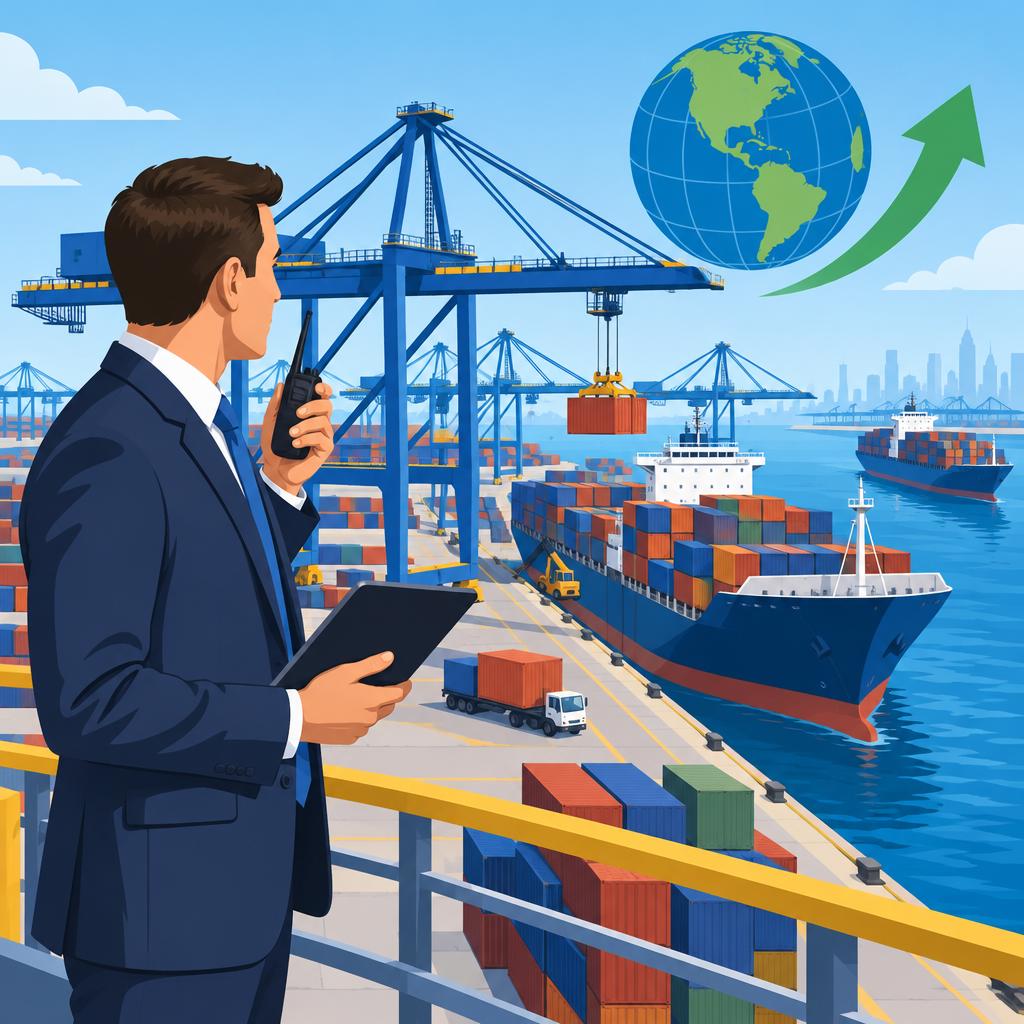
Influence on Trade Routes and Shipping Lanes
- Port operations managers select routes for different types of cargo.
- They analyze distance, weather conditions, and political stability before choosing trade routes.
- Therefore, efficient routes help goods move smoothly across borders.
- Additionally, managers negotiate favorable rates and schedules with shipping companies.
- These negotiations affect trade costs and business competitiveness.
- Managers also monitor market trends and international regulations to improve route efficiency.
By managing routes carefully, port operations managers streamline logistics processes.
As a result, they help businesses reduce transportation costs.
Their decisions also shape the competitiveness of companies involved in international trade.
Transform Your Career Today
Unlock a personalized career strategy that drives real results. Get tailored advice and a roadmap designed just for you.
Start NowDelve into the Subject: Environmental Benefits of Effective Route Planning
Impact on Global Supply Chains
- Port operations managers ensure that goods move through ports on time and with greater efficiency.
- By optimizing port activities, they reduce disruptions and delays across supply chain operations.
- This support helps businesses meet customer demands and preserve their competitive advantage.
- Moreover, port managers support just-in-time inventory management, which helps businesses reduce holding costs.
- Through strategic planning and coordination, they maintain the smooth global flow of goods.
- Consequently, efficient port operations improve transportation and logistics throughout the supply chain.
- Port managers also work with stakeholders to streamline processes and increase productivity.
- These efforts reduce lead times and strengthen the reliability of supply chain networks.
- Furthermore, optimized port activities help businesses respond quickly to changing market demands.
- Effective management through ports supports economic growth and international trade.
Gain More Insights: Common Mistakes Made by New Logistics Consultants
Role in Promoting Economic Growth
- Attracting investment for port infrastructure
- Creating local job opportunities
- Supporting regional economic development
Port operations managers promote economic growth through investment, employment, and stronger economic activity around port facilities.
First, they attract investment for modern port infrastructure.
Ports serve as gateways for international trade.
Therefore, modern and efficient facilities can attract businesses and investors.
By updating infrastructure and adopting current technology, managers make ports more appealing to shipping lines and logistics companies.
As trade volumes increase, the region can receive greater port revenue.
Managers also support local employment by expanding port operations.
Ports employ people in positions ranging from dockworkers to managerial roles.
Consequently, increased trade activity can create jobs and stimulate local economic activity.
Furthermore, ports often function as hubs of economic activity.
They connect businesses with global markets by facilitating the movement of goods.
This activity can encourage investment, raise living standards, and improve regional infrastructure.
Learn More: Networking Tips for Dock Workers in Logistics
Influence on International Trade Agreements
Port operations managers shape global trade by influencing international trade agreements.
They collaborate with government agencies and trade organizations to discuss and negotiate these agreements.
This collaboration allows them to advocate for port interests and broader trade community needs.
- Collaborating with government agencies and trade organizations
- Providing input on trade policy decisions
- Ensuring compliance with international trade regulations
Additionally, port operations managers provide valuable input on trade policy decisions.
They share industry expertise and assess how proposed agreements could affect port operations.
Consequently, they can suggest modifications that improve operational efficiency.
Port operations managers also ensure compliance with international trade regulations.
They monitor changes in trade laws and regulations to prevent penalties or operational disruptions.
Furthermore, they work with customs officials and regulatory bodies to implement required trade procedures.
They develop protocols that keep port trade activities compliant with global agreements.
These managers also help resolve disputes between parties involved in international trade.
Using their regulatory knowledge, they mediate conflicts and seek mutually beneficial solutions.
Through these efforts, port operations managers support the smooth functioning of global trade.
Find Out More: Expediter Work Environment: What to Expect
Challenges Affecting Port Operations
Port operations managers face several challenges that affect their ability to manage port activities effectively.
These challenges can influence workforce stability, environmental performance, and operational security.
Effective management requires strategic planning, communication, and proactive responses to changing conditions.
- Dealing with labor disputes and union negotiations
- Managing environmental concerns related to port activities
- Addressing cybersecurity threats and technological advancements
Labor Relations and Union Negotiations
Port operations managers navigate complex labor relations while negotiating with unions.
They seek workforce stability and productivity through effective communication and balanced agreements.
However, labor disputes can disrupt operations and delay cargo handling.
Environmental Responsibilities in Port Operations
Port activities can create air pollution, water pollution, noise pollution, and habitat destruction.
Port operations managers implement sustainable practices to reduce these environmental impacts.
They also comply with environmental regulations to protect surrounding environments.
Cybersecurity and Technological Change
Increasing digitization makes cybersecurity an important responsibility for port operations managers.
They protect critical infrastructure from cyber threats affecting port operations.
Transform Your Career Today
Unlock a personalized career strategy that drives real results. Get tailored advice and a roadmap designed just for you.
Start NowAdditionally, they adopt technological advancements that improve operational efficiency and security.
Proactive Management for Sustainable Port Operations
Port operations managers address complex challenges through strategic planning and effective communication.
They strengthen port performance by managing labor relations, environmental responsibilities, and cybersecurity risks.
These efforts support efficient and sustainable port operations within global trade.
Innovations in Port Operations Management
Port operations managers influence global trade through innovative operational approaches.
They use digital tools, automation, and sustainable practices to improve port performance.
These innovations support efficient and sustainable trade networks.
Digital Technologies for Cargo Tracking
Port operations managers use IoT devices, RFID tracking, and AI-powered software.
These technologies track and monitor cargo in real time.
Consequently, managers streamline operations, minimize errors, and handle goods more efficiently.
Automation and Robotics in Port Operations
Port managers invest in automated cranes, robotic cargo handlers, and autonomous vehicles.
These systems improve efficiency, reduce labor costs, and increase productivity.
Moreover, automation speeds cargo handling and minimizes human errors.
Sustainable Practices for Environmental Protection
Port operations managers develop sustainable practices that reduce environmental impacts.
They use alternative energy sources, improve waste management, and reduce carbon emissions.
As a result, sustainable practices support a greener and more efficient supply chain.
Strengthening Port Operations for Global Trade
- Port operations managers facilitate international trade by coordinating activities that connect shipments with global markets.
- They improve port efficiency, support smooth cargo handling, and encourage cooperation among stakeholders.
- Consequently, effective port management remains essential to successful global trade.
- Therefore, stakeholders should support port infrastructure and strengthen management practices.
- These improvements streamline trade flows, reduce logistical bottlenecks, and support economic growth worldwide.
Recognizing these managers’ pivotal role can encourage stronger partnerships among port stakeholders.
Together, stakeholders can build a more connected and prosperous global trade network.


