




Introduction
Sustainable transportation planning strategies play a crucial role in promoting environmental stewardship and reducing carbon emissions.
As the population increases, transportation demand also grows, creating a greater environmental impact.
Therefore, planners must implement innovative transportation solutions that prioritize efficiency, safety, and environmental consciousness.
Current Challenges in Transportation Planning
Transportation planners currently face major challenges because systems rely heavily on fossil fuels.
That reliance increases air pollution and greenhouse gas emissions.
Consequently, environmental degradation continues to threaten transportation sustainability.
Moreover, fossil fuel dependence threatens energy security and economic stability.
Urban traffic congestion creates another pressing challenge for transportation planners.
Congestion increases travel times, fuel consumption, and carbon emissions.
Furthermore, it reduces productivity, quality of life, and public health.
Addressing these issues remains essential for sustainable transportation systems.
Sustainable planning strategies can reduce dependence on fossil fuels.
At the same time, they can mitigate traffic congestion’s negative urban impacts.
Planners can promote renewable energy sources and efficient transportation modes.
Additionally, these approaches support more environmentally friendly transportation systems.
Investment in public transportation infrastructure offers another important strategy.
Promoting walking and cycling can also expand active transportation options.
Finally, government agencies, industries, and communities must collaborate on implementation.
Education and awareness campaigns can encourage sustainable transportation practices.
They can also support behavior change among travelers.
Strategies for Sustainable Transportation Planning
Sustainable transportation planning combines several approaches to improve how people travel.
These approaches support cleaner travel choices and more efficient transportation systems.
Together, they address public transit, active travel, shared rides, and transportation management technology.
Promotion of Public Transportation and Infrastructure Improvements
Public transportation investments give people more opportunities to choose sustainable travel.
Infrastructure improvements can make these systems more appealing and practical.
As a result, more people may use public transportation instead of traveling alone by car.
Support for Walking and Biking
Walkable environments make walking easier to include in daily travel.
Bike-friendly environments support biking as another active transportation option.
Consequently, these modes can encourage physical activity, reduce car dependency, and improve air quality.
Implementation of Carpooling and Ride-Sharing Programs
Carpooling allows multiple travelers to share one vehicle.
Ride-sharing programs can similarly reduce the number of vehicles using roads.
Therefore, shared travel can decrease traffic congestion and lower emissions.
Integration of Technology for Efficient Transportation Management
Real-time data helps planners monitor transportation conditions.
Advanced technologies can improve traffic flow and support more efficient route planning.
In turn, these tools can enhance overall transportation efficiency.
See Related Content: Freight Handler Job Description and Key Responsibilities
Sustainable transportation planning creates urban environments that protect natural resources and support long-term economic stability.
It also improves residents’ quality of life through cleaner, more efficient travel options.
Benefits of Sustainable Transportation Planning
- Lower greenhouse gas emissions and air pollution
- Improved public health and quality of life
- Reduced congestion and infrastructure maintenance costs
First, public transportation, walking, biking, and electric vehicles can reduce fossil fuel reliance.
Consequently, cities can limit harmful emissions linked to climate change and poor air quality.
Transform Your Career Today
Unlock a personalized career strategy that drives real results. Get tailored advice and a roadmap designed just for you.
Start NowFurthermore, active travel options encourage movement and can support a healthier population.
Cleaner transportation can also improve air quality and reduce conditions associated with pollution.
Meanwhile, fewer cars can ease congestion, helping residents and businesses avoid traffic delays.
Cities may also reduce long-term infrastructure maintenance costs through clean transportation investments.
These options may require less maintenance than traditional vehicles powered by fossil fuels.
Together, these benefits help cities create thriving, livable communities for current and future residents.
See Related Content: Certifications to Boost Your Logistics Operations Career
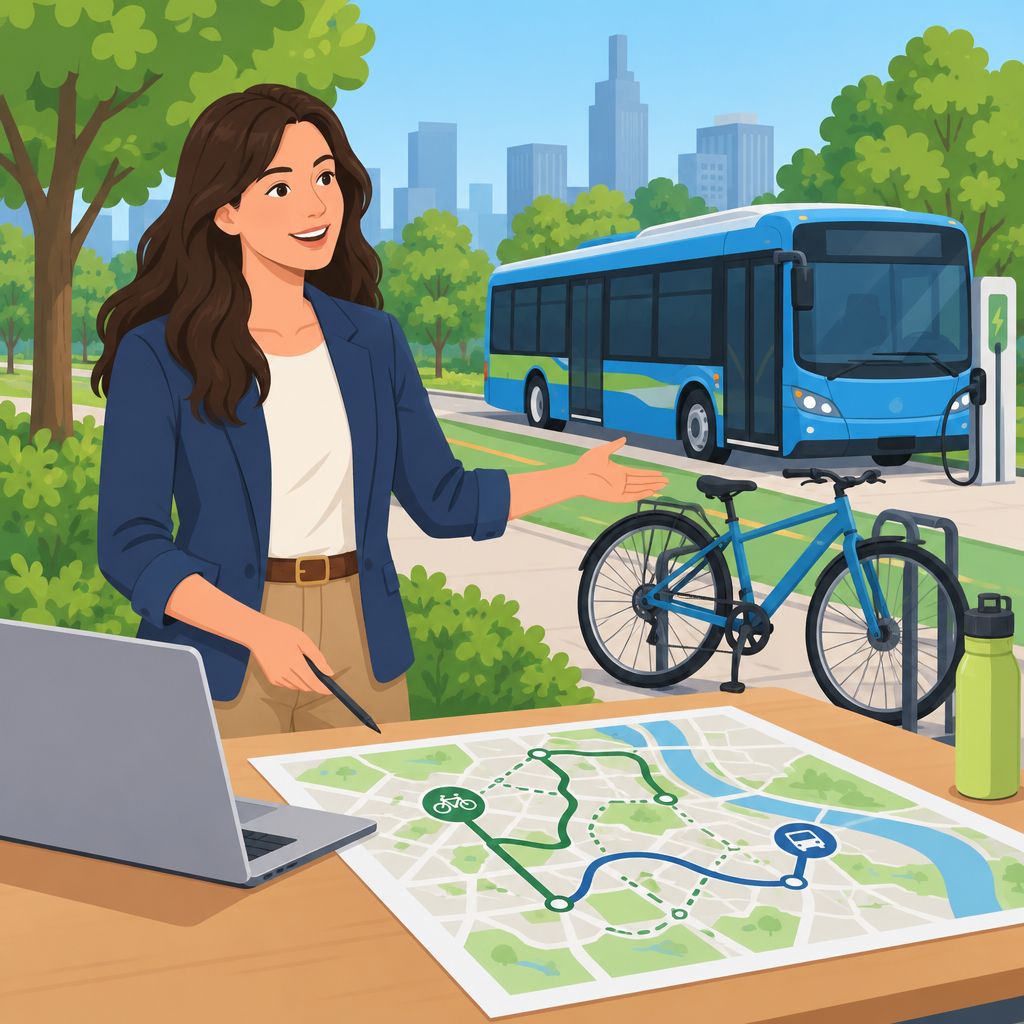
Successful Sustainable Transportation Initiatives
Several cities demonstrate how transportation planning can reduce emissions, improve air quality, and support alternatives to private vehicles.
Their programs combine infrastructure, public transit, policy changes, and community participation.
These examples show how local decisions can create healthier and more efficient travel systems.
- Portland, Oregon: Portland uses bike lanes, public transportation, and pedestrian infrastructure to encourage sustainable travel.
- Copenhagen, Denmark: Copenhagen promotes cycling through extensive bike lanes and a culture that supports bicycles as primary transportation.
- Curitiba, Brazil: Curitiba uses an efficient and accessible Bus Rapid Transit system to reduce congestion and emissions.
Regional Transportation Planning Examples
Other cities have used pricing, shared mobility, electric vehicle support, and expanded transit networks.
These measures target congestion while making sustainable travel more practical for residents.
Each initiative reflects local priorities and demonstrates different ways to reduce reliance on private cars.
- Stockholm, Sweden: Stockholm uses congestion pricing to reduce traffic, pollution, and carbon emissions in the city center.
- San Francisco, California: San Francisco supports bike sharing, electric vehicle charging, pedestrian streets, carpooling, and public transit.
- Seoul, South Korea: Seoul combines subway expansion, bike sharing, and pedestrianized streets to promote sustainable urban travel.
Key Features of Effective Transportation Initiatives
Successful initiatives share several features that help cities achieve environmental and public health goals.
Investment, policy innovation, and community involvement can strengthen the results of transportation planning.
Data and research also help decision-makers direct resources toward effective transportation improvements.
- Cities can make cycling safer and more convenient by building extensive networks of bike lanes.
- Public transit investments can reduce car use while improving access and air quality.
- Congestion pricing, bike sharing, and pedestrian programs can encourage more sustainable travel choices.
- Residents, businesses, and policymakers can shape plans that reflect community needs and preferences.
- Data and research can guide effective policies and help cities allocate transportation resources wisely.
Delve into the Subject: Top Skills Needed for Transportation Security Screeners
Public Engagement and Community Involvement
Community engagement plays a central role in transportation planning decisions.
It gives residents a meaningful opportunity to influence sustainable transportation initiatives.
Moreover, participation helps planners understand community priorities before implementation begins.
Importance of Community Engagement in Transportation Planning
An inclusive process allows different community perspectives to inform planning decisions.
Public involvement also builds trust by making decisions more transparent.
Additionally, local knowledge can improve project acceptance and strengthen legitimacy.
- Inclusive decision-making process
- Builds trust and transparency
- Local knowledge and expertise
- Enhances project acceptance and legitimacy
Public Participation in the Planning Process
Communities can participate through several accessible planning activities.
Public meetings and workshops create spaces for direct discussion.
Meanwhile, digital feedback, surveys, focus groups, and advisory committees offer additional channels.
- Holding public meetings and workshops
- Online platforms for feedback and suggestions
- Survey and focus group discussions
- Community advisory boards or committees
Benefits of Community Support for Sustainable Transportation Initiatives
Community support can improve the success and effectiveness of sustainable transportation initiatives.
It may also increase the likelihood of funding approval.
Furthermore, support raises public awareness and strengthens partnerships and collaborations.
- Increased project success and effectiveness
- Greater likelihood of funding approval
- Enhanced public awareness and education
- Strengthens partnerships and collaborations
Learn More: Railroad Engineer Job Market Trends
Government Policies for Sustainable Transportation
- Government policies aim to reduce carbon emissions.
- They promote green modes of transport.
- Additionally, regulations address vehicle emissions.
- They also address fuel efficiency.
- Furthermore, regulations guide infrastructure planning.
Regulations Shaping Transportation Choices
- Regulations set standards for vehicle manufacturers.
- These standards encourage cleaner vehicles.
- They also support more efficient vehicles.
- Moreover, regulations promote public transportation.
- Public transportation policies influence travel decisions.
- As a result, people may choose sustainable travel modes.
Policy Support for Long-Term Transportation Sustainability
- Policy support remains crucial for long-term sustainability goals.
- It strengthens transportation planning efforts.
- Government funding can support sustainable projects.
- Such funding helps build infrastructure for eco-friendly transport.
- Consequently, policies support lasting transportation improvements.
Advancing Sustainable Transportation Systems
Sustainable transportation planning strategies play a crucial role in improving cities and communities.
By prioritizing sustainability, communities can reduce carbon emissions, improve air quality, and enhance public health.
Individuals, communities, and governments must collaborate to promote sustainable transportation options.
For example, they can invest in public transportation and promote cycling and walking.
They can also create infrastructure that supports eco-friendly travel.
Furthermore, communities must support policies that prioritize sustainability in transportation planning.
These policies should integrate land use with transportation planning.
They should also promote mixed-use development and reduce private car usage.
As communities pursue a more sustainable future, every small effort contributes to progress.
People can carpool to work, use public transportation, or advocate for bike lanes.
Transform Your Career Today
Unlock a personalized career strategy that drives real results. Get tailored advice and a roadmap designed just for you.
Start NowUltimately, everyone can help create a more sustainable transportation system.
Additional Resources
Bing search results for Sustainable Transportation Planning Strategies Transportation and Logistics


