




Introduction
Public bus transportation plays a crucial role in urban mobility.
Many cities worldwide rely on buses as a common transportation option.
Understanding their environmental impact helps cities make informed transportation decisions.
Therefore, urban planners must consider both their benefits and environmental costs.
Environmental Impact of Public Bus Transportation
Public buses create both environmental benefits and environmental costs.
First, buses reduce the number of cars traveling on urban roads.
This reduction can decrease traffic congestion and related pollution.
However, buses also emit greenhouse gases, including carbon dioxide and nitrogen oxides.
These emissions contribute to air pollution and broader environmental concerns.
Additionally, diesel fuel releases particulate matter and other harmful pollutants.
Consequently, cities continue seeking cleaner alternatives for public bus transportation.
Many transit systems now introduce electric and hybrid buses to reduce these impacts.
Electric buses produce zero emissions and offer a more sustainable alternative to diesel buses.
Furthermore, technological advances can improve bus efficiency and environmental performance.
Improved infrastructure can also support cleaner and more efficient bus operations.
Therefore, cities should prioritize sustainable practices and invest in eco-friendly transportation options.
These measures can preserve bus mobility while reducing harmful environmental effects.
Bus Emissions and Sustainable Transportation
Buses release greenhouse gases when they burn diesel fuel.
These emissions include carbon dioxide, methane, and nitrous oxide.
However, buses emit fewer greenhouse gases per passenger mile than many cars.
Therefore, buses offer a more environmentally friendly option than individual cars.
In particular, buses produce fewer emissions than single-occupancy vehicles.
Nevertheless, bus operations still add greenhouse gases to the atmosphere.
Public transportation helps reduce emissions from the transportation sector.
Buses form a crucial part of that public transportation system.
Moreover, bus emissions can affect air quality.
Alternative fuels can reduce the carbon footprint of bus transportation.
Electric buses can significantly reduce greenhouse gas emissions.
They produce zero tailpipe emissions and operate more quietly than traditional buses.
Bus emissions also contribute to the broader challenge of climate change.
Public transportation, including buses, remains essential for reducing greenhouse gas emissions.
Sustainable transportation options can help mitigate climate change effects.
Cities must consider the environmental impact of public bus transportation.
Encouraging bus use can support a cleaner and healthier environment.
Additionally, transportation providers must improve bus efficiency and reduce emissions.
Choosing public transportation instead of driving alone can benefit the environment.
Governments should invest in green public transportation infrastructure.
Green buses represent progress toward more sustainable transportation.
Each person’s decision to use public transportation can help reduce emissions.
Public buses remain an important part of efforts to address climate change.
Transform Your Career Today
Unlock a personalized career strategy that drives real results. Get tailored advice and a roadmap designed just for you.
Start NowAir Pollution
Public bus transportation contributes to air pollution in urban areas.
Diesel engines release emissions that affect urban environments and resident health.
These impacts require effective strategies to reduce pollution from public buses.
Pollutants Released by Buses
Buses emit carbon monoxide, nitrogen oxides, particulate matter, and volatile organic compounds.
Diesel fuel combustion primarily releases these pollutants from bus engines.
Engine combustion therefore creates several harmful pollutants that affect urban air quality.
Effects on Urban Air Quality
Bus emissions contribute to poor air quality in urban areas.
They can produce smog, haze, and reduced visibility.
These pollutants can also form ground-level ozone and particulate matter.
Health Consequences for Residents
Bus pollution can seriously affect residents, especially people living near busy bus routes.
Particulate matter and nitrogen oxides can worsen asthma and increase cardiovascular disease risks.
Exposure also connects with lung cancer, premature death, and other respiratory illnesses.
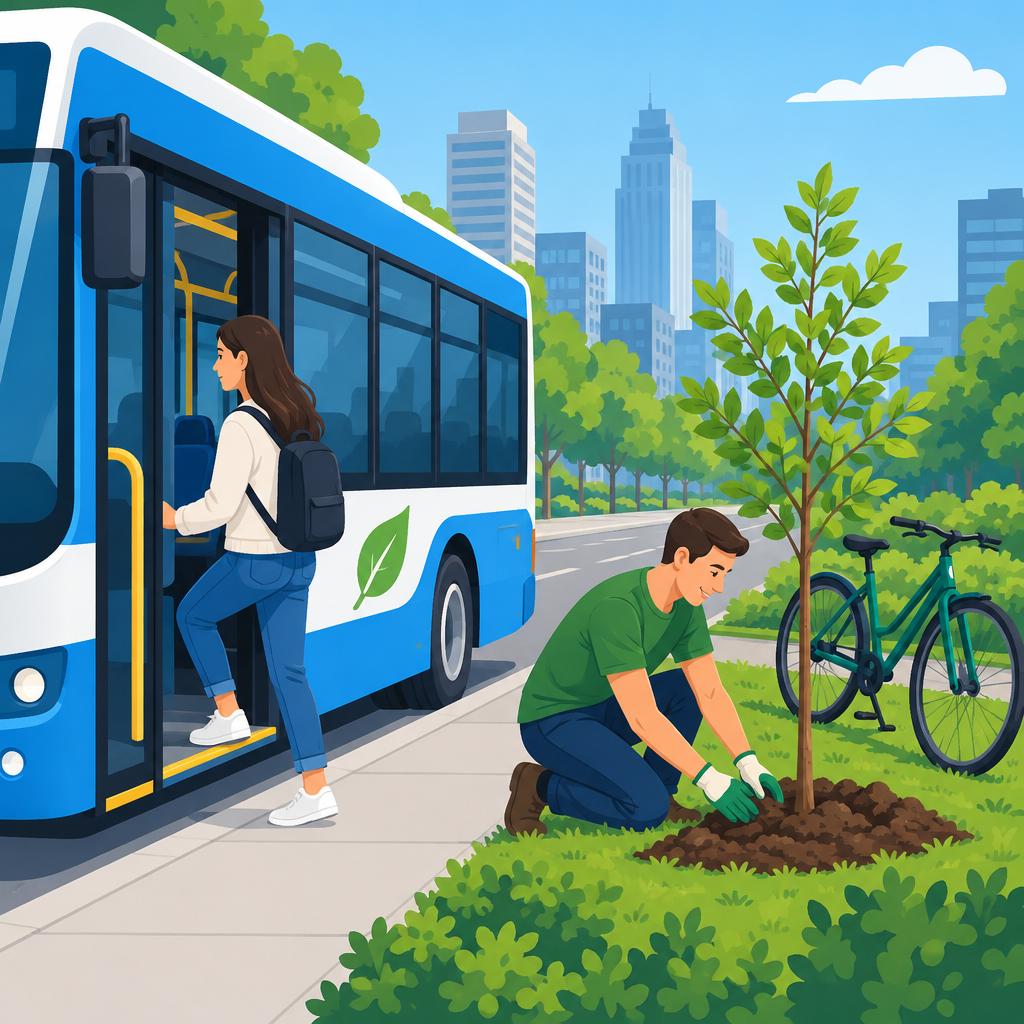
Strategies for Reducing Bus Pollution
Cities can reduce bus pollution through cleaner fuels, emission controls, and regular maintenance.
Transit planners can also reduce emissions by limiting congestion and unnecessary idling.
These measures can support healthier and more sustainable urban environments.
- Cities can replace diesel buses with compressed natural gas or electric buses.
- Transit agencies can install diesel particulate filters and selective catalytic reduction systems.
- Operators can maintain bus fleets to support efficient performance and minimize emissions.
- Residents can choose walking, cycling, or carpooling as alternative transportation options.
- Planners can design routes that reduce traffic congestion and bus idling.
Explore Further: Future Trends in Urban Transportation Planning
Fuel Consumption
Fuel efficiency shows how effectively a bus uses fuel to carry passengers over a specific distance.
Transportation authorities can assess fuel efficiency to understand how buses affect the environment.
They can also identify opportunities to reduce fuel consumption across their bus fleets.
Analysis of Bus Fuel Efficiency
Several factors influence the fuel efficiency of public buses.
These factors include bus age, maintenance practices, operating speed, and fuel type.
By examining these factors, transportation authorities can identify areas for improvement.
They can then implement strategies that increase the efficiency of their bus fleets.
Comparison of Diesel and Electric Buses
Diesel buses have traditionally served as a common choice for public transportation.
Electric buses have gained popularity because they can reduce environmental impacts.
Electric buses use energy from the grid more efficiently than diesel engines convert fuel.
As a result, electric buses produce fewer greenhouse gas emissions and pollutants than diesel buses.
Strategies for Reducing Fuel Consumption
Transportation authorities can use several strategies to reduce fuel consumption.
These measures can also limit the environmental impact of public bus transportation.
Furthermore, they can support cleaner air and improved public health in urban areas.
- Route optimization can reduce unnecessary stops and idling time.
- Driver training can encourage eco-driving techniques that improve fuel efficiency.
- Regular bus maintenance can support optimal performance and fuel efficiency.
- Alternative fuels, such as biodiesel or natural gas, can reduce reliance on fossil fuels.
- Expanded electric bus use requires continued investment in charging infrastructure.
Uncover the Details: Role of Technology in Modern Distribution Management
Noise Pollution
Public buses contribute significantly to noise pollution in urban environments.
Engine rumble, horn use, and braking sounds create an undesirable urban soundscape.
Therefore, cities must address bus noise alongside other transportation impacts.
Effects of Bus Noise on Urban Environments
Bus noise disrupts urban tranquility, which can reduce residents’ quality of life.
Moreover, persistent background noise can interfere with communication, sleep, and concentration.
Noise can also affect wildlife by disrupting natural habitats and breeding patterns.
For example, birds may avoid nesting in trees near busy bus routes.
Health Risks Associated with Constant Noise Exposure
High bus noise levels can contribute to hearing loss and sleep disturbances.
Additionally, prolonged exposure can increase stress levels and create cardiovascular problems.
Transform Your Career Today
Unlock a personalized career strategy that drives real results. Get tailored advice and a roadmap designed just for you.
Start NowThese effects can produce serious long-term consequences for overall well-being.
Children, elderly individuals, and people with existing health conditions face particular vulnerability.
Potential Solutions to Mitigate Noise Pollution
Cities can reduce bus noise through quieter technologies and thoughtful transportation planning.
They can also protect residents by limiting noise exposure near sensitive areas.
Furthermore, urban design can help absorb sound and improve the acoustic environment.
- Implementing quieter bus technologies, such as electric or hybrid buses, can reduce urban noise emissions.
- Stricter route and schedule regulations can limit buses passing through noise-sensitive areas during peak hours.
- Sound barriers along bus routes can reduce noise propagation and protect residents from excessive exposure.
- Noise-reducing construction and maintenance materials can limit sounds from engines, brakes, and tires.
- Green spaces and urban parks along bus routes can create natural buffers that absorb noise.
Uncover the Details: Interview Tips for Railroad Engineer Positions
Sustainable Alternatives for Bus Transportation
Public bus transportation provides mobility for millions of people each day.
However, its environmental effects require thoughtful and practical responses.
Cities can address these effects through cleaner vehicles and supportive infrastructure.
These measures can also strengthen sustainable urban travel.
Eco-Friendly Transportation Options
- Cities can promote cleaner transportation options to reduce bus-related environmental effects.
- These options include electric buses, hybrid buses, biodiesel buses, and compressed natural gas buses.
- Electric buses produce no tailpipe emissions, which can reduce local air pollution and greenhouse gas emissions.
- Hybrid buses combine conventional engines with electric motors to lower fuel use and emissions.
- Biodiesel and compressed natural gas buses emit fewer pollutants than conventional diesel-powered buses.
Bike Lanes and Pedestrian-Friendly Streets
- Cities can also develop bike lanes and pedestrian-friendly streets to encourage active transportation.
- Supportive infrastructure can reduce bus dependence for short trips.
- Bike lanes and walkable streets support environmental goals and healthier lifestyles.
- Cities that support cycling and walking often experience less air pollution and traffic congestion.
- Safer routes for cyclists and pedestrians can reduce a city’s overall carbon footprint.
Benefits of Sustainable Transportation Investment
- Sustainable transportation investments provide environmental, economic, and social benefits.
- Lower environmental effects can reduce healthcare and infrastructure maintenance costs.
- Cleaner transportation options can attract more riders and increase transit agency revenue.
- Sustainable transportation can improve public health by reducing pollution and encouraging physical activity.
- Such investments can help cities create more livable and vibrant urban environments.
Cities can combine cleaner buses with cycling and walking infrastructure.
Together, these strategies can support healthier and more sustainable transportation systems.
Delve into the Subject: Freight Handler Union Membership and Benefits
Government Policies
Governments use regulations and incentives to reduce the environmental impact of public buses.
These measures target emissions, energy efficiency, and cleaner fuel adoption.
They also support healthier air and more sustainable public transportation systems.
Regulations Reducing the Environmental Impact of Buses
Recent policies address environmental effects associated with public bus transportation.
These regulations reduce emissions, promote energy efficiency, and encourage alternative fuels.
One key requirement sets strict emissions standards for buses.
These standards limit nitrogen oxides, particulate matter, and carbon monoxide.
Consequently, enforcement can improve air quality and protect public health.
Another policy promotes energy efficient bus technologies.
Hybrid and electric buses generally produce fewer emissions than traditional diesel buses.
Government investment in these technologies can reduce transportation’s environmental footprint.
Some governments also encourage natural gas and biofuels.
These fuels can produce fewer emissions than traditional diesel.
Financial incentives and tax breaks can support their adoption.
These regulations guide cleaner public transportation and reduce environmental harm.
Successes and Challenges in Implementing Green Policies
Government policies have produced some progress, although implementation remains difficult.
Many cities have adopted hybrid or electric buses.
This transition has lowered emissions and improved air quality in those cities.
Government incentives and public awareness campaigns have supported this shift.
However, cleaner technologies often require higher initial investments.
Hybrid and electric buses can cost more than traditional diesel buses.
Therefore, some operators struggle to finance fleet transitions.
Infrastructure gaps create another obstacle for alternative fuels.
Many regions lack enough refueling stations for natural gas or biofuels.
That shortage makes cleaner fuel adoption more difficult for operators.
Governments must invest in infrastructure to support smoother transitions.
Despite these barriers, policy improvements can further reduce environmental impacts.
Transform Your Career Today
Unlock a personalized career strategy that drives real results. Get tailored advice and a roadmap designed just for you.
Start NowImproving Government Initiatives
Governments can strengthen these initiatives through coordinated financial and infrastructure support.
First, they can offer larger incentives for cleaner bus technologies.
Subsidies could help operators purchase hybrid or electric buses.
Tax credits could also encourage alternative fuel use.
These measures would reduce the financial burden of fleet modernization.
Second, governments can expand refueling infrastructure for natural gas and biofuels.
They can also upgrade existing facilities for cleaner technologies.
Accessible infrastructure would give operators practical resources for fuel transitions.
Finally, public awareness campaigns can explain cleaner transportation benefits.
Educational efforts can describe environmental and health effects linked to diesel buses.
They can also explain advantages associated with hybrid and electric technologies.
Greater awareness can encourage public support for cleaner transportation options.
Effective regulations, incentives, infrastructure, and education can support more sustainable bus systems.
Environmental Priorities for Public Bus Transportation
Public buses support urban mobility, but they also create environmental impacts.
These impacts include greenhouse gas emissions, air pollution, and natural resource depletion.
Therefore, individuals and policymakers must prioritize environmental considerations in public bus transportation.
Cities can reduce these impacts by adopting electric buses and encouraging public transportation use.
They can also invest in infrastructure that supports cleaner, more sustainable travel.
Sustainable transportation remains essential for future generations.
By acting now, communities can create a cleaner and healthier environment for everyone.
At the same time, they can preserve efficient and reliable transportation options for years ahead.


