




Fence Erection Safety Practices
Fence erection involves numerous risks that can cause serious accidents or injuries.
Following safety practices helps reduce hazards and supports a safer work environment.
Every worker should prioritize safe procedures throughout each fence installation.
Training and Protective Equipment
All fence erectors should complete proper training before handling equipment and tools.
Workers should also hold relevant certifications for safe equipment and tool operation.
Additionally, wear gloves, safety glasses, hard hats, and steel-toed boots.
Equipment and Worksite Organization
Store equipment and materials securely to prevent falling objects and trip hazards.
Clear communication helps team members avoid misunderstandings that could cause accidents.
Use hand signals or radios when surrounding work creates excessive noise.
Work Area Inspection
Inspect the work area before beginning any fence installation.
Identify uneven ground, overhead wires, and underground utilities during the inspection.
This preparation helps workers prevent avoidable accidents during the project.
Safe Access and Tool Handling
Use stable, secure ladders whenever the work requires elevated access.
Maintain three points of contact and avoid reaching beyond a ladder’s safe position.
Furthermore, follow manufacturer instructions and remove damaged tools from use.
Worker Readiness and Emergency Response
Drink enough water and take regular breaks during fence erection work.
These habits help prevent exhaustion and maintain concentration while working.
Maintain an emergency plan, and ensure every team member understands the response procedures.
Post-Work Site Clean-Up
Clean the work area after completing the fence installation.
Remove debris and other potential hazards from the site.
This cleanup helps protect future workers and supports safer upcoming projects.
Site Assessment Before Work Begins
- Before starting work, fence erectors should assess the job site for potential hazards.
- Additionally, workers should check for underground utilities, uneven terrain, and obstacles that could create safety risks.
- Finally, crews should clear debris and clutter from the work area to prevent trips.
Suitable Tools and Protective Equipment
- First, select tools and equipment that remain in good working condition.
- Workers should also wear gloves, goggles, and helmets to help prevent injuries.
- Furthermore, follow manufacturer instructions for proper tool use and maintenance.
Safe Material Handling and Installation
- Handle materials carefully to avoid injuries and protect the fence’s structural integrity.
- Next, follow the manufacturer’s installation guidelines to build a safe, secure fence.
- Avoiding shortcuts during installation helps prevent accidents and structural failures.
Communication and Teamwork
- Establish clear communication with team members to coordinate tasks and maintain safety measures.
- Likewise, work together when lifting heavy materials or equipment to prevent strains.
- Provide new team members with clear instructions about required safety protocols.
Breaks and Hydration During Work
- Take regular breaks to rest and reduce fatigue that could cause accidents or injuries.
- Meanwhile, drink water throughout the day, especially during hot weather, to avoid heat-related illnesses.
- Encourage team members to rest and hydrate so they maintain focus and alertness.
Emergency Preparedness on the Job Site
- Keep a first aid kit on-site, and ensure every team member knows its location.
- Also, establish emergency protocols that identify contacts and required response steps.
- Attend CPR and first aid training to prepare for possible emergencies.
Ongoing Safety Training
- Participate in regular safety training to stay current with best practices and regulations.
- Review safety procedures with team members so everyone follows the same protocols.
- Finally, stay informed about new fencing industry safety regulations and guidelines.
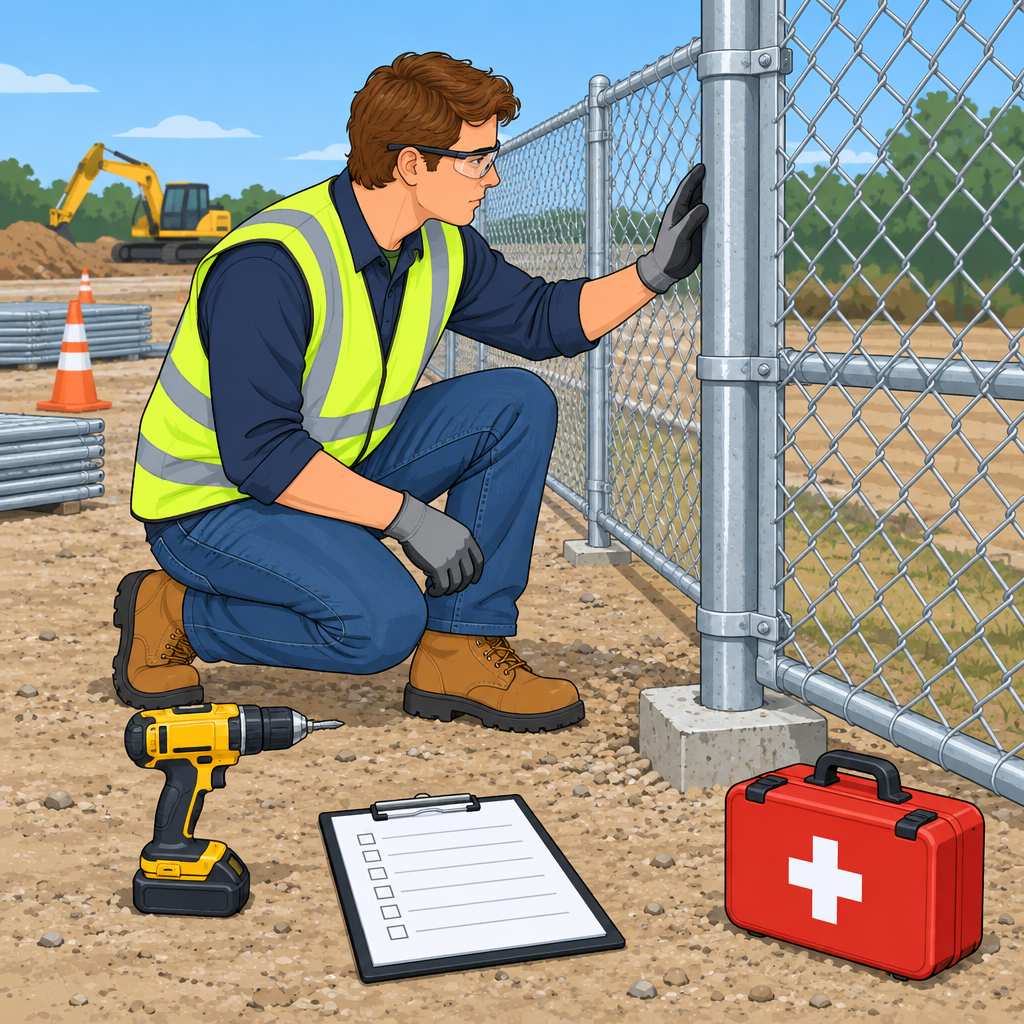
Proper PPE for Fence Erection
Personal protective equipment helps fence erectors control common injury risks during installation work.
Workers should wear suitable PPE whenever they enter or work on the job site.
Consistent PPE use supports safer handling of tools, materials, debris, and construction activities.
- Wear a hard hat to help protect against falling tools and materials.
- Use safety glasses to shield your eyes from dust and flying debris.
- Choose gloves to reduce cuts, punctures, and abrasions when handling sharp materials.
- Put on steel-toed boots to protect your feet from heavy objects and crushing hazards.
Hard hats reduce exposure to head injuries caused by objects falling from elevated areas.
Meanwhile, safety glasses help prevent eye injuries from particles released during fence construction.
Gloves provide a protective barrier while workers handle sharp fencing materials and tools.
Steel-toed boots help guard against foot injuries when heavy objects fall or shift.
Therefore, fence erectors should keep their required PPE on throughout every installation task.
Explore Further: Construction Manager's Checklist for Site Inspections
Safe Tool and Equipment Handling
Safe tool handling helps fence erectors reduce accidents and protect workers during daily tasks.
Therefore, crews should treat every tool and machine as a potential safety responsibility.
Consistent inspections, proper operation, and careful storage support safer work practices.
Safe Use of Hand Tools
Hand tools require attention because improper use can cause preventable injuries.
Before starting work, workers should inspect each tool and select suitable protective gear.
Additionally, workers should use every tool only for its intended purpose.
- Wear appropriate protective gear, including gloves and goggles, when using hand tools.
- Inspect each tool before use to confirm that it remains in good working condition.
- Use tools for their intended purposes and follow proper techniques to prevent accidents.
Safe Operation of Heavy Machinery
Heavy machinery demands specialized knowledge and careful attention from every operator.
Only trained and certified workers should operate forklifts, cranes, or similar equipment.
Furthermore, sober operators must follow established safety procedures whenever they use machinery.
- Operate heavy machinery only after receiving proper training and certification.
- Follow all safety procedures and guidelines when using forklifts, cranes, or other equipment.
- Never operate machinery while under the influence of drugs or alcohol.
Tool Maintenance and Storage
Regular maintenance keeps tools functional and supports reliable performance on the job.
Transform Your Career Today
Unlock a personalized career strategy that drives real results. Get tailored advice and a roadmap designed just for you.
Start NowWorkers should clean equipment regularly and store it where damage cannot easily occur.
They should also address damaged or worn tools before those tools return to service.
- Clean and maintain tools regularly to keep them functioning properly.
- Store tools in a dry, secure location to prevent damage and unauthorized use.
- Repair or replace damaged and worn tools immediately.
Following these practices helps fence erectors reduce equipment-related risks while completing their work.
Delve into the Subject: Landscape Architecture: Integrating Art and Nature
Securing the Work Area
Fence crews must secure the work area before beginning installation activities.
Barriers and signs can prevent unauthorized people from entering the job site.
Additionally, clear communication helps team members recognize potential hazards.
- Establish barriers around the active work area.
- Place signs where they can warn people about ongoing work.
- Control nearby traffic when roads or busy streets border the site.
- Keep team members informed about changing work conditions.
Traffic Control Near Roads
Jobs near roads require careful traffic control throughout the installation.
For example, crews can use cones, flaggers, or warning signs around the site.
These measures alert drivers and pedestrians to nearby fence work.
Communication During Fence Installation
Team members should communicate clearly about hazards and changing conditions.
Regular safety briefings can help workers identify and address safety concerns.
Moreover, simple verbal updates can help prevent accidents and injuries.
You Might Also Like: Effective Communication Skills for Maintenance Workers
Proper Lifting Techniques
Proper lifting techniques help fence erectors prevent strains and sprains.
The following practices support safer material handling.
Workers should use these methods whenever they lift or carry materials.
- Always bend at the knees when lifting heavy materials to engage your leg muscles.
- Avoid lifting with your back or twisting your body while carrying materials.
- Ask for help when a material feels too heavy or has an awkward shape.
These simple steps can support the safety and well-being of fence erectors on the job.
Delve into the Subject: How to Market Your Services as a Freelance Mover
Electrical Hazards Near Power Lines and Cables
Working near power lines or underground cables creates serious risks for fence erectors.
Fence erectors can suffer electrocution when they contact energized lines or cables.
High-voltage contact can cause severe injuries or death.
- Touching a live wire can cause a severe electric shock.
- Contact with underground cables can cause electrocution and serious injuries.
- Improper equipment handling near electrical sources can cause short circuits or electric shocks.
Identifying and Avoiding Electrical Hazards
Before starting any fencing job, workers should survey the area for overhead lines and buried cables.
Workers should mark electrical sources and maintain safe distances during installation.
When cable locations remain uncertain, workers should contact the local utility company for assistance.
- Always assume that every power line remains live.
- Keep tools, equipment, and workers away from electrical sources.
- Verify uncertain cable locations before beginning work.
Non-Conductive Tools and Protective Equipment
Non-conductive tools and equipment help reduce electric shock risks near electrical sources.
Fiberglass and wood can prevent electricity from flowing through tools.
Workers should wear insulated gloves, rubber boots, and safety helmets near electrical hazards.
These precautions provide additional protection against electric shocks and related injuries.
Following these practices helps fence erectors reduce electrical accidents and maintain a safer work environment.
Staying Hydrated and Taking Breaks
Staying hydrated and taking breaks helps fence erectors remain safe while working outdoors.
Hot weather can cause heat-related illnesses, so workers must prioritize their health and well-being.
Regular hydration and rest help workers manage demanding tasks more safely.
Importance of Staying Hydrated
- Drink plenty of water throughout the day to maintain hydration.
- Aim to drink at least 8-10 glasses of water daily.
- Choose water instead of sugary drinks when you need to quench your thirst.
- Dehydration can cause fatigue, dizziness, and heat exhaustion.
Tips for Staying Cool and Hydrated
- Wear lightweight, breathable clothing to help prevent overheating.
- Use a portable fan or misting bottle to cool yourself while working.
- Take frequent water breaks to replace fluids lost during work.
- Add electrolyte packets to water to replace lost minerals.
Listening to Your Body
- Watch for heat stress signs, including excessive sweating or lightheadedness.
- Take a break in the shade when fatigue or distress begins.
- Listen to your body and recognize when you need rest and hydration.
- Ignoring warning signs can cause serious health issues.
By drinking water and taking regular breaks, fence erectors can help prevent heat-related illnesses.
Prioritizing health and well-being supports safer workdays and successful fence installation.
Reporting Unsafe Conditions
Fence erectors must report unsafe conditions promptly.
They should communicate clearly with supervisors or managers about hazards and incidents.
Safety must remain the highest priority during every fence erection task.
- Follow the company’s procedures for reporting unsafe conditions.
- Identify hazards before they cause accidents or injuries.
- Raise concerns whenever unsafe practices appear on the job site.
Proper Reporting Procedures
Employers should explain reporting policies to every fence erector.
Training should show workers how to recognize and report unsafe situations.
Transform Your Career Today
Unlock a personalized career strategy that drives real results. Get tailored advice and a roadmap designed just for you.
Start NowWorkers must know whom to contact and how to document each incident accurately.
- Review company policies before beginning job-site activities.
- Record important details about each unsafe condition or incident.
- Notify the designated supervisor or manager without unnecessary delay.
Open Communication About Safety Concerns
Supervisors should create an environment where workers can speak openly.
Fence erectors should report hazards without fearing negative treatment.
Managers should listen carefully and address reported concerns promptly.
- Speak up when you observe hazards or unsafe practices.
- Share safety concerns with supervisors or managers immediately.
- Support coworkers who report unsafe conditions.
Safety as the Primary Responsibility
Every fence erector shares responsibility for maintaining a safe workplace.
Reporting hazards helps workers address problems before accidents occur.
Ignoring unsafe conditions can result in accidents, injuries, or fatalities.
- Protect yourself and your coworkers by reporting hazards.
- Choose safe actions instead of ignoring dangerous conditions.
- Maintain a proactive approach throughout every job-site activity.
Prompt reporting and open communication help create a safer work environment.
Safety Priorities for Fence Erectors
Safety remains paramount for fence erectors.
Always prioritize safety to prevent accidents and injuries.
By monitoring your surroundings and taking proactive steps, you can support a safe work environment for everyone.


