




Power Line Installation
Power line installation involves setting up electrical cables.
These cables transmit and distribute electricity efficiently.
Proper installation supports safety and optimal performance.
Planning the Installation
Careful planning establishes an efficient foundation for the power line installation.
First, review the site, secure approvals, and organize the installation activities.
These steps help the project team address obstacles before work begins.
- Conduct a site survey to assess the best route for the power lines.
- Obtain necessary permits and approvals from local authorities.
- Create a detailed plan outlining the placement of poles, conductors, and equipment.
Conducting a Site Survey
Before installation begins, conduct a thorough survey of the proposed route.
Assess the terrain, existing infrastructure, and environmental considerations during this review.
This assessment reveals obstacles and challenges that could affect the installation process.
Obtaining Necessary Permits and Approvals
After identifying the route, obtain the required permits and approvals from local authorities.
These approvals support regulatory compliance and help reduce potential legal issues.
Furthermore, cooperation with relevant authorities can help prevent unnecessary project delays.
Creating a Detailed Installation Plan
Once the survey and approvals are complete, prepare a detailed installation plan.
Specify the placement of poles, conductors, and equipment within the plan.
Also, sequence the tasks so the installation team can coordinate its work effectively.
A detailed plan helps identify risks and supports practical mitigation strategies.
It also helps the team maintain the project schedule throughout the installation.
Therefore, organized preparation supports a smoother and more efficient installation process.
Gathering Materials and Equipment
The installation requires several materials and pieces of equipment.
These resources support the installation process and promote safe work practices.
Workers should organize the materials before installation begins.
Required Installation Materials
The installation requires poles, wires, insulators, connectors, grounding rods, transformers, and protective gear.
- Wooden or steel poles
- Insulated wires
- Insulators
- Connectors
- Grounding rods
- Transformers
- Protective gear
Each material serves a specific purpose during the installation.
Equipment Inspection and Safety Standards
Inspect all equipment before starting the installation process.
Check every tool and material for damage or malfunctioning parts.
Confirm that all equipment meets safety regulations before use.
Installation Tools and Resource Organization
Organize the required tools in a designated area.
This arrangement keeps equipment accessible throughout the installation process.
Keep all resources within reach to streamline the work.
- Reel stands for wires
- Wire cutters
- Pliers
- Hammer
- Drill
- Ladders
- Safety harness
- First aid kit
- Installation manual
Uncover the Details: Essential Skills Needed for a Pipelayer Career
Setting Up the Work Area
- Workers should clear debris and obstructions before beginning power line installation.
- Next, workers should mark pole and support structure locations for proper alignment and stability.
- Finally, the installation team must protect workers and bystanders throughout the process.
Before installation begins, workers need a clear and clean work area.
Removing debris and obstacles makes the installation easier and safer for everyone involved.
Once workers clear the area, they can mark locations for poles and support structures.
Proper placement helps keep the power lines secure and stable.
Additionally, safety protocols and protective gear help reduce potential hazards.
Workers must remain vigilant while protecting bystanders during installation activities.
Explore Further: Lumberjack Techniques: Felling Trees Safely
Digging Holes and Setting Poles
Digging holes and setting poles requires precision and careful attention to detail.
This process establishes the stability and safety of the power line.
Therefore, workers must complete each task carefully and accurately.
Transform Your Career Today
Unlock a personalized career strategy that drives real results. Get tailored advice and a roadmap designed just for you.
Start Now- Use proper machinery to dig holes for the poles.
- Install poles securely, ensuring they remain straight and level.
- Add stabilizers or guy wires for support in high wind areas.
Using Appropriate Machinery
First, workers must use appropriate machinery to dig holes for the poles.
Terrain and soil conditions determine which machinery the task requires.
Common options include excavators, augers, and post hole diggers.
Installing Poles Securely
After workers dig the holes, they must install the poles securely.
They must position each pole correctly and keep it straight and level.
This approach helps prevent future leaning and instability.
Adding Stabilizers or Guy Wires
Areas with high winds or severe weather may require additional pole support.
Workers can add stabilizers or guy wires to reinforce the poles.
These supports help prevent poles from swaying or toppling during adverse weather.
See Related Content: How to Maintain Quality Standards as an Assembler
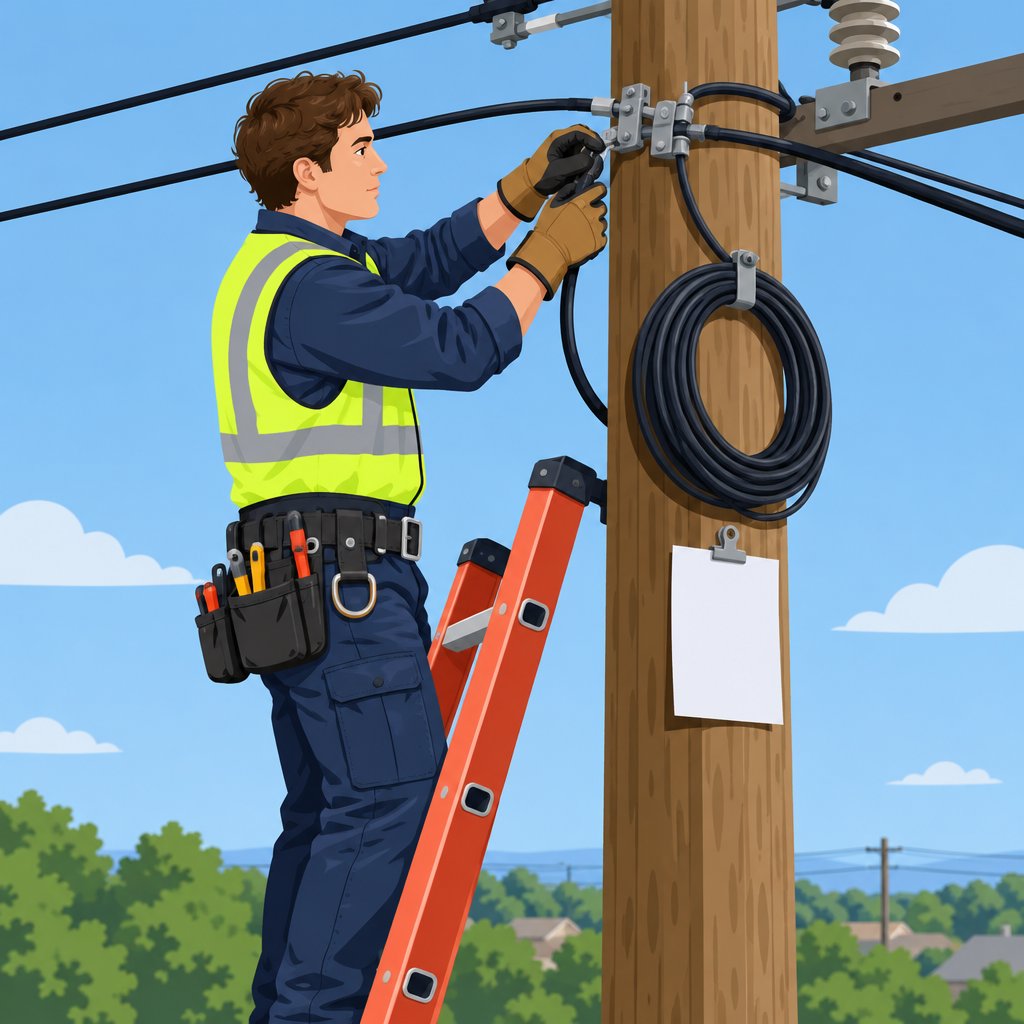
Installing Conductors and Insulators
- String power lines between poles using specialized equipment.
- Attach insulators to prevent electrical current from grounding out.
- Test line integrity and make necessary adjustments.
This step helps power lines transmit electricity without interruptions or safety hazards.
Proper conductor and insulator installation supports efficient power distribution.
Workers must follow established procedures and prioritize safety throughout the process.
Stringing Power Lines Between Poles
Specialized equipment helps workers string power lines between poles.
The equipment keeps the lines securely attached and properly aligned.
Workers must follow safety protocols during stringing to prevent accidents and injuries.
Attaching Insulators
Workers attach insulators after stringing the power lines between poles.
Insulators prevent electrical current from grounding out.
Porcelain and glass commonly provide the nonconductive materials used for insulators.
Testing Line Integrity
Workers test the power lines after installing the conductors and insulators.
They check for damage, wear, and faulty connections that could affect system performance.
Workers should make necessary adjustments promptly to maintain safe and efficient operation.
Following these procedures helps power lines operate efficiently and safely.
You Might Also Like: Day in the Life of a Waste Management Worker
Grounding and Bonding
Grounding and bonding support safety during power line installation.
Proper grounding dissipates excess electrical charge from the system.
Meanwhile, bonding connects metallic components to reduce electrical hazards.
Importance of Proper Grounding
Proper grounding provides a safe path for electrical current to enter the ground.
Without grounding, electrical charges can build up and create shock risks.
A reliable grounding system protects equipment and personnel working with the installation.
Grounding Installation Steps
First, determine the grounding method according to soil and environmental conditions.
Next, install grounding rods at designated locations around the installation site.
Finally, connect and test the grounding system to verify safe operation.
- Determine the appropriate grounding method based on soil and environmental conditions.
- Install grounding rods at designated locations around the installation site.
- Connect the grounding rods to the power line system using an appropriate conductor.
- Test the grounding system to confirm proper operation and safety compliance.
Importance of Bonding
Bonding connects metallic components so they share the same electrical potential.
This connection limits static electricity buildup within the power line system.
As a result, bonding reduces risks associated with arcing and fires.
Bonding Installation Steps
Use bonding jumpers to connect poles, transformers, and other metallic equipment.
Keep every bonding connection secure and free from corrosion.
Also, inspect and maintain these connections regularly to prevent failures.
- Use bonding jumpers to connect all metallic components of the system.
- Connect poles, transformers, and equipment through suitable bonding methods.
- Ensure that each bonding connection remains secure and free of corrosion.
- Follow electrical codes and regulations for proper bonding techniques.
- Inspect and maintain bonding connections regularly to prevent hazards or failures.
Following grounding and bonding requirements improves the safety and reliability of the power line system.
Transform Your Career Today
Unlock a personalized career strategy that drives real results. Get tailored advice and a roadmap designed just for you.
Start NowThese practices protect equipment and personnel during electrical installation work.
Therefore, workers should apply the required guidelines throughout the installation process.
Connecting the Power Source
After workers install the power lines, they connect the system to an energy source.
This connection may involve a transformer or generator.
Before energizing, technicians verify system performance and safety.
- Begin by connecting the power lines to the energy source.
- Maintain proper voltage levels and phase alignment during the connection process.
- Thoroughly test the system before energizing it.
Proper Equipment
Use appropriate tools and equipment during the connection process.
These resources help workers create safe and secure connections.
Additionally, suitable equipment supports accurate installation work.
Following Guidelines
Review the manufacturer’s instructions before connecting the power lines.
Those guidelines help workers prevent errors during installation.
Therefore, follow the specified connection procedures carefully.
Safety Precautions
Workers must take necessary safety precautions during the connection process.
Wear appropriate protective gear and follow established safety protocols.
These measures help prevent accidents near the energy source.
Afterward, check the voltage levels and phase alignment.
These checks help the system function correctly.
Testing before energizing can identify potential problems or malfunctions.
This testing helps prevent system damage.
Once testing verifies correct operation, workers can safely energize the power lines.
Energizing supplies electricity and allows the system to operate as intended.
Following these steps completes the connection process safely and efficiently.
Final Inspection and Maintenance
Final inspection confirms that the completed power line system operates properly.
Maintenance activities then preserve system efficiency and support reliable operation.
Therefore, technicians should inspect the installation before establishing a regular maintenance schedule.
- Conduct a thorough inspection of the entire installation.
- Address issues or deficiencies identified during the inspection.
- Implement regular maintenance to support system longevity and efficiency.
Thorough Inspection Procedures
Inspectors should examine every part of the completed power line installation.
They should check connections, verify grounding, and assess the overall workmanship.
This careful review helps identify conditions that could affect safe and efficient operation.
Correcting Installation Deficiencies
Technicians should correct every issue discovered during the final inspection.
They may tighten loose connections, replace damaged components, or adjust system elements.
Prompt corrections improve system efficiency and reduce the risk of future problems.
Regular Maintenance Activities
Operators should establish a maintenance schedule after completing the final inspection.
Routine inspections can reveal potential issues before they become more serious.
Cleaning components and testing the system also support dependable performance.
Benefits of Ongoing Maintenance
Regular maintenance helps prevent costly repairs and supports system safety.
It also helps maximize the useful life of the power lines.
Furthermore, proactive care reduces unexpected downtime and supports uninterrupted power supply.
Professional Maintenance Support
Some power line systems require assistance from experienced maintenance technicians.
Qualified technicians can perform detailed inspections and complete necessary repairs.
They can also provide guidance for improving system performance and maintenance practices.
Reliable Power Line Performance
Final inspections establish confidence in the installation’s condition and performance.
Transform Your Career Today
Unlock a personalized career strategy that drives real results. Get tailored advice and a roadmap designed just for you.
Start NowRegular maintenance preserves reliability while addressing developing concerns promptly.
By maintaining the system proactively, operators can support dependable power delivery over time.
Safe and Reliable Power Line Installation
Proper installation techniques ensure safe and functional power lines.
Additionally, installers must follow safety protocols and applicable regulations throughout the installation process.
Successful installations require careful planning, site preparation, and secured permits.
By following these guidelines, installation teams can support reliable and efficient power line performance.
Additional Resources
Bing search results for Power Line Installation: A Step-by-Step Guide Construction and Manual Labor


