




Climate Change and Mining Operations
Climate change refers to long-term changes in temperature, precipitation, and other atmospheric conditions.
These changes affect mining operations through environmental, operational, and regulatory pressures.
Mining companies must address these challenges while maintaining safe and efficient production.
Increased Operational Risks
Rising temperatures can melt ice caps and increase flooding risks near mining sites.
Furthermore, hurricanes can disrupt operations and damage essential infrastructure.
Droughts can also interrupt activities by reducing available water and affecting site conditions.
Resource Scarcity
Climate change can reduce access to essential resources required for mining operations.
In particular, high temperatures can create water shortages for mining activities.
Therefore, mining companies may seek alternative water sources or adopt different operating methods.
Regulatory Changes
Governments are introducing stricter environmental regulations to reduce greenhouse gas emissions.
These regulations also aim to protect natural resources from environmental damage.
Consequently, mining companies must comply with new requirements that can increase operational costs.
Shifting Mineral Demand
The transition toward a low-carbon economy is changing demand for certain minerals.
For example, renewable energy technologies may increase demand for lithium used in batteries.
This market shift can create new opportunities for some mining operations.
Technological Advancements
Mining companies are investing in technology to reduce climate-related impacts.
Autonomous vehicles can support more sustainable and resilient mining operations.
Additionally, renewable energy sources can help companies improve operational sustainability.
Building Resilient Mining Operations
Climate change creates significant challenges for mining operations.
However, these challenges can encourage innovation and support new growth opportunities.
By adopting sustainable practices and new technologies, mining companies can respond more effectively to changing conditions.
Overview of Mining Operations
Mining operations extract valuable minerals and geological materials from the Earth’s surface.
These activities support construction, manufacturing, energy production, and agriculture.
However, mining can cause deforestation, soil erosion, water contamination, and air pollution.
- Definition of mining operations
- Importance of mining across various industries
- Environmental impacts associated with mining operations
Climate Change and Mining Operations
Climate change affects mining operations through changing weather patterns and extreme temperatures.
Natural disasters can also disrupt activities and create additional operational challenges.
Consequently, mining companies must address environmental and operational pressures linked to a changing climate.
Extreme Weather Risks
Severe storms, hurricanes, floods, and droughts can interrupt mining activities.
These events can damage infrastructure and threaten worker safety.
Remote mining sites often face greater exposure because they occupy sensitive and isolated areas.
Water Availability for Mining
Mining processes require water for ore processing, dust suppression, and employee facilities.
Changing precipitation patterns can reduce the water available for these activities.
Water shortages may cause production delays, higher costs, and conflicts with local communities.
Energy Consumption and Transition
Climate change encourages mining companies to reduce energy-related emissions.
Companies may invest in solar, wind, and hydropower to diversify their energy sources.
However, renewable energy transitions can require substantial time and financial investment.
Supply Chain Disruptions
Extreme weather can damage transportation infrastructure and interrupt logistics networks.
Disruptions can delay essential equipment and material deliveries.
As a result, mining companies may experience higher costs, lower output, and reduced competitiveness.
Adaptation and Mitigation Strategies
Mining companies can invest in infrastructure designed to withstand climate-related hazards.
Transform Your Career Today
Unlock a personalized career strategy that drives real results. Get tailored advice and a roadmap designed just for you.
Start NowThey can also conserve water, improve energy efficiency, and diversify energy sources.
Emergency response plans can further strengthen operational resilience during disruptive events.
Building Resilient Mining Operations
Climate change is reshaping mining operations through weather, water, energy, and supply chain pressures.
Proactive planning can help companies manage these challenges more effectively.
By adopting practical solutions, mining companies can support more resilient and sustainable operations.
Effects of Climate Change on Mining Operations
Climate change significantly affects mining operations worldwide.
Extreme weather, shifting rainfall, and rising temperatures create new operational challenges.
Therefore, mining companies must strengthen their planning, infrastructure, and safety measures.
Extreme Weather Events Disrupt Mining Operations
Extreme weather events increasingly disrupt mining operations.
Hurricanes, floods, and wildfires can damage infrastructure and halt production.
For example, a hurricane can damage facilities, interrupt power, and create serious worker safety risks.
These effects can reduce production while threatening employee safety and wellbeing.
Consequently, mining companies must strengthen infrastructure and emergency response plans.
Changing Precipitation Patterns Reduce Water Reliability
Changing precipitation patterns also affect mining operations.
Less predictable rainfall makes it harder for companies to secure adequate water supplies.
Mining operations use water for dust suppression and mineral processing.
As rainfall shifts, companies may face production disruptions and higher water sourcing costs.
To improve reliability, mining companies use rainwater harvesting, recycling, and advanced treatment technologies.
Rising Temperatures Affect Workers and Equipment
Rising temperatures create additional risks for mining workers and equipment.
Heat increases the likelihood of exhaustion and heatstroke among employees.
These risks become especially serious in regions with hot mining environments.
High temperatures can also overheat equipment and trigger mechanical failures.
As a result, companies may experience maintenance problems, production delays, and higher operating costs.
Mining companies respond with heat stress programs, cooling stations, and hydration stations.
They also incorporate advanced cooling technologies to maintain equipment performance.
Building Resilient Mining Operations
Climate-related disruptions affect mining production, costs, water access, and worker safety.
Therefore, mining companies must adapt their infrastructure, resource management, and emergency procedures.
These measures can help companies maintain safer and more resilient operations under changing climate conditions.
See Related Content: Essential Skills for Construction Managers
Climate Change Impacts on Mining Operations
Climate change creates significant challenges for mining operations worldwide.
Mining companies face disruptions involving water availability, extreme weather, safety, and production.
The following examples show how these pressures affect companies and regions.
Mining Companies Facing Climate-Related Challenges
Several mining companies have encountered operational difficulties linked to changing climate conditions.
Water scarcity and extreme weather can interrupt production and increase operational pressures.
These examples demonstrate how climate conditions affect mining activities in different locations.
- Anglo American has struggled with water scarcity in regions such as South Africa, affecting its operations.
- Extreme weather events in Australia have disrupted Glencore’s coal mining activities and caused production delays.
- BHP Billiton has faced water shortages in Chile, affecting its copper mining operations.
Regions Experiencing Climate Pressures
Climate-related pressures affect mining regions across Latin America, Africa, and Australia.
Water scarcity creates challenges where mining operations depend on reliable supplies.
Droughts, bushfires, and extreme heat also create operational and worker safety concerns.
- Peru and Chile have experienced water scarcity that affects mining activities in Latin America.
- South Africa and other African countries have faced droughts that affect mining water supplies.
- Bushfires and extreme heat have disrupted Australian mining operations and created worker safety concerns.
Economic Consequences for the Mining Industry
Climate-related disruptions create economic consequences beyond immediate operational challenges.
Companies may experience lower production, higher costs, and uncertainty across commodity markets.
Transform Your Career Today
Unlock a personalized career strategy that drives real results. Get tailored advice and a roadmap designed just for you.
Start NowRegulatory responses can also increase compliance costs for mining companies.
- Climate-related challenges may decrease production and reduce company revenues.
- Mining companies may invest in technologies and strategies that increase operational costs.
- Climate disruptions can create market volatility and affect commodity prices.
- Stricter environmental regulations may increase compliance costs for mining companies.
Mining companies must adapt to these challenges to support sustainable operations in a changing climate.
See Related Content: Boilermaker Mentorship: Finding and Being a Mentor
Implementing Sustainable Mining Practices to Reduce Carbon Emissions
Mining companies can reduce carbon emissions by using energy-efficient equipment and vehicles.
These choices lower energy use during mining activities.
Therefore, companies can minimize emissions linked to their operations.
Investing in Renewable Energy Sources for Mining Operations
Mining companies can switch operations to renewable sources such as solar or wind power.
This transition can reduce greenhouse gas emissions from those operations.
Furthermore, renewable energy offers another energy option for mining activities.
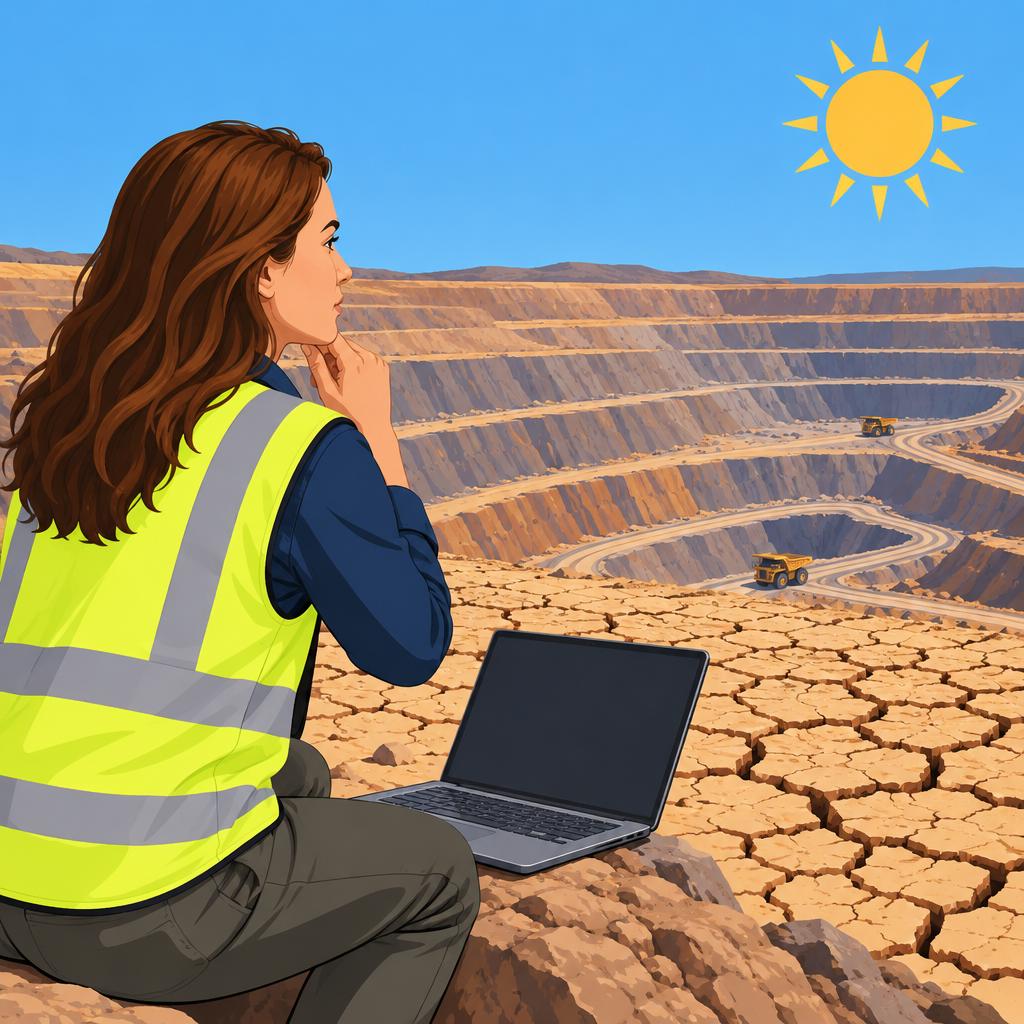
Strengthening Infrastructure Against Climate-Related Disasters
Mining companies can strengthen infrastructure against climate-related disasters.
They can invest in resilient structures for extreme weather events.
As a result, operations can better withstand climate-related hazards.
Adopting Waste Management Strategies to Reduce Environmental Impact
Mining companies can adopt waste management strategies to limit environmental impact.
Proper systems can reduce pollution from mining activities.
They can also minimize environmental degradation caused by those activities.
Using Water Conservation Techniques to Mitigate Water Scarcity
Mining operations can use water recycling and conservation techniques.
These practices reduce water use during mining activities.
They can also minimize impacts on local water sources.
Engaging Local Communities to Establish Sustainable Partnerships
Mining companies can engage local communities when developing sustainable partnerships.
This collaboration can support sustainable practices across mining activities.
It can also help companies address environmental concerns effectively.
Developing a Comprehensive Climate Change Adaptation Plan
Mining companies can develop comprehensive climate change adaptation plans.
Detailed plans can help them prepare for climate change impacts on operations.
They can also support efforts to mitigate those impacts.
See Related Content: Common Misconceptions About the Mining Profession
Partnerships Between Mining Companies and Environmental Organizations
Mining companies can partner with environmental organizations to strengthen sustainability efforts.
These partnerships can improve environmental performance across mining operations.
Environmental organizations can contribute expertise and innovative solutions.
- Joint initiatives can reduce carbon emissions, water usage, and waste generation.
- Partners can develop solutions that help mitigate environmental impacts.
- Collaboration creates opportunities for knowledge sharing and sustainable mining practices.
Sharing Best Practices and Resources Within the Industry
Mining companies can share best practices and resources to address climate change.
This collaboration helps the industry respond to environmental challenges.
Shared experience can guide more effective and efficient sustainability practices.
- Companies can learn from each other’s achievements and failures.
- Knowledge exchanges can encourage stronger sustainability practices across the industry.
- Companies can pool technology, equipment, and research to develop eco-friendly mining techniques.
Government Regulations Supporting Sustainable Mining Practices
Government regulations shape how mining companies address climate change.
They can establish emission limits, water policies, and waste management guidelines.
Compliance supports responsible mining and reduces environmental impacts.
- Regulations can define limits for emissions, water usage, and waste generation.
- Companies must follow these requirements to support responsible mining practices.
- Government incentives and penalties can encourage eco-friendly technologies and innovation.
Collaboration, shared practices, and regulations support sustainable mining.
Together, these approaches can help mining companies pursue a greener future.
Gain More Insights: Construction Manager's Guide to Green Building
Technological Innovations Supporting Sustainable Mining
Technological innovations help mining companies adapt to climate change challenges.
This section examines key advancements supporting sustainable mining practices.
These advancements address environmental impacts, resource use, and operational performance.
Transform Your Career Today
Unlock a personalized career strategy that drives real results. Get tailored advice and a roadmap designed just for you.
Start NowEnvironmentally Friendly Mining Technologies
Mining companies increasingly adopt environmentally friendly technologies.
Renewable energy sources, including solar and wind power, reduce carbon emissions.
Additionally, innovative water management systems optimize usage and minimize local water contamination.
Data Analytics for Resource Management
Data analytics helps mining companies manage resources and reduce waste.
Companies analyze ore quality, processing efficiency, and energy consumption to identify optimization opportunities.
Consequently, informed decisions minimize waste, reduce environmental footprints, and improve cost-effectiveness.
Autonomous Equipment for Efficiency and Safety
Autonomous equipment, including trucks, drills, and excavators, increasingly supports modern mining operations.
Advanced sensors and artificial intelligence algorithms let these machines operate without human intervention.
By removing operators from hazardous environments, autonomous equipment improves workplace safety.
Furthermore, these machines operate continuously, which improves mining productivity and efficiency.
Integrating climate change adaptation strategies can benefit mining operations.
These strategies can support industry success and sustainability.
Their value extends across stakeholder relations, operating costs, and long-term resilience.
Improved Corporate Reputation and Stakeholder Relations
- Mining companies can enhance their reputation by actively addressing climate change concerns.
- Investors, regulators, and local communities increasingly value companies that demonstrate environmental responsibility.
- This stronger reputation can improve investor confidence, regulatory relationships, and community support.
Cost Savings Through Energy Efficiency and Waste Reduction
- Climate adaptation strategies often improve energy efficiency and reduce waste throughout mining operations.
- These measures can lower costs because companies consume fewer energy resources.
- Waste reduction can lower disposal costs and create revenue through recycling or material reuse.
Long-Term Sustainability of Mining Operations
- Climate change creates challenges such as extreme weather events and water scarcity for mining operations.
- Adaptation strategies help companies prepare for these challenges and sustain operations over time.
- Sustainable practices can reduce climate risks and strengthen the resilience of mining operations.
Strategic Value for Mining Operations
Mining companies can strengthen continued success by integrating climate change adaptation strategies.
These efforts can improve reputation, reduce costs, and support long-term operational sustainability.
Therefore, mining stakeholders should prioritize adaptation to help secure a sustainable future for the industry.
Climate Change Resilience in Mining Operations
The impact of climate change on mining operations remains undeniable.
Extreme weather events, water scarcity, and regulatory changes can create significant challenges for the industry.
Therefore, the industry must address these issues urgently to sustain resilient mining operations.
Mining companies should prioritize sustainability practices and invest in innovative solutions.
These actions can help them mitigate climate-related challenges and adapt to changing conditions.


