




Communication Skills for Janitorial Work
Effective communication skills help janitors and custodians perform their duties efficiently.
These workers maintain cleanliness and order across many facilities.
They ensure buildings remain clean, sanitized, and presentable for occupants and visitors.
Furthermore, clear communication helps them coordinate with other staff members.
It also helps them prioritize tasks and address emerging issues.
Supervisors can use clear communication to explain responsibilities and provide feedback.
Meanwhile, workers can follow safety protocols more effectively when instructions remain clear.
Good communication also supports professional interactions with supervisors, customers, and team members.
Because janitors and custodians often work different shifts, they must share information effectively.
They also follow specific cleaning routines during their assigned shifts.
Consequently, timely communication helps them complete tasks on schedule.
It supports quality standards and encourages prompt responses during emergencies.
Additionally, open communication helps coworkers build strong working relationships.
These relationships foster teamwork and improve overall productivity.
When everyone communicates openly, the work environment becomes more efficient and enjoyable.
Understanding the Importance of Communication Skills
Effective communication skills help janitors and custodians perform their duties successfully.
Clear instructions ensure that workers understand their assigned tasks properly.
Furthermore, communication helps workers resolve issues quickly and efficiently.
- Clear instructions help janitors understand their tasks properly.
- Communication helps workers resolve issues quickly and efficiently.
- Effective communication fosters positive relationships among team members.
Moreover, good communication can improve teamwork, productivity, and job satisfaction.
Clear communication promotes collaboration among janitors and custodians.
Consequently, shared understanding helps workers complete tasks more efficiently.
Finally, proper communication can increase job satisfaction by reducing misunderstandings.
- Clear communication promotes collaboration among janitors and custodians.
- Shared understanding helps workers complete tasks more efficiently.
- Proper communication can increase job satisfaction by reducing misunderstandings.
Active Listening in Janitorial Work
Active listening helps janitors and custodians understand supervisors, colleagues, and clients more accurately.
Careful attention improves understanding of instructions, feedback, and requests.
Consequently, workers can respond appropriately and support customer satisfaction.
- Maintain eye contact: Look at the speaker to show attention and engagement.
- Avoid distractions: Set aside phones and other devices while someone speaks.
- Ask clarifying questions: Request more information when instructions or requests seem unclear.
- Paraphrase: Restate the message in your own words to confirm your understanding.
- Provide feedback: Nod or say, “I understand,” to show that you followed the conversation.
These habits help workers receive directions and feedback more effectively.
They also help janitors and custodians build stronger relationships with team members and clients.
Over time, active listening can support greater job satisfaction and productivity.
See Related Content: The Importance of Roof Ventilation and Insulation
Utilizing Nonverbal Communication
Nonverbal communication plays a crucial role in janitors’ and custodians’ workplace interactions.
It conveys professionalism, respect, and understanding without requiring spoken words.
Additionally, effective nonverbal cues can support positive workplace relationships.
Significance of Body Language, Facial Expressions, and Gestures
- Body language reveals confidence, attentiveness, and approachability through movements and posture.
- However, slouching or avoided eye contact may suggest disinterest.
- Facial expressions also influence the atmosphere during workplace conversations.
- A genuine smile can create positivity and demonstrate friendliness.
- Conversely, frowning or scowling may communicate unhappiness or displeasure.
- Hand gestures can emphasize ideas or communicate emotions during interactions.
- Nevertheless, excessive or inappropriate gestures may distract from the message.
Effective Nonverbal Cues for Janitors and Custodians
- Maintain good posture to appear confident and attentive during conversations.
- Make eye contact to convey sincerity and demonstrate active listening.
- Smile genuinely to build rapport and create a welcoming atmosphere.
- Use open hand gestures instead of defensive, closed-off movements.
- Match facial expressions to the conversation’s tone and emotional context.
- Respect personal space boundaries to help others feel comfortable.
- Observe others’ nonverbal cues to better understand their feelings or intentions.
By using nonverbal communication effectively, janitors and custodians can improve interactions with colleagues, supervisors, and building occupants.
This approach can support a positive work environment and strengthen workplace relationships.
Learn More: Training and Development for Construction Managers
Enhancing Written Communication
- Clear and concise writing strengthens notes, reports, and emails.
- Janitors and custodians should proofread their messages and use professional language.
- Use bullet points to organize information and improve readability.
- Also, avoid slang or jargon that some readers may not understand.
- When sending emails, include clear subject lines and appropriate greetings.
Improving Written Communication Skills
- Review and edit every message before sending it.
- Use spelling and grammar tools to identify writing errors.
- Additionally, ask colleagues or supervisors for feedback on your writing.
- Read professional publications or articles to expand your vocabulary and writing style.
- Practice regularly by writing reports, memos, or emails.
Discover More: Training Programs for Aspiring Agricultural Workers
Building Rapport with Colleagues and Clients
Positive relationships help janitors and custodians improve teamwork and morale.
These relationships also support respectful interactions with colleagues, supervisors, and clients.
Consequently, a positive workplace can improve everyone’s daily work experience.
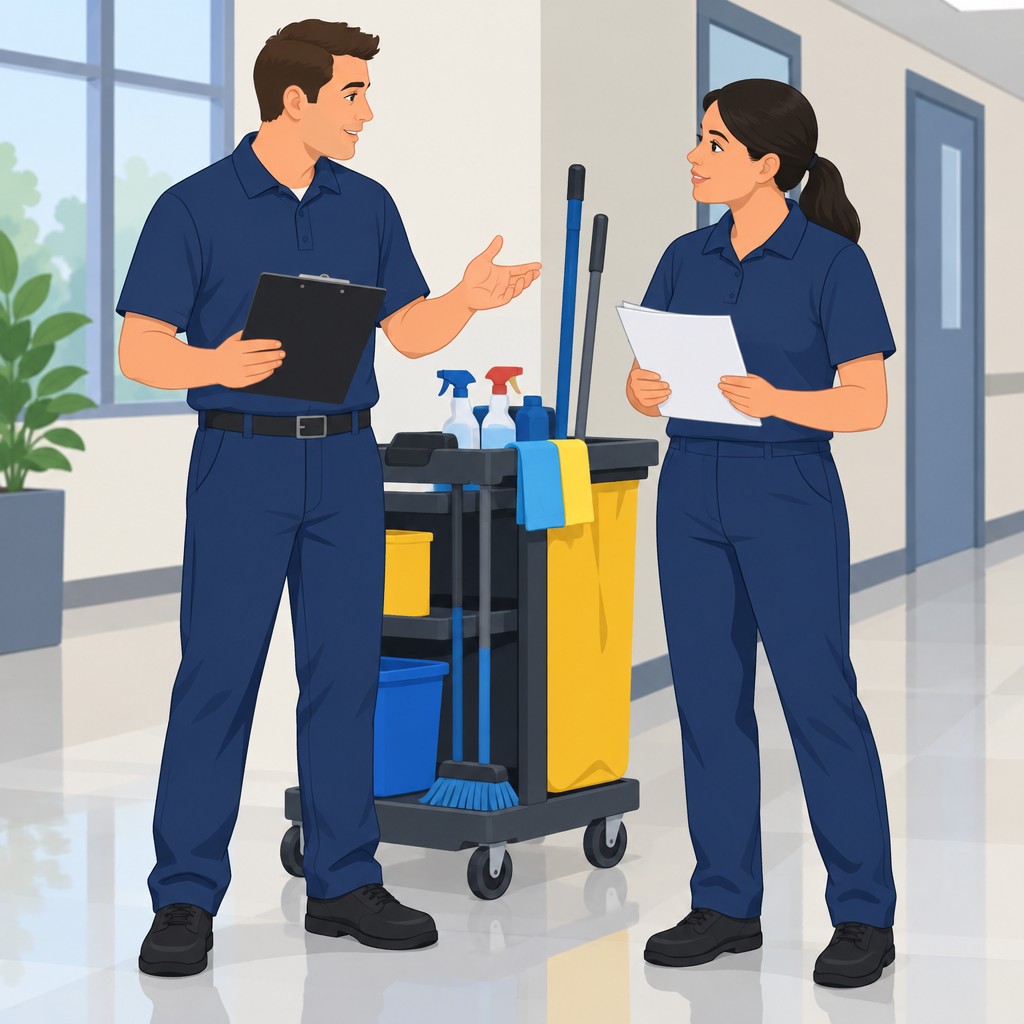
Benefits of Positive Workplace Relationships
Positive workplace relationships can increase job satisfaction and strengthen team morale.
Transform Your Career Today
Unlock a personalized career strategy that drives real results. Get tailored advice and a roadmap designed just for you.
Start NowThese connections encourage cooperation and help colleagues work together more effectively.
As a result, trust and respect can grow among workers and supervisors.
- Boosts morale and job satisfaction.
- Enhances teamwork and collaboration.
- Increases trust and respect among colleagues and supervisors.
- Creates a positive work environment.
Strategies for Building Rapport
Begin interactions with friendly greetings to create a welcoming atmosphere.
Additionally, respond thoughtfully to requests and remain open to feedback.
Finally, show appreciation and offer support when colleagues or clients need assistance.
- Start with friendly greetings.
- Engage in open communication.
- Respond to team members’ and clients’ needs.
- Show appreciation for colleagues and supervisors.
- Offer help and support when needed.
- Participate in team-building activities.
- Seek feedback and listen to suggestions.
- Respect different opinions and perspectives.
- Stay positive and approachable during challenging situations.
Using these strategies helps janitors and custodians cultivate stronger relationships at work.
Learn More: Importance of Ongoing Training for Maintenance Workers
Difficult conversations are inevitable when janitors and custodians handle workplace concerns.
These tips help workers navigate challenging situations with confidence and respect.
Addressing Workplace Conflicts and Complaints
- Address concerns promptly to prevent further escalation.
- Listen carefully without interrupting the person who raises the concern.
- Acknowledge the feelings and emotions behind the person’s grievance.
- Focus on collaboration instead of taking the situation personally.
- Communicate clearly and directly while avoiding vague statements.
Approaching Difficult Conversations with Empathy
- Consider the other person’s perspective before responding.
- Remain calm and composed during emotional outbursts.
- Allow the person enough time to express the concern fully.
- Ask clarifying questions to understand the issue accurately.
- Propose solutions that benefit everyone and remain practical over time.
These approaches help janitors and custodians manage difficult conversations effectively.
They also encourage better communication and stronger workplace relationships.
Seeking Feedback and Continuous Improvement
Feedback provides valuable insights that help janitors and custodians strengthen their communication skills.
Supervisors, colleagues, and clients can offer useful perspectives on communication strengths and improvement areas.
These perspectives may come through evaluations, written comments, or casual workplace conversations.
Workers should welcome feedback with open minds and a willingness to learn.
Instead of taking criticism personally, they should view it as an opportunity for professional growth.
Reflecting on feedback helps workers understand how others perceive their communication styles.
This awareness allows janitors and custodians to make meaningful improvements.
After reviewing feedback, workers should take practical steps to address identified weaknesses.
For example, they can pursue workshops, seminars, or online courses focused on workplace communication.
These resources can provide strategies for communicating more effectively in daily interactions.
Regularly requesting feedback also supports continued development because communication skills require ongoing practice.
By seeking varied perspectives, janitors and custodians can target improvements more accurately.
This proactive approach strengthens current performance and supports future professional opportunities.
Communication Skills and Career Success
Effective communication skills help janitors and custodians maintain smooth operations.
They help workers understand instructions, convey feedback, build relationships, and resolve conflicts efficiently.
By listening actively, using clear language, and requesting clarification, janitors and custodians can avoid misunderstandings.
Moreover, effective communication improves job performance, increases productivity, and supports a positive work environment.
Therefore, honing communication skills helps janitors and custodians excel in their roles and advance their careers.
Communication remains essential in every aspect of janitorial and custodial work.
Continue practicing communication abilities to strengthen daily interactions and job performance.


