




Importance of Building a Strong Construction Team
Building a strong construction team is crucial for the success of any project.
Without a cohesive and skilled team, projects face risks like delays and budget overruns.
Skilled and experienced individuals committed to quality work form the backbone of the team.
Team members must communicate effectively and collaborate efficiently to solve problems.
Key Roles Within a Construction Team
A project manager oversees the entire project to ensure timely and budget-conscious completion.
Project managers delegate tasks, communicate goals clearly, and motivate team members.
The site supervisor handles daily operations on the job site with attention to detail.
Site supervisors remain organized and solve problems quickly to keep projects on track.
Essential Skilled Tradespeople in Construction
Carpenters, electricians, and plumbers bring specialized skills to the construction team.
These tradespeople ensure all work meets industry standards and quality requirements.
Benefits of Assembling a Skilled Construction Team
A strong team helps complete projects efficiently and safely.
Working well together allows teams to meet high-quality standards consistently.
Define roles and responsibilities
- Clearly outline the roles and responsibilities of each team member.
- Emphasize the importance of clear communication and understanding of individual roles.
Building a strong construction team requires a clear definition of roles and responsibilities.
Each team member must understand what is expected of them.
This understanding helps to ensure the project’s success.
Let’s delve into the importance of defining roles and responsibilities in construction teams.
Benefits of defining roles and responsibilities
- Improved productivity: When team members know their roles, they can focus on their tasks efficiently without duplication of efforts.
- Enhanced collaboration: Clear roles reduce conflict and promote effective communication among team members.
- Accountability: Assigning specific responsibilities helps in holding team members accountable for their actions.
- Efficient problem-solving: With defined roles, team members can address issues in their area of expertise promptly.
Importance of clear communication in defining roles
Effective communication is paramount to ensure team members understand their roles and responsibilities.
Here are some key points to emphasize.
- Regular team meetings: Schedule meetings to discuss roles, address concerns, and ensure alignment on project goals.
- Open-door policy: Encourage team members to communicate openly about challenges and seek help when needed.
- Document roles: Provide written guidelines on each team member’s responsibilities to avoid confusion or misunderstandings.
- Training and development: Offer training sessions to enhance team members’ knowledge and skills in their respective roles.
Effective management of expectations in construction teams
Setting clear expectations is essential for building strong construction teams.
Here is how to manage expectations effectively.
- Define project scope: Clearly outline the project scope, timelines, and deliverables to avoid scope creep.
- Establish performance metrics: Set measurable goals to track progress and evaluate team performance effectively.
- Feedback and recognition: Provide feedback to team members regularly and recognize their contributions to boost morale.
- Adjust roles if necessary: Be flexible in adjusting roles based on project requirements and individual strengths.
Significance of clearly defined roles on project success
Clearly outlining each team member’s role promotes accountability and reduces confusion.
Open communication channels foster collaboration throughout the project.
Managing expectations effectively helps avoid misunderstandings and delays.
Ultimately, a well-defined team leads to a productive and successful construction project.
Building Strong Construction Teams
Building a strong construction team is vital for the success of any project.
A cohesive and collaborative team can achieve great things together.
Here are some key tips to foster a positive team culture:
Fostering a Positive Team Culture
- Encourage teamwork and collaboration among team members.
- Promote a positive work environment that fosters trust and mutual respect.
Creating a positive team culture starts with strong leadership.
Leaders should set the tone for the team by demonstrating the values of teamwork, collaboration, and respect.
By leading by example, leaders can inspire team members to work together towards a common goal.
Team building activities can also help foster a positive team culture.
These activities provide opportunities for team members to get to know each other on a personal level, build trust, and develop stronger working relationships.
Whether it is a team lunch, a group outing, or a fun team-building exercise, these activities can help strengthen bonds and improve communication among team members.
Encouraging Teamwork and Collaboration
Encouraging teamwork and collaboration is essential for building a strong construction team.
When team members work together towards a common goal, they can leverage each other’s strengths and compensate for each other’s weaknesses.
Collaboration also promotes innovation and creativity, as team members can brainstorm ideas and solutions together.
Effective communication is key to fostering teamwork and collaboration.
Team members should be encouraged to share information, ideas, and feedback openly and honestly.
Clear communication helps prevent misunderstandings and ensures that everyone is on the same page.
Encourage regular team meetings, check-ins, and project updates to keep everyone informed and engaged.
Transform Your Career Today
Unlock a personalized career strategy that drives real results. Get tailored advice and a roadmap designed just for you.
Start NowRecognizing and celebrating team achievements is also important for promoting teamwork and collaboration.
When team members feel appreciated and valued for their contributions, they are more likely to work together effectively.
Recognize individual and team accomplishments, whether it is meeting project deadlines, exceeding client expectations, or overcoming challenges as a team.
Promoting a Positive Work Environment
Creating a positive work environment is essential for building a strong construction team.
A positive work environment fosters trust, respect, and a sense of belonging among team members.
When team members feel valued and supported, they are more motivated and engaged in their work.
Encourage open communication and feedback in the workplace.
Team members should feel comfortable sharing their thoughts, concerns, and ideas with each other and with leadership.
Create a safe space for dialogue, where everyone’s opinions are heard and respected.
Address any conflicts or issues promptly and constructively to maintain a positive work environment.
Provide opportunities for professional development and growth.
Invest in training programs, workshops, and mentoring opportunities to help team members enhance their skills and knowledge.
By supporting their professional growth, you show your team that you value their development and are committed to helping them succeed.
Building a strong construction team requires fostering a positive team culture, encouraging teamwork and collaboration, and promoting a positive work environment.
By following these key tips, you can create a cohesive and high-performing team capable of overcoming challenges and achieving success.
Uncover the Details: Key Skills Every Successful Fence Erector Should Master
Provide training and development opportunities
- Invest in training and development programs to enhance team members’ skills.
- Offer opportunities for continuous learning to keep the team up-to-date with industry trends.
Invest in training and development programs
Building a strong construction team requires investing in training and development programs.
These programs help team members enhance their skills.
The training also keeps them updated with the latest industry trends.
Additionally, it improves their overall performance.
Providing learning and growth opportunities empowers your team.
As a result, they are better prepared to take on new challenges and excel in their roles.
Benefits of training and development
- Training programs improve skillsets by developing new and enhancing existing skills.
- Well-trained team members tend to be more productive and efficient, leading to better project outcomes.
- Investing in development shows you value your team’s growth, boosting morale and motivation.
- Keeping your team up-to-date with industry trends helps your company remain competitive.
- Providing growth and learning opportunities increases employee satisfaction and reduces turnover.
Effective steps for implementing training and development programs
- Assess the specific skills and knowledge gaps within your team to identify training needs.
- Design tailored training sessions relevant to the roles and responsibilities of your team.
- Provide resources such as online courses, workshops, seminars, and learning materials to support development.
- Foster a culture that values learning and encourages participation in training opportunities.
- Regularly monitor training impact and adjust programs based on team performance and feedback.
Investing in training and development opportunities is essential for building a capable construction team.
Empowered team members who improve their skills and stay informed boost productivity, morale, and competitiveness.
Tailored training programs and continuous learning help your team reach their full potential and succeed in the construction industry.
Explore Further: Day in the Life of a Glazier: Duties and Responsibilities
Set clear goals and expectations:
-
Establish clear project goals and expectations for the team.
It is crucial to define the overarching goals of the construction project. These goals align the team’s efforts towards a common objective.
-
Ensure that every team member understands the project objectives and their individual targets.
Clearly communicate the specific roles, responsibilities, and expectations. This promotes accountability and clarity for each team member.
Foster open communication and collaboration:
-
Promote a culture of open communication within the team.
Encourage team members to share ideas, feedback, and concerns. This fosters collaboration and effective problem-solving.
-
Utilize tools and technology to enhance communication.
Implement project management software or communication platforms. These streamline information sharing and decision-making processes.
Encourage teamwork and mutual respect:
-
Emphasize the importance of teamwork in achieving project success.
Foster a collaborative environment where team members support each other. This helps overcome challenges together.
-
Promote mutual respect and appreciation among team members.
Recognize and celebrate each member’s contributions. This fosters a sense of belonging and motivation within the team.
Provide opportunities for training and development:
-
Offer training programs to enhance the team’s skills and knowledge.
Invest in continuous learning opportunities. This keeps the team updated with the latest industry trends and best practices.
-
Encourage professional growth and career development.
Provide avenues for team members to advance their careers. Mentorship or certification programs help achieve this within the construction industry.
Recognize and reward team achievements:
-
Celebrate milestones and project successes as a team.
Acknowledge the collective efforts and accomplishments. This boosts morale and motivation across the team.
-
Provide individual recognition and incentives for outstanding performance.
Reward top performers with bonuses, promotions, or other recognition. This demonstrates appreciation and encourages continued excellence.
Address conflicts and challenges proactively:
-
Identify and resolve conflicts within the team promptly.
Encourage open dialogue and mediation. This helps address disagreements or issues during the construction process.
-
Implement strategies to overcome challenges and obstacles.
Collaborate with the team to develop solutions. Overcoming project obstacles ensures timely delivery and quality work.
Evaluate team performance and seek feedback:
-
Conduct regular performance reviews to assess the team’s progress.
Analyze key metrics such as productivity, quality, and efficiency. This identifies areas for improvement and recognizes achievements.
-
Solicit feedback from team members to gather insights and suggestions.
Encourage open and honest feedback to understand perspectives. Implement changes to enhance collaboration and productivity.
See Related Content: Sheet Metal Worker Career: Roles and Responsibilities
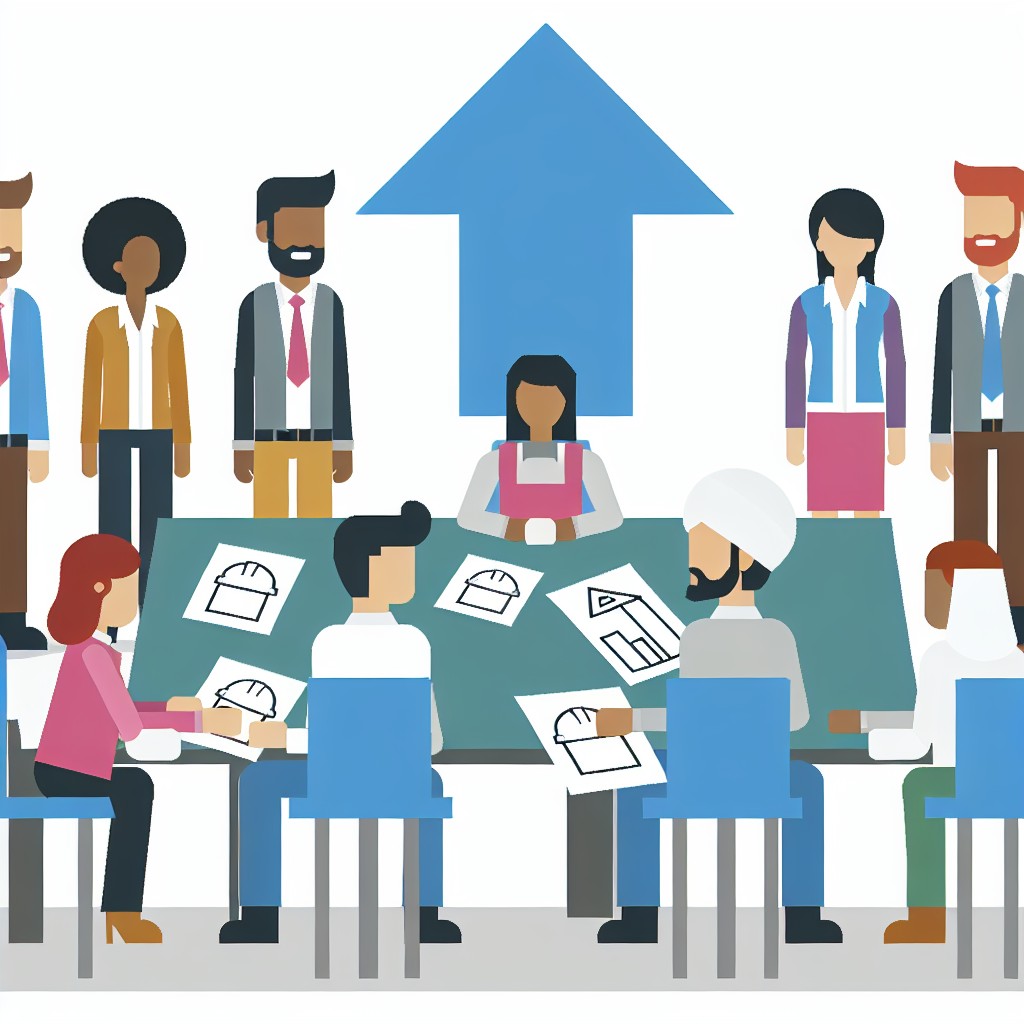
Building strong construction teams requires a foundation of open communication.
Encourage open communication
- Foster a culture of open communication where team members feel comfortable sharing ideas and concerns.
- Implement regular check-ins and feedback sessions to address any issues that may arise.
By encouraging open communication, teams can work together more effectively towards a common goal.
Benefits of open communication in construction teams
- Improved collaboration and teamwork
- Increased efficiency in project completion
- Enhanced problem-solving capabilities
When team members feel heard and valued, they are more likely to contribute their best work.
Effective communication strategies for construction teams
- Hold regular team meetings to discuss project progress and any challenges faced.
- Utilize project management tools for real-time updates and information sharing.
- Encourage face-to-face communication whenever possible to build stronger relationships.
It is important for team leaders to set the tone for open communication within the group.
Key roles leaders play in fostering open communication
- Lead by example by being open and transparent in their communication.
- Listen actively to team members’ input and feedback without judgment.
- Provide regular opportunities for team members to share their thoughts and ideas.
When team members feel their voices are heard, they are more likely to be engaged and motivated.
Challenges in maintaining open communication
- Language barriers in multicultural teams may hinder effective communication.
- Conflicting personalities or communication styles among team members.
- Time constraints and tight project deadlines that limit communication opportunities.
Despite these challenges, it is essential to prioritize open communication within construction teams.
Transform Your Career Today
Unlock a personalized career strategy that drives real results. Get tailored advice and a roadmap designed just for you.
Start NowStrategies to overcome communication barriers
- Provide language training for team members to improve cross-cultural communication.
- Implement conflict resolution strategies to address interpersonal communication issues.
- Set aside dedicated time for effective communication, even during busy project phases.
Building strong construction teams starts with establishing a culture of open communication that fosters collaboration and success.
Delve into the Subject: Eco-Friendly Cleaning Products for Janitors
When it comes to building strong construction teams, one of the key aspects to focus on is resolving conflicts effectively.
Conflict resolution is essential for maintaining a positive and productive work environment within the team.
Strategies for Resolving Conflicts Within a Construction Team
Here are some strategies that can help in resolving conflicts within the construction team.
- Establish clear communication channels: Ensure that there are open lines of communication among team members to address any conflicts that may arise.
- Define roles and responsibilities: Clearly define roles and responsibilities for each team member to avoid misunderstandings that can lead to conflicts.
- Encourage teamwork: Foster a collaborative environment where team members work together towards common goals, reducing the likelihood of conflicts.
- Provide training on conflict resolution: Offer training and resources to help team members develop the skills needed to effectively resolve conflicts.
- Set clear expectations: Make sure that expectations are clearly communicated to all team members to avoid confusion and potential conflicts.
Fostering Open and Honest Discussions to Address Conflicts Timely
It is crucial to create a culture where team members feel comfortable discussing issues openly and honestly to address conflicts promptly.
Here are some tips on how to encourage open and honest discussions.
- Lead by example: As a leader, demonstrate transparency and openness in your communication with team members to encourage them to do the same.
- Listen actively: Actively listen to what team members have to say during discussions and encourage them to express their thoughts and feelings openly.
- Respect diverse perspectives: Acknowledge that team members may have different viewpoints and respect their opinions, even if you do not agree with them.
- Focus on solutions: Encourage team members to focus on finding solutions rather than dwelling on the problems or assigning blame.
- Follow up: After a conflict has been resolved, follow up with team members to ensure that the issue has been adequately addressed and that everyone is on the same page moving forward.
By implementing these strategies and fostering a culture of open communication and honesty, construction teams can effectively resolve conflicts.
Teams can work together cohesively towards successful project outcomes.
Building Effective Communication and Trust within Construction Teams
Building a strong construction team involves effective communication.
Trust and collaboration among team members strengthens the group dynamic.
Recognition of individual strengths contributes to project success.
Each team member’s skills add value to the construction process.
Regular team meetings help address challenges promptly.
Feedback sessions improve team dynamics effectively.
Investing in team building activities enhances teamwork.
Training programs increase productivity on the construction site.
A strong construction team lays a foundation for successful project completion.
Benefits of Developing a Cohesive Construction Team
Building a strong team creates a cohesive work environment.
Enhanced communication leads to a smoother workflow.
Smoother workflows help minimize costly errors.
Team members who trust each other show higher productivity.
Supportive teams stay motivated and deliver quality results.
A strong team adapts quickly to tight deadlines and challenges.
Effective handling of changes improves project outcomes.
The success of a construction project depends on team strength and unity.
Additional Resources
Block Companies: Multifamily Housing Contractor and Developer …


