




Construction Management Skills
Construction managers oversee projects and guide teams toward successful completion.
They use essential skills to navigate challenges throughout the construction process.
These capabilities support project goals, efficient work, and positive professional relationships.
Leadership
Effective construction managers inspire their teams to pursue project goals.
They motivate team members while maintaining clear expectations.
Strong leadership helps teams work together efficiently.
Time Management
Construction managers coordinate timelines and deadlines throughout each project.
Careful scheduling helps keep work on track.
Additionally, effective time management supports budget control.
Communication
Clear communication strengthens relationships with clients, team members, and stakeholders.
Managers share information concisely to support coordinated project work.
As a result, consistent communication helps maintain professional relationships.
Problem-Solving
Construction projects can encounter unforeseen challenges during execution.
Construction managers assess problems and identify practical solutions quickly.
This skill helps teams continue working toward project goals.
Financial Management
Managers oversee budgets, costs, and financial reports during projects.
They use financial information to support informed project decisions.
Consequently, financial knowledge contributes to successful project completion.
Technical Knowledge
Construction managers need a strong understanding of construction methods and materials.
They also apply knowledge of construction techniques when making decisions.
This technical foundation supports informed choices throughout project work.
Risk Management
Managers identify potential risks before those risks affect project progress.
They implement strategies that reduce the impact of identified risks.
Therefore, risk management supports successful project delivery.
Team Building
Construction managers build cohesive teams around shared project goals.
They encourage efficient cooperation among team members.
In turn, strong teams can maximize productivity during project work.
Adaptability
Construction projects can change as work progresses.
Adaptable managers respond effectively to changing circumstances.
This flexibility helps them continue pursuing project success.
Client Management
Construction managers build and maintain relationships with clients.
They support positive interactions throughout the project process.
Furthermore, strong client relationships can support future project opportunities.
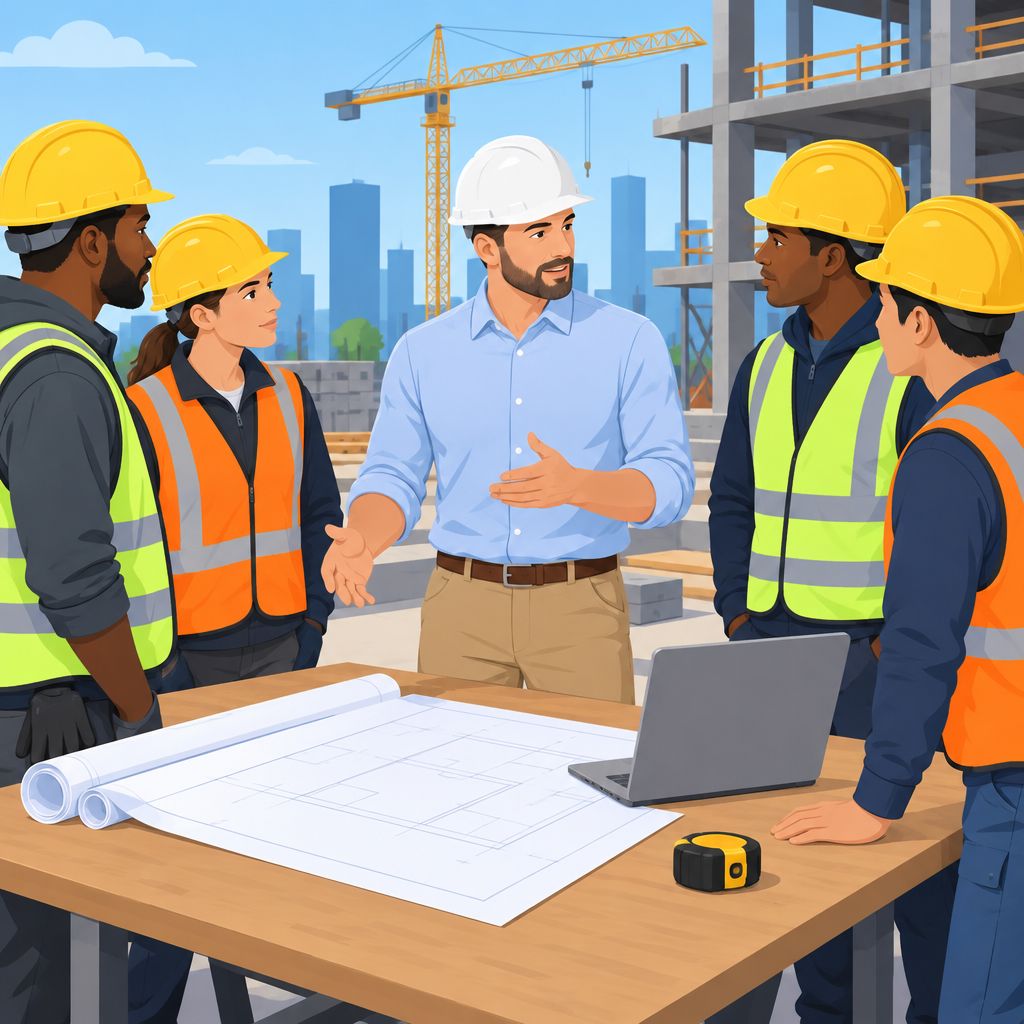
Communication Skills in Construction Management
Communication skills help construction managers collaborate effectively with clients, team members, and contractors.
They support successful project delivery and help stakeholders understand shared expectations.
Clear communication also helps managers coordinate tasks, address concerns, and maintain productive working relationships.
Clear and Effective Communication
Clear communication helps managers build strong relationships with clients and other project stakeholders.
Managers clarify project requirements so every participant understands the expected work.
They also resolve issues efficiently and keep stakeholders informed about project developments.
- Build strong relationships with clients
- Ensure stakeholders understand project requirements
- Resolve issues and conflicts efficiently
- Keep stakeholders informed and updated
Accurate Expectations, Feedback, and Information
Managers set clear project goals and objectives to guide team performance.
Transform Your Career Today
Unlock a personalized career strategy that drives real results. Get tailored advice and a roadmap designed just for you.
Start NowThey provide constructive feedback that helps team members improve their work.
Timely information allows stakeholders to respond effectively to changing project needs.
- Set clear project goals and objectives
- Provide constructive feedback to team members
- Share relevant project information promptly
Strong Written and Verbal Communication
Effective writing helps managers present project information clearly and concisely.
Verbal communication enables managers to lead productive meetings and deliver understandable presentations.
Active listening helps managers understand team members and respond to their concerns.
- Write clear and concise project reports
- Conduct effective meetings and presentations
- Listen actively and attentively to team members
These communication abilities help managers coordinate tasks and deliver project requirements effectively.
They also support positive stakeholder relationships and successful project outcomes.
Leadership Skills
- Ability to lead a team effectively and efficiently
- Inspiring and motivating team members to achieve project goals
- Decision-making skills and problem-solving abilities
Strong leadership skills help construction managers deliver successful projects.
These skills enable managers to guide teams effectively and efficiently.
Managers delegate responsibilities, communicate clearly, and provide guidance to team members.
They also inspire team members to achieve project goals.
By setting positive examples, managers encourage engagement and productivity.
Furthermore, recognition for hard work strengthens unity and team drive.
Consequently, teams create more cohesive and efficient work environments.
Effective leadership also helps managers keep work within budget.
Construction managers make decisions when complex challenges require quick solutions.
They assess situations, weigh advantages and disadvantages, and choose informed solutions.
These choices help projects remain on track.
Additionally, problem-solving abilities help managers address project issues.
They resolve team conflicts and find practical solutions to logistical challenges.
Critical thinking helps them overcome obstacles during project work.
Strong leadership allows construction managers to guide teams and support timely project completion.
Gain More Insights: Boilermaker Mentorship: Finding and Being a Mentor
Time Management Skills
Time management helps construction managers coordinate tasks and projects efficiently.
These professionals often balance several responsibilities at the same time.
Therefore, strong organization helps them meet deadlines and manage project budgets.
- Prioritize tasks and create schedules to complete projects on time
- Handle multiple projects simultaneously
- Delegate responsibilities to team members effectively
Prioritizing Tasks and Creating Schedules
Construction managers prioritize tasks to maintain an efficient workflow.
They plan task sequences carefully and assign deadlines for each activity.
As a result, teams can complete work efficiently and keep projects on schedule.
Handling Multiple Projects Simultaneously
Construction managers often oversee several projects at the same time.
Each project may involve different requirements, schedules, and deadlines.
Strong organizational skills help managers multitask without sacrificing work quality.
Delegating Responsibilities Effectively
Effective delegation distributes responsibilities across the construction team.
Managers assign tasks according to team members’ skills and availability.
This approach supports timely completion, prevents burnout, and improves team morale.
By managing time well, construction managers support efficient project delivery.
They also help projects remain on time, within budget, and at a high standard.
Learn More: Common Misconceptions About the Mining Profession
Technical Skills
Construction managers use technical skills to oversee building projects from start to finish.
These abilities help them coordinate project activities and maintain expected quality standards.
Transform Your Career Today
Unlock a personalized career strategy that drives real results. Get tailored advice and a roadmap designed just for you.
Start NowThey also apply technical knowledge to support efficient, safe, and compliant construction work.
- Understanding of construction processes, materials, and techniques
- Knowledge of building codes and regulations
- Proficiency in construction management software and tools
Understanding Construction Processes, Materials, and Techniques
Construction managers need a deep understanding of construction processes, materials, and techniques.
This knowledge helps them complete projects on schedule, within budget, and according to quality standards.
Managers must interpret construction plans and understand architectural drawings accurately.
They also coordinate with subcontractors to execute project elements according to plan.
Knowledge of Building Codes and Regulations
Construction managers need a solid understanding of building codes and regulations.
These legal requirements govern building design, construction, and occupancy.
Managers verify that project activities comply with applicable codes and requirements.
They stay informed about regulatory changes to prevent delays, fines, and legal issues.
Proficiency in Construction Management Software and Tools
Construction managers must use construction management software and digital tools effectively.
These tools streamline project management, improve team communication, and track project progress.
Managers can use Procore, PlanGrid, and Bluebeam to manage schedules, budgets, and resources.
Building Information Modeling software helps them visualize designs and identify potential issues before construction begins.
By applying these technical skills, construction managers support efficient, safe, and high-quality project delivery.
Delve into the Subject: Construction Manager's Guide to Green Building
Budgeting and Financial Skills
- Ability to develop and manage project budgets
- Understanding of cost estimation and forecasting
- Negotiation skills with vendors and contractors to stay within budget
Budgeting and financial management remain essential skills for construction managers.
A strong understanding of financial principles helps prevent significant project hurdles.
These skills help managers control costs and support financially viable construction projects.
Ability to Develop and Manage Project Budgets
Construction managers must create realistic and achievable project budgets.
This process requires understanding the scope of work, material costs, labor expenses, and equipment rentals.
Managers also account for other expenditures associated with each project.
Accurate cost estimates help align budgets with project goals and financial constraints.
Understanding Cost Estimation and Forecasting
Cost estimation and forecasting form crucial parts of effective budgeting.
Construction managers analyze variables that affect project costs and predict future expenses.
This practice helps identify potential cost overruns before they become serious problems.
Managers can then take proactive measures to reduce financial risks.
They also update cost estimates regularly to keep projects financially aligned.
Negotiation Skills with Vendors and Contractors
Construction projects involve vendors and subcontractors with different pricing structures.
Strong negotiation skills help managers secure favorable pricing and contract terms.
Managers negotiate agreements that support the project’s financial objectives.
Effective negotiations can produce cost savings and improve project outcomes.
These skills help managers control costs and maximize available project resources.
Uncover the Details: Balancing Multiple Maintenance Projects Effectively
Risk Management Skills
- Identify potential risks and develop strategies to mitigate them
- Ensure safety protocols are followed on construction sites
- Apply crisis management and conflict resolution expertise
Construction managers play a crucial role in overseeing projects and maintaining project requirements.
They must manage risks that could affect timelines, budgets, safety, or project specifications.
Strong risk management skills help managers address challenges and support successful project completion.
Identifying Potential Risks: Construction projects involve hazards that can affect timelines, budgets, and worker safety.
Construction managers identify these risks and assess their potential impact on the project.
Developing Strategies to Mitigate Risks: Managers develop strategies after identifying potential project risks.
They may introduce safety measures, adjust timelines, or reallocate resources to address emerging issues.
Transform Your Career Today
Unlock a personalized career strategy that drives real results. Get tailored advice and a roadmap designed just for you.
Start NowEnsuring Safety Protocols: Construction managers ensure that workers follow all required safety protocols.
They conduct regular inspections, provide safety training, and enforce applicable safety regulations.
Expertise in Crisis Management: Unexpected crises can arise despite careful planning and mitigation efforts.
Construction managers respond effectively to crises, minimize disruptions, and maintain project continuity.
Conflict Resolution Skills: Construction projects involve stakeholders with different priorities and interests.
Managers mediate disputes and find mutually agreeable solutions that keep projects moving forward.
These capabilities help construction managers navigate project challenges with greater control and preparedness.
Core Capabilities for Construction Managers
Construction managers need superb communication to complete projects successfully.
Effective leadership helps managers coordinate diverse teams throughout construction projects.
Strong problem-solving skills help managers address unexpected issues on-site.
Technical knowledge helps managers understand construction processes and materials.
Time management helps managers complete projects on schedule and within budget.
Ongoing Industry Adaptation
Successful project completion depends on managers applying these essential skills.
Continuous learning helps construction managers stay competitive.
It also helps them adapt to changes in the construction industry.
Additional Resources
Google search results for Essential Skills for Construction Managers Construction and Manual Labor
Bing search results for Essential Skills for Construction Managers Construction and Manual Labor


